





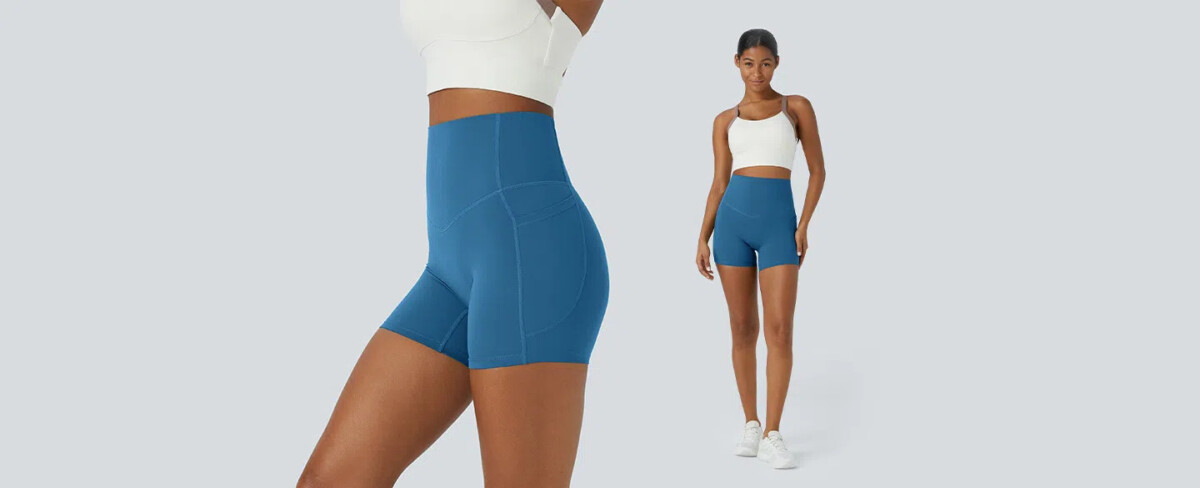
Quick Decision Framework
- Who This Is For: DTC founders and Shopify merchants doing $10K to $300K per month who are building or scaling a private-label activewear brand and want to get product development decisions right the first time.
- Skip If: You are still validating your niche or have not yet made your first 50 sales in the activewear category. Come back when you have proof of demand.
- Key Benefit: Avoid the top product development mistakes that kill activewear brands before they scale, and build a bike shorts line customers reorder within 90 days.
- What You’ll Need: A manufacturer relationship (or sourcing platform like Alibaba, Faire, or a private-label service), a basic grasp of fabric specs and MOQs, and a clear customer avatar for your activewear buyer.
- Time to Complete: 12 minutes to read; 2 to 4 weeks to apply to your sourcing process.
The brands that lose on bike shorts lose on fit. The brands that win on bike shorts win on pockets.
What You’ll Learn
- Why the “pockets problem” in activewear is a documented purchase driver worth building your product positioning around.
- How to spec the three variables (fit, inseam, fabric blend) that separate $18 dropship shorts from $68 repeat-purchase product lines.
- What material choices signal quality to your customer and hold up against Amazon alternatives at a 4x price point.
- How inseam length decisions affect return rates, reviews, and reorder cycles at different revenue stages.
- Which care and durability signals convert first-time buyers into subscribers or loyalty members within 60 days.
Most activewear founders I talk to are solving the wrong problem. They are obsessing over colorways, logo placement, and Instagram aesthetics while their manufacturer quietly approves a pocket spec that will generate a wave of one-star reviews four weeks after launch.
Here is the pattern I see consistently across brands trying to break through in the $30 to $70 activewear tier: they launch a product that looks right, photographs beautifully, and sells reasonably well for the first 60 days. Then the reviews start coming in. “Pockets too shallow.” “Shorts ride up constantly.” “Fabric lost shape after three washes.” The brand doubles down on paid acquisition to offset the return rate, margins compress, and by month six they are questioning whether the category was ever viable.
The category is absolutely viable. The global athleisure market was valued at more than $400 billion in 2024 and is projected to grow at a CAGR of nearly 7% through 2033, with women accounting for the largest consumer segment at over 40% of market share. Bike shorts with functional pockets sit at the intersection of the two biggest demand signals driving that growth: everyday comfort and mobile-phone storage. What kills brands in this category is not the market. It is the product. And the product decisions that matter most are made before a single unit is cut.
This guide covers what those decisions are, why they matter at your revenue stage, and how to get them right the first time.
Why Bike Shorts With Pockets Are One of the Highest-Repeat-Purchase SKUs in Activewear Right Now
Repeat purchase rate in the apparel category averages around 26% across ecommerce. That number looks modest until you understand what drives it up or down for a specific SKU. For bike shorts, the repeat cycle is unusually short when the product is right. Customers who find a pair that fits well, holds their phone without bouncing, and survives the wash cycle are back within 4 to 6 months, often buying a second colorway before the first pair has worn out. They are not replacing a product that failed. They are expanding a wardrobe staple they trust.
That is the business model hiding inside this category. It is not a one-time sale. It is a subscription without the subscription infrastructure, driven entirely by product quality and the confidence that the next pair will perform exactly like the last one. The brands doing $50K per month in this category are not spending more on acquisition than their competitors. They are spending less, because their repeat rate is doing the heavy lifting.
The Pocket Gap: What Amazon and Big Box Brands Keep Getting Wrong
Spend 20 minutes reading through Amazon reviews for women’s bike shorts and a pattern emerges almost immediately. The single most cited complaint across the category is pockets that fail in practical use: too shallow to hold a standard smartphone without it bouncing out, too narrow to fit anything beyond a folded credit card, or positioned so poorly at the hip that the weight distribution throws off balance during movement. This is not a minor UX issue. It is the primary reason a customer who liked the product enough to buy it decides not to reorder.
Here is what makes this a genuine opportunity for a DTC founder: fixing it costs almost nothing at the spec stage and a significant amount after the fact. A pocket spec correction during sampling is a conversation with your manufacturer. A pocket problem discovered through customer reviews is a product recall, a redesign cycle, and a return rate that eats your margin for two quarters. The brands that win in this category are the ones who treat pocket depth and placement as a primary spec decision, not an afterthought.
Why DTC Founders Are Better Positioned to Win This Category Than Retailers
A Shopify brand doing $50K per month in activewear has a structural advantage that wholesale-dependent retailers simply cannot replicate. You can run two colorways and three pocket specs in a single quarter, read your own review data in real time, and iterate on the next production run before a retailer has even submitted their seasonal buy. The review data sitting in your Shopify store, your email flows, and your post-purchase surveys is signal that your competitors are either paying for through expensive market research or ignoring entirely.
Whether you are doing $10K months or $300K months, the feedback loop available to a direct-to-consumer brand is the most valuable product development tool you have. The brands that use it to drive spec decisions rather than marketing copy are the ones building category authority. The ones that ignore it are the ones running perpetual promotions to clear inventory that should never have been manufactured at that spec in the first place.
Fit, Inseam, and Waistband: The Three Product Decisions That Determine Your Return Rate
Online apparel return rates commonly reach 30 to 40 percent, and the primary driver is not sizing confusion. It is expectation mismatch, and the expectation gap almost always opens at the fit stage. For bike shorts specifically, three product decisions determine whether your return rate sits at the low end of that range or the high end: waistband height, inseam length, and anti-ride-up construction. Your manufacturer will not prioritize any of these for you. They will build to the spec you provide, and if you do not provide a detailed spec, they will build to whatever their default is. Their default is not optimized for your customer or your review score.
High-Rise vs. Low-Rise: What Your Customer Avatar Tells You About Waistband Choice
The waistband decision is not an aesthetic choice. It is a functional choice that directly affects your most common negative review. The single most frequent complaint in the bike shorts category after pocket depth is the short rolling down during movement. High-rise waistbands eliminate that complaint almost entirely, because the extended rise gives the waistband enough contact area to grip without relying on elastic tension alone.
The trade-off is precision in grading across sizes. A high-rise waistband that fits a size small perfectly will fit a size large very differently if your manufacturer’s grading is sloppy. This is worth addressing explicitly in your tech pack and worth testing across at least three sizes before approving bulk production. If your customer avatar is a woman between 28 and 42 who cycles to coffee shops, runs errands in activewear, and wants a short she can wear from spin class to the farmers market without adjusting every 10 minutes, the high-rise wins every time. That is not a niche customer. That is the core buyer in this category.
The 5-Inch Inseam Standard and Why Deviating From It Is a Revenue Risk
The 5-inch inseam has become the de facto mid-market standard for bike shorts, and it earned that position through a decade of customer feedback across the category. It covers enough thigh to prevent ride-up without restricting knee drive or feeling restrictive when seated. It photographs well. It reads as athletic without reading as cycling-specific. At the $30 to $70 price point where most DTC activewear competes, deviating from this length without a clear reason backed by customer data is a return waiting to happen.
There are legitimate reasons to deviate. A 7-inch inseam positions you toward a cycling-specific or modest-coverage customer. A 3-inch inseam positions you toward a running-focused customer who prioritizes freedom of movement over coverage. Both are valid positioning choices. But they require a customer avatar that specifically calls for them, and they require marketing that sets that expectation clearly before the purchase. If you are launching your first bike shorts SKU and you do not have customer data driving you toward a non-standard inseam, stay at 5 inches and build from there.
Anti-Ride-Up Construction: The Silicone Grip Detail Worth the Extra $0.40 Per Unit
Silicone or elastic leg grips are a small spec addition during sampling that directly addresses the most common negative review phrase in the category: “they ride up constantly.” At scale, the math is straightforward. A $0.40 per unit addition to your production cost prevents a 3-star review, the return that follows it, and the customer who does not come back. The brands that skip this detail are optimizing for the wrong number. They are reducing unit cost while increasing return cost, and return cost in activewear is not just the shipping and restocking. It is the lost repeat purchase and the negative review that stays on your product page for the next 18 months.
Ask your manufacturer to include silicone leg grips in your first sample. Test them across movement types: seated, running, and cycling. If the shorts stay in place across all three, the spec is right. If they ride up in any of those positions, the grip placement or tension needs adjustment before you approve bulk production.
Fabric Selection for DTC Activewear: What the Blend Percentages on Your Tech Pack Actually Mean for Your Customer
Fabric is where most first-time activewear founders either over-engineer or under-specify. Over-engineering looks like sourcing a premium nylon blend for a $35 retail price point where the margin cannot support the material cost. Under-specifying looks like approving a polyester blend without asking for wash-test samples, then watching your Trustpilot score collapse by month three when customers discover the shorts lose shape after five washes. The goal is a blend that performs well enough to justify your price point and holds up well enough that customers come back for another color.
Most activewear manufacturers in Vietnam and China work primarily with polyester-spandex and nylon-spandex blends, and both are legitimate choices depending on where you are positioning in the market. The decision is not about which fabric is better in the abstract. It is about which fabric is right for your price architecture and your customer’s expectations at that price.
Nylon vs. Polyester Blends: Which Base Fabric Is Right for Your Price Point and Brand Positioning
Nylon blends feel premium, drape more smoothly against the skin, and photograph better for lifestyle content. If you are shooting flat lays or on-model content for Instagram or your product pages, nylon fabric reads as higher quality at a glance, which matters when you are asking a customer to spend $60 or more. Nylon also has better shape retention over time and tends to feel softer against the skin, which drives positive reviews in the texture and feel category.
Polyester blends are more durable, dry faster after washing, and cost less per meter of fabric. At the $35 to $55 retail range, polyester-spandex is the industry standard for a reason: it performs well, it holds up through repeated washing, and the cost structure supports a margin that lets you invest in other areas of the customer experience. Your fabric choice should follow your price architecture, not your aesthetic preference. A founder who wants to charge $68 for a polyester-spandex short is fighting the customer’s perception of value. A founder who sources nylon-spandex for a $35 retail price is fighting their own margin.
Elastane Percentage: Why the 20% Rule Matters for Compression and Shape Retention
Most functional bike shorts use 18 to 25% elastane in the blend. Below 15%, the shorts lose their compressive feel and their shape recovery after washing, which is the spec failure that triggers returns at the 30 to 60 day mark rather than immediately after purchase. The customer buys the shorts, wears them a few times, washes them, and discovers they no longer hold their shape. That is a worse outcome than an immediate return, because it generates a negative review from a customer who initially liked the product.
Before approving bulk production, ask your manufacturer for a wash-test sample at 10 washes minimum. Put the sample through the same wash cycle your customer will use: cold water, standard machine cycle, tumble dry low or air dry. If the fabric has lost compression or the waistband has stretched out after 10 washes, the elastane percentage or the elastane quality is wrong. This is a standard request that any reputable manufacturer will accommodate, and any manufacturer who resists it is telling you something important about their quality control process.
Moisture-Wicking and Breathability: What the Marketing Claim Requires From Your Fabric
“Moisture-wicking” is one of the most abused claims in activewear marketing, and it is one of the claims your customers are most likely to test directly. The claim is only meaningful if the fabric construction includes capillary-action fiber technology or a hydrophobic finish that actively moves moisture away from the skin. A synthetic blend is not automatically moisture-wicking just because it is not cotton. If your supplier cannot explain the specific mechanism by which the fabric wicks moisture, the claim will not hold up when your customer’s first review arrives.
Ask your manufacturer for the fabric’s technical data sheet. It should specify whether the moisture management is achieved through fiber construction (such as channel-weave polyester or treated nylon) or a topical finish. Topical finishes degrade with washing, which means a short that wicks on day one may not wick on day 30. Fiber-based moisture management is more durable and supports a marketing claim that holds up over the product’s life. If your manufacturer cannot provide a technical data sheet, that is a sourcing red flag worth addressing before you commit to bulk production.
Pocket Placement and Depth: The Spec Decision That Will Define Your Product Reviews
Pocket design in bike shorts is the most searchable pain point in the category and the most underdiscussed topic in DTC product development circles. It is also the easiest problem to solve at the spec stage and the most expensive problem to solve after launch. The brands that get pocket placement and depth right in their first production run stop competing on price within two quarters. The ones that get it wrong spend those two quarters managing returns and trying to suppress negative reviews with discount codes.
The spec conversation with your manufacturer needs to cover three things: pocket placement, pocket depth, and closure type. Each of these decisions affects a different segment of your customer base and a different part of your review profile.
Side Pockets vs. Hip Pockets vs. Thigh Pockets: Which Placement Works for the Active Customer
Side pockets positioned at the hip are the lowest-risk choice for a first-run product targeting a general activewear audience. They hold a standard smartphone without creating visible bulk during movement, they are accessible without requiring the wearer to reach awkwardly, and they are the placement most customers expect when they search for “bike shorts with pockets.” Thigh pockets offer more stability on uneven terrain, which makes them a strong choice for a running-specific or outdoor-focused sub-brand, but they restrict certain movements and can feel intrusive during seated activities like cycling or yoga.
Spec your pocket depth to hold a standard iPhone 15 Plus, which measures 6.7 inches in height. A pocket that accommodates that device covers approximately 80% of the smartphone market. A pocket spec built around a smaller device will generate complaints from a significant portion of your customer base before the first quarter is out. This is a $0 spec decision at the manufacturing stage. Make it deliberately. Halara built an eight-figure activewear brand almost entirely on the back of solving this one complaint.
Open Pockets vs. Zippered: When Security Features Justify the Added Cost
Zippered pockets add $0.80 to $1.50 per unit in production cost, and they are worth it in two specific scenarios: you are positioning above $55 retail and want a premium product signal, or you are building a cycling-specific sub-brand targeting commuters who need their phone and cards secured during a ride. For a general activewear audience, open pockets with snug elastic openings are sufficient and reduce production complexity. The elastic opening spec is the key detail: the opening should be tight enough to hold a phone securely during a run but loose enough to allow single-handed access without the wearer having to stop moving.
If you are unsure which direction to go, start with open pockets and a snug elastic spec. Test them with your first production run. If customer feedback consistently asks for zippered security, you have the data to justify the cost addition in your second run. Do not add cost to your first production run based on assumptions about what customers want. Add it based on what they tell you they need.
Building a Bike Shorts Product Line That Creates Reorder Behavior, Not Just First Purchases
The goal of activewear product development is not a one-time sale. It is a customer who comes back for black, then navy, then the new spring print. That loop does not happen automatically. It is engineered through product decisions made before the first unit ships and reinforced through post-purchase communication that gives customers a reason to think about their shorts again 60 days after they bought them.
The brands building this loop successfully are thinking about turning one-time buyers into repeat customers at the product development stage, not just the marketing stage. The product has to earn the repeat purchase. The marketing just has to remind the customer that the product exists.
The Color Architecture Strategy That Makes Bike Shorts a Repeat-Purchase Category
Launch with three core neutrals before introducing prints. Black, charcoal, and one brand-specific color (a signature dusty sage, a warm terracotta, a particular shade of navy that becomes associated with your brand) give you enough variety to test demand without the inventory risk that comes with a 12-colorway launch. The brands that launch with 12 colorways in the first year consistently report split-inventory problems and longer cash cycles. They are tying up working capital in colorways that are not moving while running out of the two or three that are.
The repeat-purchase mechanic in a neutral-first strategy is straightforward: the customer buys black, it performs well, and when she comes back for a second pair she adds charcoal because she already trusts the product. The print or the seasonal color becomes the third purchase, not the first. You are building the repeat habit around a SKU she already trusts rather than asking her to take a risk on a product she has never worn in a color she is not sure about.
Care Instructions as Retention Strategy: What Your Packaging Should Tell Customers About Maintaining Performance
Cold wash, no fabric softener, and air dry are the three care instructions that preserve elastane performance and extend the product life beyond 12 months. Fabric softener coats elastane fibers and degrades their elasticity over time, which is the primary reason a customer who washes her shorts correctly still has them performing at month 12 while a customer who uses fabric softener is back in the market at month four. If your customer is back in the market at month four because the product degraded, that is a repeat purchase. But it is a repeat purchase driven by product failure, not product satisfaction, and those two customers will generate very different reviews.
Including a care card in your packaging with a QR code linking to a short video showing how to care for the shorts is a retention tactic that costs less than $0.15 per unit and directly addresses the most common cause of premature product degradation. Apparel brands that provide clear, specific care guidance see measurably lower refund request rates than those that rely on the sewn-in care label alone. The sewn-in label is a compliance requirement. The care card is a customer retention strategy.
Sizing Inclusivity as a Revenue Lever, Not Just a Brand Value
Extending your size run from XS-XL to XS-3XL typically adds 15 to 22% incremental revenue in the first year without requiring a new product design (illustrative range; actual results depend on your category and audience). The conversation with your manufacturer about extended sizing is worth having early, because grading for extended sizes in a compression garment requires more precision than grading for standard sizes. A size 3XL bike short that does not compress correctly is a return and a negative review from a customer who specifically sought out your brand because you offered her size.
If your manufacturer charges more than 8% additional per unit for extended sizing, it is worth re-quoting with a competitor. Extended sizing in activewear is standard capability for any mid-tier or above manufacturer in Vietnam or China. A significant surcharge for it is either a capability gap or a negotiating position, and neither is a reason to absorb the cost without pushback.
Sourcing, Sampling, and Launch: A Practical DTC Activewear Timeline
Most DTC founders underestimate the time from tech pack to launch-ready inventory. The “pre-sell and pray” scenario, where a brand takes orders before inventory is confirmed and then misses the ship date, is almost always the result of a sourcing timeline that did not account for fit corrections. A realistic timeline prevents that scenario and protects the trust you have built with your first customers before you have even shipped to them.
Vietnam is the second-largest garment exporter in the world, with textile and apparel exports reaching $44 billion in 2024. The country produces activewear for Nike, Adidas, Lululemon, and On Running, and its mid-tier private-label factories are well-suited to DTC brands at the $50K to $300K per month revenue stage. China remains a strong option for brands prioritizing lower MOQs and faster sampling cycles, with some factories offering MOQs as low as 100 pieces per style. The right sourcing region depends on your volume, your timeline, and your margin requirements, not on a blanket preference for one country over another.
From Tech Pack to First Sample: What to Expect in the First 30 to 60 Days
Most manufacturers in Vietnam or China will return a first sample in 3 to 4 weeks from receipt of your tech pack. Plan for two to three rounds of fit corrections before approving bulk production. Each round takes 2 to 3 weeks. That means 8 to 12 weeks minimum from first manufacturer contact to a fit-approved sample, before bulk production has even started. If your manufacturer promises less than 6 weeks to a fit-approved sample, ask for it in writing or request references from brands in the activewear category. A promise that cannot be backed by references is a timeline that will slip.
The fit correction rounds are not a failure of the process. They are the process. The first sample tells you what the manufacturer understood from your tech pack. The correction rounds tell you what your tech pack failed to communicate clearly. By the third round, your tech pack is better, your manufacturer relationship is stronger, and your bulk production is significantly less likely to contain a spec error that generates returns.
MOQ Strategy for New Brands: How to Test the Market Without Overcommitting
Starting with a 200 to 300 unit MOQ per SKU in two to three colorways gives you enough inventory to test demand without over-committing cash to a product that has not been market-validated. At this volume, you are buying information as much as you are buying inventory. The data you collect from your first 200 units (which colorways sell fastest, which sizes are most requested, what the return rate looks like by size, what the reviews say about pocket depth) is worth more than the margin on those units.
At $50K per month in revenue, you can negotiate MOQ reductions more effectively than at $10K per month because you have supplier leverage to trade on. A manufacturer who sees you as a growing account with potential for five-figure runs is more willing to accommodate a 200-unit test order than a manufacturer who sees you as a one-time buyer. Lead with your growth trajectory in supplier conversations, not just your current order size. The brands that negotiate well at the $50K stage are the ones who have the supplier relationships they need when they scale to $200K.
Frequently Asked Questions
What pocket depth do bike shorts with pockets need to hold a smartphone?
Spec your pocket depth to hold a standard iPhone 15 Plus, which measures 6.7 inches in height. A pocket built to that depth covers approximately 80% of the smartphone market and eliminates the most common pocket-related complaint in the category. The pocket opening should be snug enough to hold the phone securely during movement but accessible with one hand. Test the pocket spec during sampling with the actual device, not a paper template. If the phone bounces during a light jog, the opening tension needs adjustment before bulk production approval.
What fabric blend should I use for private label bike shorts under $60 retail?
At the $35 to $55 retail range, a polyester-spandex blend with 18 to 22% elastane is the industry standard and the right choice for most DTC brands entering the category. Polyester-spandex is durable, dries quickly, holds its shape through repeated washing when the elastane percentage is correct, and supports the margin structure needed at that price point. If you are positioning above $55, a nylon-spandex blend with the same elastane range delivers a premium feel and photographs better for lifestyle content. Ask your manufacturer for a wash-test sample at 10 washes before approving any blend for bulk production.
How do I prevent negative reviews about bike shorts riding up?
Three spec decisions work together to prevent ride-up. First, choose a high-rise waistband, which gives the waistband enough contact area to grip without relying on elastic tension alone. Second, spec a 5-inch inseam, which covers enough thigh to prevent the short from migrating upward during movement. Third, add silicone or elastic leg grips to the hem of each leg. This combination adds approximately $0.40 to $0.60 per unit in production cost and directly eliminates the most common negative review phrase in the category. Test all three elements together during sampling, not in isolation, because ride-up is usually caused by a combination of factors rather than a single spec failure.
What inseam length sells best for DTC activewear brands targeting women?
The 5-inch inseam is the de facto standard at the $30 to $70 price point for a general activewear audience targeting women who wear bike shorts for gym, errands, and everyday athleisure. It provides enough coverage to prevent ride-up without restricting movement, and it is the length most customers expect when they search for bike shorts in this category. Deviating from this standard requires a specific customer avatar and clear marketing that sets the expectation before purchase. A 7-inch inseam works for a modest-coverage or cycling-specific positioning. A 3-inch inseam works for a running-focused brand. Without customer data driving you toward a non-standard length, start at 5 inches.
How many colorways should I launch in my first bike shorts production run?
Two to three colorways is the right range for a first production run. Lead with two to three core neutrals, with black as the anchor. Black is the highest-velocity colorway in the category, generates the most reviews, and gives you the clearest signal on product quality because customers who buy black are buying for function, not for color novelty. Adding a second neutral (charcoal, slate, or a warm grey) and one brand-specific color gives you enough variety to test customer preference without the inventory risk of a broader launch. Brands that launch with 12 colorways in the first year consistently report split-inventory problems and longer cash cycles. Save the prints and seasonal colors for your second production run, when you have data telling you which neutrals your customer actually buys.
