





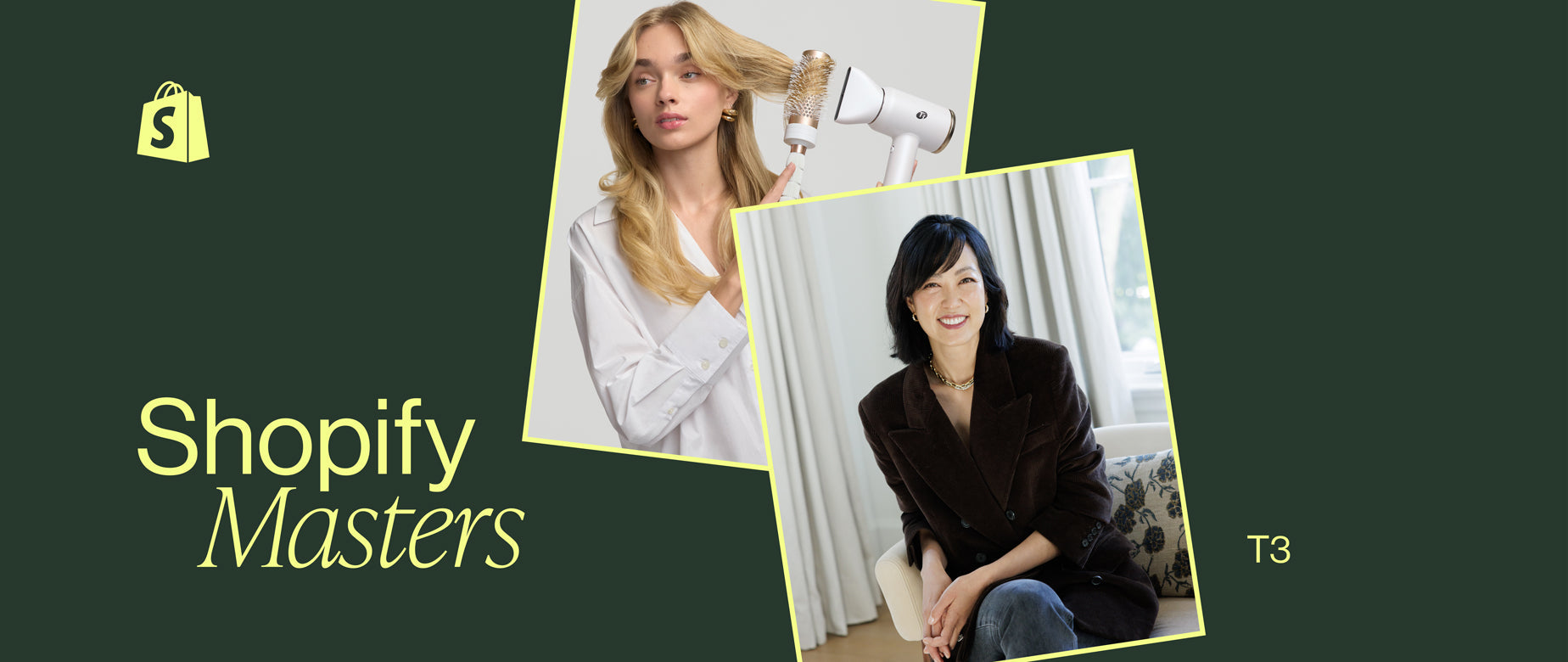
Author’s Bio:
Dr. Julie Chung is an ophthalmologist specializing in glaucoma and cataract surgery, and cofounder of T3, the luxury hair tools brand that revolutionized the category. A UCLA graduate who completed her medical training at UCSF, University of California San Francisco, Dr. Chung launched T3 in 2004 with her husband, Kent Yu, while still in medical school. She created the premium hair tools category with the groundbreaking Featherweight dryer and positioned T3 as the first hair tool brand at Sephora. Her work has transformed industry standards for design and performance, and T3 continues to be one of the leaders in hair tool innovation and excellence.
I used to drop hundreds of dollars on specialty skin care and makeup products without blinking and then grab my $20 drugstore hair dryer I had purchased in the electronics aisle. As a third-year medical student struggling with frizzy hair, I didn’t think twice about this disconnect. My then boyfriend, Kent, did. He looked at the clunky black dryer sitting next to my carefully curated beauty products and asked why I’d invest in everything else but cheap out on the tool I used for an hour every day? That question changed everything. Kent grew up in the salon world—his parents were hairdressers—and realized the entire hair tools category was trapped in the wrong section of the store. Historically, hair tools were marketed with the wrong language, and designed for the wrong customer.
Together we launched T3 and didn’t just make a better blow dryer—we relocated an entire product category from home appliances to beauty retail. By doing so, we created a market that didn’t exist before T3. If your product lives in a commoditized category where customers won’t pay premium prices, the problem might not be your product at all. It might be where it lives, how it looks, and how it speaks to people.

How to create your own product category
Below, I’ll share the process Kent and I went through to unlock a new position for our business within the beauty industry.


1. Question where your product actually belongs
At the time, hair tools lived in home appliance sections, next to toaster ovens and vacuums. In Asia and many other countries, they still do. This physical placement sent a powerful message to me though: These were utilitarian purchases, not worth investing in. So when we began talking to retailers like Nordstrom and insisting that we sit on the beauty floor next to skin care and cosmetics, it was completely unheard of.
I bought my first laptop because it was pink. I understood the psyche of the woman consumer because I was an avid shopper myself. I’d spend on makeup and skin care, but somehow my $20 hair dryer from high school (literally on the fritz after eight years) never seemed worth upgrading. The disconnect between what women would invest in for beauty versus what they’d spend on beauty tools wasn’t about the tools themselves. It was about where those tools lived and what that placement signaled about their value.

2. Make your product look like it belongs in the premium category
Aesthetics aren’t superficial—they signal category membership. We designed our packaging to look like Apple products: minimalist, clean, premium. A picture of the tool on the front with minimal copy. Now all packaging of hair tools looks like what we did 20 years ago and it’s just standard fare.
The product itself needed to match the category we wanted to be in. Kent developed soft air technology that dried my hair in 12 minutes instead of 45 to an hour. When I caught a glimpse of myself in the hallway after rushing to class, I realized my hair wasn’t frizzy. For the first time, I didn’t need to put BioSilk in my hair to control it. Even beyond performance, the dryer needed to be lightweight, ergonomic, and beautiful enough to sit on my vanity next to my other beauty products.
3. Use marketing channels from your target category, not your current one
Most brands get stuck marketing according to where they are, not where they want to be. We did something very out of the box at the time, which was to use beauty PR. We hired a publicist who worked only on beauty accounts, and had her do desk sides at Glamour, InStyle, and Harper’s Bazaar.
All of those media outlets were perplexed by why a hair dryer would try to get press with them. We had to convince them that this was a beauty device. It dries hair incredibly well and women end up with silky hair. The end result is beautification, not just dry hair.
Most people didn’t want to write about us, but InStyle came out with the first article about T3, and the title was “The $200 Blow Dryer: Is It Worth It?” with Tyra Banks and celebrity stylist Luke O’Connor. After that feature, other beauty outlets wanted to cover it. We seeded celebrity stylists, completely novel for hair tools at the time and found ourselves backstage at New York Fashion Week getting coverage for the hair tools. It was the beauty PR that caught the attention of Sephora, not appliance trade shows.

4. Speak the language of your aspirational category
Messaging in the home appliance section focuses on watts, power, and technical specs. Beauty messaging focuses on outcomes like silky hair, healthy styling, and beautification. We used messaging that women were already familiar with to explain the tools’ benefits and tell a story about the brand.
The technical innovation mattered, because soft air technology genuinely solved my frizz problem. But knowing how your aspirational category communicates is key to helping them understand why your products are different.
5. Insist on placement that reinforces your new positioning
When Sephora called at the end of our first year, they said, “Hey, what you guys are doing is great. Make us a Sephora-branded dryer.” They didn’t fully understand that this was a brand. We weren’t interested in making a Sephora-branded dryer, so we held firm. T3 is a brand, and it belongs in beauty retail.
Before T3, there were actually zero hair care tools at Sephora. Not even a single electronic device could be purchased online or in store. We started online at Sephora and sold out immediately. Then we expanded to stores gradually as we could scale production. We spent what we earned, so it had to be a slower burn than what they wanted.
Physical placement validated our premium positioning and created permission for women to invest in the category. When retailers want you, dictate terms that support your category vision. Your placement tells customers what you’re worth.
Flash forward to now, when Dyson and Shark have entered the category with their $400 to $500 hair tools, and it actually boosts our business. They raised category awareness and made our products seem like affordable luxury. That’s the ultimate proof that category creation works when billion-dollar companies follow you into the space you reimagined, and instead of putting you out of business, they validate everything you built.
Watch my full Shopify Masters interview to hear how Kent and I have navigated our Sephora partnership and grown successfully over 20 years.
