





A version of this was originally featured on AdExchanger
Marketers who want to remain competitive need to reexamine the way they view, plan and measure performance across video and streaming platforms.
If they’re still debating programmatic vs. direct or linear vs. streaming, then they’re missing out on the real meaning behind convergent TV, according to Mike Fogarty, head of client development, brand and agency partnerships, at Tatari.
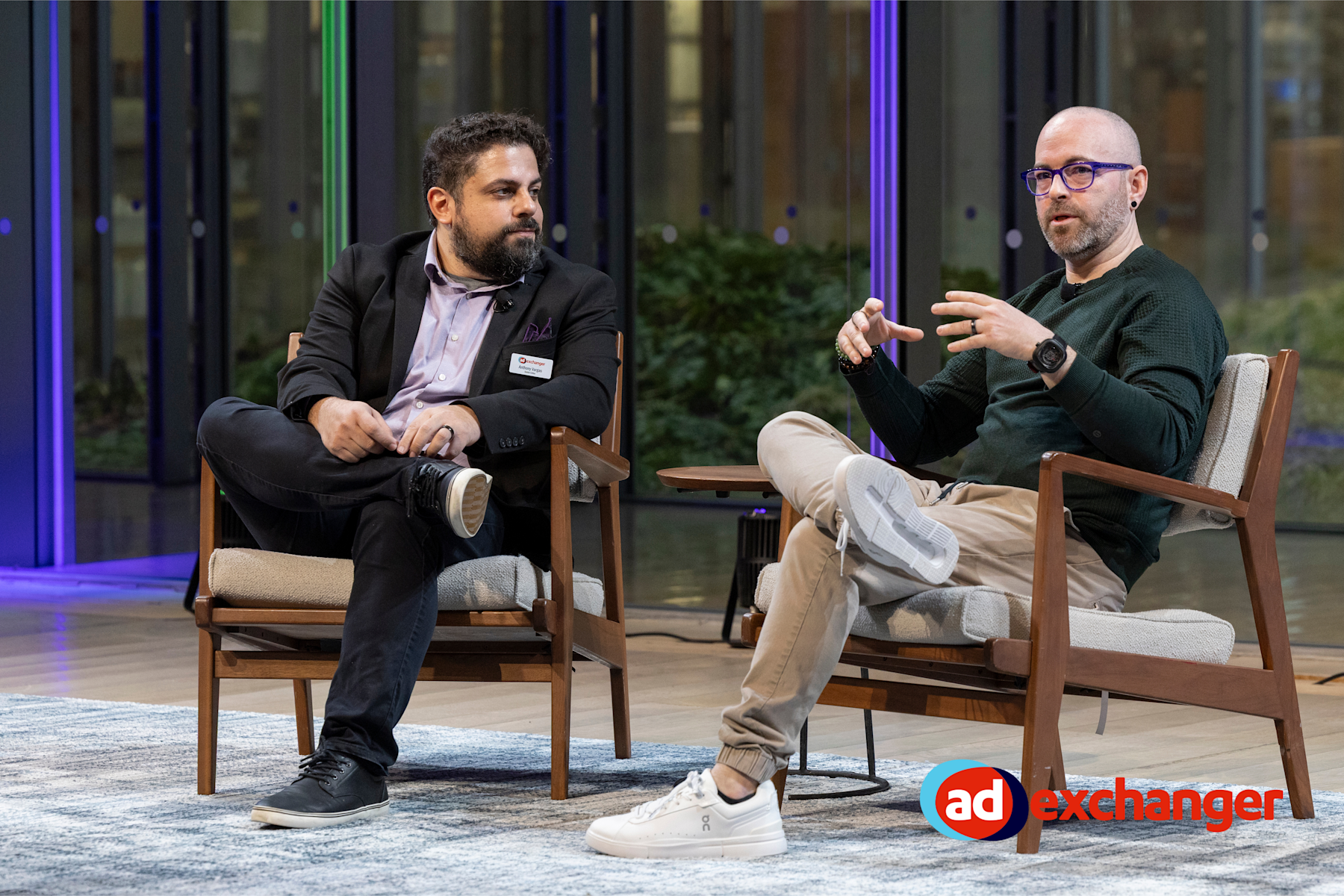
Fogarty shared his perspective as media professionals across the TV and advertising industry met March 5 and 6 in New York City to discuss the shifting video landscape at this year’s Convergent TV World.
“There is a rapid, ongoing change in viewership between linear and streaming, and as the lines continue to blur, it’s becoming more complex,” Fogarty said during a fireside chat with AdExchanger Senior Editor Anthony Vargas. “What is linear streaming? How do you define YouTube? The answer isn’t so simple.”
Both traditional and digital technologies are coming to the center of streaming, leaving marketers wondering how to best use programmatic vs. direct activation and how to measure a campaign’s impact. But there’s no one-size-fits-all solution to the problem.
Take buying the Super Bowl, for example: “We had four media partners with first-time Super Bowl placements this year, and all of their journeys were unique,” Fogarty said. “Some took a convergent approach, maximizing reach by doing both broadcast and streaming, while others took the more cost-effective streaming-only route. It’s a very judicious and deliberate process.”
The future is flexible, not fragmented
Consumers are splintering their viewing across many devices, and this fragmentation is changing advertising planning cycles. Being nimble matters, which means increasing the cadence to a monthly, weekly or even daily basis. In the future, Fogarty sees an operational fluidity that allows marketers to buy, plan, optimize and measure at a different scale.
“The world we’re moving toward is an always-on ecosystem,” he said. “The way you’re leveraging machine learning and the agentic era is changing quite rapidly.”
Another challenge caused by the fragmentation of viewing behavior is how it complicates attribution models.
“The key here, to use Lord of the Rings, is that there’s not one attribution model to rule them all,” Fogarty said. Instead, he added, buyers should look at data from a multimodal perspective – examining linear and digital data and noting how they align.
Connected TV is still television
Of course, buyers have more programmatic tools at their disposal now for buying and measuring TV across platforms. The rapid change in TV viewership, combined with antiquated operational rails and burdens in how marketers were planning, forced the industry to adapt quickly.
But the number of options available has many marketers locked into tried-and-true direct-buying strategies. Therefore, while the programmatic infrastructure for CTV has come a long way, it still remains a mostly direct-sold channel, Fogarty said – which makes devising a truly convergent campaign strategy across different TV touch points more difficult.
“The problem is that programmatic is still such a small part of the overarching nature of the television business in the United States,” he said. “The market’s about $70 billion between linear and streaming, $90 billion if you add in local linear, but if we concentrate on the streaming side of $30 billion, a significant portion is still a direct-to-network negotiated transaction.”
He advised marketers to stop debating the value of programmatic vs. direct and to instead use both buying strategies to ensure CTV is a continually optimized channel, with programmatic insights informing direct deals and vice-versa.
Plus, deeper custom integrations with DSPs are helping some brands combine programmatic’s potential with their established direct-buying strategies, Fogarty noted, enabling more convergent campaign activation.
“Smart marketers are establishing hybrid playbooks and recognizing you have to be in a DSP and own direct-level access to network relationships for cost efficiencies and moments,” he said. “They’re driving more surplus and growth when they’re buying from both ends of the spectrum.”
So what’s really driving performance and outcomes? There isn’t one answer, but Fogarty urged attendees not to fall into the trap of forcing connected TV into the same measurement parameters as social.
Yes, CTV has targetable and addressable metrics, but it is still television, which means it is subject to the channel’s ongoing currency debates, Fogarty said.
“We’re in the world of alternative currencies,” he said, “and I think everyone is trying to hedge their bets on what’s the currency of record, what’s the measurement model.” But, he added, there isn’t one right way to measure results.
Even as television evolves in its delivery mechanism, from linear to streaming, the value proposition it presents to marketers and the emotion it evokes in viewers remains unchanged. It continues to be an impactful place to grow brands and drive performance.
What is changing is the buying infrastructure and fluidity. And advancements in cross-platform buying and measurement, combined with a merging of programmatic and direct strategies, are making some of the channel’s operational and optimization challenges obsolete.
“I no longer believe that TV should be about linear vs. streaming,” Fogarty said. “It’s about responsiveness.”
