


How many times have you clicked ‘buy’ without a second thought? Think about that perfect jacket you discovered online – the one in your size, preferred color, and at a price point that made sense. Poof! It appears seemingly by magic, but behind that seamless purchase was a sophisticated personalization engine that had learned your preferences across months of interactions. This is the power of e-commerce personalization, and it’s transforming how we think about digital retail.
Yet, despite its proven effectiveness, e-commerce personalization remains an elusive goal for many. Marketers are aware of its importance, with studies showing an average 40% more revenue from companies that excel in personalization. However, the path from recognition to realization is not as straightforward as it seems.
Let’s explore some of the common personalization pitfalls and dive into real-world examples, illustrating how industry leaders have transformed potential stumbling blocks into stepping stones for success.

How do you ensure your business gets a piece of the growing e-commerce pie? The answer lies in personalization, and the data from McKinsey & Company’s recent study paints a crystal-clear picture of its tangible impact:
These statistics are a roadmap to competitive advantage in an increasingly crowded marketplace. When you consider that each percentage point of improvement translates to significant revenue in a trillion-dollar market, the importance of getting personalization right becomes undeniable.
Now that we’ve explored the challenges and opportunities in the e-commerce personalization landscape, it’s time to equip you with actionable strategies. Let’s dive into six practical strategies to inspire and elevate your own personalization efforts.
Let’s shift our focus to how leading brands like Puma and Babbel have turned these best practices into winning strategies.
PUMA faced the challenge of managing a vast amount of customer data across multiple segments, countries, and languages. Their dedicated marketing team was working diligently to navigate this complex landscape. Initially, their approach included weekly newsletters without automation or personalization. As a global brand with a diverse customer base, PUMA recognized the need to evolve their CRM strategy to better serve their varied audience, despite having a lean marketing team.
Partnering with SAP Emarsys gave them the power and tools to master their data overload. They were able to:
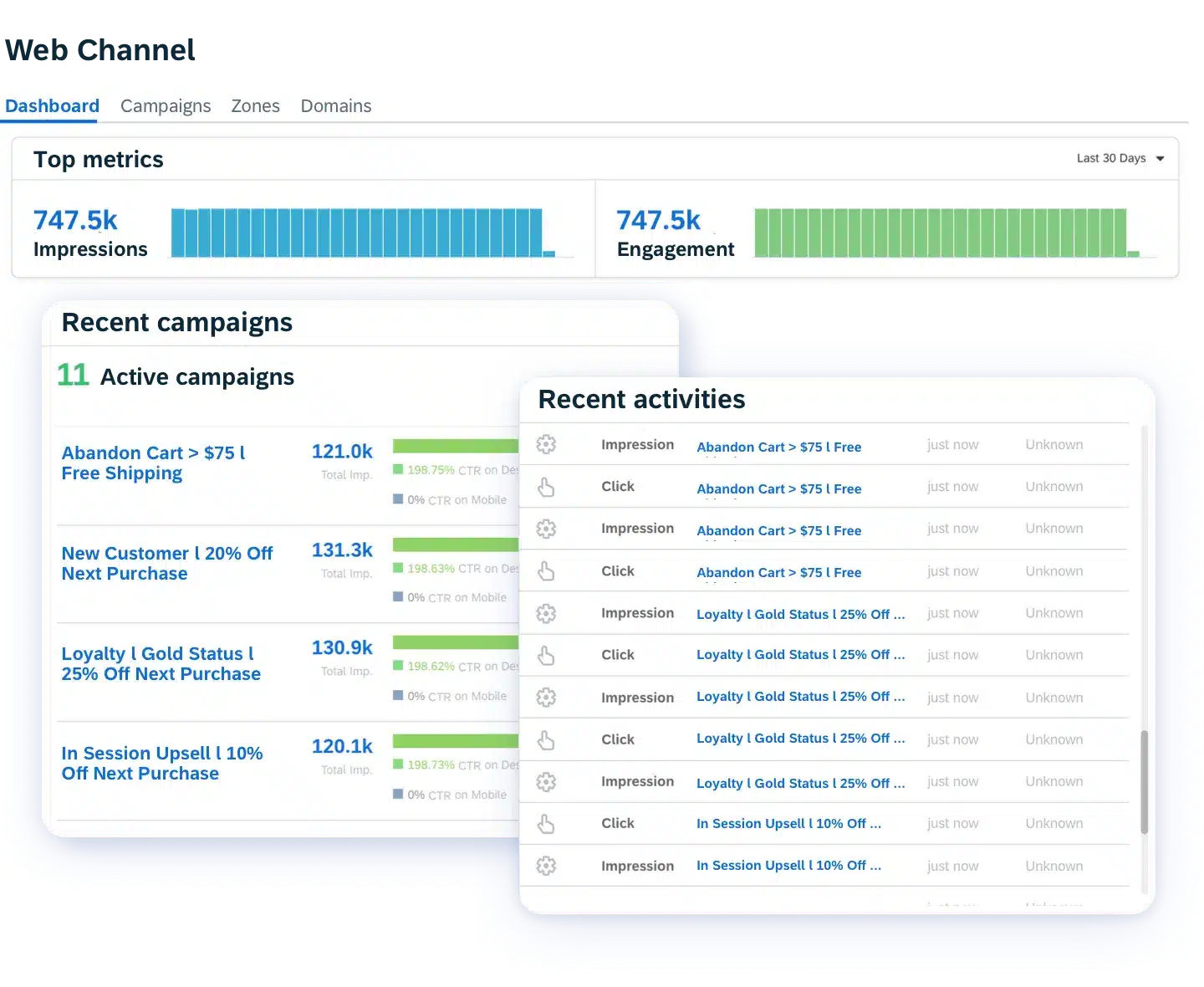
With a more complete view of the customer, the sportswear brand was able to identify highly engaged segments that were likely to purchase in the next 2-3 months, and then send relevant content and recommendations, while also reducing the frequency of sends to less engaged segments. Impressively, Puma successfully 5X their revenue and grew their database by 50% within only 6 months of adoption.
“When we send an email, the logic is built, so the subject line will always appear in the right language for that customer. Any product that we feature will feature the right currency for that customer based on where they are… and we can use block targeting to really focus the content to make sure everyone’s seeing the right thing.”
When COVID-19 forced the world to go digital, Babbel didn’t just adapt – they revolutionized their approach to language learning. The online learning platform recognized that their users weren’t just seeking lessons, they were looking for personalized learning experiences that could fit into their rapidly changing lives. By leveraging real-time data and user behavior analysis, Babbel transformed their platform from a one-size-fits-all solution into a dynamic learning ecosystem that responds to each user’s unique needs.
At the end of the day, we want to personalize the whole product experience. Eventually, no two people who enter [our] bubble should have the exact same experience if they use the product differently… [and] we’re working to have personalized recommendations at all times.
Here are the key personalization tactics they leveraged with the help of SAP Emarsys’s personalization platform:
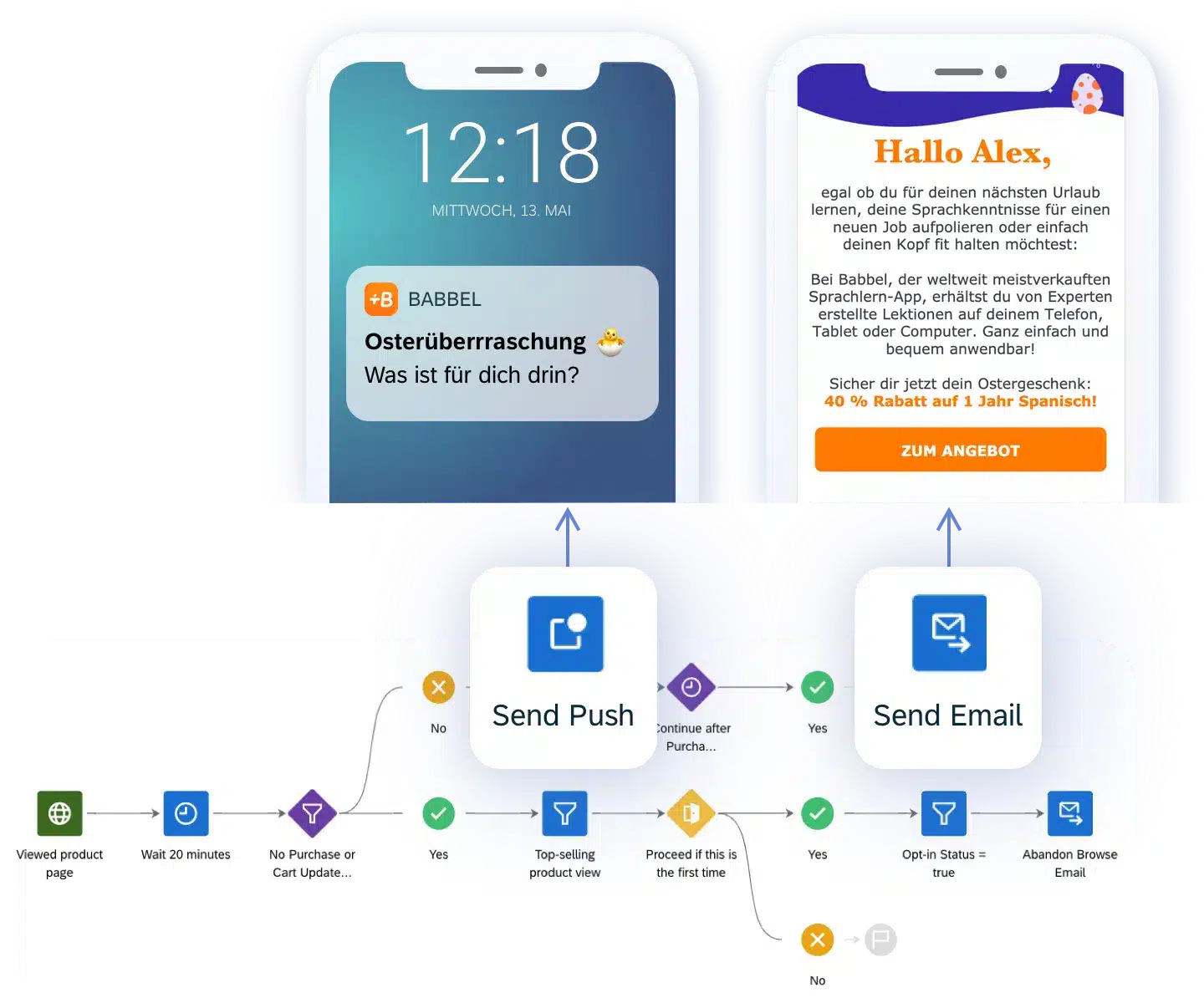
By analyzing user data, Babbel executed the right personalized engagement at the right time, resulting in a 100% YoY revenue increase in the US and a 50% improved conversion rate using push notifications and emails.
The success stories of brands like Puma and Babbel serve as a true testament to the power of data-driven strategies and personalized customer experiences.
As we look ahead to the trends and technologies of the future, e-commerce personalization is sure to be dynamic.
Instead of just crafting emails, you’ll be overseeing AI-generated content and ensuring brand consistency across personalized communications. Campaign management will become more about strategic adjustments based on AI recommendations, and customer journey mapping will demand integrating innovative AR/VR touchpoints. All the while, privacy compliance will be a constant, requiring close collaboration with IT, legal, and data science teams.
To streamline these shifts and empower your team with the tools they need to succeed now and in the future, consider adopting a comprehensive personalization engine that can deliver personalized experiences across the customer journey.
Learn more about how SAP Emarsys is bringing the power of personalization to thousands of marketers around the globe.
Kirk Donlan is a Product Marketing Manager at SAP Emarsys, exploring the evolving role of product marketing, storytelling, and customer engagement in helping businesses build meaningful connections. He writes about how brands can craft compelling messaging, develop revenue-driving engagement strategies, and foster long-lasting loyalty. Passionate about transforming complex ideas into practical guidance, he provides insights that help brands connect their offerings to real-world needs.

Kirk Donlan
Product Marketing Manager





