





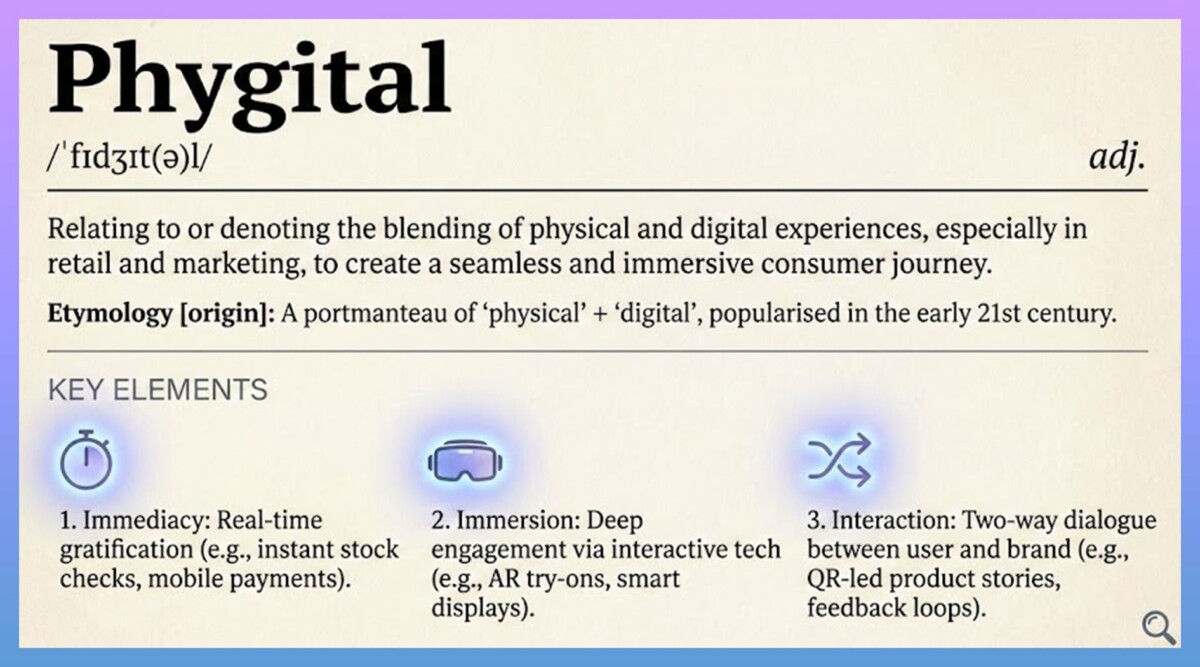
What is “Phygital”?
The term “Phygital” describes the blending of physical and digital storefronts to provide an immersive, personalized customer journey. It’s the strategy of using digital tools (like AR, QR codes, and social commerce) to enhance a physical space, or using a physical space to drive online engagement. For a brand, it means being where your customer is, regardless of the medium.
The Problem: The Digital-Only Ceiling
Online retailers are facing a crowded marketplace. Traditional digital advertising is yielding diminishing returns, with some brands reporting that Return on Marketing Investment (ROMI) for physical pop-ups is 4.5x higher than online-only ads (Source: Shopify/Colorful Socks 2025).
Without a physical touchpoint, brands miss the “tactile trust” that converts a browser into a lifelong fan.
The Power of the Pop-Up: By the Numbers
Pop-ups are no longer just “temporary shops”; they are high-performance marketing engines. Consider these 2025 benchmarks:
- Massive Market Growth: The pop-up industry is projected to exceed $95 billion in value by the end of 2025 (Source: Capital One Shopping).
- Higher Conversion: Pop-up stores boast an average 18% conversion rate, significantly outperforming the 11% average of permanent retail locations (Source: Shopify).
- Success Rates: An incredible 80% of retailers who have opened a pop-up shop considered it a success, with 58% planning to open another (Source: Capital One Shopping).
- Low Barrier to Entry: 44% of pop-up shops cost less than $5,000 to open, making them a low-risk “test and learn” laboratory for online brands (Source: Capital One Shopping).
Capturing Gen Z through “Retailtainment”
To win over Gen Z – the generation with a projected $12 trillion in spending power by 2030 – retailers must move beyond the transaction. Gen Z doesn’t just want to buy; they want to be entertained.
Recent data shows a “reversal” in Gen Z habits: 61% of Gen Z now prefer to discover new products in-store (Source: PwC 2025 Holiday Outlook). For this demographic, shopping is an event.
To cater to them, brands are turning physical spaces into “Retailtainment” centers. This includes:
- Interactive “Instagrammable” Moments: Creating viral-ready backdrops that turn customers into micro-influencers.
- Gamified Discovery: Using QR codes or AR scavenger hunts within the store to unlock digital discounts.
- Community Hubs: Hosting workshops or live podcast recordings within the pop-up to build brand loyalty.
Key Stat: Over 55% of Gen Z’s total holiday spend now occurs via “omnichannel” experiences (a mix of online and offline) compared to less than 25% via online-only channels (Source: J.P. Morgan).
“The future belongs to the brands that show up where their customers live, breathe, and play.” – says Robert Kraus, Founder of PopUpsByDesign.com
Pro Tip: Keep it temporary but make it feel permanent. The “FOMO” (Fear Of Missing Out) created by a short-term window is your greatest marketing asset.
For the online retailer, a pop-up is not just a shop; it’s a living billboard, a data-collection point, and a community builder. In a world where the digital space is increasingly noisy, the most innovative brands are finding that the best way to get noticed online is to show up in the real world.
Not Just for “Brands” but also Artists, Musicians, and Designers
The “Phygital Edge” is more than just a marketing trend – it is a way to break the “fourth wall” of creativity. It allows a creator to sell a physical object while providing a digital experience that lives, breathes, and evolves over time.
In the current 2026 landscape, here is how creative professionals are using this edge to build deeper connections and new revenue streams:
The “Living” Canvas (Augmented Reality): Static art is becoming a gateway to dynamic storytelling. Using WebAR (which doesn’t require an app download), artists are turning physical pieces into portals.
How it works: A collector scans a physical painting with their phone. The “phygital layer” then shows a time-lapse of the artist creating the piece, or the characters in the painting begin to move and speak.
The Edge: It transforms a one-time purchase into an ongoing “performance” that the owner can show off to friends.
“Digital Twins” and Authenticity: For creators of physical goods (sculptures, high-end fashion, jewelry), phygital tech provides a solution to the age-old problem of forgery and provenance.
How it works: A physical item is embedded with a tiny NFC (Near Field Communication) chip. When a buyer taps their phone to the item, it instantly pulls up a “Digital Twin”—a blockchain-verified certificate of authenticity that also tracks the item’s history.
The Edge: This increases the resale value for collectors and allows the artist to receive a “royalty” every time the physical item is resold on the secondary market.
“Try-Before-You-Buy” Phygital Pop-Ups: For independent fashion designers and makers, phygital tools reduce the risk of high-cost retail space.
Smart Mirrors: In a small pop-up, a designer can display only one sample of a jacket. A customer stands in front of a “Smart Mirror” that overlays different colors and patterns onto their reflection.
The Edge: The artist carries less inventory (lower overhead) while offering a “bespoke” experience that feels high-end and futuristic.
Interactive Performance & Soundscapes: Musicians and performers are using phygital elements to make merch more valuable.
Example: A concert poster that, when scanned, plays an exclusive unreleased track or a 3D hologram of the artist thanking the fan for attending that specific city’s show.
The Edge: It turns “merch” into a “membership.” The digital layer can be updated after the purchase, so the poster “unlocks” new content every month.
“Creators who embrace the “Phygital Edge” aren’t just selling “stuff” – they are selling access.” – Robert Kraus – PopUpsByDesign.com
In a world where digital files can be easily copied, the connection between a physical original and its exclusive digital counterpart is what creates true scarcity and value.
How the Phygital Edge Applies to Non-Retail & Non-Creative Sectors in 2026
For non-profits, the Phygital Edge isn’t about selling a product; it’s about selling the mission and elevating the connection. It moves an event from a “one-night-only” occasion to a layered experience where the physical space serves as the emotional heart, and the digital layer provides the depth, data, and longevity.
From “Ask” to “Impact” – Non-Profit Galas: In a traditional gala, donors hear a speech and write a check. A phygital gala makes the impact tangible.
The “Impact Portal” (AR): Place physical “story stations” around the room – perhaps a simple photo of a child or a map of a project site. When guests scan it, they see a 360-degree video or a message from the person they are helping.
Live Digital Giving Walls: As guests donate via their phones, a physical LED wall in the ballroom updates in real-time, not just with numbers, but with digital “bricks” building a house or “seeds” growing into a forest.
The Edge: It turns a financial transaction into a visual, shared victory.
Beyond the Badge – Corporate Meetings & Conferences: For meetings, phygital tools solve the “networking friction” that often plagues professional gatherings.
Smart Badges & Heat Maps: Attendees wear badges with low-energy Bluetooth or NFC. As they move, digital kiosks in the hallway can say, “Welcome back, [Name]! Based on your sessions, you might enjoy the networking lounge on Floor 2.”
Phygital Breakout Zones: Physical whiteboards that instantly digitize notes and send them to the attendees’ phones, or “Ask Me Anything” kiosks where remote speakers appear as life-sized holograms.
The Edge: You collect “dwell time” data – knowing exactly which topics kept people engaged – which is invaluable for planning the next year’s ROI.
The Modern Memory – Weddings & Private Social Events: For weddings, the Phygital Edge creates a bridge for guests who can’t attend and enhances the experience for those who do.
AR “Guest Books”: A physical book where guests leave a written note, but they also “link” a video message to that page via a QR code. The couple can “scan” the book for years to see and hear their loved ones.
Interactive Tables: Instead of a static menu, a small digital projection or an AR trigger on the centerpiece allows guests to see the story of the couple or interact with a live photo feed from the “digital guest wall.”
The Edge: It makes the event inclusive for global family members while giving local guests a “wow” factor that goes beyond just flowers and food.
The Phygital Edge is the sweet spot where the emotional weight of a live event meets the infinite scale of digital innovation. In 2026, if your event isn’t phygital, you’re only telling half the story. – Robert Kraus – PopUpsByDesign.com
 Bio: Robert Kraus, Founder of PopUpsByDesign.com and SmallConferences.com, is a pioneer in the “phygital” landscape, bridging the gap between digital convenience and physical experience. With over 20 years of event planning expertise and 15 years in retail and wholesale merchandising, Robert has produced over 250 high-impact gatherings for groups of 25 to 2,500. His unique ability to find “hidden gem” properties and apply high-performance retail strategies to any sector – from nonprofit galas to brand activations – has earned him features in USA Today, NonProfit PRO, and on The Today Show. Robert believes that in 2026, the most innovative organizations must show up where their customers live, breathe, and play.
The Phygital Launchpad – A Free Checklist for Your First Pop-Up: http://popupsbydesign.com/checklist
