





Key Takeaways
- Choose a tool with strong accuracy, natural voices, and solid lip-sync to reach more viewers and beat creators who rely on subtitles alone.
- Compare AI video translators using a simple checklist: accuracy, voice quality, lip-sync, language coverage, editing control, and export formats.
- Localize videos with clear speech and well-timed subtitles to build trust, reduce confusion, and help customers feel seen in their own language.
- Test lip-sync on a short talking-head clip first, because great mouth matching can make viewers feel like the video was filmed for them.
Language has acted as a bridge that connects people across global culture, especially for global ecommerce and content creation.
Translating and localizing videos builds trust, increases accessibility, and conversions.
Whether you’re content creators, marketers, educators, or enterprises, AI video translation continues to be important — with the ability to speak to a customer in their native tongue, with perfect lip-syncing and cultural nuance. And AI video translation tools have developed not only to translate speech but to preserve tone, emotion, pacing, and visual alignment across languages.
To identify the best tools, our team tested popular platforms. We evaluated accuracy, voice naturalness, lip-sync quality, editing flexibility, workflow speed, and export usability. These five tools consistently delivered the best balance of key criteria. Check below and choose one for your business.
How to Choose the Best AI Video Translation Tool in 2026
Before diving into the top tools, we’d like to show you the key criteria we used when selecting a platform. It’s important to understand what the best AI video translation tool is and how you can choose.
1. Translation Accuracy and Context Awareness
A strong AI translator must first ensure accuracy. It preserves the meaning, tone, and intent of the original video, and fits the target cultural environment with translated language, voice, and more. This matters most for instructional content, marketing messages, and emotional storytelling.
2. Voice Quality and Naturalness
Flat, robotic voices reduce viewer trust and engagement. The best tools offer expressive AI voices that sound like the original speaker, reflecting emotion, pacing, and personality.
3. Lip-Sync and Visual Alignment
Mismatched mouth movement lets viewers just hear the translation. High-quality lip-sync, especially in talking-head videos, significantly improves realism. Viewers feel like the video was made just for them.
4. Language and Accent Coverage
Global reach depends on broad language support and regional accent options. Tools with limited language coverage are not our choice.
5. Editing Control and Workflow Flexibility
You need the ability to tweak or customize translations, adjust timing, regenerate lines, swap voices without starting over, or process videos in batches. A clean and intuitive editing interface makes the translation process easy and fast.
6. Output Formats and Platform Compatibility
Exports should support common formats like MP4, SRT, VTT, and broadcast-ready files — without watermarking or format restrictions. This factor helps creators share and upload videos with ease.
These criteria shaped our testing and ranking of the five tools below.
Top 6 AI Video Translation Tools in 2026
1. VMEG AI
VMEG AI is designed as a comprehensive video localization platform for creators, brands, educators, and global teams. It goes beyond basic translation by combining speech recognition, multilingual dubbing, lip-sync, voice cloning, subtitle generation, and in-platform editing into one unified workflow.
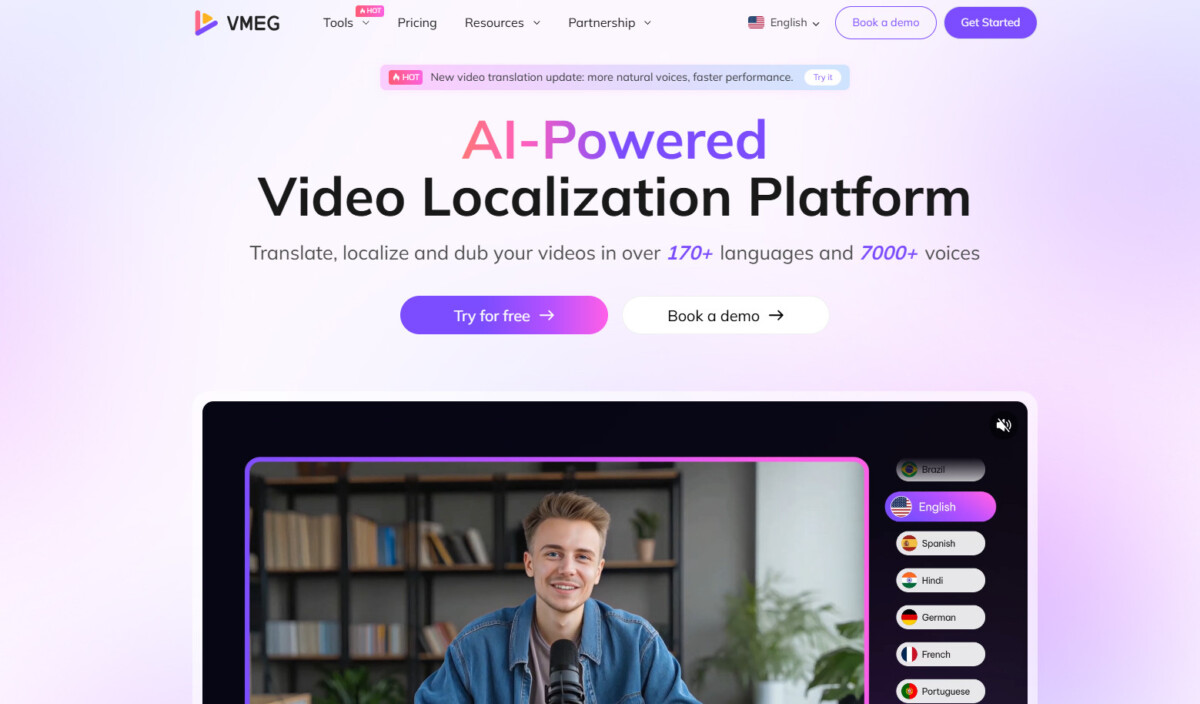
Top AI Video Translation Tool in 2026 – VMEG AI
Key Features
- Translation and dubbing your videos in 170+ languages and dialects.
- High-quality AI voice cloning with emotional tone control and 7000+ lifelike voices.
- Advanced AI precisely aligns translated audio with the speaker’s mouth movements, creating accurate lip-sync, especially for talking-head and presenter videos.
- Automatic subtitle generation with rich style and manual editing tools.
- Flexible exports with translated MP4 video with embedded subtitles, or single SRT files.
Best For
Global brands, content teams, and educators who need broad language coverage, voice customization, fine control over localization quality, and bulk video localization.
User Reviews
In testing, VMEG consistently delivered strong translation accuracy, natural voice rendering, and some of the best language coverage available.
“What I like most about VMEG.AI is how naturally it captures the rhythm and emotion of real human speech. Unlike many other AI dubbing tools, VMEG feels like it understands the language—it doesn’t just translate words, it delivers the nuance.” — Verified User
“Quick to learn, but needs better collaboration for teams and better workflow organization.” — Glassroom P.
2. Dubly.AI
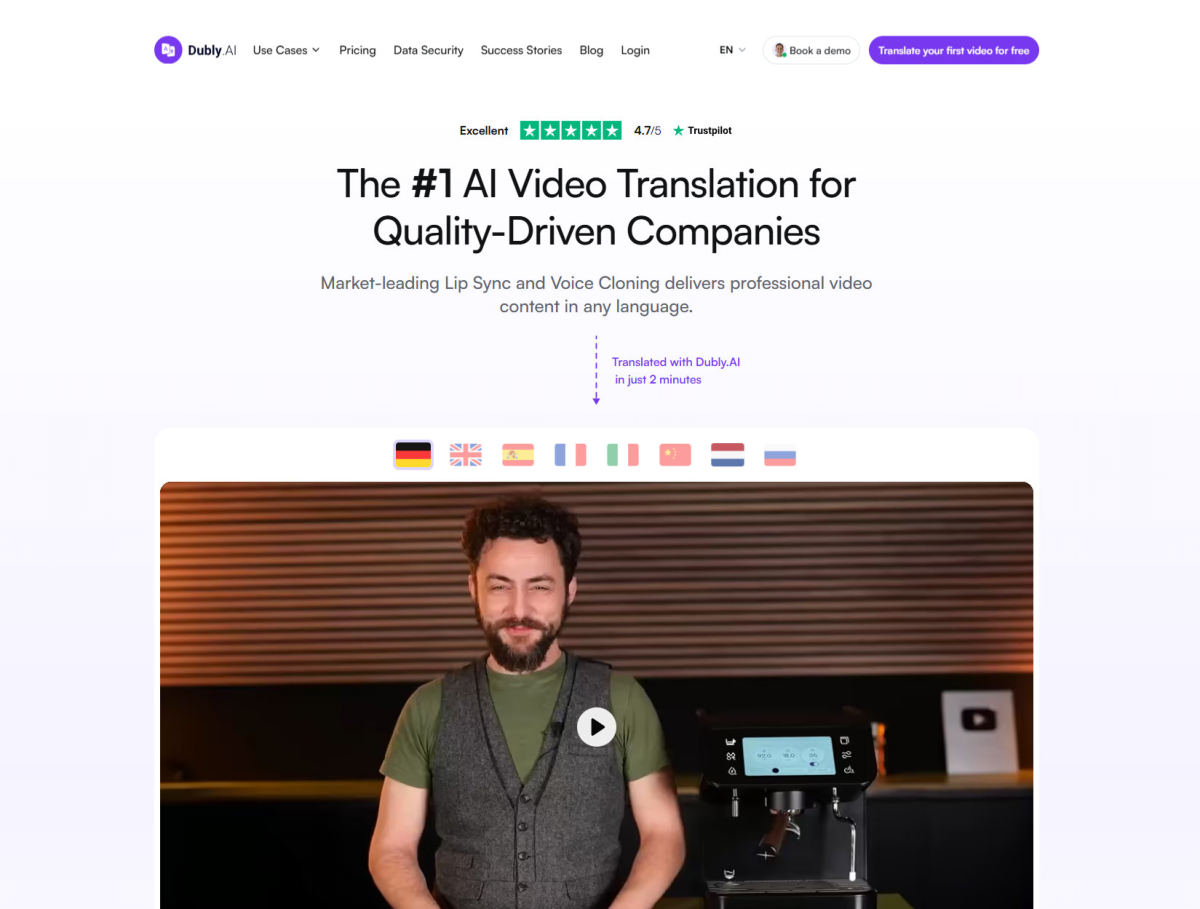
Dubly.AI is a quality-first AI video translation platform made in Germany and recommended by YouTube, built for brands and enterprises that need professional-grade results without the traditional production overhead. Its standout feature is Lip Sync 2.0 – a Hollywood-level technology that matches mouth movements to translated audio with no visual artifacts or uncanny valley effect. Trusted by 750+ organizations including BMW, Havas, and Axel Springer, Dubly.AI positions itself as the tool for quality-driven companies that won’t compromise on authenticity.
Key Features
- Translation and dubbing in 38+ languages with regional dialect variants (including multiple English, Spanish, Arabic, French, and Portuguese options).
- Market-leading lip sync technology that preserves facial expressions and natural movements from the original video.
- Voice cloning that accurately replicates the original speaker’s tone, energy, and personality.
- Customizable translations with a built-in glossary for brand-specific terminology – ensuring consistent, accurate language every time.
- Native Speaker Control: an optional human review layer with qualified native speakers covering 20+ languages for final polish.
- 4K export with zero quality loss and support for unlimited video length.
- 100% GDPR compliant, TÜV certified, AES256-GCM encrypted – data is never used to train AI models.
Best For
Quality-conscious brands, enterprise teams, and publishers who need authentic lip-sync results, strong data privacy compliance, and the option for human-reviewed translations. Particularly well-suited for European markets and regulated industries.
User Reviews
In testing, Dubly.AI delivered some of the most natural-looking lip-sync results available, with a clean workflow and strong customization controls.
“Dubly.AI fully translates and lip syncs all video content into new languages – saving us costly productions, countless revisions, and a lot of stress. The results feel impressively authentic. Dubly radically simplified our localization workflow.” – Moritz Hausdoerfer, Head of Content Marketing, HAVAS Social
3. Rask AI
Rask AI is built for scalable video localization, combining translation, dubbing, subtitles, and automation into a streamlined platform. It’s especially strong for creators and enterprises handling large volumes of content across multiple languages.
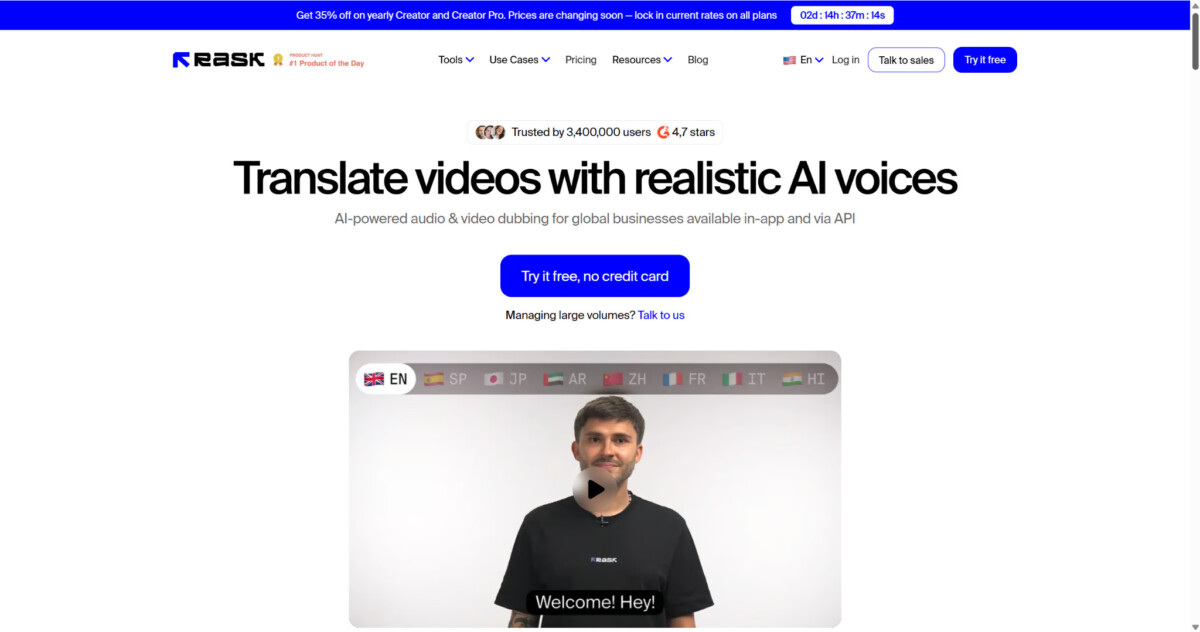
Top AI Video Translation Tool in 2026 – Rask AI
Key Features
- Translate and dub videos in 130+ languages and specific regional dialects.
- Multi-speaker voice detection, assigning unique voices to different people within the same video accurately.
- Voice cloning and emotion-aware speech synthesis.
- Automatic subtitle generation and export.
- Enterprise-ready API and automation workflows.
Best For
High-volume content teams, media publishers, and enterprises that need repeatable, scalable localization workflows with minimal manual intervention.
User Reviews
In our testing, Rask performed particularly well on long-form and multi-speaker videos, with reliable subtitle timing and consistent voice output.
“Winning by far against other dubbing AIs by offering the option to edit speech. The translation of a word doesn’t always come out as we want, this happens on other platforms too, and with RASK.AI you have the possibility to edit the words and correct them if any word has come out wrong.” — Rayssa A.
4. HeyGen Video Translator
HeyGen almost set the standard for lip-syncing technology, and in 2026. It blends AI translation with generative video creation, for visual realism. In addition to translating videos, it allows users to replace presenters with AI avatars, generate multilingual presenters, and localize scripts visually as well as verbally.
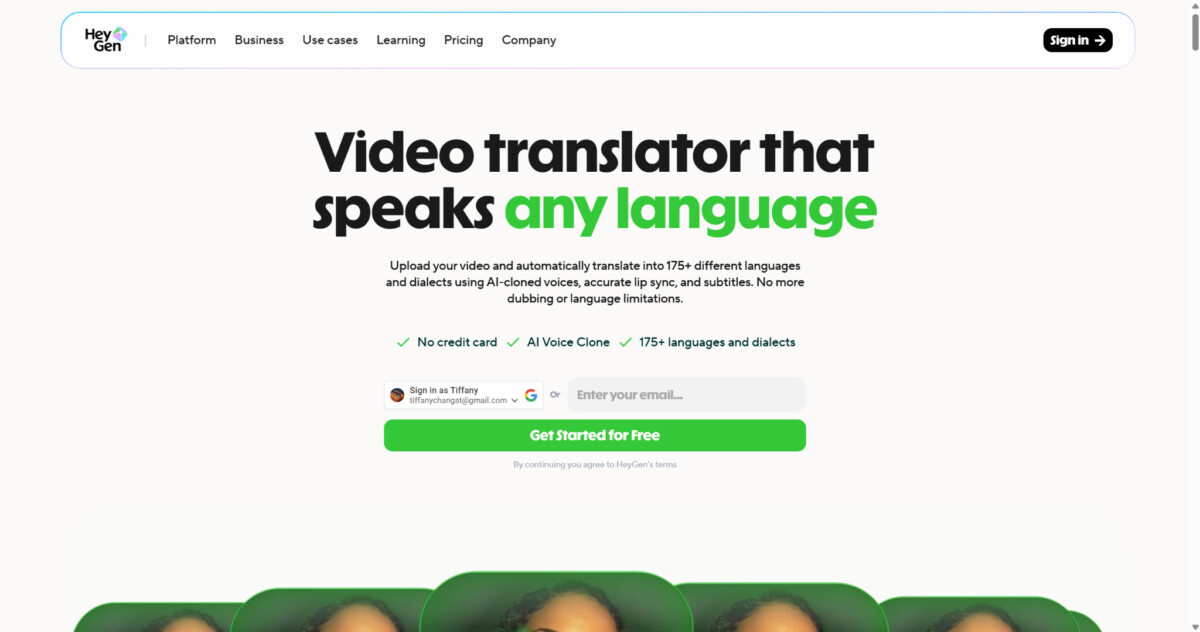
Top AI Video Translation Tool in 2026 – HeyGen Video Translator
Key Features
- Lip-sync with 300+ AI voices, and match speech with expression, making it look as though the speaker was originally filmed in the target language.
- AI-powered translation and dubbing across 175+ languages.
- AI avatars for multilingual presentation.
- Script-based editing and regeneration.
Best For
Talking head video translation that is not just for audio, but on-screen presenters, especially for training modules, product demos, and explainer content.
User Reviews
During testing, HeyGen performed best for marketing, training, and explainer-style videos where visual presentation is just as important as spoken translation.
“The video translation feature preserves accurate lip syncing in various languages, making it ideal for connecting with international audiences.” — Evgenii B.
“While HeyGen is powerful, there are also limits to emotional nuance and spontaneity compared to being on camera yourself.” — Shawn T.
5. VEED Video Translator
VEED is a browser-based video editor with built-in AI translation and subtitle tools. While it doesn’t offer the deepest dubbing or voice cloning capabilities, it excels at quick, simple localization paired with easy video editing.
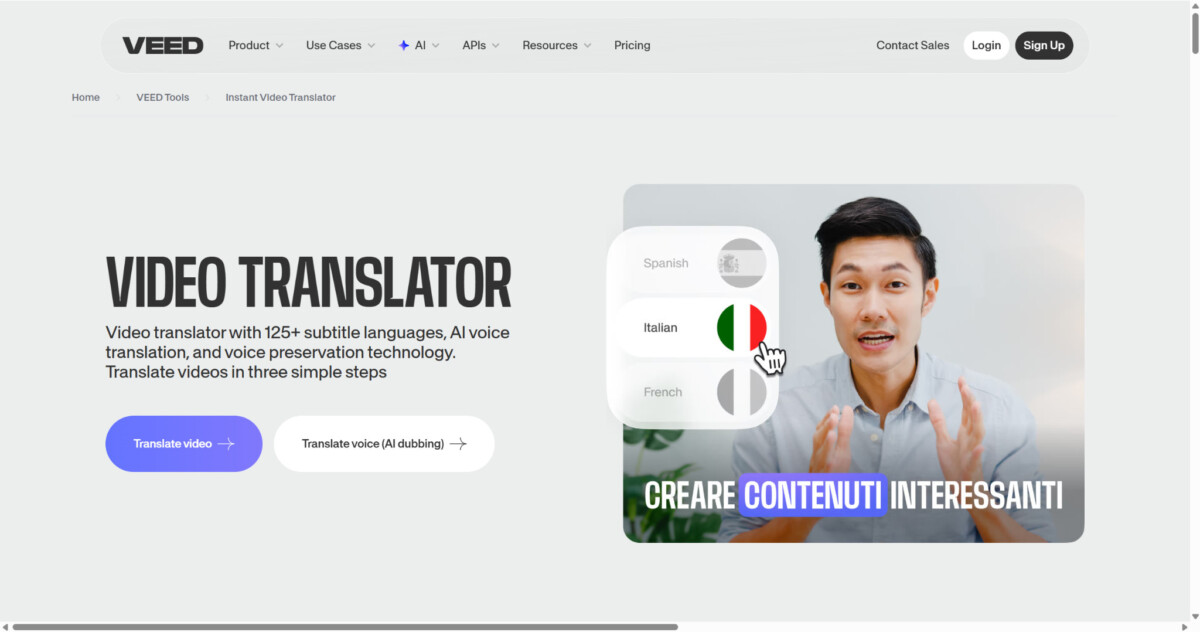
Top AI Video Translation Tool in 2026 – VEED Video Translator
Key Features
- Automatic subtitle transcription and translation for 125+ languages.
- Voiceover generation integrated into the editor.
- Timeline-based editing and caption timing control. You can add brand overlays, remove video backgrounds, and more.
- Export in multiple formats for social and web platforms with multiple aspect ratios supported.
Best For
Social media creators, marketers, and small teams who want fast translation + editing in one place without a steep learning curve.
User Reviews
In our tests, VEED delivered fast subtitle translations and was ideal for social media workflows where speed matters more than professional localization.
“VEED is a very intuitive tool for online video editing. I especially like how easy it is to start using it without a long learning curve. Features like automatic subtitles, quick editing for social media, and the ability to work directly from the browser save a lot of time.“ — Luis C.
“The only thing I dislike is that rendering can be a bit slow at times, especially with longer videos. It’s not frequent, but when I’m in a hurry, it can be frustrating.” — Eliza W.
6. Synthesia Video Translator
Synthesia is designed as an AI video generation platform and widely recognized for delivering some of the most natural AI video outputs in the industry. It combines translation, dubbing, voice cloning, and professional-grade lip-sync with enterprise-level reliability and collaboration features.
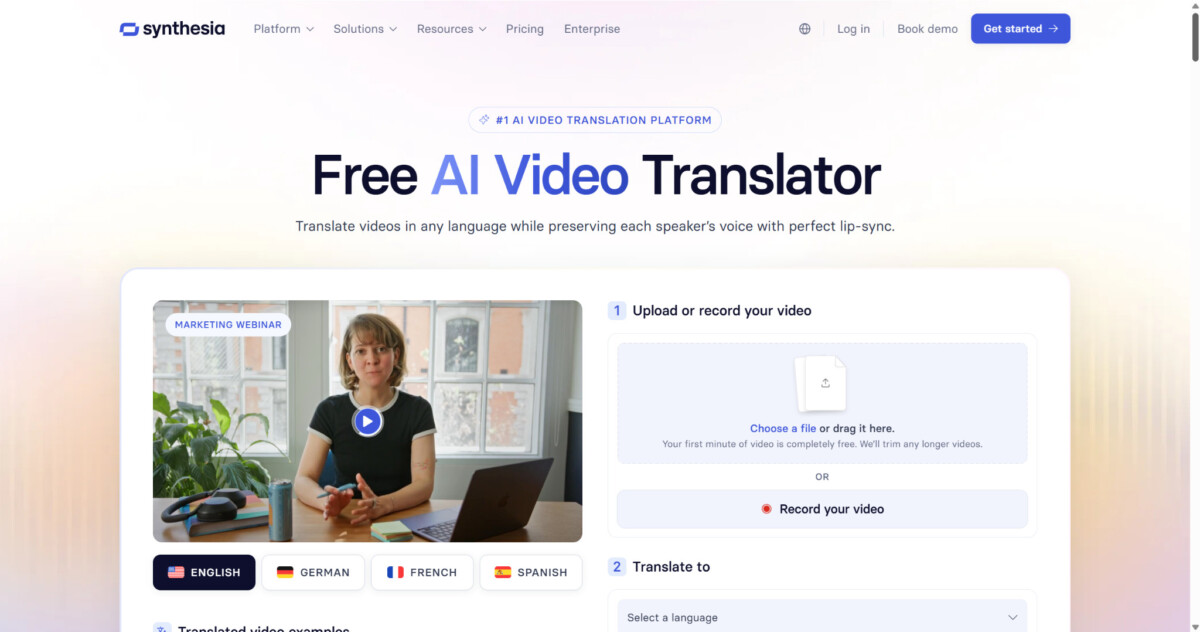
Top AI Video Translation Tool in 2026 – Synthesia Video Translator
Key Features
- Translation and dubbing your videos in 140+ languages and 240+ avatars.
- Industry-leading lip-sync accuracy for natural delivery.
- High-quality voice cloning and expressive AI voices, especially preserving speaker identity.
- Team collaboration and enterprise security. You can invite your team to create and translate videos.
Best For
Enterprises, training departments, and professional content teams who require maximum polish, realism, and consistency across multilingual video assets.
User Reviews
In testing, Synthesia consistently produced the most polished results — especially for corporate training, product onboarding, and executive communications.
“Being able to create videos with their avatars has saved me countless hours that I would have otherwise spent recording behind the microphone. And, perhaps most importantly, I can easily translate my videos into other languages, creating a more accessible experience for my clients.” — Jilly D.
“User-Friendly platform with great features, but limited access for smaller teams.” — Keralynn L.
Comparison Table of Top AI Video Translation Tools
| Tools | Language | Lip-Sync | Voice Cloning | Editing | Best For |
| VMEG AI | 170+ | Excellent | Yes | Yes | Global localization with nuance |
| Dubly.AI | 38+ | Very Good | Yes | Yes | Quality-driven brands with GDPR compliance needs |
| Rask AI | 130+ | Very Good | Yes | Limited | Scalable enterprise workflows |
| HeyGen | 175+ | Very Good | Yes | Yes | Avatar-based video localization |
| VEED | 125+ | Basic | Limited | Full | Fast content |
| Synthesia | 140+ | Excellent | Yes | Yes | High-polish corporate and training videos |
Conclusion
AI video translation in 2026 is about how well it preserves meaning, emotion, and viewer trust. The five tools reviewed here were tested based on our key criteria — accuracy, voice realism, workflow efficiency, and output quality. Now, use one of the AI video translation tools to let your videos speak targeted languages.
Frequently Asked Questions
What is AI video translation, and why is it important in 2026?
AI video translation turns your video’s speech into another language, often with dubbing, subtitles, and lip-sync. It matters because global audiences expect content in their native language, not just English captions. When the message feels local, viewers trust it more and are more likely to watch and buy.
What is the difference between video translation and video localization?
Translation changes the words from one language to another. Localization also adapts tone, phrasing, and cultural details so the message feels natural in the target region. Good localization avoids awkward wording that can hurt trust in marketing, training, and education videos.
How do AI dubbing and AI voice cloning work, and are they the same thing?
AI dubbing creates a new voice track in a new language, using AI voices or a cloned voice. Voice cloning copies a specific speaker’s vocal style so the dubbed audio sounds like the original person. They work together, but dubbing is the output and cloning is one method to get a matching voice.
How accurate are AI video translators with context, tone, and emotion?
Accuracy is not only about correct words, it is also about meaning and intent. Strong tools do better with everyday speech, clear audio, and consistent pacing, but complex jokes, slang, and brand-specific terms can still need edits. The best workflows include a review step and quick line-by-line fixes inside the editor.
How do I judge lip-sync quality, and when does it matter most?
Lip-sync quality is how well mouth movement matches the translated audio. It matters most in talking-head videos, founder messages, product demos, and training where a face is on screen the whole time. If lip-sync is weak, use subtitles or cutaways to reduce the viewer’s focus on the mouth.
Which AI video translation tool is best for my use case: VMEG AI, Rask AI, HeyGen, VEED, or Synthesia?
Choose based on your main job: VMEG AI for broad language coverage and full localization features, Rask AI for high-volume workflows, HeyGen for presenter-focused translation and avatars, VEED for quick edits plus captions, and Synthesia for polished training and business videos. If you have multi-speaker content, prioritize tools with speaker detection and easy voice assignment. Always test one real clip before you commit to a plan.
What export formats should a good video translator support for YouTube, TikTok, and courses?
Look for MP4 video exports plus subtitle files like SRT and VTT so you can upload captions separately when needed. If you run courses or paid platforms, clean exports without forced watermarks protect your brand and keep content professional. Also check if the tool supports different aspect ratios for social platforms.
What is a common myth about AI video translation that hurts results?
A common myth is that you can hit translate once and get perfect results with no review. Even strong tools can miss names, product terms, or regional phrasing that changes meaning. A quick human check and a short glossary for your brand words often improves quality more than switching tools.
What is the fastest, most practical way to start translating videos this week?
Start with a one-minute clip that has clear speech and a single speaker, then translate it into one target language your audience already requests. Review the subtitles first, fix key terms, then regenerate the audio and check lip-sync on the face. Once it looks right, scale the same workflow to longer videos or batches.
I read an AI-generated overview of these tools; what should I verify before trusting it?
Verify language counts, voice cloning limits, lip-sync quality, and export rules on the tool’s own product pages, because these details change often. Run a side-by-side test using the same clip, then compare timing, pronunciation of names, and how easy it is to edit one bad line. Real testing reveals workflow pain points that summaries rarely mention.
