





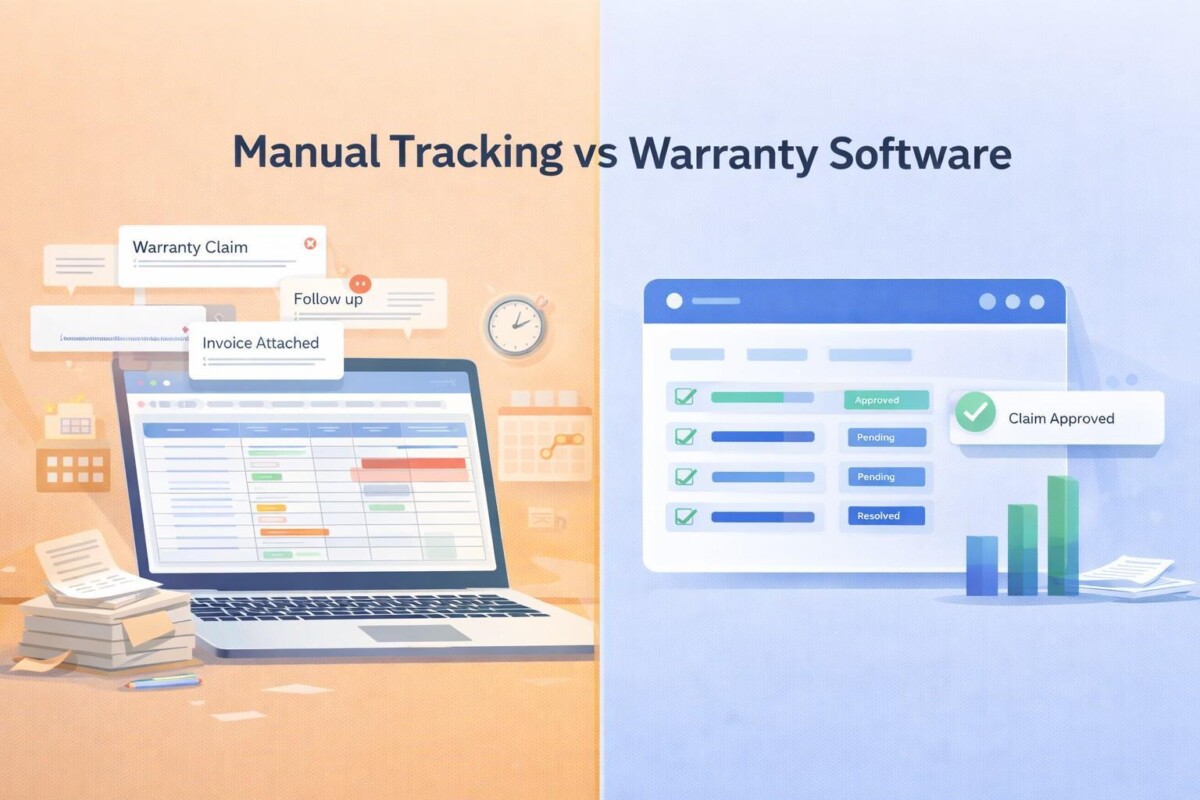
Key Takeaways
- Scale your business faster by replacing slow manual spreadsheets with automated warranty tracking that prevents costly errors and lost claims.
- Implement a centralized digital dashboard to manage the entire warranty lifecycle from product registration to final claim resolution in one place.
- Build stronger customer loyalty by providing real-time claim updates and faster approvals that remove the stress of waiting for email replies.
- Discover hidden product defects and quality trends by using built-in analytics that turn simple warranty records into powerful growth insights.
If your business sells products with warranties, you already know that keeping track of warranty claims can quickly become messy.
Paper records, spreadsheets, and emails can work for a while, but as your customer base grows, things start slipping through the cracks. That’s when the real trouble begins – lost claims, frustrated customers, and time wasted digging through files just to verify coverage.
This is where warranty management software (or warranty tracking software) steps in. It simplifies everything from claims tracking to reporting, automating the work that usually eats up hours of your team’s day.
Here, we’ll break down how warranty tracking software compares with manual warranty tracking. You’ll learn what each involves, the pros and cons, and which approach makes the most sense for modern businesses.
What is Warranty Management Software?
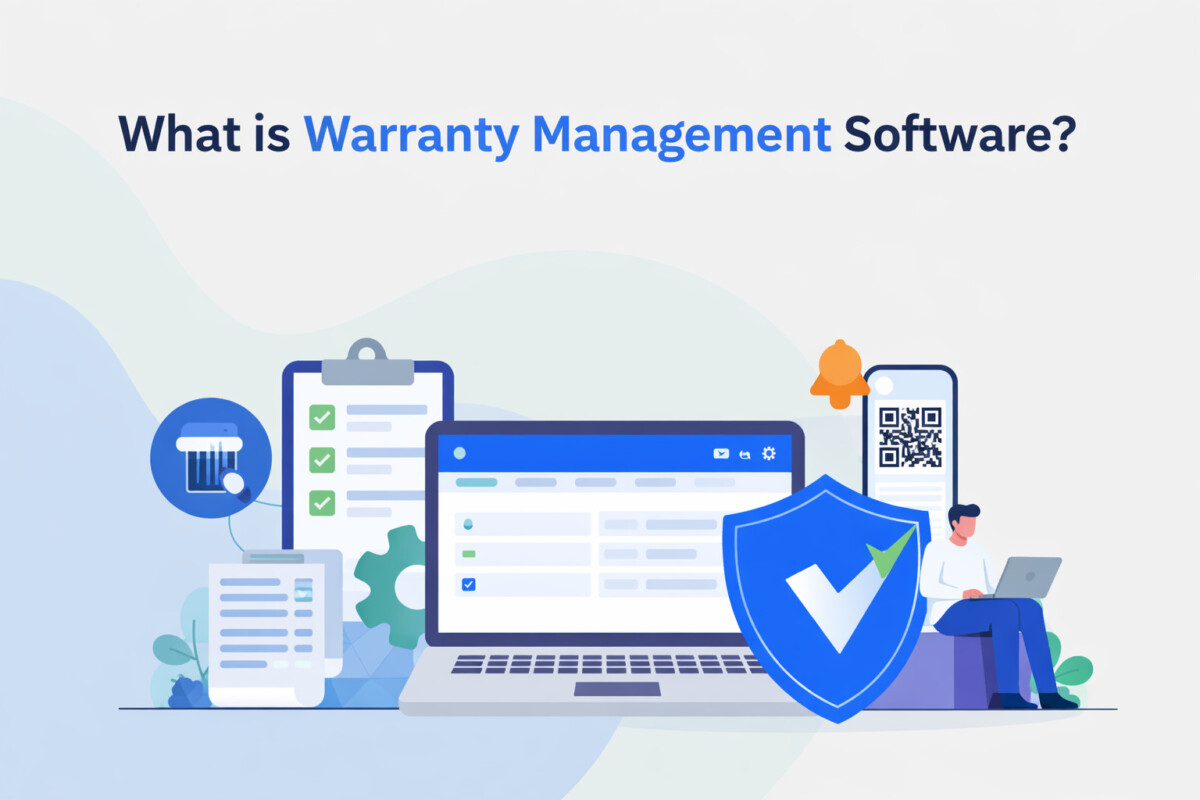
Warranty management software (sometimes called warranty tracking software or warranty tracker software) is a digital solution designed to manage every part of the warranty lifecycle. From product registration to claims submission, approval, and resolution, it brings all the moving parts together in one place.
In simple terms, it’s a system that helps you track who bought what, when they bought it, what warranty applies, and what happens when something goes wrong.
Most modern warranty tracker platforms include features like:
- Automated claims tracking to monitor each step of a customer’s claim.
- Centralized warranty data stored in one dashboard for quick access.
- Analytics and reporting tools to understand claim patterns and product performance.
- Integration with CRMs, ERPs, and customer service tools for smooth workflows.
- Notifications and reminders for upcoming expirations or updates on the status of customer claims.
You can think of it as your all-in-one control center for warranty operations. Instead of chasing spreadsheets, you simply log in and everything’s visible in seconds.
What is Manual Warranty Tracking?
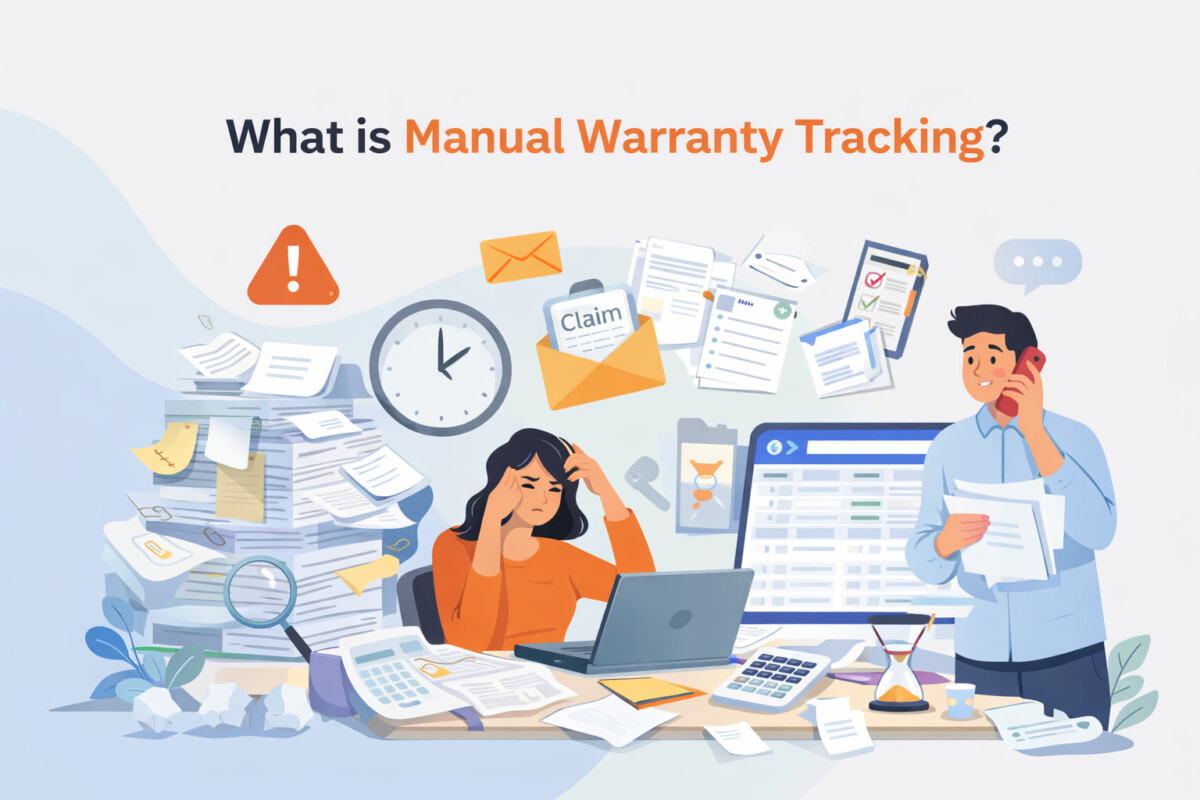
Before warranty management software became mainstream, most companies relied on manual processes. That usually meant using tools like Excel, paper files, or even physical folders to record product warranties and customer details.
Manual tracking often involves:
- Maintaining multiple spreadsheets for different products or regions.
- Emailing back and forth for claim updates.
- Storing paper receipts and invoices for verification.
- Manually calculating warranty coverage or expiration dates.
While this approach may feel familiar, it’s also full of potential pitfalls – duplication of data, inconsistent formats, errors, and no real-time visibility.
For small businesses with limited customers, it can work temporarily. But as soon as you start handling a few hundred (or thousand) claims, the cracks begin to show.
Warranty Tracking Software vs Manual Claims Tracking

Both methods aim to manage warranties and handle claims. But how they get the job done is very different.
Side-by-Side Comparison
| Feature | Warranty Tracking Software | Manual Claims Tracking |
| Data handling | Centralized system with auto updates | Spreadsheets and manual edits |
| Claims tracking | Automated workflow and reminders | Email chains and follow-ups |
| Accuracy | System checks reduce human error | High chance of mistakes |
| Reporting | Real-time dashboards | Manual reports, often outdated |
| Speed | Faster approvals and updates | Slow and dependent on staff availability |
| Scalability | Easily handles growing volumes | Breaks down as volume increases |
So, manual warranty tracking works until it doesn’t. As claims grow, errors multiply and visibility fades.
Warranty tracker software, on the other hand, keeps everything connected. It helps teams move faster, stay accurate, and give customers the quick answers they expect.
Challenges of Manual Warranty Tracking

Manual warranty tracking might sound simpler or cheaper initially, but it comes with several hidden challenges that can affect your business in the long run.
1. Time-Consuming Data Entry
Manually recording every customer warranty, claim, and product detail takes hours. Teams often spend more time on repetitive administrative work than actually resolving customer issues.
2. High Risk of Human Error
One wrong entry in a spreadsheet can lead to lost data or incorrect claim processing. Since warranty terms can vary by product or customer, manual errors can easily cause disputes or missed deadlines.
3. Lack of Real-Time Updates
When tracking is manual, it’s hard to know the real-time status of a claim. Teams rely on constant back-and-forth communication between departments to get updates. This slows everything down and frustrates customers.
4. Difficult to Scale
As your business grows, so does the number of claims. Managing thousands of rows of data manually is risky. Duplicate entries, missed renewals, and delayed responses can pile up quickly. And fraud claims may increase.
5. Poor Customer Experience
Customers today expect transparency and instant updates. If they have to call or email repeatedly to check claim progress, they lose trust. Manual tracking makes it difficult to offer the seamless experience customers expect.
6. Limited Insights and Analytics
Manual records don’t easily show patterns or trends. You can’t easily identify recurring defects, claim frequency by product, or high-cost areas without spending hours sorting data. This makes proactive improvements almost impossible.
Benefits of Using Warranty Tracker Software

Switching to a warranty tracker software is transforming how your business handles product warranties and customer relationships.
Here’s what makes it so valuable:
1. Centralized Warranty Data
A customer warranty tracking software brings all warranty and claim information into one place. You can see the product history, customer interactions, and claim progress in seconds. No need to juggle multiple files or versions.
2. Automation and Efficiency
From claim registration to approval, many steps can be automated. This not only saves time but also ensures every claim follows a consistent process. Notifications, reminders, and claim routing happen automatically.
3. Improved Accuracy
With built-in validation and data syncing, the chances of entering incorrect data drop significantly. The system ensures that warranty dates, terms, and conditions are applied correctly every time.
4. Real-Time Claim Tracking
Customers and teams can track claim progress in real time. Everyone involved knows the exact stage – whether it’s pending approval, under inspection, or resolved. This reduces confusion and improves transparency.
5. Better Customer Experience
Customers appreciate fast responses and transparency. Warranty tracking software allows them to submit claims online, upload proof, and track updates without endless communication. That builds trust and loyalty.
6. Easy Reporting and Insights
With a warranty tracker, you get dashboards and reports that show patterns like – which products have the most claims or which customers need follow-ups. This data helps your business improve product quality and service strategy.
7. Cost Savings
Automating warranty and claims tracking cuts down on labor costs, reduces paperwork, and prevents revenue loss due to missed claims or fraudulent submissions. In the long run, it’s far more cost-effective than manual processes.
8. Scalable and Flexible
As your business grows, the software scales with you. You can manage thousands of customers and claims without adding complexity. Plus, it easily connects with ecommerce and CRM tools like Shopify, HubSpot, or Salesforce, so order details, customer data, and claim records stay perfectly in sync across systems.
How to Choose the Right Customer Warranty Tracking Software

Not all warranty tracking solutions are the same. Picking the right one can make a big difference in how smoothly your operations run. Here are some key things to consider before making your choice.
Ease of use: Pick software that’s simple to navigate and doesn’t require heavy training.
Automation: Make sure it automates claim approvals, reminders, and updates to save time.
Customization: It should let you adjust forms, steps, and dashboards to match how your business works.
Integration: Choose one that connects with your CRM, ERP, or support tools so everything stays in sync.
Reporting: Built-in analytics help you track claim volume, resolution time, and product trends easily.
Security: Ensure it follows data protection standards like GDPR.
Scalability: Go for a system that grows with your business and offers solid customer support.
Common Myths About Warranty Management Software

“It’s too expensive.”
The cost is minor compared to the time and errors it helps you avoid.
“It’s hard to set up.”
Modern systems are cloud-based and include easy onboarding and support.
“Only big companies need it.”
Even small businesses benefit from automation once claims start increasing.
“Spreadsheets work fine.”
They might for a while, but they can quickly become messy and time-consuming.
Conclusion
Managing warranties should not feel complicated or time-consuming. Manual tracking might work at the start, but it becomes harder to manage as claims, customers, and products increase.
Warranty tracking software brings structure, visibility, and speed to the entire process. It helps businesses track claims better, reduce errors, and deliver a smoother experience to customers.
In the long run, the right system is about saving time, improving trust, and building better relationships with your customers.
Frequently Asked Questions
What is warranty tracking software and how does it work?
Warranty tracking software is a system that helps businesses record product warranties, track claims, and manage approvals in one place. It works by storing warranty details digitally and automating the claims tracking process from start to finish.
How is warranty claims tracking different from manual tracking?
Warranty claims tracking with software is automated and centralized. Manual tracking relies on spreadsheets and emails, which increases the risk of errors and delays.
Is warranty tracker software suitable for small businesses?
Yes, warranty tracker software works well for small businesses. It helps them stay organized early and avoid issues as claim volume grows.
What problems does customer warranty tracking software solve?
Customer warranty tracking software reduces lost claims, improves response time, and gives customers visibility into their claim status. It also helps teams work faster with less manual effort.
Can warranty tracking software reduce claim processing time?
Yes, automation speeds up verification, approvals, and communication. This results in faster claim resolution and fewer follow-ups from customers.
How does warranty management software improve customer experience?
It provides clear communication, real-time updates, and faster resolutions. Customers feel more confident when they can track their warranty claims easily.
What features should I look for in a warranty tracker?
Look for claims tracking, automated notifications, reporting, integrations, and easy customization. These features help manage warranties more efficiently.
When should a business switch from manual tracking to warranty software?
A business should consider switching when manual tracking starts taking too much time or causing errors. Software becomes essential as warranty claims and customer data increase.
