





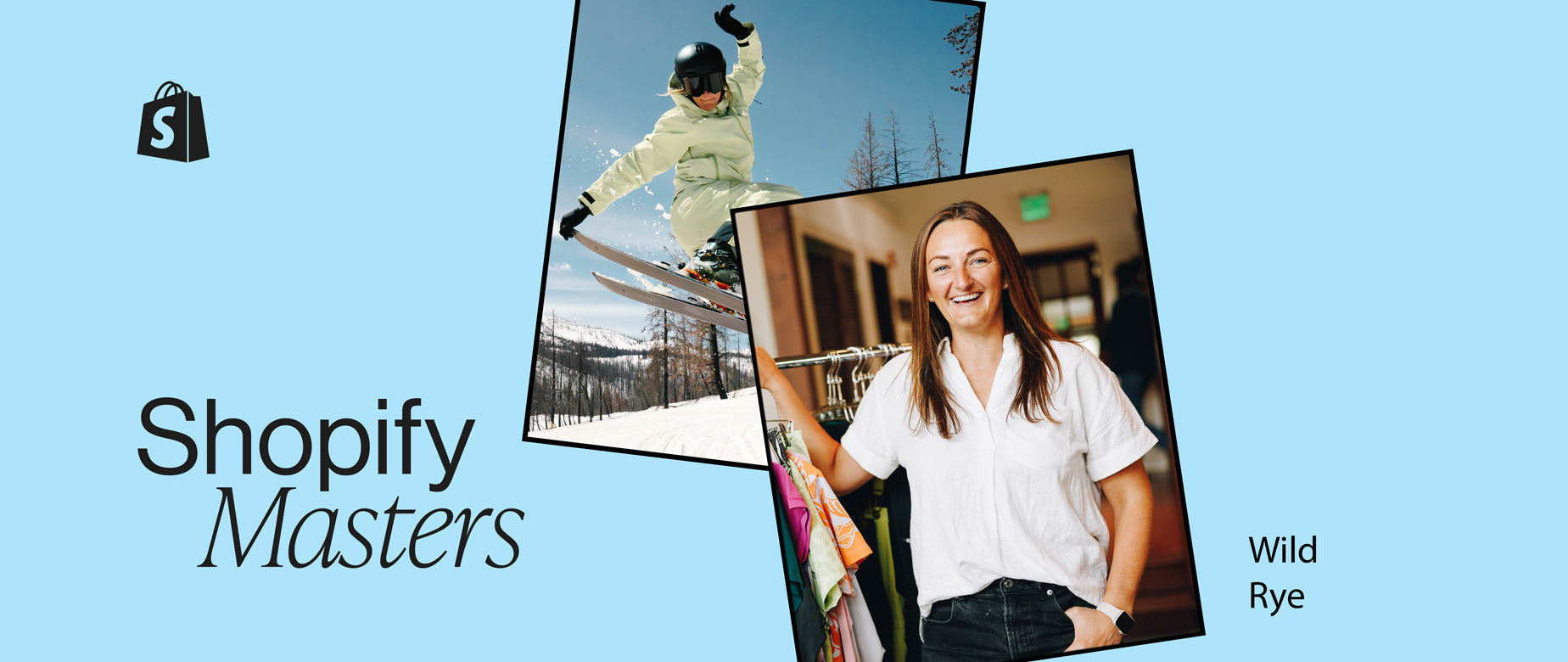
Cassie Abel founded Wild Rye in 2016 to solve a long-standing gap in the outdoor industry. Most technical gear was designed with men in mind, while women’s versions were often afterthoughts: ill-fitting, uninspired, and lacking key functional details.
Wild Rye set out to change that. The brand makes stylish, high-performance apparel for women who ski, bike, and move through mountains. Along the way, it’s grown into a purpose-driven company carried by REI, expanded 30% to 50% year over year, and cultivated a loyal community of customers and investors alike. Here’s how Cassie scaled Wild Rye with intention—from manufacturing partnerships to fundraising—while anchoring every decision in values.


Letting purpose shape every business decision
Before launching Wild Rye, Cassie worked in PR and marketing for outdoor brands, sitting in on countless sales and strategy meetings. Those experiences made a pattern impossible to ignore. “It was really high quality technical product, but it was designed from a men’s-first lens,” Cassie says. Women’s gear was often adapted rather than intentionally designed—an approach that felt especially out of step with the growing number of women participating in outdoor sports.

From the start, Cassie viewed Wild Rye as more than a business opportunity. She committed to designing for women first, building sustainably, and using the brand’s platform to speak out on issues from reproductive rights to public lands. Wild Rye became a certified B Corp, climate neutral, and a member of 1% for the Planet—investments the company made even before reaching profitability.
“We’ve taken strong stances … and those are genuine stances that we believe in,” Cassie says. “But they also have a financial upside because it amplifies who we are and strengthens our relationship with our core customer base.”
That clarity of purpose has become a long-term differentiator. Wild Rye customers aren’t just buying gear; they’re buying into a brand that reflects their values. In moments of uncertainty, those values guide decisions and deepen trust.
Building long-term supplier relationships rooted in trust
Wild Rye’s early supply chain was anything but smooth. The brand launched with a four-piece mountain bike collection made in the US, but two pieces arrived so flawed that Cassie and her cofounder had to hire third-party seamstresses to unsew and resew every garment. “They delivered product about four months late. … We clearly didn’t matter to this particular partner,” she says.
Rather than abandon manufacturing altogether or compromise on quality, Cassie looked for a better fit. Within a year, she found a highly skilled factory in China that not only met Wild Rye’s quality expectations but also shared its long-term vision. The supplier even traveled to Idaho to meet Cassie in person and discuss how they could help Wild Rye grow.
That same factory has worked with Wild Rye since 2018. Despite trade policy challenges, Cassie has stuck with them, emphasizing that their proactive communication, quality control, and willingness to work with small minimum order quantities (MOQs) has been vital to the brand’s growth.
Manufacturing is often framed as transactional, but Cassie takes a different approach: “Treat it like a long-term relationship,” she says. For founders, that mindset extends beyond factories. Whether it’s your fulfillment partner, design contractor, or developer, seek collaborators who are genuinely invested in your success. The upfront effort to find the right partner saves money, mistakes, and frustration down the line.

Navigating the fundraising journey on your own terms
Cassie bootstrapped Wild Rye for its first five years. Early on, she ran a PR agency alongside the brand, slowly building Wild Rye without outside capital. “We didn’t raise a dime from outside investors until 2021. … I didn’t feel like I could take outside capital until I was all in.”
That inflection point came during a period of personal and global change. After giving birth in late 2019 and pausing her agency work during the chaos of COVID, Cassie focused entirely on Wild Rye. That same year, the brand started to take off.
When she did raise capital, she started with friends, family, and industry insiders. “I’d gotten words of caution about going the VC route,” she says, especially as an apparel brand focused on sustainable, steady growth.
Instead of chasing hypergrowth, Cassie prioritized patient capital. In 2025, when new tariffs dramatically increased costs, she turned to Wild Rye’s community and launched an equity crowdfunding campaign on WeFunder. The brand raised nearly $1 million—more than half through the platform and the rest through side agreements. “It was an opportunity to be very transparent … and to give our customers a share on the upside,” she says.
Her approach underscores that not all money is the same. Timing and values alignment matter, especially for businesses built for longevity.

Staying close to customers while scaling up
With more than 100 specialty retailers and shelf space at REI and Title IX, Wild Rye has grown substantially—but Cassie remains focused on staying close to customers. “One of our core values is that we give a damn,” she says. That shows up in the brand’s ambassador program, investment in community events, and resale program that allows customers to buy and sell pre-owned gear directly on Wild Rye’s site.
Cassie also launched Women-Led Wednesday, an initiative now supported by more than 900 brands. It started as a scrappy alternative to Black Friday and has evolved into a powerful network of female founders supporting one another.
Even as Wild Rye approaches $5 million in revenue, Cassie isn’t shifting to growth at all costs. “We’re just trying to be very realistic with what we can do with the resources that we have. Every year we need to be better. Our processes need to be more defined.”
For other entrepreneurs, the takeaway is simple: scale doesn’t have to mean losing your foundation. Whether it’s a loyalty program, community event, or transparency campaign, staying human at scale is often what fuels the next chapter of growth.
Wild Rye’s story is a reminder that big wins often come from staying small in the ways that matter. Cassie built a multimillion-dollar business by prioritizing purpose, forging lasting partnerships, and fundraising on her own terms. For more on Cassie’s journey, be sure to check out her full interview on Shopify Masters.
