






Quick Decision Framework
- Who This Is For: Entrepreneurs, founders, and remote operators who want a reliable personal and shared listening setup for work, travel, and team environments and have not yet landed on a device that consistently serves all three.
- Skip If: You already have an audio setup you are happy with or you are looking for a deep technical audio engineering review. This is a practical buyer’s guide, not a spec sheet breakdown.
- Key Benefit: Walk away with a clear, confident answer on which audio device fits your specific use case so you stop second-guessing and start buying the right tool for the right job.
- What You’ll Need: A budget of $50 to $300 depending on your use case, a smartphone or laptop to pair with, and about 10 minutes to read and decide.
- Time to Complete: 8 minute read. Buying decision achievable within the same session.
The wrong audio device does not just sound bad. It costs you focus, productivity, and presence in the moments that matter most.
What You’ll Learn
- Why the choice between earbuds and wireless speakers comes down to context, not preference, and how to identify your primary listening environment before spending a dollar.
- How to evaluate the five features that actually determine daily satisfaction with any audio device, from sound balance to charging case design.
- What wireless speaker technology does differently than personal earbuds and when shared audio is the right call for your space.
- How to match your audio device to your work style, whether you are deep in focus work, on calls all day, or running a team environment.
- Where to buy with confidence and what to verify before completing any audio purchase.
Most people spend more time reading reviews than they do thinking about the one question that actually determines whether a device will work for them: what am I using this for, and where? A founder who spends four hours a day on investor calls has a completely different audio requirement than one who needs background music during deep work sessions or a speaker that fills a shared team space during a sprint week. The device that gets five stars in one scenario gets returned in another.
I have been in enough home offices, co-working spaces, and travel situations to know that the earbuds-versus-wireless-speaker decision is almost never about which category is better. It is about which one fits the specific listening reality you are living. Get that right first and the rest of the decision gets a lot easier.
This guide is built for operators and founders who want to make one good decision and move on. Whether you are doing $10K months from a spare bedroom or running a distributed team across three time zones, the framework here will tell you which direction to go.
Why the Earbuds vs. Wireless Speaker Decision Is Really About Context
Context is the variable that most buyers skip when they shop audio. They go straight to brand comparisons, spec sheets, and review scores without first asking the question that would make all of that research useful: what does my actual listening day look like? Getting context right before you spend a dollar is what separates a device that becomes part of your daily routine from one that sits in a drawer.
Personal Listening vs. Shared Audio: The Core Distinction
Earbuds are built for one listener in one environment. They create a private audio bubble that travels with you, blocks out the world when you need it to, and delivers sound directly into your ears regardless of what is happening around you. That design is a feature when you are on a call in a noisy coffee shop or trying to stay focused in a shared workspace. It becomes a limitation the moment you want audio to serve a room rather than a person.
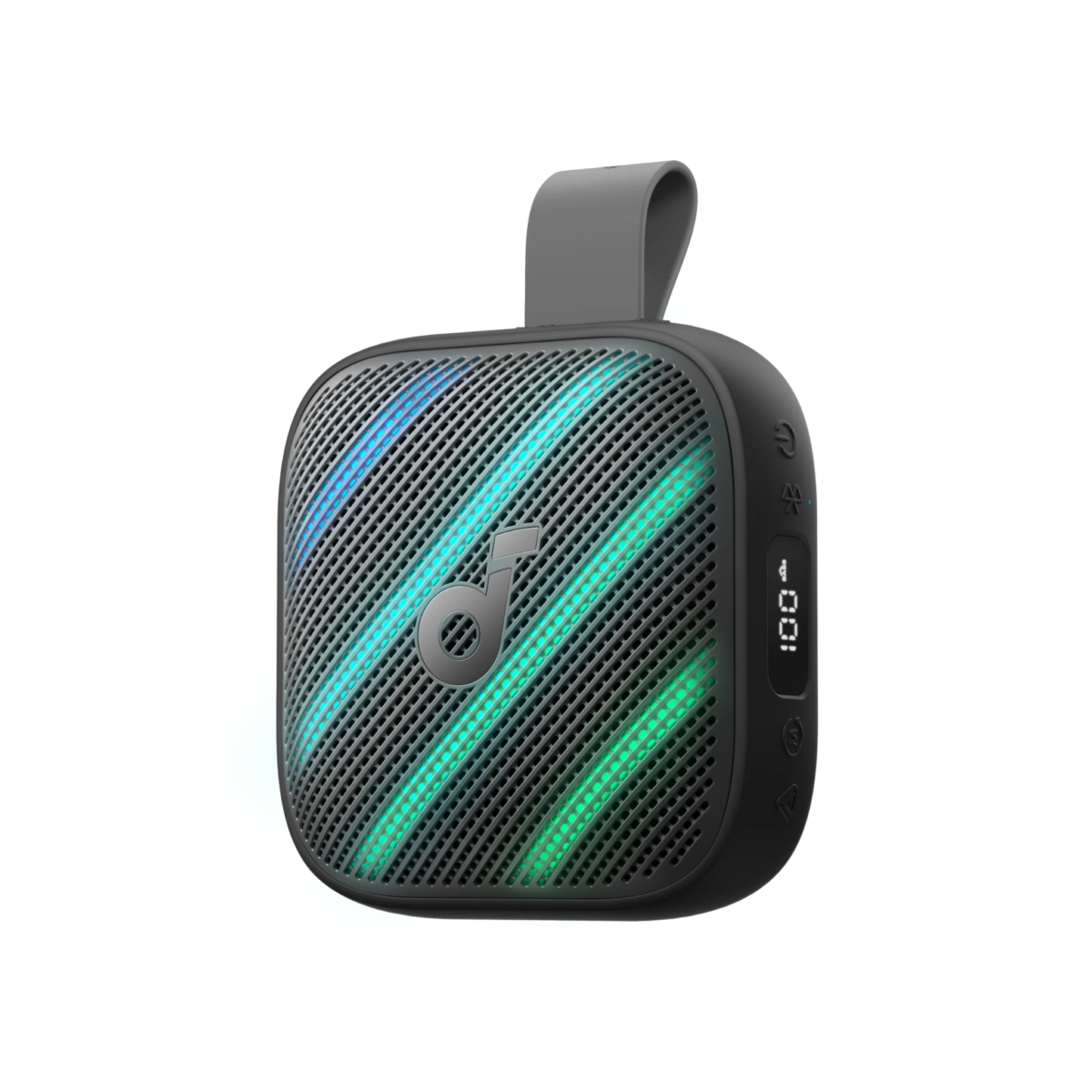
Wireless speakers are built to fill a space and serve everyone in it. The audio disperses across the room, creating an ambient listening experience that earbuds cannot replicate. When you are running a team standup from a shared office, hosting a working session with a collaborator, or just want music in the background while you move around your home, a wireless speaker handles the job in a way that earbuds were never designed to. The core distinction is simple: earbuds are personal, speakers are shared. Knowing which scenario describes most of your listening day narrows the decision immediately.
The Most Common Mistake Buyers Make
The most common mistake I see founders and operators make when buying audio is purchasing based on reviews written for a completely different use case than their own. A five-star earbud for daily commuters might be the wrong fit for someone who needs all-day call clarity in a home office. A wireless speaker praised for outdoor durability might underperform in a small indoor workspace where sound reflection and room acoustics matter more than weather resistance.
Review scores are aggregates. They reflect the average of a product’s performance across the average of its buyers’ use cases. If your use case is not average, a high review score can actively mislead you. The right question before reading any review is not “is this a good product?” It is “is this a good product for my specific situation?” That shift in framing will save you at least one return and probably more.
The Five Features That Actually Determine Whether You Will Use Your Earbuds Every Day
Sound quality gets most of the attention in earbud reviews and most of the marketing budget from manufacturers. It is rarely the feature that determines whether you are ready to shop earbuds with confidence or still narrowing down your options, based on independent testing of over 295 pairs of wireless earbuds, the five features that consistently separate daily-use earbuds from occasional-use ones are the same every time.

Sound Performance and Fit Working Together
Balanced audio matters. Earbuds that reproduce voices clearly on calls, handle music without distorting at higher volumes, and do not fatigue your ears after two hours of listening are worth paying for. But earbuds that fall out at the gym, create pressure discomfort during a long afternoon, or require constant readjustment will not stay in rotation regardless of how they sound. Fit and sound are a package decision, not two separate ones.
The practical implication is that you should evaluate earbud fit before you evaluate sound. If you know you have smaller ears, or that most in-ear designs are uncomfortable after an hour, that narrows your field before you ever listen to a single track. Manufacturers like Sony, Bose, and Apple include multiple ear tip sizes precisely because fit is individual. A pair of earbuds that fits perfectly and sounds good will outperform a pair that sounds excellent but fits poorly, every single day.
Battery Life and the Role of the Charging Case
The headline battery number on most earbud marketing materials is the continuous playback time for the earbuds themselves, typically six to ten hours depending on whether active noise cancellation is running. That number matters, but it is not the number that determines whether you are ever caught without power on a travel day. The number that matters is the total system battery, which includes the charging case.
A case that adds three to four full charges changes how you plan your week. It means your earbuds are effectively always charged as long as you put them back in the case between uses. For a founder doing a full day of calls followed by a flight, a 30-hour total system battery is the difference between packing a charging cable and not thinking about it at all. Look past the headline earbud battery number and evaluate the full system. The case is not an accessory. It is half the product.
Connectivity Stability and What to Test Before You Commit
Wireless range and connection reliability vary more than spec sheets reveal. Two earbuds can both advertise Bluetooth 5.3 and behave completely differently in real-world conditions. Walls, competing wireless signals, and movement all affect connection quality in ways that laboratory measurements do not capture. A pair of earbuds that drops connection when you walk from your desk to your kitchen is a daily frustration that no amount of good sound quality will compensate for.
If you are buying in person, test connection stability by moving around the store with the earbuds connected to your phone. If you are buying online, the return policy becomes your test period. The specific things to evaluate are: does the connection drop when the phone is in your pocket and you move away from it? Does audio cut out when you pass through a doorway or walk near a microwave or router? Does the connection re-establish quickly if it does drop? These tests tell you more about daily usability than any benchmark comparison.
What Makes a Wireless Speaker the Right Choice for Your Space
A wireless speaker earns its place when the listening environment is shared, the audio needs to carry across a room, or the use case shifts from personal focus to social presence. The decision is not about whether a wireless speaker sounds better than earbuds in some absolute sense. It is about whether your situation calls for personal audio or ambient audio. When the answer is ambient, a wireless speaker is not just a preference. It is the right tool for the job.
Room-Filling Sound and Why It Matters Beyond Volume
Wireless speakers do not just play louder than earbuds. They disperse sound differently. A good wireless speaker creates an ambient audio experience where sound feels like it is coming from the space itself rather than from a single point source. For home entertainment, team environments, or any situation where multiple people are sharing a room, that distinction changes the experience fundamentally.
The practical difference is most apparent on calls. When you are in a shared workspace and someone needs to join a call that the whole team can hear, a wireless speaker connected to a laptop or phone lets everyone participate without crowding around a single device. When you are working from a home studio and want music that fills the room while you move around, a wireless speaker delivers that in a way that earbuds physically cannot. The room-filling characteristic is not a luxury feature. For shared use cases, it is the core function.
Portability Without Compromise
The best wireless speakers in the mid-range category now match outdoor durability with indoor sound quality, which means one device can handle a home office session in the morning and a backyard gathering in the afternoon. IP67-rated speakers from brands like JBL, Bose, and Ultimate Ears are genuinely waterproof and drop-resistant while still delivering the kind of sound quality that holds up in indoor listening environments. That dual capability matters for founders and operators whose days do not always stay in one place.
Battery life on wireless speakers has also improved significantly. Mid-range models in the $100 to $200 range now commonly deliver 12 to 20 hours of playback on a single charge, which means a full work day and then some. For anyone who moves between environments, the combination of durability, battery life, and sound quality in a single portable device removes the need to own separate speakers for different contexts. One good wireless speaker can handle the full range of shared listening scenarios most founders actually encounter.
How to Match Your Audio Device to the Way You Actually Work
Your work style and primary environment should drive the final decision more than any single feature comparison between devices. The three scenarios below cover the majority of use cases that founders and operators actually face. Identify which one describes most of your day and the right device category becomes clear. If you have already invested in designing a workspace that reflects your brand and your focus, your audio setup is the next layer of that same intentionality.
The Deep Focus and Long Session Use Case
If your workday involves three or more hours of consecutive heads-down focus, earbuds with active noise cancellation and all-day comfort become a productivity tool, not just a listening device. ANC removes the ambient noise that breaks concentration without requiring you to work in silence, which most people find more fatiguing than the noise itself. The difference between a distracted afternoon and a focused one can come down to whether your audio setup is doing its job.
For this use case, prioritize ANC performance, comfort over extended wear, and total system battery life. You do not need the most expensive earbuds on the market. You need a pair that fits well enough to wear for four hours, cancels enough noise to keep you focused, and does not run out of power before your workday ends. In the $100 to $200 range, options from Sony, Anker Soundcore, and Sennheiser consistently deliver on all three. Whether you are doing $10K months or $1M months, the calculus is the same: if focus work is where your leverage is, protect it with the right tool.
The Calls and Communication Use Case
Microphone quality on earbuds varies significantly, and for founders and operators who spend two or more hours a day on calls, microphone performance should rank above audio playback quality in your evaluation. A pair of earbuds that sounds great for music but transmits your voice with background noise, tinny quality, or inconsistent volume will cost you credibility on every call you take. The person on the other end of an investor call or a customer conversation forms an impression based on how you sound, not just what you say.
The practical test for microphone quality is to record a voice memo in your actual working environment and listen back. Do this before committing to any earbuds for a call-heavy workflow. Beamforming microphone arrays, which are common in the $150 to $250 range, do a significantly better job of isolating your voice from background noise than single-microphone designs. For operators who take calls from coffee shops, co-working spaces, or anywhere with ambient noise, that difference is not subtle.
The Shared Environment and Team Use Case
When audio needs to serve a room, a wireless speaker removes the isolation that individual earbuds create and signals availability rather than distraction. This matters more than most founders acknowledge. In a team environment, whether that is a physical office or a hybrid working session, the choice between personal earbuds and shared audio communicates something about how you are showing up. Earbuds signal focus and unavailability. A wireless speaker signals presence and openness.
Office culture and team presence can be a legitimate factor in the audio decision, particularly for operators who manage small teams in shared spaces. A good wireless speaker in a shared workspace creates a shared listening environment that earbuds cannot replicate, and that shared environment has a real effect on energy, collaboration, and the feeling that people are working together rather than alongside each other. For teams doing sprint weeks, planning sessions, or any kind of collaborative work, the audio environment is part of the work environment.
Where to Shop and What to Verify Before You Buy
The channel matters less than the verification steps you take before completing the purchase. Whether you are buying online or testing in person at an electronics retailer, the same two checks apply to every audio device purchase: compatibility and return policy. Skipping either one is the reason most audio returns happen. The broader principle applies to any technology decision you make for your business, and the discipline of evaluating full cost and fit before committing, rather than after, is what making the right technology decisions for your business at each stage actually looks like in practice.
Online vs. In-Store: What Each Environment Gets Right
Online purchasing lets you compare specifications side by side, filter by battery life and ANC performance, read long-form reviews at scale, and often find better pricing than in-store retail. The limitation is that you cannot evaluate fit, build quality, or the subjective character of how a device sounds in your specific ears. For earbuds in particular, fit is individual enough that no review can tell you whether a specific design will be comfortable for you after four hours of wear.
In-store purchasing solves the fit and feel problem. You can hold the device, evaluate the build quality, test the case mechanism, and in many electronics retailers, listen to a demo unit before committing. The limitation is that demo environments are rarely representative of your actual listening environment. A quiet retail floor does not tell you how ANC performs on a noisy call or how a wireless speaker sounds in a reflective room. The practical approach for earbuds is to buy online with a generous return policy, use the return window as your real-world test period, and only keep the device if it performs in your actual environment.
Compatibility and Return Policy: The Two Checks Most People Skip
Confirming that the device connects cleanly to your primary platform is the first check. iOS and Android handle Bluetooth audio differently, and some earbuds deliver significantly better performance on one platform than the other. Apple AirPods are optimized for iOS and deliver features on iPhone that are unavailable or degraded on Android. Some Android-optimized earbuds support codecs like LDAC and aptX that iOS does not. If you are buying earbuds for an iPhone-primary workflow, verify iOS compatibility explicitly, not just general Bluetooth compatibility.
The return policy is the second check and the one most people skip until they need it. A 30-day return window turns any audio purchase into a risk-free trial. A 14-day or no-return policy turns it into a gamble. This is the same logic that applies when evaluating the full infrastructure cost of any tech decision: the upfront price is only part of the equation. Knowing your exit options before you commit is not overthinking. It is how you protect your time and your budget from a decision that looks right in a review but feels wrong in practice.
Frequently Asked Questions
What is the main difference between earbuds and a wireless speaker?
The main difference is who the audio is for. Earbuds deliver sound directly to one listener, creating a personal audio experience that travels with you and can block out ambient noise. A wireless speaker disperses sound across a room, creating a shared listening environment that serves everyone in the space. Earbuds are the right choice when your use case is personal: focused work, calls, commuting, or any situation where you need audio that is private and portable. A wireless speaker is the right choice when your use case is shared: team environments, home entertainment, or any situation where audio needs to fill a space rather than serve a single listener. The choice is not about which category sounds better. It is about which one matches how you actually use audio day to day.
How do I know which earbuds will actually fit comfortably for all-day wear?
The honest answer is that you cannot know for certain until you have worn them for two to three hours in your actual environment. Ear anatomy is individual enough that no review or spec sheet can predict fit for your specific ears. What you can do is narrow the field before you buy. In-ear designs with multiple ear tip sizes give you more options for finding a seal that works. Earbuds with stability fins or hooks add security for active use. Designs that sit shallower in the ear canal tend to be more comfortable for extended wear than deep-insertion designs. The most reliable approach is to buy from a retailer with a 30-day return policy and treat the first two weeks as your real-world fit test. If they are not comfortable after a full workday by day 14, return them.
What battery life should I look for when I shop earbuds for daily use?
For daily use in a work context, look for a minimum of seven hours of continuous playback from the earbuds themselves, with a charging case that delivers at least two to three additional full charges. That gives you a total system battery of 21 to 28 hours, which covers most work weeks without needing to charge the case more than once. If you use active noise cancellation regularly, expect battery life to drop by 20 to 30 percent from the advertised figure. The headline battery number on most packaging assumes ANC is off. For a founder or operator who runs ANC all day, the real-world number is lower. Look for earbuds that specifically advertise battery life with ANC enabled, not just the maximum figure without it.
When does it make sense to buy a wireless speaker instead of earbuds?
A wireless speaker makes sense when your primary listening scenario involves more than one person, requires audio to carry across a room, or benefits from an ambient audio environment rather than a personal one. If you manage a small team in a shared space, a wireless speaker creates a shared listening environment that earbuds cannot. If you work from a home office and want music that fills the room while you move between your desk, kitchen, and other areas, a wireless speaker handles that in a way earbuds were not designed for. If your listening day includes both personal focus work and shared team sessions, the practical answer is often one of each: earbuds for personal use and a mid-range wireless speaker for shared environments. The $100 to $200 range delivers genuinely good quality in both categories.
What should I check for compatibility before buying a wireless speaker or earbuds?
Check three things before completing any audio purchase. First, confirm the device pairs cleanly with your primary platform. Apple AirPods deliver features on iPhone that are unavailable on Android. Some earbuds support codecs like LDAC or aptX that require Android to function at full quality. If your primary device is iOS, verify iOS compatibility explicitly. Second, check the return policy before you buy, not after. A 30-day return window turns the purchase into a risk-free trial. Anything shorter than 14 days is a risk worth acknowledging. Third, if you are buying a wireless speaker for a specific space, check whether the speaker supports the connection method you actually need, whether that is Bluetooth, Wi-Fi, or both, and whether it pairs with your existing devices without requiring a separate app or account.
