

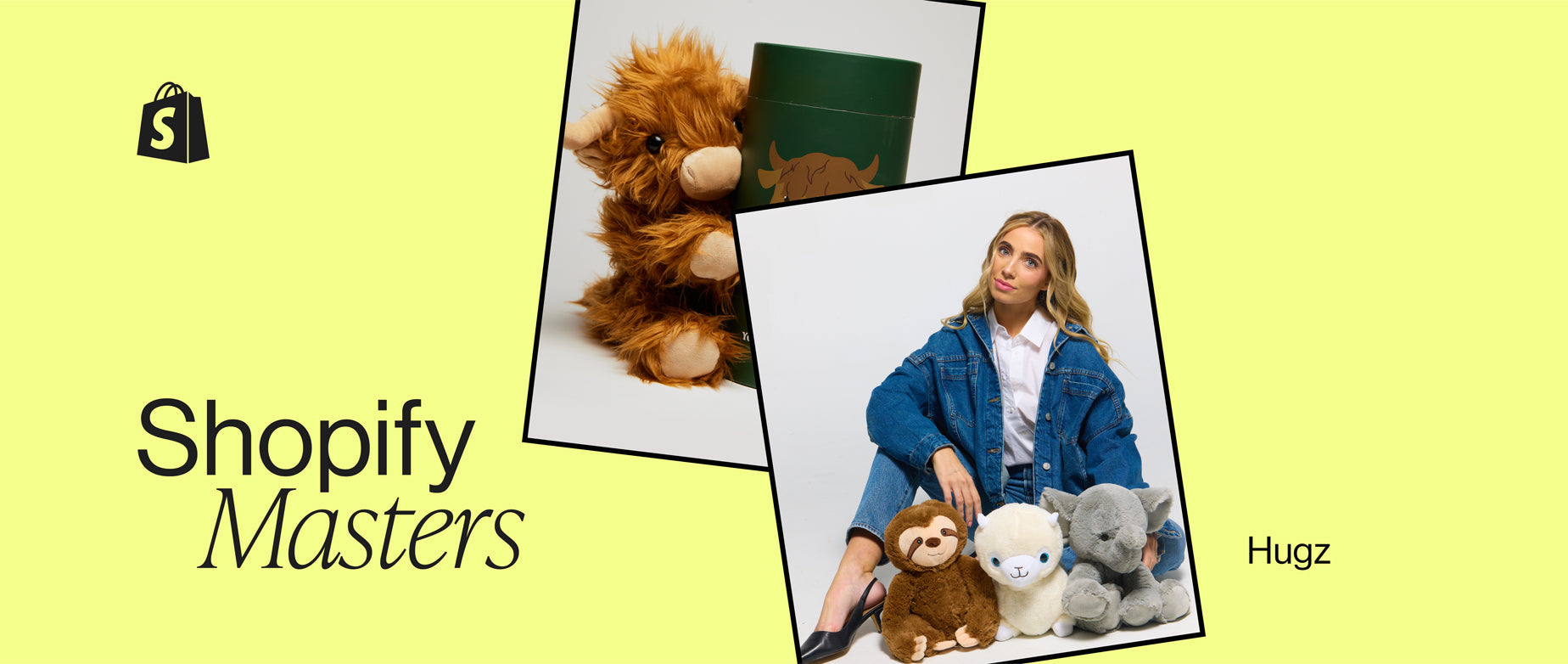
Before Hugz became a weighted stuffed animal company tripling sales year over year, it was a merch line called Lexi Llama, featuring mental-health-themed hoodies, llama hats, and a Christmas sweater launch that didn’t go as planned. Lexi Hensler, a creator with more than 18 million followers, didn’t ignore the lessons that experience taught her. She and her three cofounders used every mistake as a blueprint: fewer SKUs at launch, no promised delivery dates they couldn’t hit, no opening worldwide before they could afford the shipping. They self-funded, skipped salaries for years, and designed every product in-house. The result is a brand that stands on its own—one where customers show up without knowing who Lexi Hensler is. Here’s how Lexi built Hugz by getting it wrong first.


We had a merch line called Lexi Llama before Hugz. It was also mental health themed: “Be kind”—hoodies, llama hats. And I’m so grateful we did it first because we knew nothing diving in. We were honest with each other about that. We were just figuring it out as we went.
The most memorable disaster: We decided to launch a Christmas sweater and promise Christmas deliveries and release everything a week before Christmas. Those were three mistakes in a row. We opened up worldwide as a small business with no clue how much international shipping was going to cost us. A few days before Christmas, we realized we weren’t going to make some of those deliveries. So all of us, days before Christmas, are at my apartment packing thousands of orders. I’m hand-signing Christmas cards telling people how much we appreciate them, how sorry we are, basically begging for their forgiveness.
We also started with way too many SKUs—eight right off the bat. And it wasn’t just one of each. If we had a pink hat, we figured we should also have a tan hat. We bit off more than we could chew. With Hugz, we started with three SKUs, and one of them was the llama people had already met through Lexi Llama. We built slowly. Every mistake we made early is what we implemented into the success of Hugz.
I’ve dealt with panic attacks pretty seriously throughout a lot of my adolescence, along with other mental health struggles. I found weighted blankets were an incredible tool, but I had problems with them. I couldn’t carry one room to room, let alone take it anywhere. It was too heavy, too hot. I liked the idea but thought it could be done better.

At the time there weren’t really any weighted stuffed animals on the market. I started wondering why the weight worked, so I dove into the science. It’s deep pressure stimulation, which activates your parasympathetic nervous system, your rest and digest state. It naturally produces serotonin, dopamine, melatonin—things a lot of us are deficient in. I got excited about creating something more portable and more cute than a blanket. Something you could have an emotional attachment to, with a personality and a name and a character.
We played around a lot with that Goldilocks weight. Four pounds ended up being the sweet spot. For the fill, we found that a non-toxic glass bead was the highest quality and best for user experience. A lot of other companies were using flaxseed or rice. Those start smelling really bad, especially when you microwave them. And there were actually cases of mold and maggots growing inside. That is not a therapeutic experience.
We wanted these to last. We wanted this to be the stuffed animal you pull out in 50 years for your grandkids and it looks all loved on. So we tested everything: We slept with them, played with them, roughed around with them. I have a video on our page of running them over with a car, trying to rip them to shreds. Durability tests. We dove deep into the development process, and we did it without bringing in an outside design team. If you have a good idea, it’s about execution. It’s about getting started. You’d be surprised how far you can get without all those resources and professional teams people think they need.
When I first had this idea, I reached out to someone who’d been my finance guy for years—a very good friend I trusted with my life and my finances. He’d done some business ventures before and was very entrepreneurial. I was expecting him to be like, “Oh, that’s cute.” But he was genuinely excited about it. We brought in another founder, and then eventually a fourth partner, who was also a good friend.

We self-funded. We didn’t want anyone to be able to compromise our integrity and what we wanted to do on this mission. Lexi Llama had made mistakes, but we still made a profit, and that profit is what we rolled into founding Hugz along with some of our own money. We decided none of us would take a salary. None of us would take any money out of the company for years—just keep it flowing. If that doesn’t tell you how much we believe in what we’re doing, I don’t know what will. One of our cofounders, Larry, just came on full time. He left a job he loved because we reached a point where we really needed one of us there full time, and we didn’t want to bring someone in from the outside. Who’s going to do that position better than one of the cofounders?
Everything we’ve done with Lexi Llama and Hugz has been scrappy. Even to this day, sometimes my cofounder Rohan and I will just go do the photo shoot ourselves. I’ll model, he’ll take the photos and edit them. We’ll set everything up, get the props, and just knock it out.
Sometimes those are the ones that actually perform better—more often than the ones we hired out a whole professional team for. We have a vision. We understand the business more than anyone. That brings back the point that you don’t need crazy funding and money and experience to create something meaningful.
You could have the most viral videos in the world, but if people don’t know anything about your story and your mission, why are they going to buy what you’re selling? I’ve seen other creators in a similar position who, when they came out with their merch line, weren’t really able to sell that much. They asked me why. I was like, “Well, if you look at your content, is there a single moment where you’ve actually sat down and tried to connect with your audience? Or do you keep this veil of a show going?”

Showing my journey, being vulnerable, building that trust—that’s huge. And then not breaking it. Partnering with brands that make sense. Choosing charities we’ve actually visited, where we’ve met the kids in the program and flown out and spent time with them. What’s cool about Hugz is the goal is always for it to be bigger than all of us, bigger than me. People come to Hugz and know Lexi the stuffed animal girl, but they don’t know who Lexi Hensler is. I love that.
Four is an even number, so sometimes it splits: Me and Larry [Larry Mei, cofounder] will be on the same side, like, “Yeah, we should just give everything away for free.” And then Rohan’s [Rohan Thakkar, cofounder] running the numbers: “We can’t afford to do that.” And Sho [Shoaib Kabani, cofounder] is kind of the dad presence: “Everyone has such a wonderful point. I think what we really want to do is this.”
Growth doesn’t happen from people-pleasing and yes men. It happens from having people who care enough about you to have the hard conversations, to say, “Hey, I don’t agree with that,” or “This doesn’t align.” We’ve had celebrities reach out wanting equity in the brand. We’ve had other brands pitch collabs that would look exciting on the surface. But if it doesn’t align with our mission, we don’t do it. No one person is running this show. We even write our North Star on a whiteboard during retreats and ask: Does this bring us back here? Does this get Hugz where we want it in five or 10 years?
Hear more from Lexi on Shopify Masters, including how she navigates the line between sharing and oversharing as a creator, the charity partnerships she’s built into the business from day one, and why she thinks her morning routine has become the most important thing she does for her company.





