



Running an ecommerce business can feel simple in the early days. You sell products, collect payments, pay suppliers, and keep an eye on your bank balance.
Then growth happens.
Sales channels multiply. Inventory gets harder to track. Ad spend changes every week. Returns affect margins. Payment processors deposit money on different schedules. Your bookkeeper asks for clean records, your accountant wants better categorization, and you start realizing that money coming in is not the same thing as profit.
This is where many ecommerce brands reach a turning point. They either keep patching financial tasks together manually, or they build a more reliable operating system for the business.
One of the smartest ways to do that is by outsourcing the right financial functions at the right time.
Financial outsourcing is not just about saving time. Done well, it helps ecommerce companies make better decisions, reduce errors, improve cash flow visibility, and avoid the kind of messy back-office problems that slow growth.
The idea is similar to how larger organizations use investment outsourcing to bring more structure, consistency, and expert oversight to complex financial decisions. Ecommerce brands may not be managing institutional portfolios, but they still need clean data, reliable reporting, and disciplined financial workflows.
Here are eight practical outsourcing lessons ecommerce brands can use to build a cleaner, stronger, and more scalable financial operation.
The best functions to outsource first are usually the ones that are repetitive, time-consuming, and easy to standardize.
For ecommerce brands, this often includes bookkeeping, transaction categorization, bank reconciliation, sales channel reconciliation, accounts payable tracking, and monthly financial reporting.
These tasks matter, but they do not always need to be handled by the founder or internal team. In fact, keeping them in-house too long can create a hidden bottleneck.
A founder might spend hours checking Shopify payouts, matching deposits from Amazon, reviewing Stripe fees, and trying to figure out why the bank balance does not match reported revenue. That time could be better spent improving product margins, supplier relationships, or growth campaigns.
The goal is not to hand off responsibility blindly. The goal is to move routine work into a repeatable process managed by people who understand ecommerce financial workflows.
A good outsourced bookkeeping partner should know how to handle payment processors, marketplace fees, inventory-related transactions, chargebacks, refunds, sales tax categories, and cost of goods sold. These details are what separate basic bookkeeping from ecommerce-specific financial support.
This mirrors one of the core benefits of investment outsourcing: the business keeps strategic direction, while specialized partners handle complex, repeatable, and process-heavy work more efficiently.
When repetitive financial work is outsourced properly, the business gains cleaner books and the founder gets back valuable decision-making time.
Outsourcing should not mean losing control.
This is one of the most important lessons ecommerce businesses can borrow from more mature financial sectors. In industries like wealth management and institutional finance, companies often outsource parts of the investment process, reporting, or operations while still keeping strategic oversight in place.
The same principle applies to ecommerce.
You can outsource bookkeeping, payroll support, accounts payable, financial reporting, and tax preparation. But the bigger decisions should still belong to the business owner or leadership team.
Those decisions include questions like:
Outsourced partners can provide the numbers, structure, and financial clarity. But leadership still needs to interpret those numbers in the context of brand strategy.
Think of outsourcing as a support system, not a replacement for business judgment.
The best setup is collaborative. Your bookkeeping team keeps records accurate. Your accountant provides tax and compliance guidance. Your internal team uses the financial data to make smarter commercial decisions.
That balance allows ecommerce brands to stay lean without becoming disconnected from their own numbers.

Many ecommerce owners wait too long to improve financial reporting.
At first, basic reports may feel good enough. A profit and loss statement, a bank balance, and a few sales dashboards might seem sufficient.
But as the business grows, surface-level reporting becomes risky.
An ecommerce brand can appear healthy because revenue is rising, while profit is shrinking due to ad costs, shipping increases, supplier changes, or marketplace fees. Without the right reports, these problems can stay hidden until cash gets tight.
Outsourced financial support can help brands build reporting that answers more useful questions.
Instead of only asking, “How much did we sell?” the business can ask:
These are the questions that help ecommerce leaders make better decisions.
A strong outsourced finance function should not just close the books. It should help turn raw financial activity into useful business insight.
For example, a monthly report might show that Shopify revenue increased, but gross margin dropped because the brand ran a discount-heavy promotion. Another report might show that Amazon sales look strong, but fulfillment and marketplace fees are making the channel less profitable than expected.
This kind of visibility helps owners act early rather than react late.
That is another reason the concept of investment outsourcing is useful for ecommerce leaders to understand. At its best, outsourcing is not just task delegation. It creates better visibility, stronger controls, and a clearer basis for decision-making.
A growing ecommerce company can quickly become process-heavy.
Someone has to upload receipts. Someone has to track supplier invoices. Someone has to reconcile sales deposits. Someone has to review inventory purchases. Someone has to organize tax documents. Someone has to make sure expenses are categorized correctly.
If there is no defined process, the work gets done differently every month.
That inconsistency creates problems. Reports take longer to prepare. Mistakes become harder to spot. Accountants need more clarification. Cash flow forecasts become less reliable. The founder spends more time answering questions that should already be documented.
Outsourcing can solve this, but only when it is paired with process discipline.
A good financial outsourcing partner should help create clear workflows for how information moves through the business. That may include a monthly close checklist, standard chart of accounts, receipt collection process, approval rules for expenses, and a repeatable reporting schedule.
The benefit is not just cleaner bookkeeping. It is operational stability.
For ecommerce brands, consistency is especially important because transaction volume can grow quickly. A process that works for 200 monthly orders may fall apart at 2,000 orders. A process that works with one sales channel may become confusing once the brand adds Amazon, Walmart Marketplace, wholesale, or international sales.
Outsourcing helps when it brings structure before chaos arrives.
The earlier a brand creates clean financial workflows, the easier it becomes to scale without constantly rebuilding the back office.
Not every ecommerce brand needs the same level of outsourced support.
A small direct-to-consumer store with one sales channel may only need basic monthly bookkeeping and tax-ready financials. A larger brand selling across Shopify, Amazon, wholesale, and international marketplaces may need deeper support with inventory accounting, channel-level reporting, cash flow planning, and financial cleanup.
The mistake many businesses make is choosing a partner based only on price.
A low-cost general bookkeeper may be fine for simple businesses. But ecommerce accounting has moving parts that traditional service providers may not fully understand.
Common ecommerce complexities include:
If the outsourcing partner does not understand these details, reports may look clean on the surface but still fail to reflect business reality.
The right partner should match the company’s stage and complexity.
Early-stage brands may need affordable bookkeeping and clean monthly reports. Growing brands may need stronger controls, inventory visibility, and cash flow support. More mature brands may need controller-level guidance, forecasting, and deeper financial analysis.
This is where ecommerce finance and investment outsourcing share a similar lesson: the value of outsourcing depends heavily on fit. A provider must understand the complexity of the work, the risks involved, and the level of oversight the business still needs.
Outsourcing works best when the service level grows with the business.
One useful idea ecommerce brands can borrow from the finance world is the operating model mindset.
In the investment industry, outsourcing is often used to improve how complex work gets managed, monitored, and reported. Investment teams may rely on outside providers for research support, portfolio operations, reporting systems, or decision-support tools while maintaining oversight of the overall strategy.
That same mindset can help ecommerce brands think more clearly about their own financial operations.
Instead of asking, “What tasks should we outsource?” a better question is: “What financial operating model will help this business scale without losing control?”
That question pushes the business to think beyond individual tasks. It encourages owners to define who handles bookkeeping, who reviews reports, who approves expenses, who tracks cash flow, who prepares tax documents, and who turns financial data into decisions.
Ecommerce companies can apply this same logic by building financial workflows that combine expert support, automation, reporting, and leadership review. In that sense, investment outsourcing offers a helpful model for thinking about how specialized financial work can be delegated without giving up accountability.
The point is not that ecommerce brands should run like investment firms. The point is that both types of businesses need accurate data, clear roles, reliable reporting, and disciplined oversight.
A strong operating model helps ecommerce leaders avoid the two extremes: doing everything manually or outsourcing so much that no one internally understands the numbers.
The best model sits in the middle. External experts handle specialized work. Internal leaders stay close to the financial story of the business.
Cash flow is one of the biggest reasons ecommerce businesses need better financial support.
Revenue can be misleading. A brand may have strong sales but still struggle with cash because money is tied up in inventory, ad spend, shipping costs, supplier payments, or delayed marketplace payouts.
This is why outsourced bookkeeping should not only focus on historical reports. It should also help the business understand cash movement.
For ecommerce brands, cash flow visibility means knowing:
A clean bookkeeping process gives ecommerce owners the foundation for better cash flow planning.
For example, imagine a brand sees strong sales in November and assumes it can safely reorder inventory in December. But after reviewing fees, refunds, ad spend, shipping costs, and supplier balances, the owner realizes cash is tighter than expected. That insight can prevent over-ordering, delayed payments, or unnecessary debt.
Outsourced financial partners can also help identify patterns.
Maybe the business consistently runs short on cash after large inventory buys. Maybe ad spend increases before the brand has enough working capital. Maybe supplier payment terms are too short. Maybe profitability looks good on paper but cash is trapped in slow-moving inventory.
These insights can change how a brand operates.
Better cash flow visibility helps owners plan ahead instead of making decisions based on gut feel.
The most successful ecommerce brands do not treat finance as a back-office chore.
They treat it as a growth system.
This means financial operations are not just there to keep records clean. They help the business understand what is working, what is wasting money, and where the next smart move should come from.
Outsourced bookkeeping and accounting support can contribute directly to growth when the reports are accurate, timely, and tied to real business questions.
For example, financial reports can help identify:
This is where outsourced support becomes more than task completion.
A great financial partner helps the ecommerce owner see the business more clearly. They create the reporting foundation needed for better decisions. They reduce the stress of tax season. They organize messy data. They help spot issues before they become expensive problems.
But the brand also has a role to play.
Outsourcing works best when the business owner stays engaged. Review reports monthly. Ask questions. Compare numbers over time. Share context with your financial team. Explain upcoming campaigns, product launches, supplier changes, or expansion plans.
The more context the outsourced team has, the more valuable their work becomes.
This is also why investment outsourcing is often discussed in terms of oversight, reporting, governance, and accountability. The lesson for ecommerce brands is clear: outsourcing should make the business easier to understand, not harder to control.
In a healthy setup, outsourced finance is not separate from growth. It supports growth by making the business easier to manage.
Ecommerce growth can create financial complexity faster than most founders expect.
More sales can mean more transactions, more fees, more inventory decisions, more tax considerations, and more cash flow pressure. Without the right support, the back office can become messy just when the business needs clarity most.
That is why financial outsourcing can be so valuable.
The goal is not to outsource everything. The goal is to outsource the right work, build cleaner processes, improve reporting, and keep leadership focused on strategy.
For ecommerce brands, the bigger lesson from investment outsourcing is not simply that outside experts can help. It is that outsourcing works best when paired with structure, clear roles, reliable reporting, and active oversight.
Start with repetitive financial tasks. Keep major business decisions in-house. Build better reporting before the company becomes harder to manage. Choose partners who understand ecommerce complexity. Create clear workflows. Use financial data to improve cash flow, margins, and growth decisions.
When done well, outsourced finance gives ecommerce brands something every growing business needs: more time, cleaner numbers, and better control over what happens next.
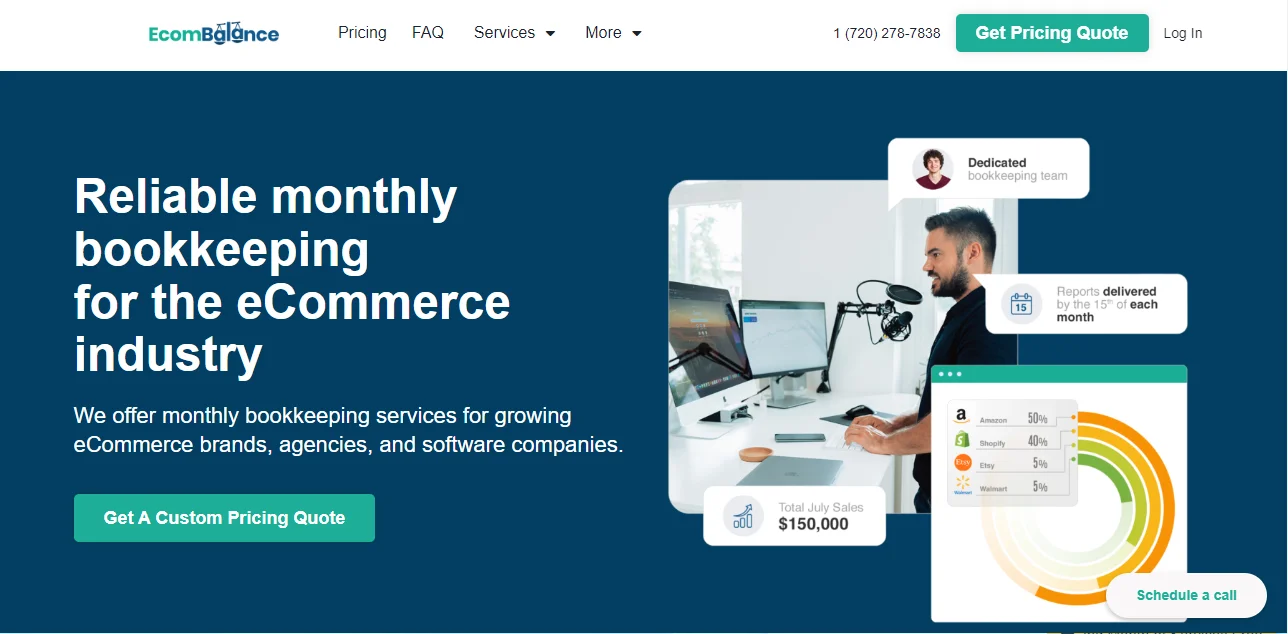
EcomBalance is a monthly bookkeeping service specialized for eCommerce companies selling on Amazon, Shopify, eBay, Etsy, WooCommerce, & other eCommerce channels.
We take monthly bookkeeping off your plate and deliver you your financial statements by the 15th or 20th of each month.
You’ll have your Profit and Loss Statement, Balance Sheet, and Cash Flow Statement ready for analysis each month so you and your business partners can make better business decisions.
Interested in learning more? Schedule a call with our CEO, Nathan Hirsch.
And here’s some free resources:




