

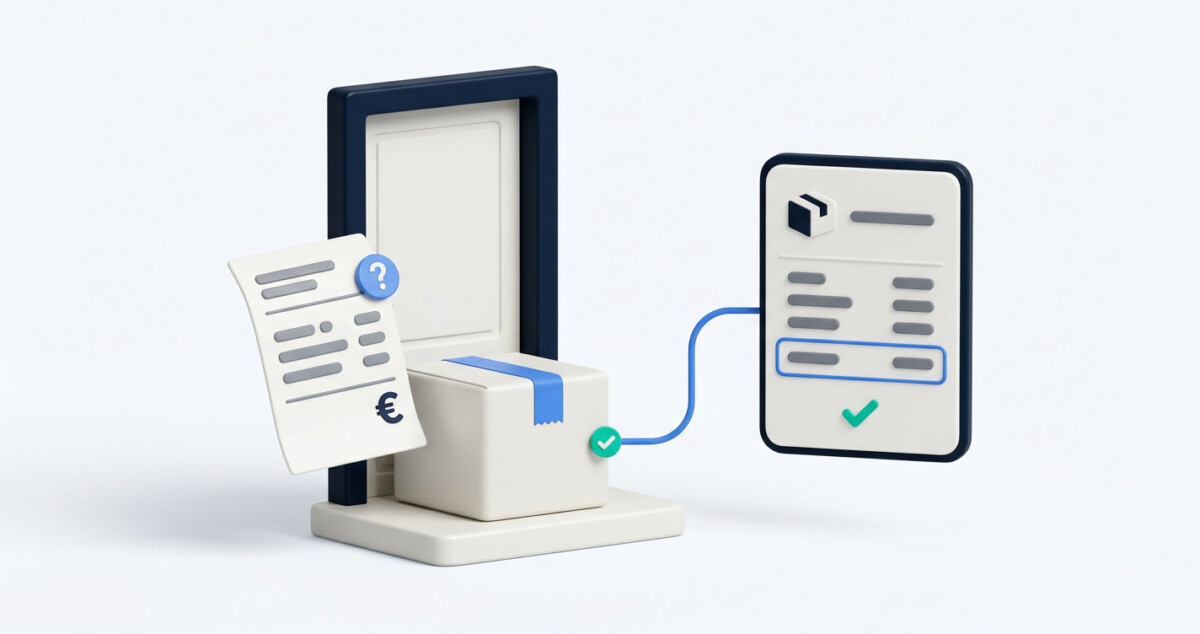
Showing guaranteed duties and taxes inside your Shopify checkout, through Shopify Markets, Managed Markets, Zonos, Passport, or Swap, removes the surprise carrier bill that drives international cart abandonment and package refusals, and it is now table stakes for US brands selling to Canada, the UK, and Australia.
An international customer who refuses a package over a surprise $47 duty bill does not just cost you one order. In many countries that refused parcel cannot even be returned, so you lose the product, both shipping legs, and the customer, all in the same afternoon.
Picture the order from your customer in Toronto. She found your brand through a creator video, spent $180 on your site, and paid for expedited shipping. Six days later a DHL driver hands her a bill for duty, GST, and a brokerage fee she has never heard of before she can touch the box. She pays it, feels burned, and never orders again. Or she refuses the package, and you eat both shipping legs plus the product.
That doorstep moment is where most US brands quietly lose their international business. The technology to prevent it, showing the full landed cost inside the cart and guaranteeing it, has matured fast over the last three years, and the vendor landscape has consolidated hard while most operators were not looking. One of the best-known names in the category no longer exists as a standalone company. Shopify’s own answer got renamed and rebuilt. This guide maps what is actually available in 2026 and which option fits your stage.
Surprise duty and tax bills suppress international conversion twice: once at checkout, where fine print about “fees due on delivery” scares buyers off, and again at the doorstep, where unexpected charges trigger refused packages and lost customers. Research analyzed by the Baymard Institute consistently ranks unexpected extra costs, including shipping, taxes, and duties, as the number one reason shoppers abandon carts, against an average abandonment rate of roughly 70%. For cross-border orders the effect compounds, because the buyer cannot even see the full cost before committing.
The delivery-side damage is worse than most operators realize. When a package ships with duties unpaid, carriers in high-tax markets like Canada and the UK collect duty, tax, and a brokerage fee at the door, and refusal rates on those shipments can reach 10 to 20%. A refused parcel means you pay the outbound leg, often pay the return leg, and in some countries the parcel is destroyed rather than returned at all. Run that math on a $60 landed shipping cost and a $45 product cost, and a single refusal wipes out the margin on your next four or five international orders.
There is also a competitive dimension your customers feel immediately. Amazon has trained international buyers to expect an all-in price with an import fees deposit baked into checkout. When your store shows a disclaimer instead of a number, the buyer opens a new tab, finds a similar product on Amazon with total cost clarity, and your acquisition spend just funded someone else’s sale.
Every international order you ship is either DDU, where your customer pays duties and taxes at delivery, or DDP, where those costs are calculated, collected at checkout, and prepaid so nothing is owed at the door. If you have never explicitly configured this, your store is almost certainly running DDU by default, and your customers are discovering that at the worst possible moment. According to Passport’s 2026 analysis of DDP versus DDU shipping for global ecommerce brands, up to 39% of cart abandonment traces to unexpected costs, and DDP eliminates the sticker shock that drives both abandonment and doorstep refusals.
Getting DDP right requires three pieces working together. First, an accurate landed cost calculation at checkout, which depends on HS codes and country of origin data on your products. Second, collection of that amount from the customer as a line item or folded into an inclusive price. Third, a DDP shipping label so the carrier bills you for the duties you already collected instead of billing your customer again. Miss any leg and you either surprise the customer or double-charge them. The physical shipping side of this equation, carrier selection, label workflows, and returns, is covered in depth in my complete guide to international ecommerce logistics, which pairs with this piece.
One distinction matters more than any vendor’s marketing: estimated versus guaranteed landed cost. An estimate that comes in low leaves you reconciling the difference with the carrier after the fact. A guarantee means the provider absorbs any discrepancy. Whether the number your customer sees is guaranteed is the first question to ask every vendor in this space.
Shopify now offers two native paths: the Markets duties and import taxes calculator, which lets you collect landed costs at checkout on your own merchant-of-record setup, and Managed Markets, a full cross-border service powered by Global-e where duty and tax amounts shown at checkout are guaranteed. The self-serve calculator lives in your admin under Settings, then Taxes and duties, and per Shopify’s documentation on collecting duties and import taxes at checkout, it calculates from your HS codes and country of origin data, displays duties as a line item or inside dynamic tax-inclusive pricing, and tags orders DDP so your fulfillment flow uses the right labels. US and Canadian merchants can buy DDP labels from DHL Express and DHL eCommerce directly in the admin, which closes the loop without a third-party app.
Managed Markets is the deeper commitment and the one most merchants still know by its old name, Markets Pro. Global-e acts as merchant of record for your international orders: it auto-assigns HS codes across your catalog, handles tax registration and remittance in destination countries, screens restricted products, covers fraud chargebacks on eligible orders, and guarantees the duty and tax amounts your customer sees at checkout, absorbing any difference customs charges later. Pricing rides on your order flow, including a 1.5% currency conversion fee plus transaction fees, and it is available from the Basic plan up for eligible US merchants. Because payment processing runs through the same stack, it also pairs cleanly with everything covered in my ultimate guide to Shopify Payments.
The honest tradeoff: Managed Markets is the fastest path to guaranteed DDP with the least operational lift, but you hand over merchant-of-record status, accept the fee stack on every international order, and your international customer data flows through the program’s structure. Speed and safety in exchange for control and margin. That trade reads differently at $400K than it does at $4M, which is exactly why the stage framework at the end of this piece matters.
If you want guaranteed landed costs at checkout while keeping your own merchant-of-record status, carrier accounts, and customer relationships, three names dominate the Shopify conversation in 2026: Zonos, Passport, and Swap. Zonos is the landed cost specialist. Its Duty and Tax app calculates and guarantees duties, taxes, and fees in your existing checkout, pays any discrepancy on the customs bill, and handles cross-border tax registration and remittance including IOSS for the EU and UK VAT, all while working with your own carrier accounts. Published app pricing runs $2 per international order plus 10% of the duties and taxes collected, and those charges can be passed to the customer. For a brand that wants ownership of its international stack, this is the strongest independence play, and it layers cleanly on top of multi-currency selling through Shopify Markets rather than replacing it.
Passport approaches the problem from the carrier side. It is an international parcel carrier built for DTC brands that bundles guaranteed DDP delivery with the compliance layer, so the checkout number, the label, and the customs clearance all come from one accountable party. That single-vendor accountability is attractive for brands doing meaningful volume into a handful of markets like Canada, the UK, and Australia.
Swap Global offers guaranteed landed cost DDP shipping to any country with automated duty and tax remittance and discounted carrier rates through its partners. It has grown quickly in the Shopify ecosystem, though merchant reviews on its app listing are mixed on pricing transparency and contract terms, so go into any sales conversation with your volume numbers firm and get every fee in writing before you sign. That diligence advice honestly applies to every vendor in this category, because pricing is volume-negotiated almost everywhere.
At the enterprise end, brands doing eight figures internationally typically work with Global-e directly rather than through Managed Markets, gaining deeper localization, market-specific pricing strategy, and negotiated economics across 200 plus destinations, with eShopWorld (ESW) standing as the other major enterprise merchant-of-record alternative. Global-e direct is a different relationship than the Shopify-packaged version: dedicated account teams, custom duty and pricing strategy per market, and integration depth that a $50M brand needs and a $2M brand does not.
The consolidation story in this category is a caution worth internalizing. Borderfree, once the default answer for cross-border retail, was acquired by Pitney Bowes for $395 million in 2015, sold to Global-e for roughly $100 million in 2022, and absorbed into the Global-e platform, while Pitney Bowes’ broader ecommerce logistics unit went through Chapter 11 wind-down in 2024. A category-defining vendor lost three quarters of its acquisition value in seven years and then disappeared as a brand. If you are evaluating cross-border partners, weight financial durability and platform ownership as heavily as feature checklists, because migrating your international checkout mid-growth is expensive and slow.
The strategic read for operators: this market is consolidating toward two poles, platform-native solutions on one side and a small set of well-capitalized independents on the other. Picking a vendor in the squeezed middle is how you end up doing a forced migration in 18 months.
The right duty and tax solution depends almost entirely on your international revenue stage, not on feature comparisons. If you are doing $10K to $40K months with international orders trickling in, resist the urge to bolt on a full cross-border platform. Start with Shopify’s native duties and import taxes collection for your top one or two destination countries, get HS codes and country of origin onto your catalog, and buy DHL DDP labels in the admin. That setup costs you configuration time, not a new vendor contract, and it removes the doorstep surprise for the markets that matter. Premature complexity kills more stores at this stage than missing features ever will.
Between roughly $500K and $2M, with international traffic reaching 10 to 20% of sessions, the decision becomes Managed Markets versus Zonos. Choose Managed Markets when you want maximum speed and guarantee coverage with minimum operational attention, and you can accept the merchant-of-record trade. Choose Zonos when owning your carrier relationships, customer data, and international P&L matters to your long-term plan. Above $2M internationally, model Passport or Swap against your parcel volume for carrier economics, and at eight figures start the Global-e direct or ESW conversation. Whichever path you take, remember that duties at checkout is one leg of a larger localization stool alongside currency, payment methods, and delivery experience, a shift I unpacked in how Shopify brands are preparing for the next wave of digital payments.
Whatever tier you land on, run one test this week: place an order on your own store from a Canadian or UK address, or ask a customer in that market to walk you through their checkout screenshots. If the total they see is not the total they will pay, you now know exactly which problem to fix first.
You can show duties and taxes at checkout on Shopify by activating the duties and import taxes feature under Settings, then Taxes and duties, in your admin. The calculation requires HS codes and country of origin on your products, and you can display charges as a separate line item or fold them into duty-inclusive prices per market. For guaranteed rather than estimated amounts, use Managed Markets, where Global-e covers any difference between the checkout amount and what customs actually charges, or a third-party app like Zonos that guarantees its landed cost calculations while you keep your own carrier accounts.
DDP (Delivered Duty Paid) means the merchant calculates and collects duties and taxes at checkout and prepays them, so the customer owes nothing at delivery, while DDU (Delivered Duty Unpaid) means the carrier collects duties, taxes, and a brokerage fee from the customer at the door. DDU is the default for most stores that have never configured cross-border settings, and it produces surprise bills that drive refusals of 10 to 20% in high-tax markets. DDP requires accurate landed cost calculation, collection at checkout, and a DDP shipping label so the carrier bills the merchant instead of the buyer.
Yes, Managed Markets guarantees the duty and tax amounts displayed to your customers at checkout, and if customs later charges a different amount, the program covers the difference so neither you nor your customer pays extra. Managed Markets is powered by Global-e acting as merchant of record, which also handles HS code assignment, destination-country tax registration and remittance, restricted product screening, and fraud chargeback protection on eligible orders. It is available to eligible US merchants from the Basic plan up, with costs that include a 1.5% currency conversion fee plus transaction fees on international orders.
Zonos lists its Duty and Tax app for Shopify at $2 per international order plus 10% of the duties, taxes, and fees collected, and those charges can be passed on to the customer at checkout rather than absorbed by the merchant. That pricing buys a guaranteed landed cost calculation, meaning Zonos pays any discrepancy on the actual customs bill, plus automated cross-border tax registration and remittance including IOSS for the EU and UK VAT. Zonos works with your own carrier accounts, which is the key difference from merchant-of-record programs: you keep control of your shipping relationships and international customer data.
Yes, unexpected extra costs including duties and taxes are the single most common reason shoppers abandon carts, according to research analyzed by the Baymard Institute, and industry analyses attribute up to 39% of abandonment to unexpected costs specifically. The damage continues after purchase: when duties arrive as a surprise bill at delivery, refusal rates in high-tax markets like Canada and the UK can reach 10 to 20%, and a refused international parcel typically costs the merchant both shipping legs plus the product. Showing a guaranteed all-in price at checkout removes both failure points, which is why DDP has become the baseline expectation in mature international markets.




