


As the digital landscape of healthcare continues to evolve, innovative pregnancy monitoring tools are revolutionizing maternal care. According to a recent study by the American College of Obstetricians and Gynecologists, a staggering 71% of expectant mothers are now embracing wearable technology to track their health during pregnancy.
One of the fastest-growing technologies in women’s health is mobile apps. From period tracking to women’s fitness, this is where mHealth’s strengths shine through.
An important stage in life, like pregnancy, could not be done without modern technologies. The market of SaaS development services for expectant mothers is experiencing a new stage of development. We are ready to offer a different vision of mHealth apps for pregnant women: functional, convenient, and valuable.
There are myriad opinions on what this technology market should look like. What criteria are considered essential in pregnancy apps:
If these points don’t come together at least at one stage of development, the application’s efficiency will instantly drop.
All-in-one software is a complete package of functional offerings in a single application. This approach can meet a wide range of user needs: from fertility tracking to postnatal care.
However, there is a hidden problem: in pursuing maximum functionality, you may miss the moment when the software becomes overloaded.
On the other hand, some developers are intentionally separating their digital offerings:
This has advantages: each product caters to a specific segment of users, and the application is manageable, requiring less development time.
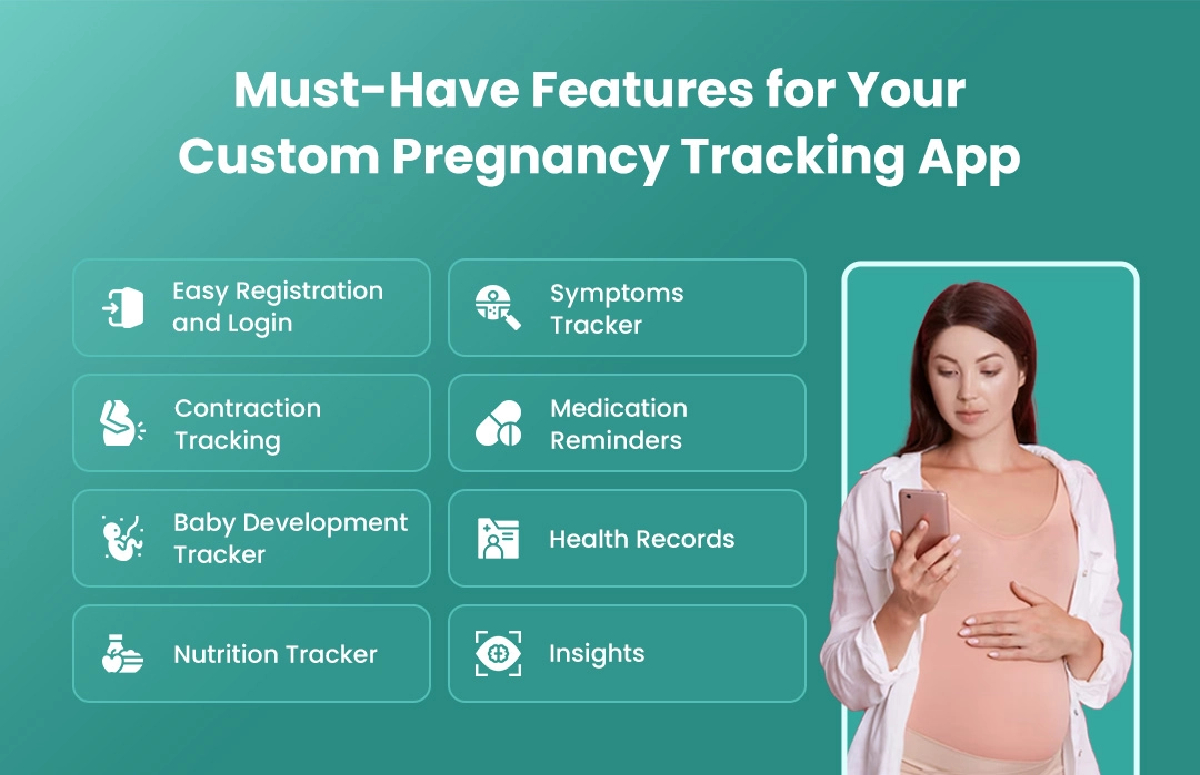
What digital solutions will give the app a competitive advantage in the marketplace:
Direct communication with a doctor is an important technology. Telemedicine allows convenient monitoring of pregnancy. The promising data exchange technology will enable doctors to receive basic information about a pregnant woman’s health through an application. If necessary, he can intervene and invite the woman for a detailed examination in the clinic.
Health tech companies can use data analytics to offer personalized care recommendations for expectant mothers. Businesses can provide tailored advice on nutrition, exercise, and prenatal care by analyzing data from wearable devices and app inputs. This personalized approach improves the user experience and creates opportunities for targeted product recommendations. Ecommerce entrepreneurs can partner with health tech providers to offer curated product bundles based on individual pregnancy stages and health needs.
Combining telemedicine and pregnancy monitoring tools opens up new avenues for remote prenatal care. Ecommerce businesses can partner with healthcare providers to offer virtual consultations bundled with monitoring devices. This integrated approach allows expectant mothers to receive professional medical advice from the comfort of their homes while creating a seamless ecosystem of products and services. Entrepreneurs can position themselves as one-stop shops for comprehensive maternity care solutions.
Gamification can significantly boost user engagement in pregnancy monitoring apps. Businesses can encourage consistent app usage and data input by incorporating elements like achievement badges, progress trackers, and community challenges. This increased engagement improves the monitoring tools’ effectiveness and creates more touchpoints for marketing and sales. Ecommerce founders can leverage these engagement features to promote related products and services throughout the pregnancy journey.
As the market for pregnancy monitoring tools expands globally, it’s crucial to consider cultural differences in maternity care practices. Ecommerce entrepreneurs can gain a competitive edge by offering localized versions of their products and services. This might include adapting content to reflect diverse cultural beliefs, dietary practices, and support systems. By demonstrating cultural sensitivity, businesses can build trust and loyalty among a broader customer base, potentially opening up new market opportunities.
The pregnancy journey doesn’t end at birth, nor should the support provided by maternity tech companies. Ecommerce businesses can explore subscription-based models that extend beyond pregnancy into early parenthood. These could include ongoing health monitoring for both mother and baby, personalized postpartum care plans, and access to expert advice on infant care. Companies can maintain long-term customer relationships and create recurring revenue streams by offering continuous value. This model also allows for introducing complementary products and services as the family’s needs evolve.





