Imagine wrapping up a high-performing holiday campaign but noticing inconsistent experiences across channels: while one set of customers gets perfectly personalized promos, another receives generic emails.
Meanwhile, different team members and in-store teams lack visibility into shoppers’ online behaviors, so they miss opportunities to make relevant recommendations or segment them well. Sounds messy, right?
Today’s customers demand seamless brand interactions no matter where they shop. This is where omnichannel marketing comes in. By leveraging your omnichannel customer data, you’ll be able to deliver consistency and personalization at every touchpoint.
In this guide, we’ll explore how unified data can increase personalization, loyalty, and ROI while overcoming key challenges. We’ll also examine seven ways brands like yours can leverage customer data to drive omnichannel strategies.
Let’s take a look at seven ways brands use data to power their omnichannel marketing, complete with actionable tips:
Omnichannel customer data enables you to deliver targeted promotions or content to each individual at the right time, no matter how large the audience. You can boost conversions and stretch marketing dollars further by aligning offers with each customer’s lifecycle stage. Based on a unified shopper profile, you can use the following:
AI-driven Customer Data solutions automate hyper-personalization at scale. You can use AI to enrich your customer data. Based on their likely future actions, such as purchasing or churning, you can provide content and experiences that connect with customers through their preferred communication channels.
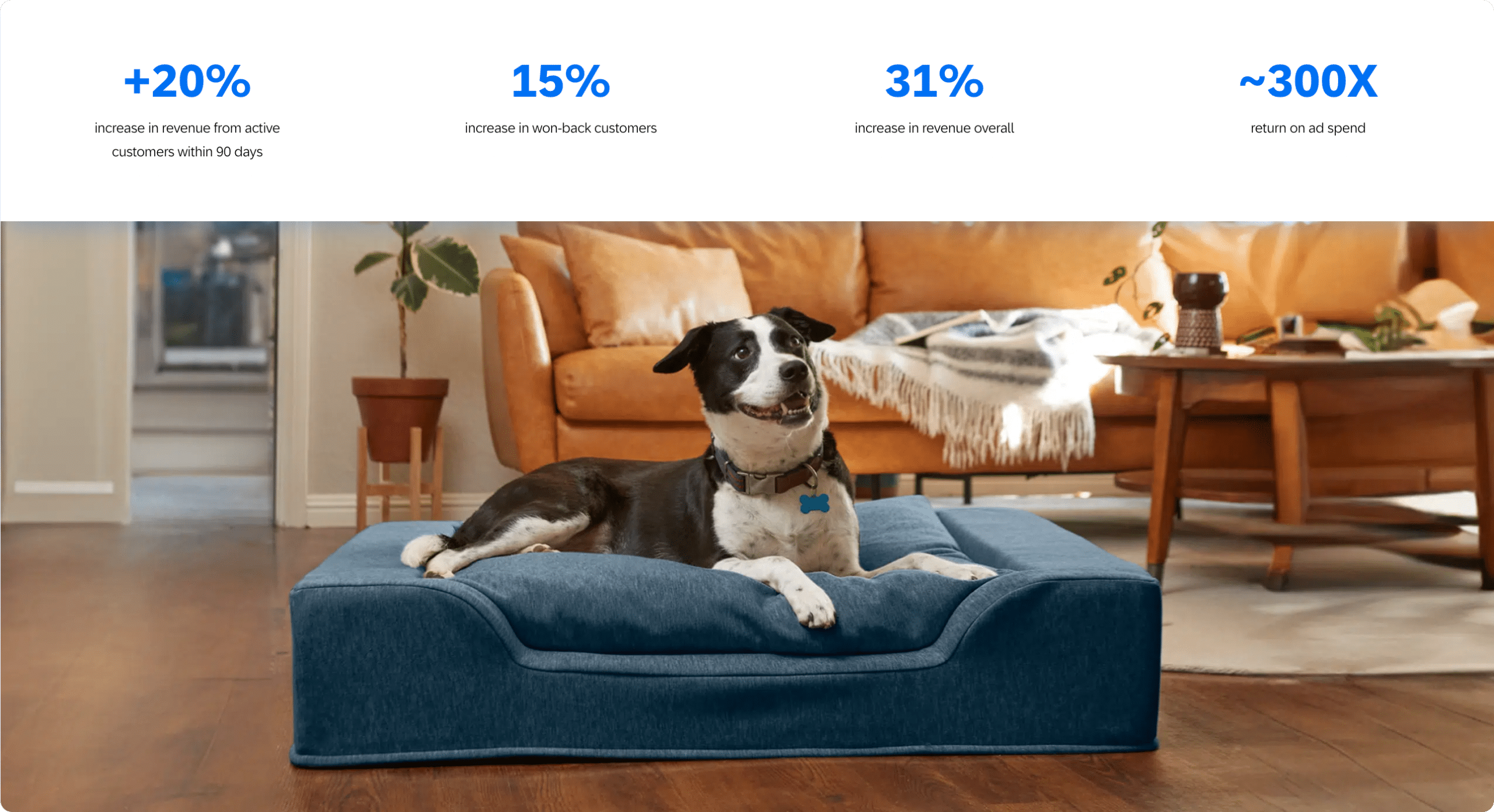
Example in action: By setting up this automation to engage with active and churned customers, Petco increased its won-back customers by 15% and accomplished much more.
Discover how SAP Emarsys achieved this for Petco.
Even for large brands undergoing multiple digital transformations, data is often scattered across legacy CRMs, disconnected eCommerce platforms, POS systems, loyalty databases, and social media tools.
Each environment operates in isolation, creating fragmented views of the same customer. This lack of a single source of truth can lead to duplicate marketing efforts, misaligned product recommendations, and inconsistent campaign performance metrics. With omnichannel customer data, you can:
For more guidance on breaking down departmental barriers, check out Break Down the Silos or Break Your Customer Experience.
Quick implementation insight: Cloud migration is frequently essential. Companies mired in legacy architectures risk expansion bottlenecks, as illustrated by Disney’s challenges in scaling omnichannel marketing. Shifting data workflows to a scalable, cloud-based system ensures identity resolution stays accurate and immediate.
Learn more with Disney Theatrical Group: Adapting Content for Multiple Channels – Power To The Marketer Shorts.
Unifying data also fuels predictive analytics, from forecasting churn to identifying upsell opportunities proactively. This type of data analysis employs statistical models and machine learning techniques to recognize patterns in large datasets.
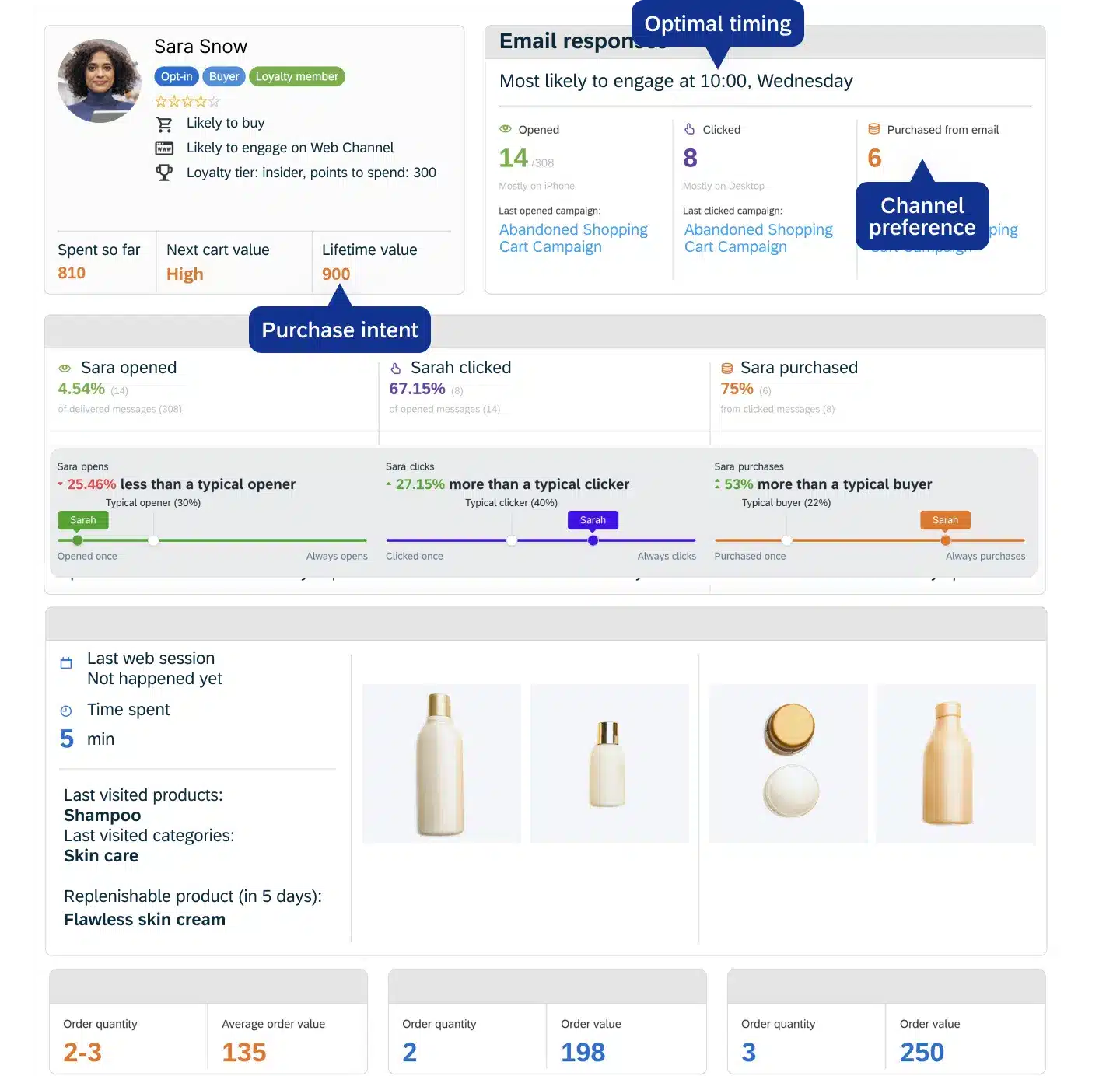
Predictive analytics strategies include:
Example in action: BrandAlley increased AOV and won back 24% of defecting customers by switching from reactive marketing to proactive marketing with AI predictive analytics in only 90 days. Learn how here.
Cross-channel marketing uses multiple online and offline channels to reach and engage with each customer throughout their journey. Optimizing these is a recipe for success.
Marketing teams thrive when they understand not just which channels consumers use but how and why each channel influences conversion:
Learn more about cross-channel marketing and its benefits.
Navigating privacy legislation across multiple markets is crucial—particularly for enterprises with global footprints. Centralized systems enable:
When brands adopt centralized platforms like SAP Emarsys, they can unify consent management and automate data sharing or restriction, minimizing the risk of noncompliance. Learn more about data security through SAP Emarsys.
Omnichannel data’s benefits aren’t confined only to marketing. Data architects and operations teams can glean insights to automate the entire business. Data applications include:
Organizations maximize resource allocation and minimize guesswork by interlinking supply chain analytics with loyalty and browsing data. Some advanced teams even tie staff incentives to data-driven metrics, ensuring all departments operate from the same performance indicators.
Working with SAP Emarsys, Home Depot drove operational efficiency and unified data, helping customers have a more cohesive shopping experience. Learn how Home Depot gets more done during peak seasons.
Finally, visibility of ROI (Return on investment) is a core reason marketing leaders invest in omnichannel data. Revenue analytics helps you measure and drive profitable results.
With omnichannel analytics, you get:
AI-powered reporting and analytics solutions are crucial to measuring the revenue impact of your marketing messages at scale, with predicted campaign outcomes and effortless optimization of future performance.
Example in action: Industry leaders like Nike are delivering relevant 1:1 customer engagements to accelerate revenue. In the first year with SAP Emarsys, Nike achieved +110% revenue from automation. Discover how they did it.

As omnichannel touchpoints expand, teams must ensure today’s data model can absorb tomorrow’s channels without an expensive re-architecture.
The stakes are clear: siloed data strategies risk customer churn and inefficiency, while unified approaches drive loyalty and revenue.
By unifying fragmented data streams, brands can predict customer needs, personalize at scale, and optimize every facet of their business, from marketing campaigns to supply chains.
Omnichannel customer data might sound like an overused buzzword, but it’s the foundation of sustainable growth. Siloed, outdated data architectures limit personalization and hamper operational efficiency, compliance, and overall brand competitiveness.
Meanwhile, a synchronized approach unlocks advanced personalization, streamlined operations, and the ability to adapt to emerging trends without skipping a beat.
For large teams juggling complex systems, integrated solutions drastically reduce time-to-market—and free your data scientists and marketers to focus on strategy over tech troubleshooting.
If you’re ready to transform your marketing with unified, omnichannel customer data, SAP Emarsys can help. Our AI-driven customer engagement platform provides prebuilt workflows for retail, SaaS, eCommerce, and beyond—so you can centralize, analyze, and activate your data in a fraction of the time.
By making omnichannel data a core part of your strategy, you’ll be equipped to meet—and exceed—rising customer expectations while delivering measurable business value year after year. Discover more about our customer data solution.
Mikkel Tophoj has worked in digital marketing for 11 years with a focus on strategy. As a Services Consultant at SAP Emarsys and previous roles at agencies, he has helped Fortune 1000 brands across all industry verticals connect their data to create dream customer experiences and drive measurable results. Keeping up with innovation, he is focusing on how AI can amplify marketing efforts. He holds a BS in business administration with an emphasis in marketing and a minor in economics from CU Denver.