


In the past decade, industries like healthcare, government, and more have begun to embrace the cloud. With worldwide end-user SaaS spending projected to reach nearly $300 billion in 2025, it’s clear that SaaS is here to stay. Accordingly, the volume of data stored in the cloud is growing. But who’s responsible for protecting the essential information stored across the SaaS platforms organizations rely on? The answer is twofold; both the user and the provider share the responsibility for data protection, and these duties are outlined in what’s called the Shared Responsibility Model.
In this article, we’ll break down what the Shared Responsibility Model entails, how it applies to SaaS applications, how data loss can happen in SaaS, and the role of backups in protecting account-level data.
In a nutshell, the Shared Responsibility Model is a framework used to divide responsibilities between SaaS providers and their customers. In the context of data protection, this means that businesses have an obligation to understand the role they play in keeping their own data safe and protecting it from threats.
While SaaS providers secure the necessary infrastructure, platform uptime, and service reliability, customers are responsible for their own data, user access control, and compliance with industry regulations.
This means that while platforms like Atlassian, Azure DevOps, Shopify, and monday.com ensure their systems remain operational and data as a whole is secure, the responsibility for protecting user data against accidental deletions, insider threats, or cyberattacks falls on the customer.
If we map all the solutions out side by side, we can see where the provider’s responsibility ends and where the users’ begins:

This is why the major SaaS apps clearly state the limitations around what they can and can’t restore in their Terms of Service—seen here in examples from Shopify and Atlassian’s Cloud architecture operational practices:

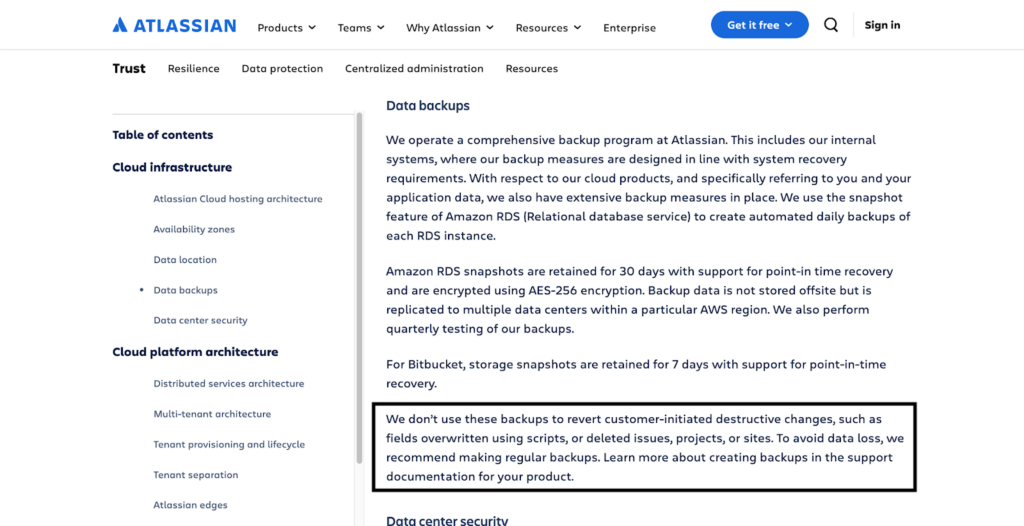
If this is the first time you’re hearing about the Shared Responsibility Model, or if it doesn’t make complete sense, you’re not alone: In an Oracle / ESG survey, nearly half (49%) of organizations blamed confusion around the Shared Responsibility Model for SaaS data loss. Businesses that misunderstand this framework are often left vulnerable to data loss events, but the most important thing to know is that data and user access/security are the customers’ responsibility across the board. No matter how the data is lost, it’s up to you to get it back.
“Data and user access/security are the customers’ responsibility across the board. No matter how the data is lost, it’s up to you to get it back.”
Innovations in the data security industry progress quickly—and so do threats to your data. From multinational corporations to local governments, no organization is safe from cyber threats. The reality is that there are several ways for businesses to lose data, and it’s important to be prepared for all of them:
The lesson here is simple: Protect your data, protect your business. How? By partnering with a third-party backup and recovery provider, which can help your organization stay compliant and build data resilience.
The data we store in SaaS platforms is vital to our day-to-day business operations. As we’ve learned, apps can’t restore this account-level data, so the onus is on the user to restore everything to its original state. Without a backup strategy, this can involve hours, days, or even weeks of manual work for your team.
Partnering with a third-party backup and recovery provider dramatically reduces your odds of losing vital data, as you can always restore your SaaS instance from a clean copy of the data. Plus, by decreasing your time to recovery, you can prevent a flood of support tickets (and save yourself from the aforementioned painstaking manual rebuilding). You’ll spend more time focused on your work, rather than trying to solve the stressful challenge of data loss.
Beyond having peace of mind knowing data is safe and easily recoverable, organizations with a solid backup strategy in place can also support their compliance requirements with regulatory frameworks such as HIPAA, GDPR, and SOC 2. These frameworks impose strict data protection and retention requirements on businesses. Without a third-party backup solution, businesses risk non-compliance which can lead to legal penalties, reputational damage, and failed audits.
No matter which SaaS apps you use, the Shared Responsibility Model is universal. This means that the onus is on you, the user, to understand the risks to your data and take steps to mitigate those risks. Organizations must take a proactive approach to data protection by evaluating their backup strategies and implementing policies tailored to their operational needs. Enter: Rewind!

With a trusted backup and recovery solution like Rewind in your back pocket, you’ll be able to quickly recover from costly data loss incidents and future-proof your SaaS data—ultimately strengthening your organization’s resilience against threats and disasters.
Learn more about the Shared Responsibility Model and how Rewind can help.





