


The difference between a one-time visitor and a loyal repeat customer often comes down to personalized touches that make the journey more relevant and enjoyable.
In this article, we’ll explore e-commerce personalization examples that show how brands can stand out by delivering hyper-relevant interactions at each stage of the customer lifecycle.
We’ll start by examining how personalization directly improves the overall customer experience. Then, we’ll explore nine specific strategies—from targeted emails to dynamic pricing—that e-commerce marketers can implement quickly.
Whether you’re looking for a simple entry point or advanced tactics to refine your existing efforts, these examples will help you craft memorable, high-converting experiences at scale.
Personalization in e-commerce is all about aligning products, content, and promotions with individual preferences. By leveraging data-driven insights, marketers can design frictionless shopping journeys that resonate with each customer, increasing satisfaction, loyalty, and revenue. Let’s take a quick look at some examples of e-commerce personalization in action:
PUMA used Emarsys to deliver one-to-one campaigns, fine-tuning their messaging for each subscriber’s past purchases and interests. The result? A 5x increase in revenue and 50% database growth within six months.
—Read more about how Puma achieved this within 6 months of adopting SAP Emarsys.
Levi’s prioritized personalization in its post-purchase outreach, focusing on style recommendations and special offers. By sending timely reminders for new arrivals that match past orders, they drastically boosted repeat purchases.
—Here’s how Levi finds the right fit to improve the repurchase rate.
By anchoring your strategy in data and tailored interactions, you can transform your e-commerce site into a platform that entices first-time visitors and keeps loyal customers coming back for more.
In this section, we’ll explore eight examples of e-commerce personalization, each with a brief definition, implementation tips, pros and cons, and real-life case studies. You can choose which methods best align with your brand’s goals or adopt several for a more holistic strategy.
For additional inspiration on leveraging these strategies in a broader marketing context, take a look at our e-commerce marketing strategies and review our customer engagement strategies in e-commerce.
The different types of e-commerce personalization can include but are not limited to:
Essentially, this is an automated “digital salesperson” guiding the shopper to relevant products.
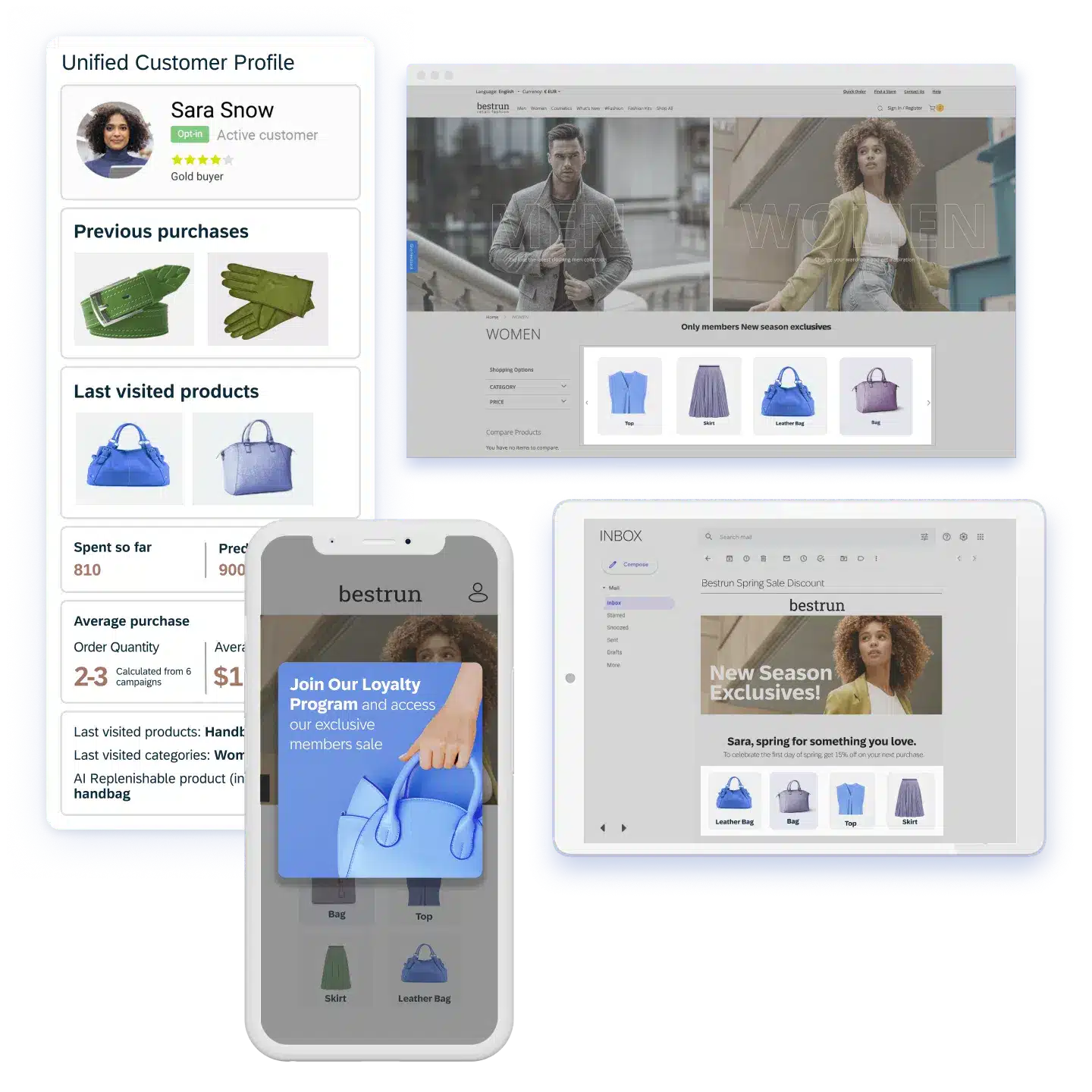
How does it work? An AI engine—like the one in SAP Emarsys––drives conversion and revenue with personalized product recommendations. Its AI marketing capabilities enable you to combine historical and real-time data to build a proper view of every customer. Using visual affinity, channels, and purchase predictions. SAP Emarsys recommends products tailored to each customer while maintaining consistency across multiple channels, from email to web to mobile.
Real-world success
Implementation tips
Unlike generic email blasts, personalized email campaigns segment recipients based on factors like demographics, purchase history, or browsing behavior. Each email arrives with content and offers relevant to the individual’s context.
How they work
Real-world success
Implementation tips
When a returning visitor lands on your site, the homepage (or specific landing page) changes based on their profile, past interactions, or location—offering tailored visuals, product highlights, or calls-to-action.
How do they work? A personalization engine checks cookies, browsing data, purchase history, user account info, and other points of reference to dynamically display content blocks or promotional banners aimed at each individual.
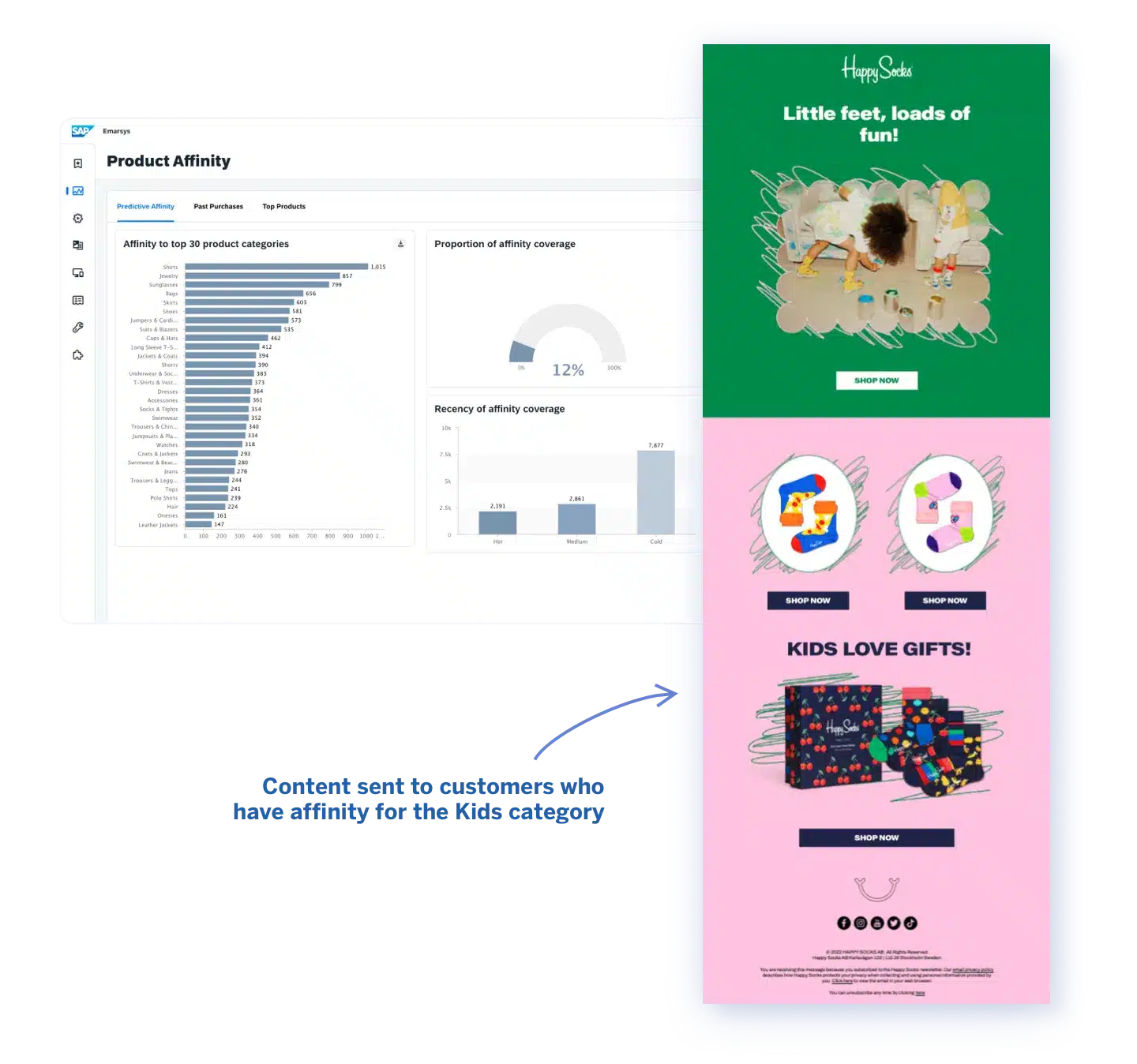
Using product affinity, channels, and purchase predictions, SAP Emarsys AI recommends products, content, and offers tailored to individual customers while maintaining consistency across multiple channels. Learn more about how it works.
Real-world success
Implementation tips
Dynamic pricing allows e-commerce stores to adjust prices in real-time based on supply, demand, user behavior, or even loyalty status. While it can be sophisticated, dynamic pricing is a powerful tool for maximizing profits without scaring off price-sensitive customers.
How do they work? Algorithms scan market conditions and user data, automatically tweaking prices to align with business objectives. For example, they might move slow-selling inventory or give exclusive discounts to top-tier loyalty members.
Real-world success
Implementation tips
Behavioral targeting shows ads to people based on their interests or behaviors—like products they’ve looked at, visited pages, or items left in a cart.
How they work
Real-world success
Implementation tips
Tailored content personalizes everything from blog articles to push notifications based on user context—recent activities, preferences, or even time of day.
How it works
Marketing automation and real-time triggers combine to deliver the right message at the right moment. For instance, a sportswear brand might congratulate a user on completing a running milestone and suggest relevant gear.
Real-world success
Implementation tips
Push notifications are short, clickable alerts on mobile or desktop devices. Personalizing them involves sending context-aware messages that resonate with each user’s behavior or purchase patterns.
How they work
With a robust marketing platform, triggers are set based on user actions, such as app logins, location changes, or cart additions. The system then delivers relevant push messages (e.g., “Your item is back in stock!”).
Real-world success
Implementation tips
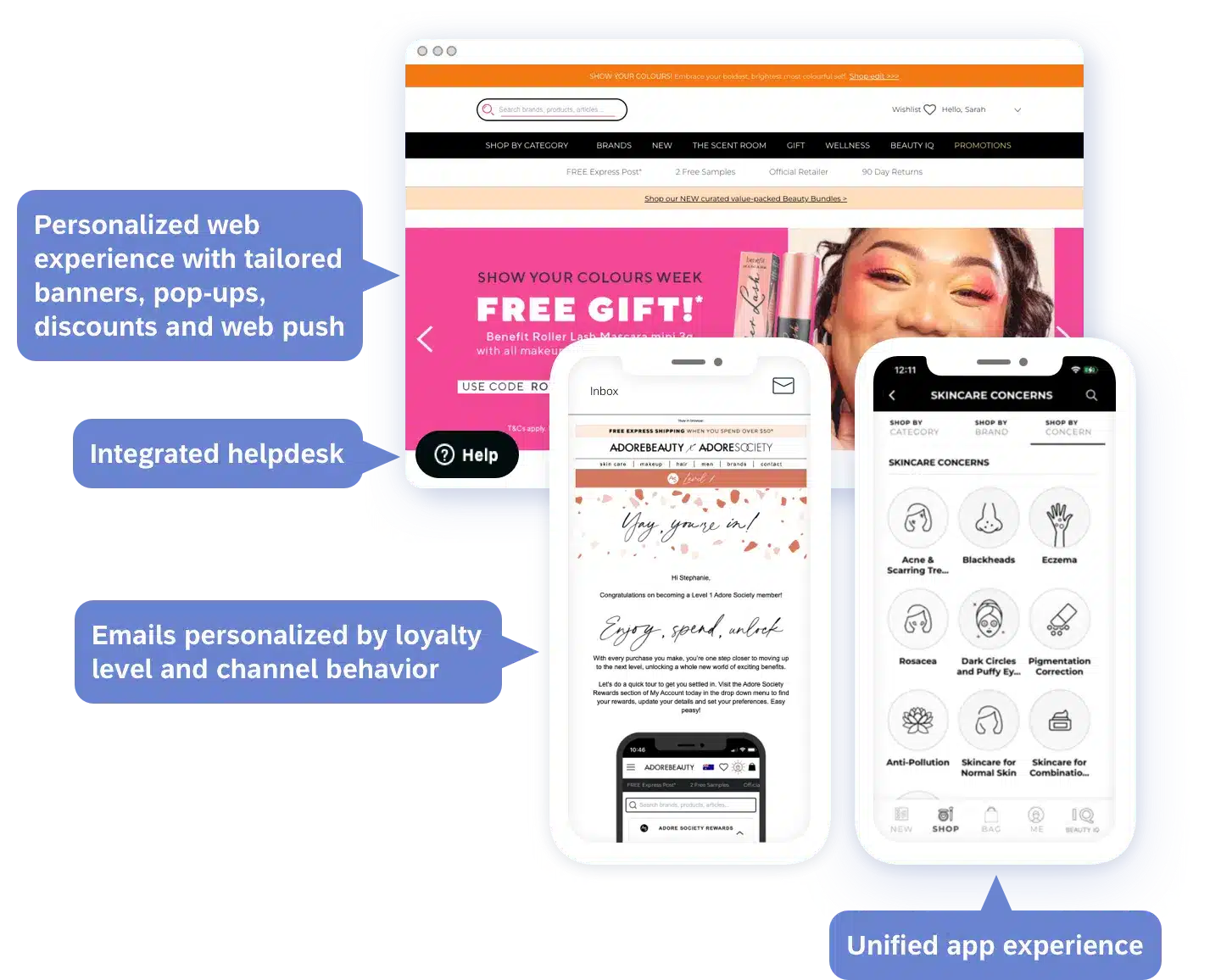
Loyalty programs go beyond one-size-fits-all points systems by offering exclusive rewards tied to a shopper’s actual interests, purchase behavior, and brand interactions.
How they work
Real-world success
Implementation tips
E-commerce personalization is a strategic necessity that fuels customer loyalty, higher conversions, and sustained growth. By applying the nine methods discussed, your brand can deliver more relevant, engaging experiences at every touchpoint.
If you want to streamline the process, consider SAP Emarsys’ e-Commerce Marketing Platform. With built-in AI, unified data management, and easy-to-use automation tools, SAP Emarsys makes personalized marketing fast and scalable—no massive development team is required.
Ready to see it in action? Book a demo today and learn how Emarsys can help you transform ordinary browsing sessions into meaningful customer journeys that boost loyalty and revenue.
Mikkel Tophoj has worked in digital marketing for 11 years with a focus on strategy. As a Services Consultant at SAP Emarsys and previous roles at agencies, he has helped Fortune 1000 brands across all industry verticals connect their data to create dream customer experiences and drive measurable results. Keeping up with innovation, he is focusing on how AI can amplify marketing efforts. He holds a BS in business administration with an emphasis in marketing and a minor in economics from CU Denver.