



Accounting relies on precision. A solitary mistake within financial documentation can disrupt the entire report structure which generates expensive problems with legal consequences. Accuracy stands as an absolute necessity in this field so technology has revolutionized work procedures. Enter audio transcription software. The software enables accountants to convert spoken words into text documents which minimizes errors in their work.
The tool enables automatic transcription of all types of discussions, which would otherwise require human typing. The tool eliminates the need to stress about missing or misinterpreting important numbers. Speech-to-text technology ensures complete accuracy in word transcription, so human errors become minimal. The tools present accountants with a useful solution that combines both speed and accuracy performance in the workplace. The useful capabilities of these tools help professionals maintain both quick operation and polished work in dynamic business contexts.
Audio conversion tools which operate under the names speech-to-text and transcription software transform spoken words into written text. All recordings starting from business meetings through phone calls down to voice memos get processed by AI-powered algorithms that generate error-free transcriptions from recorded audio.
Audio conversion tools gain substantial value when used for accounting purposes. Audio transcription software enables users to convert verbal meeting notes and phone call recordings into text documents automatically within short periods of time. The result? The accounted time becomes available for strategic analysis while administrative processes remain in the background.
The tools function by using speech recognition systems that evaluate recorded material to create written documents. The software implements machine learning algorithms which adapt to multiple accents as well as speech patterns together with technical jargon. Through continuous exposure to different speech types the software becomes more effective at transcription and improves its accuracy levels.
Accountants benefit from these tools because they correctly transcribe numbers as well as names alongside technical financial phrases, which saves time and minimizes errors. Many tools provide automatic punctuation and speaker identification features which enhance the smoothness of the conversion process. The features of this software make it possible to embed it directly into accounting systems, thus enabling professionals to meet deadlines while keeping their records reliably precise.
Different market-available audio conversion platforms serve the needs of accounting professionals. Otter and Rev, as well as Sonix, represent the most popular audio conversion software options in the market today. Training tools maintain exceptional accuracy during financial discussion transcriptions for difficult discussions. Several platforms integrate with accounting software which enables users to rapidly move transcriptions into their financial system databases.
Accounting teams achieve workflow optimization and eliminate manual errors when they implement these transcription tools while gaining time to perform essential analysis and create reports.

Accounting operations experience major effects from each minor mistake that occurs. Business decisions require accurate financial records to assess matters properly and tax filings need these records to avoid issues with authorities. Also customer trust depends on precise accounting data. Financial misrepresentation of company health occurs when precision is lacking leading to losses and financial audits and possible legal consequences.
The process of accounting involves both number calculation and number precision. Financial statements together with reports and tax returns need exact numerical data for their creation. Misreported information no matter how inconsequential it appears will trigger cascading effects throughout the business operations. A wrong number transcription or missing meeting data by an accountant may result in tax discrepancies or payment errors.
Accountants who use automation for data entry, together with error reduction methods, create more precise records for their work. Audio conversion tools become essential at this stage to improve the quality of work. The tools enable precise transcription of spoken words, especially numerical data, which decreases the risk of substantial errors.
Financial reports experience widespread damage because of a solitary mistake found in accounting. Audio conversion tools minimize human errors that naturally occur when manual entry is used because they convert spoken words accurately into written text. The technology translates spoken words into text messages that exactly match the original speech. The transcription process records financial jargon along with numbers and complex terms with perfect accuracy. Automation of transcription processes enables accountants to depend on accurate data without performing manual verification of every data entry.
You must play your recordings repeatedly to verify numbers many times. Audio-to-text software cuts down the requirement to repeatedly check recordings. The real-time functionality of the tool enables it to produce written documentation of all essential information at the moment it occurs. The data quality becomes more reliable because fewer mistakes occur in financial reporting processes.
The entry of data manually stands as one of the major time-consuming activities in accounting departments. The process of entering extensive data raises your risk of making errors. The conversion process for spoken data into digital text saves accountants substantial time periods through automated standards. The time-consuming task of typing for hours can be completed in just minutes by accountants because this allows them to concentrate on vital activities like analysis and strategic planning. The combination of quick data entry enables you to complete reports within deadline periods, allowing you to finish tasks before their due dates.
These tools provide accountants with a combined functionality to collect data from various sources simultaneously. The ability to combine audio data from various sources through this tool allows users to gather all important information rapidly without the risk of omitting vital details.

Audio-to-text software provides more than simple speech-to-text functionality as it presents multiple features to optimize accounting operations. The following features found in audio-to-text software provide advantages to accountants:
Audio tools in accounting help users save considerable amounts of time when used for their work. Professional accounting work requires a substantial time investment to transfer recorded meetings and phone call audio into text documents. The automatic transcription process is made possible by audio-to-text software. You dedicate your time to essential accounting work such as financial data evaluation and report creation since audio tools eliminate the need for manual transcription. Real-time transcription technology enables users to capture information during events which avoids the requirement of later note typing. The accounting process becomes more efficient through the use of this software solution, which enables you to meet your deadlines smoothly.
All human beings tend to make mistakes during the process of manual data entry. The skill level of an accountant does not prevent mistakes from arising while typing data from voice recordings into the system. Audio tools provide complete error prevention because they eliminate these problems. The automatic text conversion of audio data guarantees precise documentation of all numbers, terms, and details. The automated data capture process decreases the likelihood of high-priced errors that might impact financial reports and tax filings, as well as client relationships. The reduced number of mistakes enables you to base crucial decisions on dependable data.
The implementation of audio tools allows accounting teams to enhance both accessibility and collaboration levels in their work environment. Multiple team members gain simultaneous access to transcription files through cloud-based platforms provided by various audio transcription tools. The platform eliminates the need to distribute documents through email along with the need to handle different version numbers. Everybody maintains alignment through shared understanding which leads to better teamwork communication. The digital format of the transcription enables quick searching and referencing of information which simplifies the search for important details.
The selection of an audio conversion tool for accounting work requires finding one that matches your particular requirements. Prior to decision making it is essential to look at these main factors:
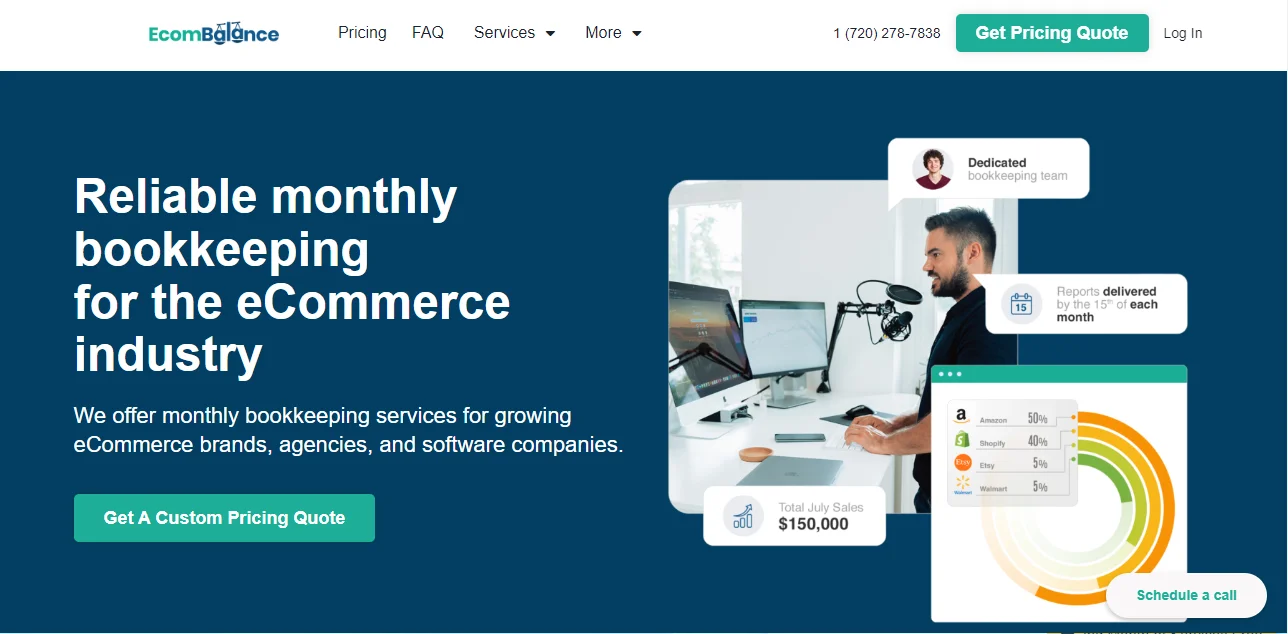
EcomBalance is a monthly bookkeeping service specialized for eCommerce companies selling on Amazon, Shopify, eBay, Etsy, WooCommerce, & other eCommerce channels.
We take monthly bookkeeping off your plate and deliver you your financial statements by the 15th or 20th of each month.
You’ll have your Profit and Loss Statement, Balance Sheet, and Cash Flow Statement ready for analysis each month so you and your business partners can make better business decisions.
Interested in learning more? Schedule a call with our CEO, Nathan Hirsch.
And here’s some free resources:
Achieving maximum value from audio-to-text tools requires their integration into your regular accounting work process. Begin using the audio tool when meeting clients or making financial phone calls or whenever financial details are being discussed. Using the process regularly will help you recognize both the time efficiency and accuracy improvement from these tools.
Team members who learn to make proper use of these tools tend to enhance their overall productivity. Promote your team members to adopt the technology by showing them how to use all of its available features. Your team will experience better productivity through audio conversion tools, which simultaneously decrease stress and save time compared to manual transcription processes. Your accounting responsibilities and client outcomes benefit when you make use of these tools because they help you manage your tasks effectively while ensuring you meet deadlines.





