


Tariffs, which are taxes on imported goods, have long shaped international trade.
Recent policy shifts, including those under the Trump administration, have driven tariff rates to historic highs. Some imports from China now face rates up to 145%, and the elimination of the de minimis exemption means more shipments are getting hit with extra fees and paperwork. Costs are climbing fast for brands that rely on global suppliers, and price volatility is squeezing margins throughout ecommerce.This ongoing tariff escalation forces tough decisions: either absorb higher costs, raise prices, or rethink supply chains altogether. In recent podcast interviews with Shopify brands navigating these changes, common themes include fractured forecasting, squeezed advertising budgets, and the need for reliable channels that don’t depend on unstable third parties. With pay-to-play acquisition costing more every month, growth-stage brands can’t afford to trust their futures to rented channels alone.
This is where email marketing stands apart. As an owned channel, email offers predictable returns, protects margins, and allows you to control your brand experience—no matter what global trade winds blow through. In this article, we’ll dig into how tariffs have redefined the risk landscape for Shopify merchants and explain why doubling down on email could be the smartest, most resilient move you make this year. For those wanting tactical retention strategies to offset rising costs, check out my breakdown of high-ROI post-purchase flows at ecommercefastlane.com/4-opt-in-experiences-to-improve-your-ecommerce-stores-email-marketing-strategy.
Tariffs are no longer an abstract policy—today, they are an unavoidable operating expense for any brand importing goods. For Shopify and DTC companies pushing for growth, the direct effects of tariffs show up fast: on product pricing, fulfillment, planning, and customer relationships. Recent podcast guests on eCommerce Fastlane describe how, after a single tariff hike, a carefully structured ad budget or planned product launch can be thrown off balance in a matter of weeks. Brands must react quickly to protect margins, stay competitive, and communicate clearly with their customers.
Tariffs act as an immediate cost multiplier. Direct-to-consumer merchants and Shopify sellers importing finished goods or components see their landed costs rise overnight. Every duty increase inflates the all-in price paid before an item even lands on U.S. soil. The hard truth? Sellers on tight margins can’t absorb that spike forever.
The domino effect of these costs pressures teams to rethink their Shopify product strategy. For more on hands-on tactics, see the guide to Shopify tariff tactics.
Tariffs force sudden supply chain pivots. I’ve heard firsthand from brands who scrambled to reroute production after fresh duties blindsided them during seasonal buying or Black Friday planning. Here’s where trouble appears fast:
Supply chain visibility suffers. Even the most organized DTC operators deal with container holds and unplanned fulfillment fees. These pain points kill forecasting confidence, which came up often in interviews with Shopify brands this year.
Some brands devise regional fulfillment or onshore partial assembly just to maintain flexibility, but those options often come at a higher dollar and time cost.
Tariffs test just how much pain a merchant or their customers can tolerate. Most ecommerce brands already run lean. When a new duty hits, bluntly raising prices will not always save the business.
Passing every dollar of added cost to the customer isn’t realistic. Instead, DTC brands often look for other ways to defend profit:
These changes demand nimble financial management and rapid response. To make smart pricing calls under pressure, many merchants turn to Shopify apps and custom dashboards for scenario modeling.
Tariffs don’t just raise costs—they spark confusion on both sides of the checkout process. Fast-moving and unpredictable tariff announcements mean customers might see:
This volatility chips away at trust. During peaks in tariff activity, customer support tickets spike, as people ask why last week’s price looks nothing like today’s. In our eCommerce Fastlane interviews, several DTC leaders said they noticed cart abandonment rates spike during price adjustment windows—often from repeat buyers shocked at sudden increases.
A well-briefed support team and transparent web content can reduce this churn. For more context on rapid tariff changes and their effect on operational planning, review the Trump tariffs impact on Shopify survival guide.
Tariffs are a moving target for ecommerce. Staying alert, tracking legislation, and keeping communication lines open are necessary just to maintain steady ground in the face of constant change.
When tariffs spike and global markets turn unpredictable, most Shopify brands feel the pinch immediately—not just in product costs, but in the effectiveness of their go-to marketing channels. The usual growth playbook for ecommerce—paid ads, social media campaigns, and organic search—starts to lose power just when stability matters most. My experience working with Shopify merchants, and digging into these topics on the eCommerce Fastlane podcast, proves that tariff volatility exposes critical weaknesses in the traditional marketing stack. Let’s break down what happens when each channel is put to the test.
Paid acquisition feels the pressure of tariff changes faster than almost any other channel. Every significant ad platform—Google, Facebook, TikTok—runs on auction pricing. When more brands scramble to maintain sales during margin squeezes, competition for the same clicks heats up. At the same time, those platforms often shift increased costs down the chain, raising CPMs and CPCs even higher.
A recurring theme in my interviews: brands see their ad budgets shrink in real terms as cost-per-acquisition rises, but average order value and margins don’t keep pace. Tariff-induced price hikes only compound this, making return on ad spend (ROAS) harder to hit.
Key challenges:
During a recent eCommerce Fastlane episode, a DTC founder shared how her ROAS dropped 30% month-over-month after a new wave of tariffs took effect. Cutting spend entirely wasn’t an option, but holding budgets steady only delivered fewer (and lower-value) new customers.
Anyone running paid or organic campaigns on social platforms has seen shrinking engagement, unpredictable reach, and more pay-to-play requirements each year. During periods of tariff-induced price volatility, platforms double down on monetization. Organic reach dwindles further unless brands boost posts, sponsor content, or invest in creator partnerships.
The instability doesn’t stop at declining visibility. Algorithm changes—sometimes announced overnight—can wipe out months of planning. During times of market shock, these algorithms often overweight breaking news, viral topics, or macro trends. Branded content, especially from DTC startups, gets crowded out.
Social media marketing teams can expect:
In podcasts with Shopify Plus marketers, brands often mention that their viral tactics or once-reliable playbooks stopped working in the face of rapid tariff hikes. Instead of predictable engagement, results became erratic—with fewer high-intent shoppers seeing core messaging.
Search engine optimization has always been a long game. Most brands see results from technical fixes and content months after implementation. Tariff volatility shortens planning cycles and forces rapid pivots on pricing, product availability, and messaging—areas where SEO simply can’t adapt quickly enough.
Here’s what this means for ecommerce:
Many growth-minded Shopify merchants, after investing heavily in SEO, end up frustrated when a sudden supplier change or forced price adjustment makes their optimized pages out of date. In my experience, these brands are best served by supplementing search with nimble, owned channels. For those interested in sharper SEO strategies, I recommend the E-commerce SEO Growth Tips article on eCommerce Fastlane.
While search traffic is still valuable, traditional SEO can’t keep pace with day-to-day shifts driven by international policy. During tariff volatility, fast-moving retention strategies—not traditional traffic drivers—are what protect revenue and customer relationships.
Tariff hikes and policy shifts hit Shopify merchants and DTC brands right where it hurts: rising costs, planning chaos, and shaky trust in day-to-day operations. In these turbulent times, working with an email marketing agency becomes indispensable—because the marketing channels you own and control outright are your lifeline. In my consulting work with growth-stage ecommerce brands and through candid conversations on the eCommerce Fastlane podcast, I’ve seen a clear pattern emerge: when market conditions turn, those who’ve partnered with a skilled email marketing agency to build and refine robust email programs consistently outmaneuver competitors relying on unstable paid channels. This section breaks down why email, especially when managed by an expert email marketing agency, is the resilient channel for Shopify and DTC operators facing the challenge of tariffs.
Traditional marketing channels work on borrowed platforms—one algorithm update or ad policy can erase months of hard-earned traction. With email, you own every contact. This is more than a talking point; it’s how Shopify merchants defend against external shocks.
When tariffs force quick price or offer changes, having a direct line to your audience is crucial. Shopify DTC leaders in recent podcast discussions emphasized that an owned list enables real communication—no gatekeepers, no unpredictable reach, and no silent demotions from third-party platforms.
Key benefits of audience ownership:
This is what gives Shopify brands the edge—they set their own rules on timing, content, and frequency. Instead of being at the mercy of a platform’s profit goals, you run your outreach in service of your own. Anyone serious about protecting their brand equity—and their customer data—won’t settle for anything less than full ownership.
For those building resilient acquisition strategies, see the full breakdown on Shopify opt-in experiences and owned growth.
Tariff news moves fast; your marketing should, too. Paid channels require constant spending and days of creative review. SEO takes months to reflect new pricing or product launches. Social reach fluctuates with every minor change to the algorithm. With email marketing, you can design and launch a campaign on the same day—no significant costs, no ad approval bottlenecks.
Based on interviews with several Shopify Plus brands on eCommerce Fastlane, rapid pivots in discounting, bundle offers, or new fulfillment options performed best over email—especially when tariffs forced category-wide pricing reshuffles.
Advantages of email’s speed and flexibility include:
One director of retention from a 9-figure Shopify brand shared on the podcast that email campaigns covered 70% of their customer communication during the height of the 2023 tariff hikes—no other channel even came close in agility.
For brands searching for scalable and adaptive approaches, there’s value in reviewing shared warehousing benefits for cost-effective flexibility on the operations side—paired with email, you can move just as fast in your customer experience.
Email stands out for more than logistics—it’s the primary channel where you can combine trust, nuance, and personalization with scale. When tariffs or external events drive uncertainty, customers look for clear, authentic communication. DTC brands with advanced segmentation and dynamic content can speak directly to concerns, explain price changes, and reinforce long-term value.
The eCommerce Fastlane interviews have revealed several retention leaders using detailed segmentation to:
Trust in a brand comes from clear, repeated, and consistent communication—email lets you deliver on this while honoring customer preferences and privacy choices. By owning the channel, you set the standard for how, when, and why you connect, instead of letting a corporate algorithm decide if your message gets seen.
If your focus is on advanced customer retention under pressure, these lessons are core to the ecommerce retention frameworks I’ve built, tested, and refined across many Shopify merchants. The result speaks for itself: higher list engagement, more brand loyalty, and reliable revenue when conditions outside your control shift without warning.
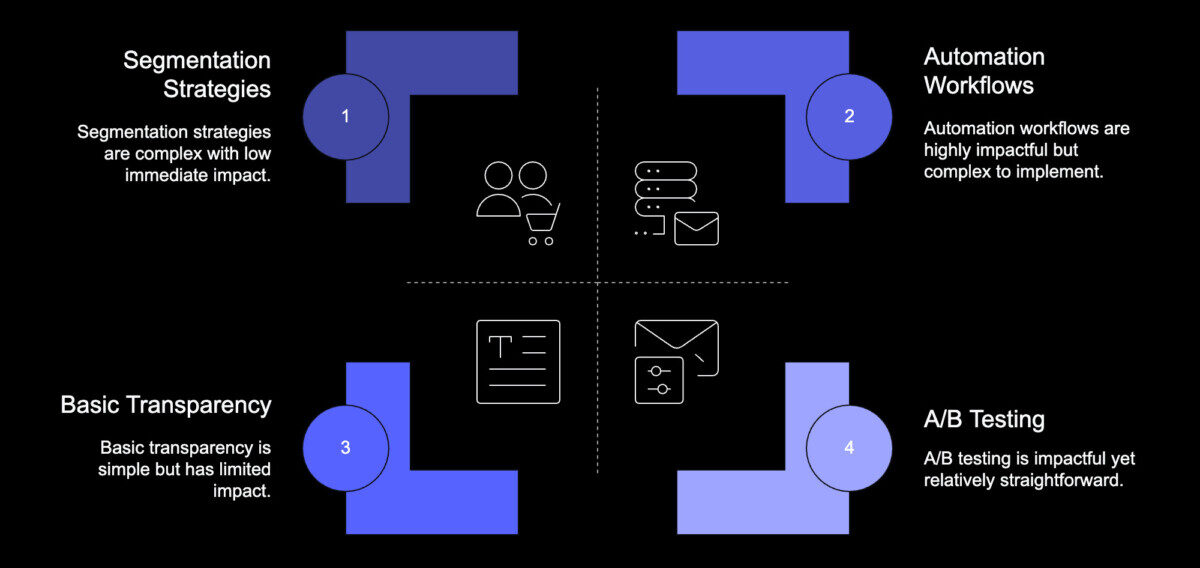
When tariffs drive up costs and create uncertainty for Shopify brands, relying on quick fixes or surface-level tactics isn’t enough. Predictable revenue comes from building a stable, owned channel approach—one fueled by email strategies that adapt to real market change. At eCommerce Fastlane, I’ve worked closely with DTC operators and Shopify merchants who faced unexpected tariff hikes. The real difference makers are clear: transparency, automation, segmentation, and constant testing drive ROI even when outside factors disrupt business as usual.
Here, I detail practical, proven steps—rooted in firsthand interviews and consulting for brands under tariff pressure—to help you future-proof your owned marketing programs. Use these strategies to address customer needs, protect profit rates, and position your brand as a dependable choice during uncertain times.
Rising costs and delivery delays fuel customer frustration fast. I’ve seen Shopify brands turn potential backlash into long-term loyalty with proactive, clear messaging. Email gives you control—no social media noise, no ad platform barriers—letting you address pricing changes and support priorities directly.
Key practices for transparency:
During a recent eCommerce Fastlane podcast, a Shopify Plus founder shared that automated tariff update emails anchored their customer retention strategy through a multi-month stretch of import duty increases. Customers expressed appreciation—and continued subscribing—once they saw transparency as a brand promise.
For additional approaches in maintaining open lines with your shoppers, explore targeted email marketing advice in the Targeted Email Marketing: Tips For Successful Campaigns guide.
When market conditions swing, manual campaigns can’t keep up. Automation ensures your key messages and retention offers reach the right shoppers at the right time—regardless of staffing or resource pressures.
The eCommerce Fastlane approach recommends three essential flows during tariff disruptions:
By connecting automation with real, updated customer support info, you’ll decrease negative reviews while protecting your recurring revenue stream—even when macroeconomic factors change without warning.
Tariff volatility doesn’t hit every segment of your audience the same way. Sophisticated Shopify brands don’t broadcast blanket discounts—they segment based on behavior, geography, purchase history, or risk profile, then deliver the most relevant offers and content by group.
Here’s how to make segmentation work for you:
For a deep dive into customer grouping and rewards, see Creating effective customer segmentations through loyalty programs.
Tariff cycles test more than just your operations—they challenge your messaging, timing, and creative. Continuous A/B testing is non-negotiable: what worked last quarter may flop when cost anxiety runs high.
Best practices I teach Shopify teams:
Constant optimization doesn’t just protect near-term revenue; it future-proofs your entire owned marketing playbook for whatever policy change or supply chain hurdle comes next.
For more practical testing frameworks, check out these pro email marketing tips in the 10 Pro Email Marketing Tips To Get Results article.
Adopting these actionable strategies positions your brand as resilient, resourceful, and ready to exceed customer expectations—no matter how the tariff environment evolves.
Tariffs create unpredictable cost surges for Shopify brands. They also expose how fragile third-party marketing channels become when global trade shifts. From recent consulting work and dozens of eCommerce Fastlane podcast interviews with founders, I’ve seen that the brands most prepared for ongoing tariff changes all share one trait: operational discipline applied directly to their owned email programs. Making email work under pressure isn’t just about sending more campaigns. It’s about adopting a tactical checklist approach—rooted in what I call the eCommerce Fastlane Email Readiness Protocol—to keep your channel audit-proof, adaptable, and profit-focused.
Let’s break down the non-negotiable steps that ensure your email channel holds the line when tariffs hit hard.
Every strong email program begins with a reality check. Tariff turbulence only intensifies the need to know your list’s strengths and weak links.
In my consulting, brands who skipped these basics saw declining deliverability just when they needed a responsive list most. For a practical walkthrough, use the Email Campaign Checklist to structure your team’s weekly audit process.
Static messaging goes stale fast with tariffs in play. Build a library of messages that address cost changes, supply updates, and support resources. Prepare these as modular blocks ready for quick swaps.
Observing best practices, brands shared on the podcast that prepping “modular” messaging elements in advance cut response times from days to minutes—critical during major tariff events.
Manual campaigns fall short when changes come fast. The eCommerce Fastlane Email Readiness Protocol calls for mapping flows that flex with tariff-driven events:
High-growth stores I worked with in late 2023 attributed 40% of saved revenue during peak tariff volatility to well-tested automations. Check out the approach in BFCM Email Campaigns for real-world examples of rapid response automation.
Generic sends waste budget and customer trust. Segment based on tariff-hit products, geographies, and purchase recency.
One founder on eCommerce Fastlane detailed how segment-specific incentives doubled click rates during a challenging tariff announcement, retaining sales that would have otherwise been lost.
Tariff events require delicate but clear communication. Run continuous A/B tests focused on:
Most brands resist testing in crisis mode, but the top Shopify Plus operators I’ve interviewed swear by iterative testing as the best insurance against churn and unsubscribe spikes.
Tariff era anxiety increases vulnerability to spam traps and compliance hiccups. The protocol requires:
Keeping this house in order has saved my clients legal hassle and deliverability headaches in the heat of global regulatory swings.
The last step is running a real-time drill. Simulate a tariff hike—and execute a full-cycle campaign using the prepped templates, automations, and segmentation flows. Debrief and document any missed coverage, ROI gaps, or brand tone issues.
The top-performing brands in 2024 were those that treated their email program exactly like a supply chain—regularly stress-testing every flow and message before the next disruption.
Tariff cycles are not a passing storm. They are the new normal for global ecommerce. Building email strength with the eCommerce Fastlane Email Readiness Protocol means your brand won’t just survive shocks—you’ll build customer trust by communicating when it counts.
For more in-depth channel tactics that adapt beyond email, tap into these Ecommerce Growth Strategies to round out your playbook.
In today’s fast-moving ecommerce world, founders and marketers need a mix of smart strategies and the latest technology to stay ahead. Using tools like AI and automation helps you create a smoother customer experience. Personalized product suggestions and quick, real-time chat support make shoppers feel valued and boost your sales. Growing a loyal customer base happens by connecting across different channels—like your website, social media, and even in-person events—so each shopper’s experience is easy and familiar.
Strong engagement comes from building real relationships. Working with micro-influencers, sharing short videos on platforms like TikTok, and encouraging honest reviews create trust and excitement around your brand. Make sure to use these tactics to boost your visibility and encourage repeat business. Small changes—like bundling products, offering time-limited deals, or setting up a simple loyalty program—can quickly lead to bigger orders and greater retention.
To put these ideas to work, start by picking one or two areas that fit your business best. Try automating your support chat, collect reviews to use on your site, or launch a fresh campaign on your audience’s favorite platform. Test, learn, and adjust as you go. The most successful brands are the ones willing to try new approaches and put customer experience first.
If you’re ready to build on these insights, consider following the latest ecommerce blogs, joining industry groups, or talking with other founders. The market always changes, so keep exploring and applying new strategies. By staying adaptable and customer-focused, you will set your business up for real, lasting growth.
Tariff shifts have reset the rules for ecommerce, especially for growth-minded Shopify brands and DTC operators counting every point of margin. What stands out across dozens of eCommerce Fastlane interviews is the unfiltered reality: when external shocks hit—rising import duties, cross-border fees, or sudden regulatory swings—owned channels like email marketing keep you in control. These channels don’t just sidestep third-party risk; they offer agility, reliability, and a clear bridge to customer trust through the storm.
Relying on email, grounded in the eCommerce Fastlane Email Readiness Protocol, isn’t just good practice—it’s operational discipline for the era of constant trade uncertainty. Staying nimble with segmentation, automation, compliance checks, and proactive messaging helps brands outperform those frozen by rising ad costs or sluggish channel pivots. For a sharp breakdown of how current duty laws shape ecommerce costs, see the US Tariffs Overview.
The brands thriving right now share one key trait: investing in direct customer relationships, with owned data at the core. Start by applying the actionable checklists and frameworks shared here—test, improve, and keep your program stress-tested for the next change. To dive deeper, explore case studies and tactical playbooks at ecommercefastlane.com, or share your own real-world challenges and results with our community of operators. Which step will you put into action first?
The most effective strategies include using AI for smarter, personalized customer experiences, building strong relationships through influencer partnerships, and optimizing all touchpoints such as your website, social media, and live chat. Combining these methods helps attract new customers and keeps current buyers loyal to your brand.
Automation tools can handle simple but time-consuming tasks like order updates, customer support replies, and inventory tracking. By letting technology take care of these jobs, business owners have more time to focus on creative campaigns and customer care.
A great customer experience makes shoppers feel noticed and valued, which leads them to buy again and recommend the store to others. Personal touches, fast support, and a smooth checkout process are crucial for building trust and loyalty.
Try bundling products for a limited-time offer, set up a simple rewards program, or launch a social media campaign with user-generated content. Even small changes like streamlining your checkout can quickly improve both sales and customer satisfaction.
Partnering with influencers—especially micro-influencers—brings authentic voices and new audiences to your brand. Their followers trust their opinions, so honest product reviews and short videos can drive real engagement and increase sales.
Yes, it’s a myth. Today, many affordable tools make AI and automation work for businesses of any size. Smaller brands can use these solutions to compete by offering personalized service and efficient support just like larger companies.
Data and analytics help you understand what your customers want, which products are most popular, and which campaigns work best. By tracking these details, you can adjust your strategy for better results and a higher return on your investment.
Reviews and other social proof build trust by showing that real people have had good experiences with your brand. Highlighting customer stories and positive feedback helps convince new shoppers to make their first purchase.
Building customer communities through events, online forums, or private groups can foster loyalty and spark word-of-mouth referrals. Creating space for customers to connect with each other and your brand can turn buyers into advocates.
They should pick one or two new strategies from this guide to test right away, then track the results and adjust as needed. Joining ecommerce forums, subscribing to industry blogs, and staying open to new tactics will help anyone keep learning and growing their business.





