

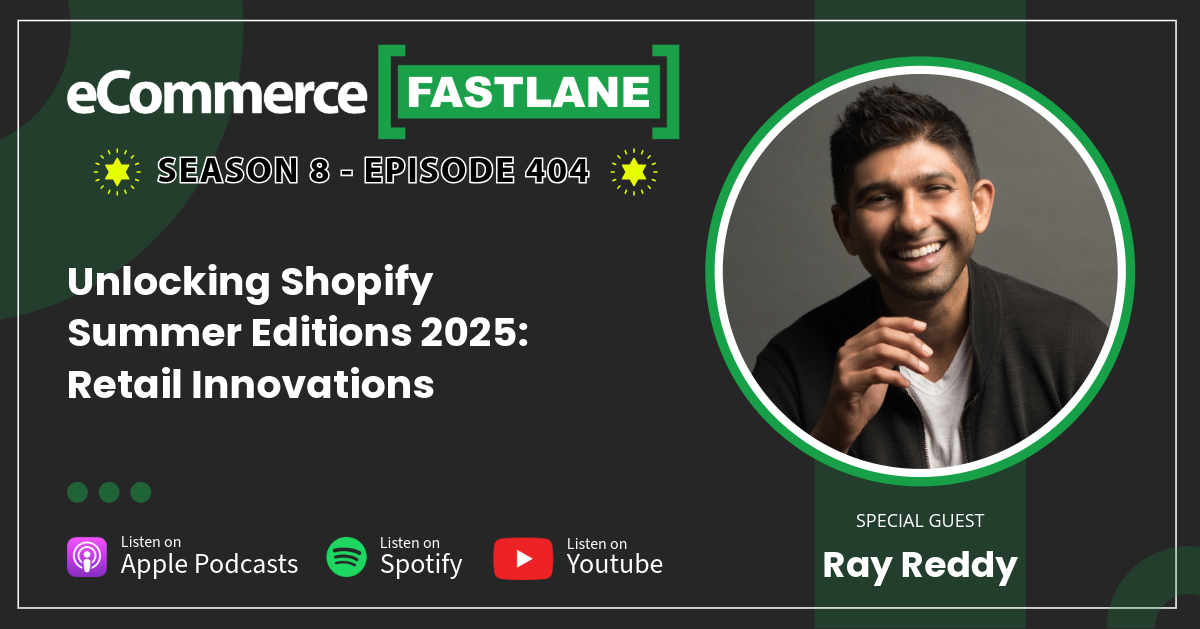
Shopify’s Summer Editions 2025 is setting a new standard for retail, and after working through Ray Reddy’s hands-on episode, I see one truth: we now have a real blueprint to unify our stores, our customer experiences, and our workflows—all in one place.
If you’ve ever felt bottlenecked by clunky systems or watched staff slow down as store complexity ramps up, the changes here are the toolkit we’ve been waiting for.
After my deep dive, I’m breaking down three playbooks you can act on now. Use them to unlock faster in-store service, join up data across online and physical, and actually customize your POS the way your business needs—no giant tech budget required.
Let’s get straight to the point: what’s new is more than features. Shopify is making enterprise-level tools, APIs, and unified data models accessible to brands like ours, not just the big names.
Here’s how I decide which conversations are worth my time or yours: does this episode offer strategic, high-leverage insight for any brand with in-store ambitions? My answer is yes—which is why I’m sharing these distilled takeaways and direct playbooks below.
If you have any retail presence—flagship, pop-up, or even seasonal—Ray maps out how we get unified data, faster staff ramp-up, and in-store agility our teams actually feel. This isn’t a product pitch; it’s a guide on putting new Shopify power directly to work.
Ray Reddy, Shopify’s VP of Product for Retail, leads the unified commerce charge. I’ve followed his work for years, and he’s the guy who cuts through the buzzwords and actually puts feedback from brands like ours into the roadmap. His focus: make in-store tech as fast and flexible as the best ecommerce, without drowning us in vendor talk or costly middleware.
If you want his direct perspective, check out Ray’s LinkedIn profile or browse the official Shopify POS page for the latest updates.
I’ve run enough shop floors to see where real dollars slip through the cracks: slow checkouts, confused staff, long lines, “where’s the item?” searches that grind energy and conversions down. When I heard Ray spell out how POS 10 fixes these, it hit home.
Here’s what stores like ours deal with as soon as growth hits:
I know because I’ve tallied up those lost weekends and rotting staff schedules myself.
Here’s how POS 10 lets us flip the script:
I’ve seen teams cut cart build/checkout times by 5–8% after moving to POS 10—and the true win is how much less staff training is needed. People get up and running fast, with less handholding.
It’s intuitive—training took a few minutes and in one shift people are ready to go. – Ray Reddy
Audit your own busiest checkout moments. Where are we losing time—searching SKUs, navigating screens, managing bigger carts? Now, picture POS 10’s smart search or always-on workflows in that spot. If one of those new features would cut waits or boost confidence, you’ve got a business case to move. Roll this into your next hire’s onboarding and see the compounding effect for yourself.
We all agree: disconnected customer journeys bleed loyalty and lull revenue. Every time a customer gets treated as “new” because the system can’t see their full history, trust takes a hit—and conversion rates never recover.
Most brands I talk to are running two separate tracks: ecommerce and physical retail. Data gets siloed, loyalty programs fall flat, and the in-store team has no visibility into online purchases or preferences. The result? We under-serve high-value customers and guess at what’s working across channels.
Ray’s push at Shopify means there’s now a native, shared customer model. No more patching with middleware or day-late syncing. When I see a regular come to the counter, the staff can pull up their history—what they bought online, loyalty status, and even open carts.
We now have:
When my peers started using this system, onboarding dropped, tech headaches faded, and retention improved measurably. Brand after brand sees the difference when staff can actually recognize customers and use data in the moment—without jumping systems.
When we say one system we mean like there is a single customer model that spans online and in store. The way that developers build and the way that you would customize things work in the same way online and in store because they’re actually built on the same foundation and platform and were designed to work together. – Ray Reddy
Walk through your customer journey start to finish. Can you or your team see everything they’ve purchased, everywhere? Are rewards, preferences, and returns handled smoothly on both sides? If not, now’s the time to dig into Shopify’s upgrade tools and support—because those who move first gain in loyalty and LTV while the rest chase behind.
Let’s be honest, until recently, custom POS or workflow tweaks were only for the big brands with deep pockets. Most of us had to accept out-of-the-box “good enough” tools.
I’ve lost count of how many times personalizing receipts, adding a loyalty popup, or streamlining a workflow meant either spending big on devs or giving up entirely. APIs were limited. Custom UIs were locked down. Small and mid-sized brands had to play by someone else’s rules.
POS 10 plus Shopify’s new AI-driven tools change the game:
We’re no longer stuck waiting for the next big core update; we can experiment and iterate live, right on the shop floor.
AI will democratize software—customizing POS will soon be as easy as creating a TikTok. Soon, it won’t matter if you can code or not; it’s all about the creativity behind the workflow. – Ray Reddy
Start by picking one repetitive, time-wasting task your in-store team does every day—maybe stock checks at another location or looking up loyalty status. Jump into the new POS app ecosystem and see if an embeddable app or API can automate it out of existence. Don’t overhaul everything at once; test, measure, and stack micro-automations. The brands who move on small wins now layer them into the fully adaptive in-store journeys our customers expect.
Shopify’s 2025 upgrades, led by Ray Reddy’s retail blueprint, aren’t just incremental—they signal the baseline for real unified commerce that we drive, not the other way around. By moving to POS 10 and adopting true unified data and customization, we finally get efficiency, control, and personalization—without depending on legacy systems or vendors.
These three playbooks aren’t just tactics; they’re the new fundamentals. Embrace them, and your store joins the leaders turning data into revenue, staff into brand champions, and omnichannel into reality instead of a slogan.
Thanks for building together and raising the retail bar.
—
Listen to Episode 405 with Ray Reddy:
Apple Podcasts | Spotify | Stream here
— Links referenced:





