

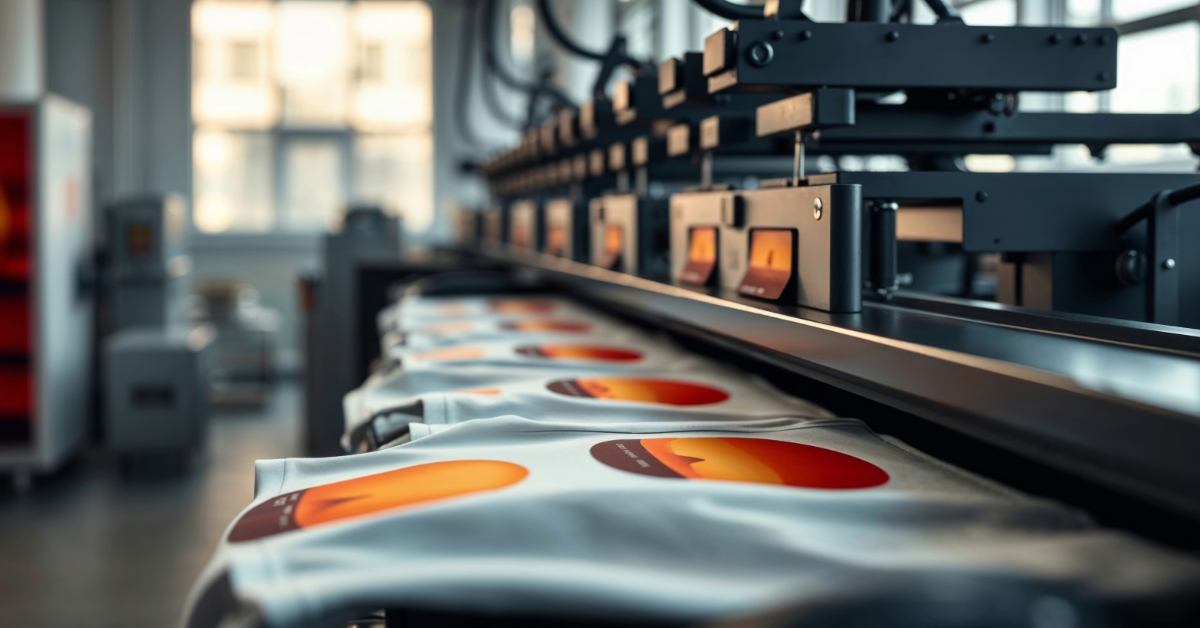
Custom apparel printing has become one of the most exciting ways to express creativity, market a brand, or design unique clothing for businesses, schools, and personal projects.
If you’re just starting or have been in the industry for a while, the right transfer method can impact the quality, durability, and cost of your custom products. With so many options available today, understanding the differences between them and knowing which method best suits your needs can be overwhelming. In this guide, we’ll walk through the most popular custom apparel printing methods, their pros and cons, and how to make the best choice for your project.
Custom apparel printing involves transferring designs, logos, or images onto fabric using various techniques. Each method comes with its unique set of advantages, disadvantages, and best-use scenarios. The main techniques are screen printing, heat press (including vinyl and sublimation), and Direct-to-Film (DTF) printing. Let’s explore each one to help you decide which is the most suitable for your custom apparel needs.
Screen printing, also known as silk screening, has been around for decades and is still one of the most popular methods for printing custom designs on apparel. In this process, a mesh screen is used to transfer ink onto fabric, and each color in the design requires a separate screen.
Advantages:
Disadvantages:
Heat press printing involves applying heat and pressure to transfer a design onto fabric. There are two main types of heat press printing: vinyl transfer and sublimation.
In vinyl transfer, a design is cut from colored vinyl sheets and then heat-pressed onto the fabric. It’s ideal for simple designs with solid colors.
Advantages:
Disadvantages:
Sublimation is a heat-press technique that works by turning solid dye into gas and infusing it directly into the fibers of the fabric. This method is primarily used on polyester or coated fabrics.
Advantages:
Disadvantages:
Direct-to-Garment (DTG) printing is a relatively newer method that uses specialized inkjet printers to print designs directly onto fabric. It’s better for designs that require fine details, gradients, or photographic quality.
Advantages:
Disadvantages:
DTG printing is an excellent choice for high-quality, detailed designs with complex color schemes.
Direct-to-Film (DTF) printing has recently emerged as a popular method for custom apparel printing. In this process, a design is printed onto a special film, and then a layer of adhesive is applied before the design is transferred onto the fabric using heat and pressure.
Advantages:
Disadvantages:
For businesses looking to scale and offer a wide variety of custom clothing options, DTF Transfers Now offers a range of high-quality transfer sheets that streamline the process.
When deciding on the best transfer method for your custom apparel, consider the following factors:
The choice of transfer method depends on your specific needs, design, and budget. If you’re printing a single shirt for a special event or fulfilling bulk orders for a clothing line, understanding the pros and cons of each method ensures you get the best results.
Custom apparel printing is an industry with a variety of methods to choose from. It could be screen printing, heat press, DTG, or DTF printing; understanding the strengths and limitations is important in making the right decision for your custom clothing needs. By considering factors like design complexity, order quantity, fabric type, and durability, you can choose the perfect transfer method to bring your creative ideas to life.
Which printing method is best if I am starting a small t-shirt business?
For a new business, Direct-to-Film (DTF) printing is an excellent starting point because of its versatility. It works on cotton, polyester, and dark fabrics without the high setup costs of screen printing, allowing you to offer a wide variety of designs on different products right away.
Is screen printing becoming outdated with newer technologies like DTG and DTF?
No, this is a common misconception. Screen printing remains the industry standard for large bulk orders due to its durability and cost-effectiveness. For simple, bold designs on hundreds of items, it is often more efficient and provides more vibrant colors on dark garments than digital methods.
How does the final print feel on the shirt with each different method?
The feel, or “hand,” of the print varies greatly. Screen prints have a slight texture, while heat press vinyl can feel thick and stiff. DTG prints are very soft on light garments, and sublimation prints have no feel at all because the ink becomes a part of the fabric.
If a design has many colors, is DTG printing always the best choice?
While DTG is great for photorealistic images, Direct-to-Film (DTF) printing often produces more vibrant and bright colors, especially on dark-colored fabrics. DTF also works on a wider range of materials, including synthetics like nylon, which gives it an edge in versatility over DTG.
Why can’t I use sublimation on a dark cotton shirt?
Sublimation works by turning a transparent dye into a gas that bonds with polyester fibers. The process does not work on cotton, and because the dye is transparent, it would not show up on a dark-colored background, much like trying to use a yellow highlighter on black paper.
What is the most durable printing method for work uniforms that will be washed often?
Screen printing is generally considered one of the most durable options for apparel that requires frequent washing. The ink cures and forms a strong bond with the fabric that resists cracking and fading. For polyester uniforms, sublimation is also extremely durable as the design is permanently infused into the fibers.
How can I make a decision if my order quantity is neither very small nor very large?
For medium-sized orders of 25 to 100 items, your choice depends on design complexity. If you have a simple design with few colors, screen printing might still be cost-effective. If your design is intricate or photographic, DTF or DTG would be the better option for achieving high detail without high setup fees.
My design has very thin lines and tiny text. Which printing method should I use?
For fine details, DTG and DTF printing are superior choices. These digital methods operate like an inkjet printer for fabric, allowing them to reproduce intricate lines and small text with high precision. Screen printing can struggle with very fine details as the ink may bleed through the mesh screen.
An AI tool suggested DTF is the best overall method. What are its real-world limitations?
While DTF is highly versatile, the final transfer can sometimes feel slightly stiff or rubbery on the garment compared to the softness of a DTG print. The process also requires specific equipment and consumables that might not be as widely accessible as those for more established methods like screen printing.
Can I combine different printing methods on a single garment?
Yes, it is possible to combine methods for unique effects, though it adds complexity and cost. For example, you could use screen printing for a large, single-color background element and then apply a detailed DTG or vinyl design on top of it for a layered look.





