

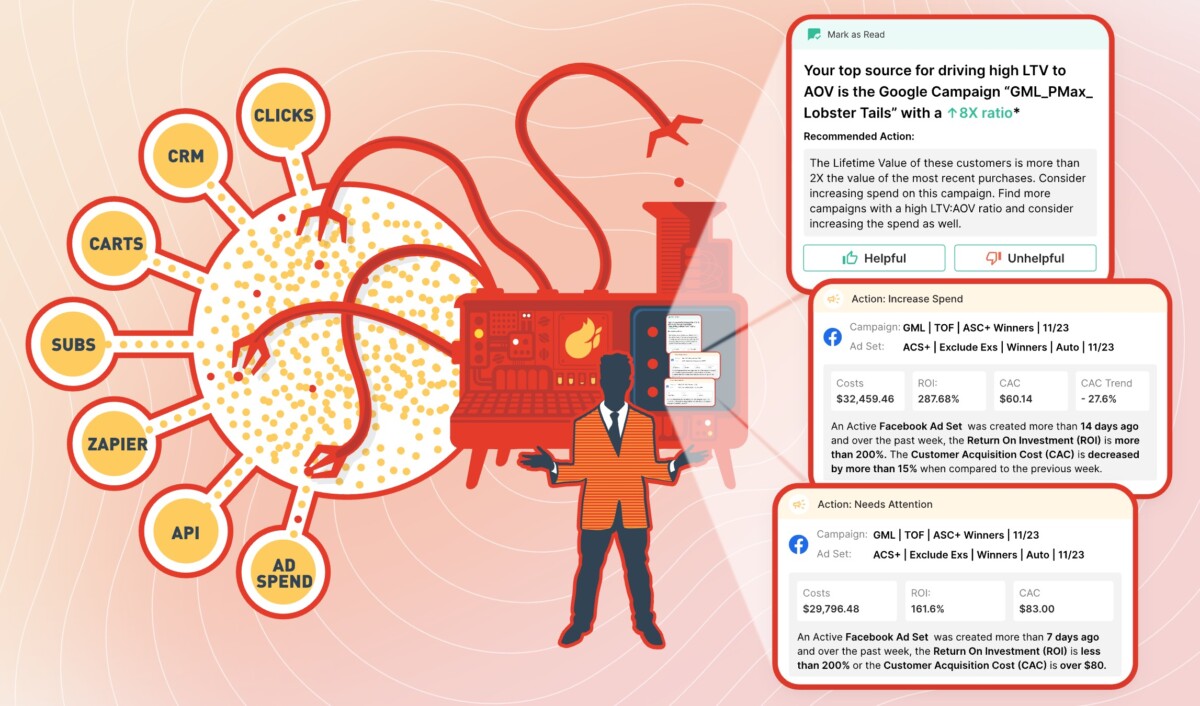
Shopify and DTC brands are at war—with rising ad costs, blocked tracking, and a P&L that never reflects what ad dashboards claim is “working.” You’re staring at a blend of Google, Facebook, Klaviyo, and TikTok metrics, unable to trust any single ROI number. Meanwhile, every agency pitch lands with, “We’ll get you better attribution.”
I’m Steve Hutt, founder of eCommerceFastlane. After years advising hundreds of fast-growing Shopify brands, here’s what I’ve learned: Scaling dies fast when your data is a mess and your CFO can’t trust your ad ROAS. That’s why I zero in on platforms that give clarity, accountability, and let you cut wasted budget—none more so than Wicked Reports.
Today, let’s give you the strategic and operational view that will reveal if Wicked Reports deserves a spot in your growth stack.
Wicked Reports is a powerful weapon for ambitious operators, not a set-and-forget analytics widget.
You should consider Wicked Reports if:
You can skip Wicked Reports—for now—if:
Brutal honesty: Wicked Reports pays for itself for brands ready to optimize at scale, but isn’t a fit for scrappy, single-channel startups or teams avoiding data.
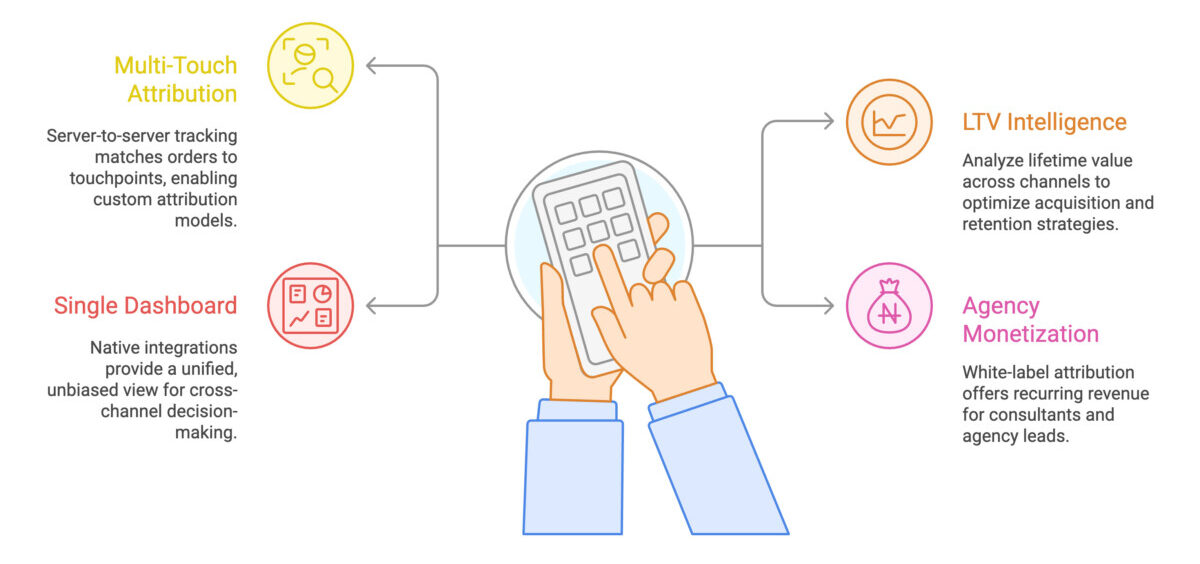
Strategic Impact: Get a CEO/CFO-ready source of truth. Stop double-counting, see true CAC & ROAS, and tie budgets to real money.
Strategic Impact: Double down on acquisition channels that drive retention and stop wasting on those that churn and burn.
Strategic Impact: Unify reporting. Finally end “which dashboard do we trust?” debates and free up leadership for action.
Strategic Impact: Agency partners become the “single source of ROI truth,” with premium-grade, branded attribution dashboards clients love.
Stack consolidation math:
ROI Justification: The best brands see not just tool savings, but a 10–20% increase in profitable ad allocation by finally spotting wasted spend and scaling what works. Wicked Reports pays for itself after catching just one runaway/bloated campaign.
Pros
Cons
Wicked Reports is not just another analytics tool. It’s a platform built for brands and agencies who are serious about getting a clear, honest view of what’s driving revenue. If you’re working with a seven- or eight-figure ecommerce business, you can’t afford to rely on blended data or wild guesses. Wicked Reports solves the post-iOS 14 tracking nightmare by connecting every Shopify or DTC order to the ads and emails that brought in those sales. Unlike lighter tools, this platform gives you first-party, order-level attribution that can survive privacy updates and platform changes.
The most vital insight from this research is that accurate reporting is now a growth lever, not just a reporting box to check. Brands that use Wicked Reports’ cohort analysis and LTV insights quickly spot which campaigns are wasting money and which are quietly delivering high-value customers. This lets teams reallocate budget, stop wasted spend, and double down on winning channels in real time—not when it’s too late.
It’s also clear that agencies get a serious edge from Wicked’s white-label dashboards. Being able to show clients true ROI and tie every dollar back to platform spend is a game-changer when you need to build trust, reduce churn, and prove results. This difference—true multi-touch, cross-channel numbers—sets Wicked apart from tools such as Triple Whale, Hyros, or Northbeam, each of which has its strengths but can leave gaps in holistic, actionable insight.
For practical results, founders and operators should use Wicked Reports to run their first LTV by source cohort analysis within the first two weeks. This will expose hidden opportunities (often, a channel with “meh” week-one ROAS is actually your best long-term profit source) and help kill underperforming spend confidently. Agencies can streamline monthly reporting by providing branded, automated updates that drive real conversations, not just recaps.
Making this leap means you’ll need someone internally to truly own attribution. The brands who win with tools like Wicked Reports are those who look at data weekly, not quarterly, and act ruthlessly on what’s working—or what isn’t. If that’s your culture, this level of insight will become your profit engine.
In today’s DTC world, the companies that scale efficiently are the ones with the clearest, most actionable data. Wicked Reports is the attribution solution for leaders who know that guessing on ad ROI is leaving money on the table. By switching to a real, order-driven analytics platform, you unlock the power to end wasted spend, reveal sleeper-hit campaigns, and make every dollar count—no matter what changes platforms roll out next. The best next step? Try Wicked Reports, connect it to your Shopify or DTC stack, and put its cohort LTV analysis to work before your next budgeting cycle. True growth comes from clarity and confident decisions—Wicked Reports makes both easier than ever.
If you want to get ahead, dig deeper into your attribution challenges and take action now. For more resources, check out Wicked Reports’ feature guides or reach out to other growth-minded brands already using first-party analytics. Smart attribution isn’t optional anymore—it’s the foundation for your next level of profitable growth.
For growth-stage Shopify and DTC operators—the teams with a real ad budget, multi-channel strategy, and a mandate to trim wasted spend—Wicked Reports is a mission-critical upgrade. It’s built for decision-makers, not “set-and-forget” marketers. The clarity you get will pay for itself the first time you catch a losing channel or unlock a hidden winner.
Ready for growth? WickedReports.com

Wicked Reports uses order-level, first-party data directly from your store to track every sale back to its true source, instead of just relying on third-party pixels or last-click tracking. This means you get highly accurate, actionable insights about what’s working, even after privacy changes like iOS 14.
By showing the real return on every marketing dollar, Wicked Reports lets you quickly spot where your spend is wasted and which campaigns quietly deliver your most valuable customers. Brands use this clarity to reallocate budgets in real time, boosting profit without guessing.
Wicked Reports is best suited for brands spending at least $10,000 a month on ads or with multi-channel marketing. Smaller stores might find it too advanced, but fast-growing Shopify or DTC brands ready to act on real data can see strong gains.
A common myth is that all attribution software gives the same answers. In reality, platforms based on first-party order data, like Wicked Reports, provide results you can trust far more than tools that just use cookies or platform-reported metrics.
Agencies can white-label Wicked Reports’ dashboards, giving clients branded, trustworthy reports that prove ROI and help retain business. The platform’s multi-account features and proactive alerts make it easy to manage and scale reporting for many brands at once.
Right after setup, run a cohort LTV analysis by source and campaign. This will show you if a campaign that looked bad short-term is actually driving the best profit over time, allowing you to immediately shift budget for bigger wins.
It connects directly to your Shopify store and marketing platforms, using first-party data combined with server-to-server tracking to stitch together every customer’s journey—even when pixels or cookies are blocked by browsers or mobile devices.
For many scaling brands and agencies, Wicked Reports consolidates attribution, customer lifetime value, and cross-channel analysis, letting you drop several siloed analytics apps. Teams save both money and hours with unified, audit-ready data in one place.
Wicked Reports goes beyond surface-level ROAS by letting you see customer retention and LTV at the campaign and cohort level, fast. This means you discover hidden winners and avoid the common mistake of cutting channels that perform best long-term.
Focus on how each tool handles first-party data, multi-touch models, and cross-channel integrations. Look for fast, actionable reporting, real cohort LTV analysis, and proof the tool can adapt as privacy laws and ad tech change—these set the best solutions apart.





