

Music creation is undergoing a fascinating transformation driven by artificial intelligence.
The rise of AI music generators is not only simplifying how music is produced but also reshaping genres, especially rap, which thrives on lyrical creativity and rhythmic flows. This article examines three notable platforms — MusicCreator AI, MakeBestMusic, and Typecast AI — highlighting their core capabilities, unique features, and impact on modern music production from an experiential perspective.
The popularity of music genres like rap, hip-hop, and electronic underscores the demand for fresh, rhythmically complex tracks. AI technologies are advancing rapidly, enabling tools that translate text or simple user prompts into full-fledged songs with beats, melodies, and vocals. These advancements not only accelerate the music-making process but also invite a broader audience to participate creatively, breaking down traditional barriers.
Rap music particularly benefits from AI innovations because it demands both lyrical precision and engaging vocal delivery. An AI Rap Generator can simulate these elements, producing verses with rhythm and style tailored to the user’s instructions. The confluence of AI’s compositional power and rap’s expressive demands creates exciting possibilities for both creators and listeners.
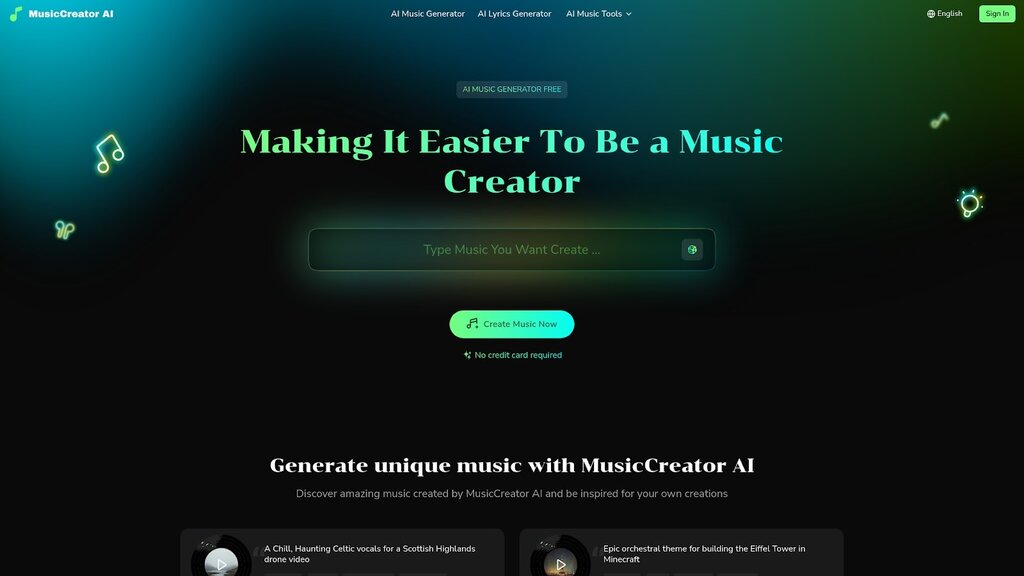
MusicCreator AI offers a powerful yet approachable music generation experience. It enables users to turn text prompts into musical compositions across genres, with particular strength in rap. The AI rap generator crafts rhythmic and emotive verses, making it easier for creators to experiment with styles and moods without needing advanced musical knowledge.
The platform includes tools for converting text into melodies, generating lyrics, and even creating backing tracks. Users can also customize their music through a MIDI editor, allowing refinement of notes and instrumentation. This suite supports both novice users wanting quick results and professionals aiming for fine-tuned productions.
Using MusicCreator AI feels like having an accessible songwriting partner. The simplicity of entering ideas or lyrics and receiving a composed track instantly encourages creative exploration. While the AI generated raps can sometimes miss nuanced emotional depths, overall, the output often surprises with its flow and coherence, providing a solid base for further customization.
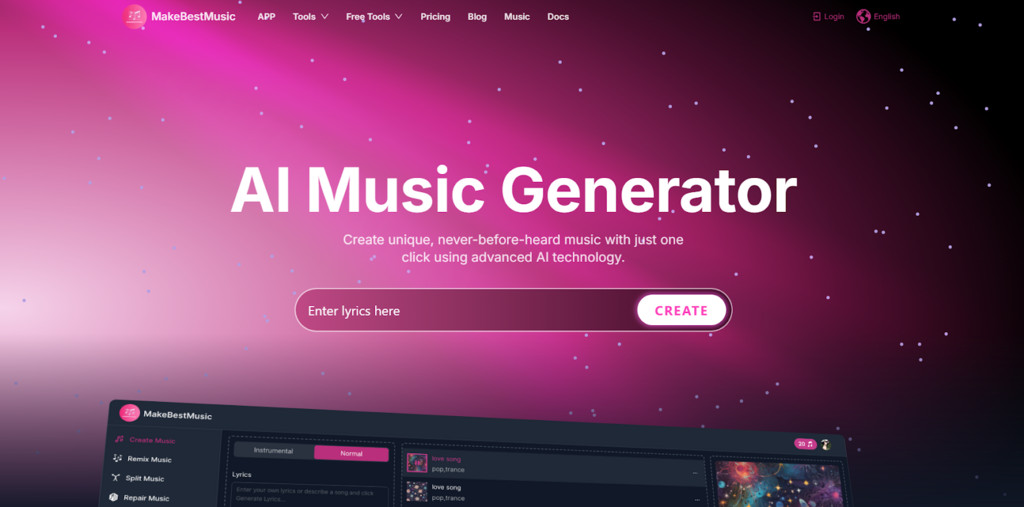
MakeBestMusic focuses on delivering fast and high-quality AI music generation. The platform’s AI music generator processes user-inputted parameters such as genre, emotion, and tempo to produce polished royalty-free tracks instantly. It’s ideal for content creators needing fresh background music or musicians prototyping ideas.
This tool offers extensive creative control, allowing adjustments of instrumentation and mood. Its ability to generate complete compositions quickly supports diverse applications, from YouTube videos to film scoring. The AI’s analytical approach to musical datasets enables unique and contextually relevant tracks.
Exploring MakeBestMusic reveals a robust and dependable option for those valuing efficiency without compromising quality. Its interface strikes a balance between simplicity and depth, providing users a playground to quickly realize musical concepts. While it excels in instrumental and melody generation, it currently doesn’t focus on vocal or rap lyric integration, which limits its scope compared to specialized rap generators.
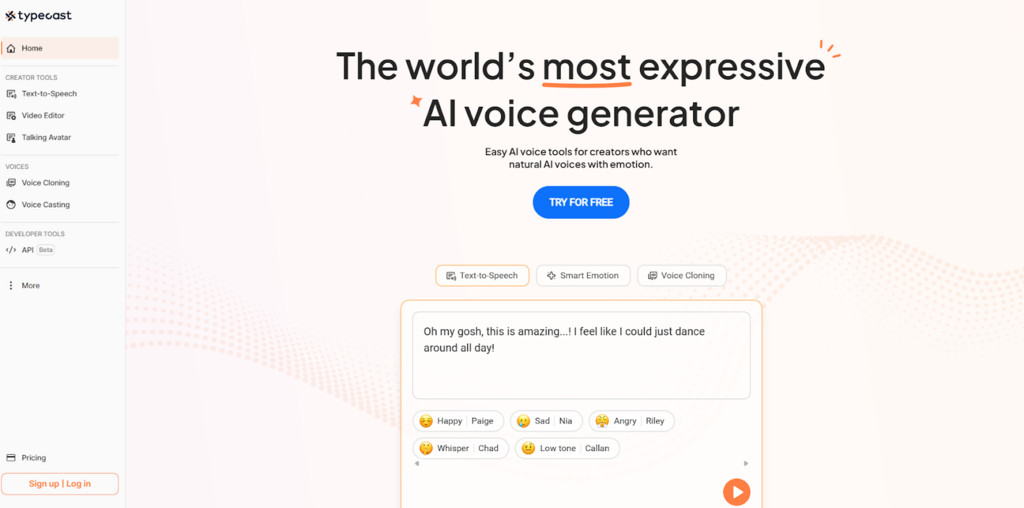
Typecast AI distinguishes itself by specializing in rap vocal synthesis. Its rapper voice generator transforms text lyrics into vocal performances with multiple customizable voices and emotional tones. This capability opens doors to creating authentic rap vocals without access to a human rapper.
Users appreciate Typecast’s flexibility in voice selection to match different rap styles. The system supports multiple languages and expressive nuances, allowing tailored performances. Its intuitive interface makes generating and tweaking vocal tracks straightforward, perfect for fast iteration.
Utilizing Typecast AI offers exciting possibilities for independent creators and marketers. The rap voice synthesis is impressively realistic, and choosing different voice inflections adds dynamic range to tracks. However, limitations exist in voice variety and the absence of more advanced vocal editing, leaving room for growth.
From firsthand use, MusicCreator AI combines ease-of-use with creative freedom, making it a useful companion for those exploring AI rap generation. MakeBestMusic impresses with professional instrumental compositions accessible in moments, while Typecast AI brings the vocal element to life with convincing rap voices. Each tool carries unique strengths and, when used complementarily, can enrich the overall music creation process.
As AI music generators evolve, their integration into rap and wider music genres signals a dynamic shift in creative processes. MusicCreator AI, MakeBestMusic, and Typecast AI exemplify diverse approaches—from text-driven songwriting to vocal emulation—each contributing value without overshadowing human artistry.
For enthusiasts and professionals alike, these platforms herald a future where music production is more inclusive, faster, and creatively expansive. Ultimately, AI rap generators are not replacements but enhancers, helping unlock new rhythms, lyrics, and sounds shaping the next era of music innovation.
The biggest change is how AI accelerates the initial creation process, turning simple ideas into full tracks almost instantly. This allows creators to quickly prototype songs and experiment with styles without needing advanced music theory knowledge. These AI music generators are lowering the barrier to entry for many aspiring artists.
These generators use advanced machine learning models trained on vast datasets of existing rap music, lyrics, and rhythmic patterns. When a user enters a prompt, the AI translates the words into a rhythmic structure and chooses a flow that matches the requested mood or style. This allows the AI rap generator to produce coherent verses with complex timing.
Beginners can easily create basic tracks and ideas since the interfaces are often designed for simplicity. However, professionals gain the most value by using the tools for specific parts, like generating a unique bassline or a scratch vocal track. They then apply their expertise to fine-tune the AI’s output using features like MIDI editors for a truly polished sound.
No, the tools are primarily enhancers, designed to speed up the creative workflow, not replace human artists entirely. The article shows that platforms like MusicCreator AI and Typecast AI provide a solid foundation. The final, nuanced emotional depth and artistic vision still depend on the human creator, who uses the AI-generated elements as building blocks.
Typecast AI focuses specifically on high-quality rap vocal synthesis, which sets it apart from generators that focus mainly on instrumentals and melodies. It allows users to convert raw lyrics into professional-sounding vocal performances using customizable voices and emotional tones. This feature is crucial for creators who need authentic rap vocals without hiring a human rapper.
Most commercial AI music platforms, especially those suitable for content creators like MakeBestMusic, offer royalty-free tracks for user-inputted parameters. This means you can use the resulting music in your content without paying extra fees for every play. You should always confirm the licensing agreement to ensure the track is unique and free for commercial use.
Rap music’s structure depends heavily on rhythmic precision, lyrical complexity, and distinct vocal delivery. AI rap generators can simulate these elements effectively, creating verses with tailored rhythm and style, which accelerates the typically demanding process of writing and recording. The expressive demands of the genre align well with AI’s pattern-recognition capabilities.
If you need fast turnaround on background music, you should start by testing MakeBestMusic, focusing on generating a track that matches the mood and tempo of your video or podcast. For those interested in the vocal side, immediately experiment with Typecast AI by inputting a verse to hear a few different rapper voices. This lets you quickly assess which tool best addresses your specific music production needs.
While AI can provide flow and coherence, the current technology sometimes struggles to capture the deep, nuanced emotional landscape present in human-written music. When using a tool like MusicCreator AI, you may find the generated rap lyrics or melodies lack a specific, heartfelt emotional tie. This emphasizes that human editing is still necessary for truly distinctive and moving art.
MusicCreator AI includes a MIDI editor, which is a key feature for fine-tuning the AI’s output. The MIDI editor allows you to precisely adjust notes, instrumentation, and timing, stepping beyond simple text prompts. This feature is essential for creators who want to take an AI-generated idea and mold it into a truly unique, final composition.





