

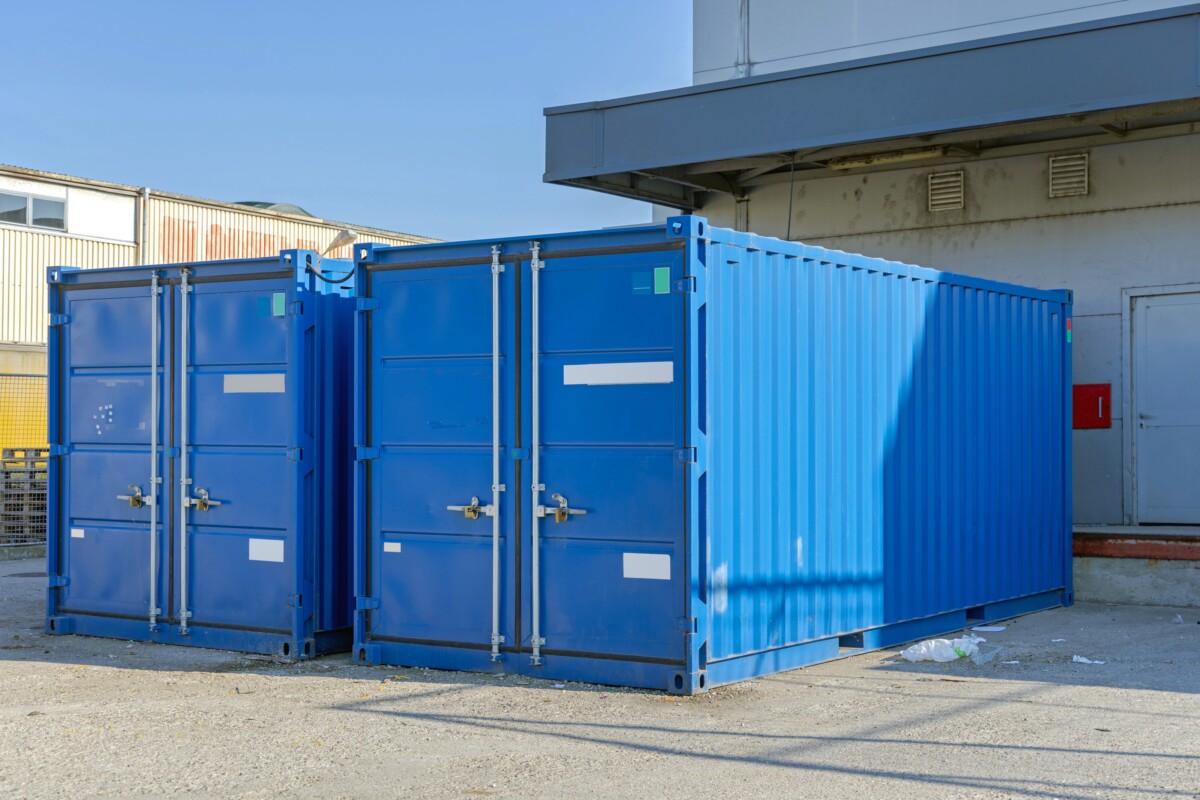
Here’s a scenario I see play out constantly: You place that big manufacturing order because the unit economics finally make sense at volume. The container arrives. And suddenly you’re playing Tetris with pallets in your garage, spare bedroom, or overwhelmed warehouse space.
Or maybe it’s Q4 and you’ve built up three months of inventory to avoid stockouts during peak season. Except now your fulfillment team is literally climbing over boxes of slow-moving SKUs to pick today’s orders.
This is the inventory overflow problem—and it hits differently depending on where you are in your ecommerce journey. Whether you’re shipping 100 orders monthly from your basement or managing a 10,000-square-foot fulfillment center, the core challenge is the same: how do you handle inventory that doesn’t fit in your active picking space without slowing down fulfillment or burning cash on premature warehouse expansions?
Let’s break down the solutions that actually work at each stage, including some unconventional approaches I’ve seen brands successfully deploy across 400+ founder conversations.
Before we solve this, let’s acknowledge something important: inventory overflow usually signals growth. Your sales are increasing, you’re buying smarter quantities, or you’re planning ahead for seasonal demand. These are positive indicators.
But the operational reality creates real friction:
For emerging operators (100-500 orders/month):
For growth-stage brands (500-5,000 orders/month):
For established operations (5,000+ orders/month):
The pattern I see consistently: brands hit overflow at predictable inflection points, and how they handle it often determines if they maintain fulfillment speed during growth or create operational bottlenecks that damage customer experience.
Here’s the framework that works regardless of your current stage—you’ll just emphasize different tiers based on where you are:
Before adding any external storage, maximize your current space.
The mistakes I see most often:
Immediate optimizations for emerging operators:
Growth-stage space optimization:
Established operation strategies:
One brand I worked with was paying $8,000/month for overflow warehouse space. After a two-day layout optimization, they reclaimed enough room to bring everything back in-house. Sometimes the problem isn’t space—it’s organization.
This is where most brands discover a practical middle ground.
Here’s what works: using flexible storage solutions for inventory that doesn’t need to be in your active fulfillment space.
What belongs in offsite storage:
What should never go offsite:
The economics of offsite storage:
For emerging operators, a 5×10 or 10×10 storage unit typically costs $80-150/month and can hold 6-12 pallets of slow-moving inventory. Compare that to:
For growth-stage brands, the calculation shifts to: “What’s the cost of this overflow space versus the cost of slowed fulfillment?” If your pick time increases 30% because the team is navigating around pallets, that’s labor cost you’re not calculating.
One supplement brand I know uses offsite storage for their bulk packaging materials. They buy corrugate boxes in 10,000-unit quantities (saves $0.12 per box), store 9,000 units offsite, and shuttle 1,000 units weekly to their fulfillment center. Monthly storage cost: $120. Annual savings on box costs: $14,400.
Making offsite storage work operationally:
The key is treating it as a buffer warehouse, not a black hole.
Create a retrieval rhythm:
Use basic inventory management:
Brands making this work typically have someone visit offsite storage 1-2x weekly for 30-60 minutes. It’s not elegant, but it’s far more cost-effective than jumping to a 3,000-square-foot warehouse before you’re ready.
When to jump to a third-party logistics provider:
The trigger points I see:
The 3PL value proposition:
The realistic costs:
For a brand shipping 2,000 orders monthly with average 2 items per order:
Compare that to:
The math flips when you factor in:
The brands I see successfully using 3PLs aren’t necessarily the biggest—they’re the ones where founder time is worth more than the cost differential.
When you’re ready for your own expanded space:
The indicators:
The commitment:
Making the math work:
A 3,000-square-foot warehouse in a mid-tier market might cost:
This becomes economically viable when:
The mistake I see: brands jumping to dedicated warehouse space too early because it “feels” like the right next step. Unless you’re consistently hitting the volume thresholds above, you’re likely better served by optimized space + strategic offsite storage + selective 3PL partnership.
Here’s what I see working in practice for brands at different stages:
Emerging operators (100-1,000 orders/month):
Growth-stage brands (1,000-5,000 orders/month):
Established operations (5,000+ orders/month):
The common thread: successful brands use the right tool for each type of inventory rather than forcing everything into one solution.
Q4 exposes every weakness in your inventory strategy. Here’s how to navigate it without chaos:
8-12 weeks before peak season (September for most brands):
6-8 weeks out (October):
During peak (November-December):
Post-peak (January):
One apparel brand I worked with nails this: They keep 3 weeks of inventory in active fulfillment during Q4, with the remaining 8-10 weeks in nearby offsite storage. They do a 20-minute retrieval run every Monday, Wednesday, and Friday morning. Total additional labor: 1 hour weekly. Cost of storage for 3 months: $450. Alternative cost of expanding warehouse for 3 months: $3,600+.
Mistake #1: Storing everything “just in case”
You don’t need 6 months of slow-moving inventory in active fulfillment. Calculate turn rates and move items with 90+ day supply to offsite storage.
Mistake #2: No system for tracking offsite inventory
If you can’t find it quickly, you’ve just converted inventory into lost money. Basic inventory management prevents the “I know we have 200 units somewhere” problem.
Mistake #3: Treating storage as a permanent solution for dead stock
Storage costs compound monthly. If something hasn’t sold in 6+ months and isn’t seasonal, make a decision: liquidate, donate, or dispose. Holding costs erode any potential future value.
Mistake #4: Optimizing for lowest storage cost instead of total cost
The cheapest storage 45 minutes away might save $30/month but cost you 3 hours of drive time weekly. Calculate your time at $50-100/hour and suddenly the closer (slightly pricier) option is the better deal.
Mistake #5: Jumping to 3PL before optimizing DIY operations
If your current space is disorganized, a 3PL won’t magically solve your inventory management problems—they’ll just charge you more to store your chaos. Get your systems right first, then scale infrastructure.
If you’re just starting out (0-500 orders/month):
This week:
This month:
This quarter:
Expected impact: Reclaim 30-50% more usable space, reduce pick time per order by 20-40%, set foundation for scaling fulfillment.
If you’re growing (500-5,000 orders/month):
This month:
This quarter:
Expected impact: Maintain or improve fulfillment speed while handling 30-50% more inventory, defer major warehouse expansion 6-12 months, reduce space-related stress during growth.
If you’re established (5,000+ orders/month):
This quarter:
This year:
Expected impact: Strategic infrastructure that scales with revenue, improved unit economics through better inventory positioning, competitive advantage through fulfillment speed and accuracy.
The inventory overflow problem is a natural byproduct of growth—the question is whether you handle it strategically or let it create operational bottlenecks that hurt customer experience.
Here’s what works across the board:
Whether you’re shipping from your garage or managing a 10,000-square-foot warehouse, the principle stays the same: the right inventory needs to be in the right place at the right time. Everything else is just clever logistics.
Start with what you have, optimize ruthlessly, add infrastructure strategically, and scale when the economics clearly justify it. The brands that get this right maintain fulfillment speed during growth. The ones that don’t end up in reactive crisis mode every time demand increases.
How much inventory should I keep in active fulfillment vs. offsite storage?
A good rule of thumb: keep 2-4 weeks of inventory for fast-moving SKUs in your active picking area, and 4-8 weeks of slow-movers or seasonal items in offsite storage. Calculate turn rates per SKU—anything turning less than 3-4 times annually is a candidate for offsite storage. The goal is optimizing your active space for speed (fast picks, minimal searching) while using lower-cost offsite storage for items accessed less frequently.
What’s the break-even point for moving to a 3PL?
Most brands find 3PLs economically viable around 1,500-2,000 orders monthly, especially when factoring in the opportunity cost of your time. If you’re spending 30+ hours weekly on fulfillment tasks and your time is worth $50-100/hour, you’re “paying” $6,000-12,000 monthly in sweat equity. Compare that to 3PL costs of $6,000-10,000 monthly at that volume. The break-even isn’t just about dollars—it’s about whether your time is better spent on growth activities versus packing boxes.
How do I prevent offsite storage from becoming a disorganized mess?
Create a simple system before you store the first box: (1) Label everything clearly with SKU, quantity, and date stored, (2) Track offsite inventory in a basic spreadsheet or your Shopify inventory system with location notes, (3) Take photos of how items are arranged when storing them, (4) Set a regular retrieval schedule (weekly or bi-weekly) rather than random emergency runs, (5) Conduct monthly inventory counts to ensure accuracy. The mistake most brands make is treating storage as “set it and forget it”—successful operators treat it as an extension of their fulfillment system.
Is it worth using offsite storage if I’m planning to move to a bigger warehouse soon?
Absolutely, especially if “soon” means 6-12+ months. The mistake I see is brands suffering with cramped, inefficient space (which slows fulfillment and frustrates teams) while waiting for the “perfect time” to expand. Offsite storage for $100-300/month bridges that gap and often helps you defer expensive warehouse expansion even longer by proving you can operate efficiently with optimized systems. Some brands find they never need the bigger warehouse because strategic storage + optimization solved the problem at a fraction of the cost.
What’s the best way to handle seasonal inventory buildups without permanent warehouse expansion?
Start planning 8-12 weeks before peak season: (1) Calculate expected Q4 inventory needs based on historical sales plus growth factor, (2) Secure temporary offsite storage in September before prices increase and availability drops, (3) Move all non-seasonal slow-movers out of active fulfillment space in early October to reclaim room, (4) Establish a 2-3x weekly retrieval schedule to shuttle seasonal inventory from storage to active fulfillment as needed, (5) Return to normal configuration in January and release the temporary storage. This approach lets you handle 2-3x normal inventory volume for 3-4 months without committing to year-round warehouse expansion costs.
How close should offsite storage be to my fulfillment location?
Ideally within 10-15 minutes. The calculation is simple: if storage is 45 minutes away and you need to make retrieval runs 2x weekly, that’s 3 hours of drive time weekly. At $50-100/hour for your time, the distant “cheaper” storage is costing you $600-1,200 monthly in time cost. Pay an extra $50-100/month for closer storage and you’re actually saving money while reducing operational friction. The exception: if you only need to access storage 1x monthly for truly slow-moving items, distance matters less.





