

As more businesses across the globe turn toward the cloud, data loss is not a hypothetical scenario. It is a matter of when, not if. And when it hits your DevOps toolchain, the fallout can be intense: broken releases, stalled pipelines, scrambling teams, and shaken customer trust.
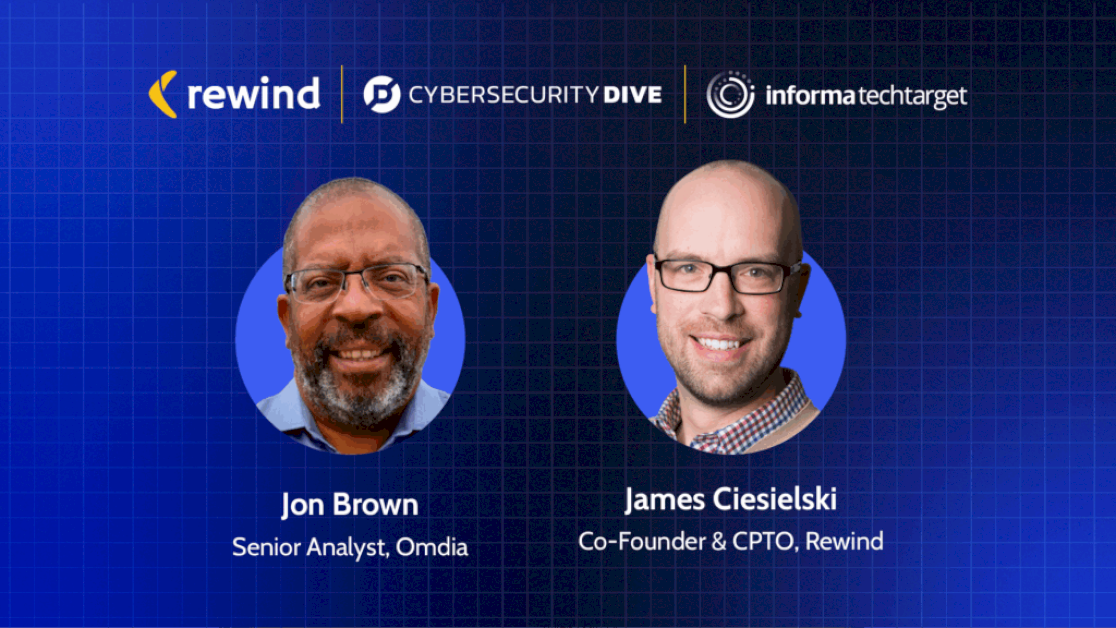
During a recent webinar, Building resilience: Breaking the DevOps data loss chain, Jon Brown, Senior Analyst at Omdia, and James Ciesielski, Co-Founder and CPTO at Rewind, unpacked what real resilience looks like for modern DevOps teams and why platforms’ native protections are not enough.
This recap breaks down the speakers’ key insights, along with practical steps for building a DevOps data resilience strategy that actually works.
When most people think about data protection, they jump straight to customer records and regulated data. Jon Brown argued that this view is too narrow for DevOps-driven organizations.
“When we are talking about critical DevOps data, we are talking about your company’s intellectual property… your engineers, the code they are developing, that is your IP.”
It’s not just source code. Critical DevOps data includes:
James shared a stat from Rewind’s 2024 State of SaaS Data and Recovery report: about 85% of organizations reported at least one data loss event in the past year. When you map that reality onto the list above, the risk is clear. Losing any one of those elements can directly impact your ability to ship.
A lot of organizations expect to lose data after a massive disaster, like a data breach or ransomware attack. The reality is more mundane and more dangerous.
James highlighted the most common causes of data loss that Rewind sees from our customers:
“If they paused and read the terms in their entirety, they would likely find a line saying ‘any data you put into this tool is your responsibility to safeguard and secure.’”
Jon added a layer of emerging risks, including:
In short, there is no single root cause to defend against. You need a resilience strategy that assumes multiple, overlapping risks.
Many teams assume their SaaS platforms “have backup covered.” Jon and James were blunt about why that assumption is dangerous.
First, there is the contractual reality: “In the licensing, they tell you explicitly they are not responsible for your data.”
But even beyond the Shared Responsibility Model, there are technical and architectural constraints:
James used a simple analogy:

To build real resilience, both speakers came back to the 3-2-1 rule: 3 copies of your data, stored in 2 different places in the cloud, 1 of which is not your SaaS provider.
One of the most important messages from the webinar was also one of the simplest:
“The bottom line is that the company, not the SaaS provider, is responsible for data resilience. If you walk away from this webinar with one message, it is that this is on you.”
Ownership is where many organizations stumble:
Jon recommended using a RACI framework and making ownership explicit:
James also stressed the importance of testing, not just planning:
“Everyone has a plan until they get punched in the face.”
At Rewind, the team runs regular tabletop exercises, including scenarios where core decision makers are intentionally unavailable, to make sure the plan works when reality gets messy.
Jon and James also dug into what really happens when things go wrong. The costs go far beyond the immediate recovery work.
From Jon’s perspective, the big cost drivers include:
James added a more human angle:
“Beyond the direct costs and downtime, there is this internal challenge where people build up cynicism. You end up debating whether to switch tools instead of focusing on delivering value.”
He described this as part of the “data loss domino effect”: downtime leads to revenue loss, reputational harm, missed opportunities, and internal distraction.
AI showed up in the discussion as both a helper and a new source of risk.
On the positive side, Jon shared research showing that organizations using AI to plan and execute restores are seeing about an 11% reduction in recovery time. AI can:
But AI also generates a lot of new data. Prompts, responses, and interaction histories are rarely backed up today.
“I fully expect that a few years from now we are going to have to be able to explain what AI did. Part of that explanation will be retention of AI inputs and outputs.”
James pointed out that this is not just a compliance issue. People are already relying on AI systems in very practical ways. Losing a long running chat thread or analysis can be painful, even before regulation arrives.
He also called out opportunities for AI in backup itself, especially around anomaly detection and guiding teams during high stress incidents.
To close the session, Jon and James shared a checklist that any DevOps or platform team can use as a starting point for building their resilience strategy:
This list forms a solid blueprint for moving beyond “checkbox” compliance and toward resilience that actually keeps your teams shipping.
In their closing thoughts, both experts came back to a single theme: resilience is not optional anymore.
James summed it up for teams moving to or scaling with SaaS:
“In the cloud, your data resilience is your last line of control. You need to worry about this for compliance and for business continuity. Everyone will care about this when something goes wrong.”
Jon framed it as a mindset shift:
“There was a time when we were more comfortable with downtime. As work becomes more dependent on continuously operating, integrated software systems, the risks and costs of not having resilience, grow.”
If you are not actively thinking about how to make your SaaS applications more resilient, you are probably not thinking about it enough.
This recap only scratches the surface of the Building resilience: Breaking the DevOps data loss chain webinar with Jon Brown and James Ciesielski.
To hear the full discussion, including real world stories from Rewind customers and deeper dives into AI, shared responsibility, and backup architecture, watch the on-demand webinar.





