

Expanding into a new market used to mean waiting for everything to be in place: including localized product pages, region-specific ads, translated customer support scripts, and yes, even localized reviews. But with the right infrastructure, you don’t need to wait anymore. You just need to make the content you already have feel local.
Let’s talk about how to do that, without slowing down your international growth plans.
You’ve translated your PDPs, updated your pricing and shipping logic, maybe even created a region-specific Instagram account. But when it comes to customer reviews, a lot of brands hit pause. Why?
Because they think they need to wait for country-specific review content before launching.
For example:
“We can’t go live with our German site yet – we don’t have any German-language reviews.”
It’s a reasonable assumption. After all, reviews are one of the most powerful trust signals on an ecommerce site. If you’re launching in a new market, it makes sense to assume that customers want to see feedback from that market.
But that’s not actually what shoppers care about most.
What truly matters to shoppers isn’t the location of the reviewer, it’s whether the review is understandable, relevant, and speaks to their experience.
According to CSA Research, 73% of global consumers prefer content in their native language, and 40% will not buy from websites that don’t offer it.
So when a shopper in France visits your site, they don’t necessarily need reviews written by other French customers, they need reviews they can read in French. That’s a critical difference, and it changes how global brands should approach review strategy.

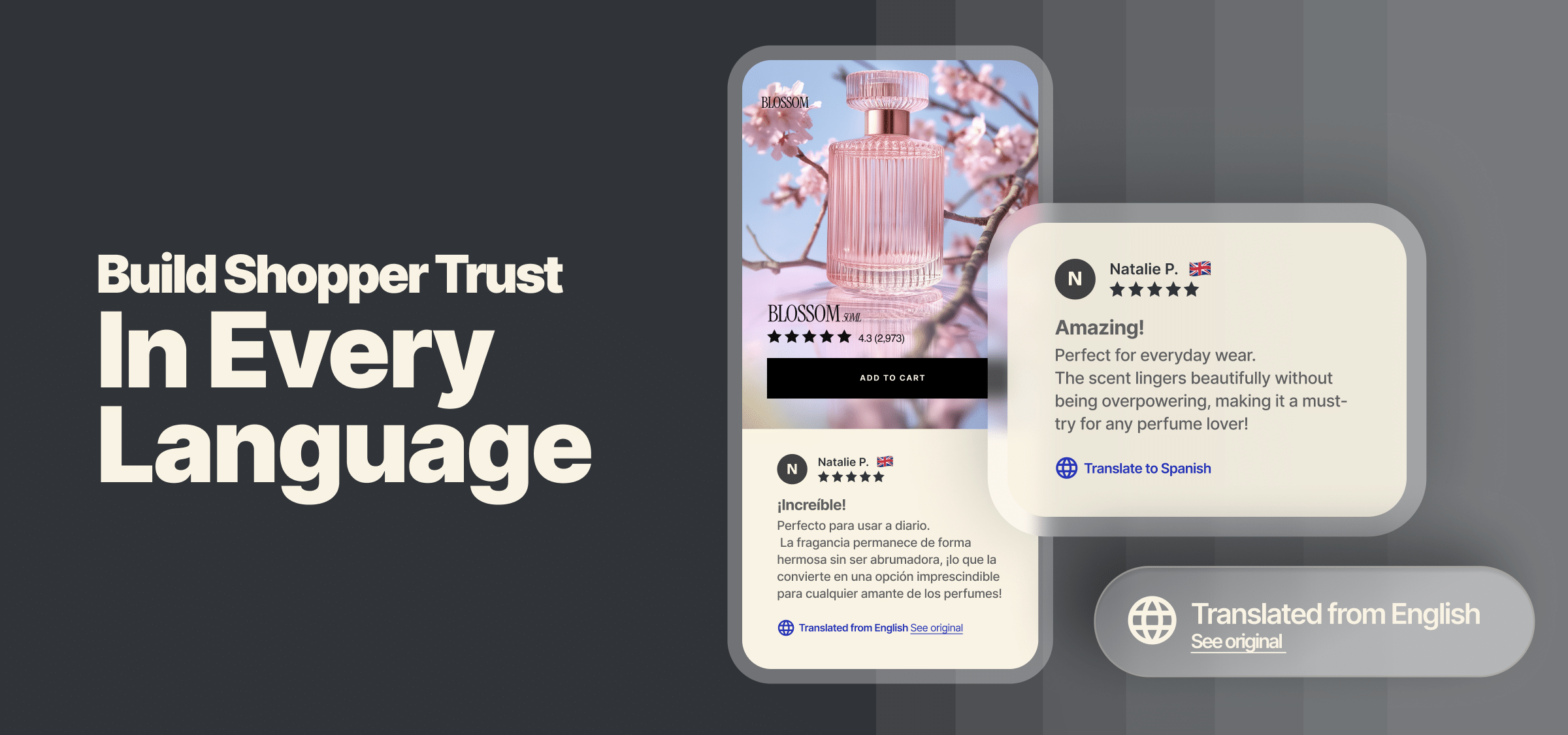
Thanks to smarter tools and infrastructure, global ecommerce brands can now dynamically display review content in the shopper’s own language, even if that review was originally written in another.
This removes one of the biggest blockers to international scale: waiting for localized UGC.
This means brands can deliver local-feeling reviews from day one, without needing waiting to collect them from the local market.

Localization is usually seen as a requirement for scale, but it can also be a blocker if you’re doing it the old way.
Instead of delaying a market launch while you build up enough reviews in that language, you can start with the reviews you already have, and present them in a way that feels local to the shopper.
This unlocks speed and flexibility in several ways:
Some brands have even found they no longer need to run aggressive sampling programs before launch. With translated reviews and AI summaries that surface the most relevant feedback, shoppers can get a clear, trustworthy picture of the product experience right away.
Dynamic localization isn’t just about operational efficiency, it makes the experience better for shoppers too.
When customers visit a product page and instantly understand what others are saying, they’re more likely to trust the product, feel confident in their decision, and follow through with a purchase.
Here’s what that looks like in practice:
All of this creates a smoother path to purchase, and it works even when the underlying review content comes from another market entirely.

It wasn’t long ago that this level of localization required a lot of manual lift. Brands would have to manage review translations themselves or rely on rigid workflows that didn’t scale well across markets.
Now, it’s built into the system.
With Yotpo’s review infrastructure, global scale doesn’t require duplicating effort across markets. You can:
This kind of smart infrastructure means brands don’t need separate marketing ops or dev resources per region. They can focus on expanding and trust that the shopper experience will feel local, even if it’s powered by a global backend.
You don’t need to wait for local reviews to launch in a local market.
You just need review content that adapts to the shopper: translated, summarized, and filtered in their language, automatically.
This isn’t just a UX win. It’s a way to scale faster, convert sooner, and build trust across borders, without reinventing your UGC operations every time you grow.





