

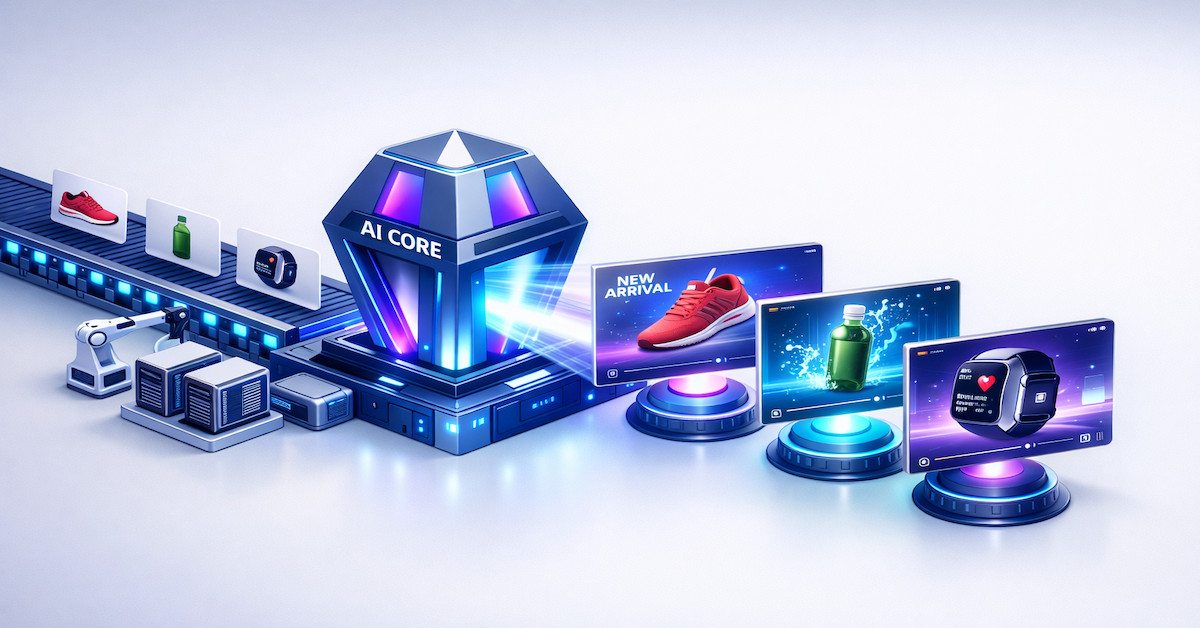
In the fast-paced world of DTC e-commerce, the definition of a “high-converting” Product Detail Page (PDP) has undergone a significant shift.
In 2024, high-resolution photography was the gold standard. Today, in 2026, it is merely the baseline.
Customer expectations have evolved. Driven by the “TikTok-ification” of shopping, consumers now demand to see products in motion before making a purchase commitment. They want to see the drape of the fabric, the sparkle of the gemstone, or the functionality of the gadget.
However, for Shopify merchants with extensive catalogs—ranging from 500 to over 1,000 SKUs—this creates a massive “Content Gap.”
You know that video drives higher Average Order Value (AOV) and lowers return rates. But the logistics of producing unique videos for thousands of products are often prohibitive. Traditional photoshoots are expensive, time-consuming, and operationally complex.
The good news? You no longer need a film crew, a studio, or shipping logistics to close this gap. With the maturation of generative media tools, savvy brands are now automating their creative workflows.
Here is how you can scale video across your entire catalog using an AI-first strategy.
Before diving into the “how,” let’s look at the “why.” Why is filling the content gap urgent?
For a store with 1,000 SKUs, ignoring video means leaving money on the table across 1,000 individual revenue streams.
The biggest misconception is that you need new raw footage to create a video. You don’t. You likely already have the raw materials sitting in your Shopify backend: your high-quality product photography.
For lifestyle, fashion, and home decor brands, the primary goal of video is often purely aesthetic—to capture the eye and showcase dimension.
This is where Image to Video AI technology becomes a game-changer.
Instead of organizing a reshoot, you can feed your existing flat lays or model shots into these advanced engines. Image to Video AI algorithms analyze the composition of a static photo and predict motion.

By applying this technology, you can turn a static gallery into a dynamic visual experience in seconds, costing pennies per SKU compared to hundreds of dollars for a physical shoot.
For functional products—like tech accessories, tools, or skincare—aesthetic motion isn’t enough. Customers need an explanation. They need to know how it works or why it’s better.
Historically, this required hiring a presenter, writing a script, recording the voiceover, and editing the footage. Doing this for 50 products is hard; doing it for 1,000 is impossible.
Enter the enterprise-grade AI Video Generator.
These platforms have revolutionized the “Explainer Video” format. The workflow for a modern Shopify manager looks like this:
This allows you to create a “sales associate” for every single page on your site. You can generate distinct videos for your entire inventory overnight, ensuring that every product—not just your best sellers—gets a dedicated pitch.
Scaling to 1,000 SKUs shouldn’t happen in a day. To maintain quality control and measure impact, follow this roadmap:
In 2026, the barrier to entry for video content has collapsed. The constraint is no longer budget or logistics; it is simply strategy.
By leveraging these new technologies, DTC brands can finally close the content gap. You can deliver a premium, high-touch visual experience across thousands of SKUs without ever hiring a film crew. The result is a more engaging store, happier customers, and a healthier bottom line.





