


In 2026, SEO has a hard entry requirement: authority.
According to Internet Marketing Ninjas, 96.3% of pages ranking at the top of Google have over 1,000 referring domains and in practice, it’s extremely difficult to compete with fewer than 50.
For most people the problem is economic.
According to most link marketplaces, the average cost of a decent backlink sits around:
And that doesn’t include hidden costs:
For small businesses, this quickly becomes unsustainable.
So the real question becomes:
How do you build authority without a five-figure budget?
The advice to “just create great content” is still everywhere, and still mostly wrong for new sites.
Without authority, content doesn’t get distribution. Without distribution, it doesn’t get links.
Even good content struggles to attract links when it’s invisible.
There is, however, one notable exception.
Content that aggregates statistics, benchmarks, or market data tends to attract links more easily.
Why?
This creates a small asymmetry:
Even new sites can earn backlinks if they position themselves as the aggregator of information.
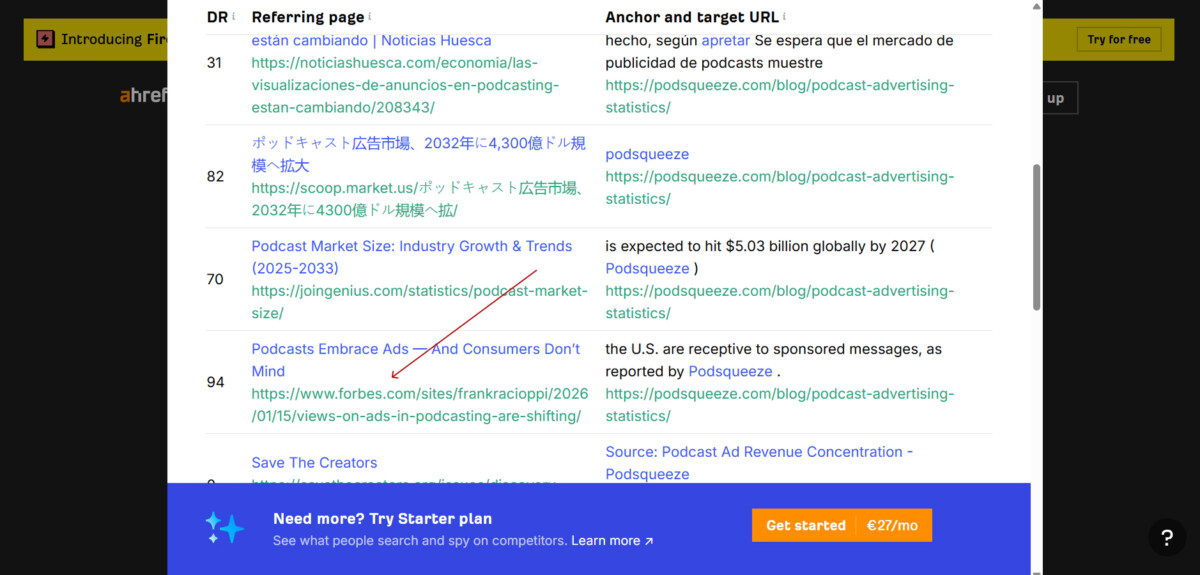
For example, this article about podcast advertising statistics even got a backlink from Forbes.
Outside of this, though, relying on passive link acquisition is rarely effective. No one is linking to guides and informational content in general anymore.
Traditional outreach, where you contact people asking for a guest post or link exchange, has a fundamental problem:
Response rates hover around 3%.
A simple way to improve this is to flip the dynamic. Instead of reaching out and asking for a link, start by offering something first.
One easy approach is to create a listicle, something like “Best tools for [your niche]”, and feature the websites you’d be interested in partnering with.
Something like this:
This shifts the interaction from a cold request to a mutual opportunity.
This approach pushed conversion rates up to ~12%.
For new sites, direct link exchanges often don’t work.
Low-authority domains have little to offer.
That’s where ABC exchanges come in.
Instead of:
You structure it as:
In practice:
This helps:
If you run multiple sites, this becomes one of the most effective tactics available.
Even though link exchanges, and especially ABC exchanges, can be very effective, they still require a fair amount of manual work:
That’s where tools like Rankchase come in to automate this process.
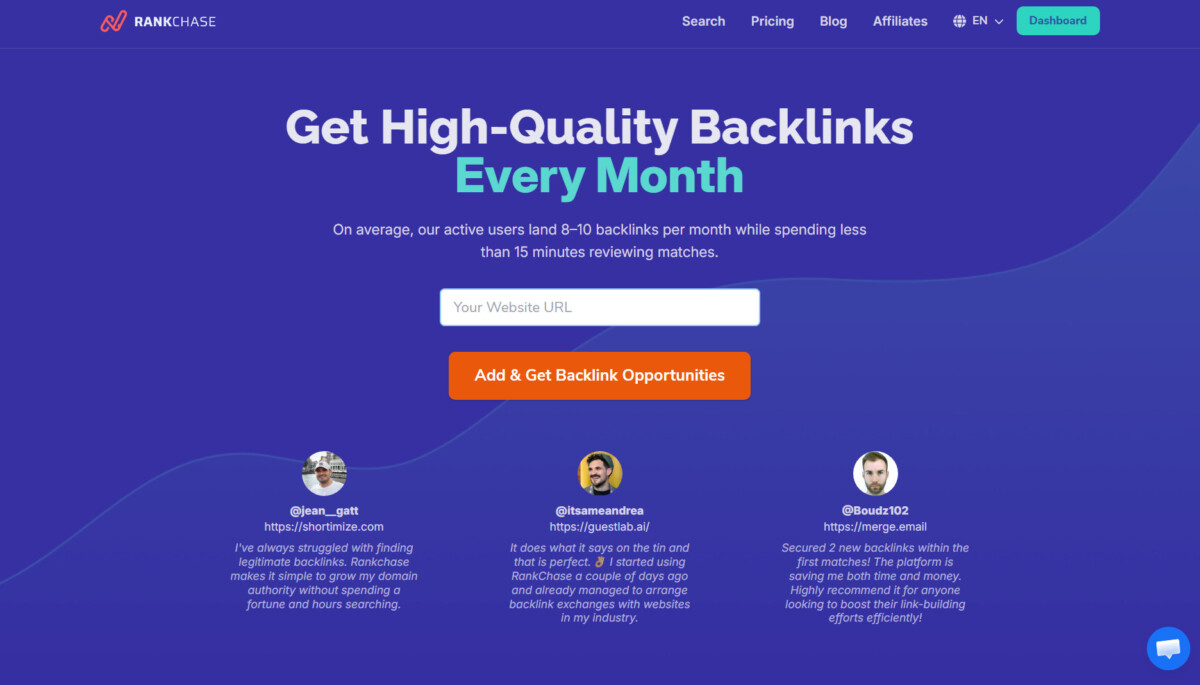
At a high level, it works like this:
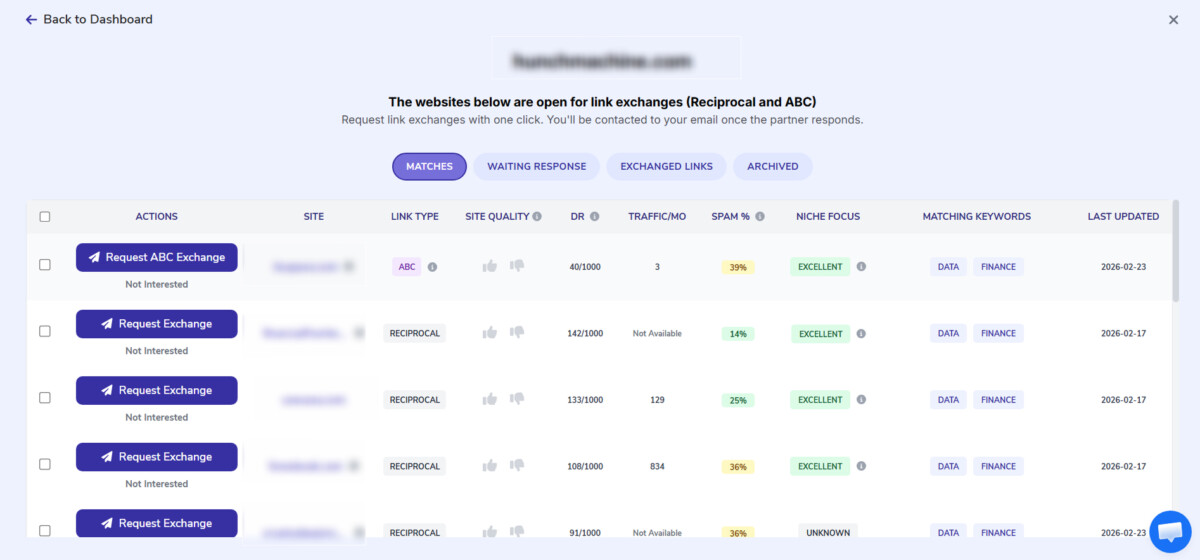
The result is a significant cost reduction.
Compared to ~$300 per link in marketplaces, the effective cost can drop to $2–$3 per link, especially when replacing manual work.
It’s not a magic solution, but it turns link building into a repeatable system instead of a chaotic, expensive process.
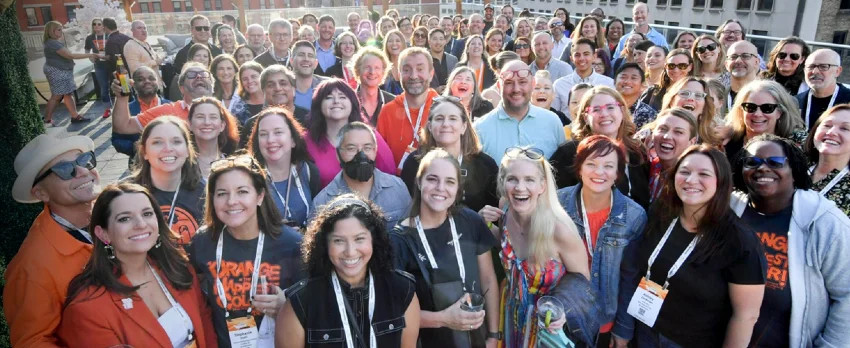
Digital outreach is saturated.
Offline, though, it’s a different story.
Events, meetups, and small niche gatherings still work surprisingly well. A quick, genuine conversation in person can do more than dozens of cold emails that never get a reply.
You don’t need to fly to something like WebSummit either. In the US, there are plenty of smaller, more targeted ways to meet relevant people:
If you’re in SaaS, marketing, ecommerce, etc., there’s almost always something happening nearby.
And when these connections turn into link opportunities, they’re usually better:
It’s less transactional, and that’s exactly why it works.
In 2026, backlinks are still important, but not for the reason most people think.
LLMs like ChatGPT and Gemini don’t “use backlinks” the same way Google does.
Instead, the process looks like this:
When LLMs read a page, they’re not just looking at links.
They’re identifying:
This means that brand mentions with clear context are increasingly valuable.
Instead of focusing only on anchor text like:
It’s often more effective to include:
For example:
“Tools like XYZ help automate finding link exchange partners…”
This gives both users and models a clearer signal.
In 2026, link building for new sites comes down to sticking with a few strategies that actually move the needle:
The biggest mistake new sites make is waiting for links to come naturally.
The sites that grow are the ones that treat link building as an active process, even a simple one.
Because at the end of the day, authority has to be actively built.
Not necessarily.
Buying links can accelerate results, but it’s expensive and often inefficient for small teams.
Many sites grow using exchanges, outreach, and partnerships instead.
Yes, when done properly.
Focus on:
ABC exchanges can also help reduce direct reciprocity signals.
Typically:
It depends on competition and consistency.
A combination of:
These tend to produce the quickest early results.
Yes, but indirectly.
Backlinks help you rank on Google, and LLMs often pull sources from top-ranking pages.
However, once your content is surfaced, clear brand mentions and context become just as important.
If your main bottleneck is:
Then yes, it can significantly reduce time and cost.
Especially compared to agencies or manual workflows.





