





Quick Decision Framework
- Who This Is For: Shopify founders doing $500K to $5M who are deciding whether the next growth move is a new hire, a smarter AI workflow, or the upstream work of documenting their operational knowledge so both humans and AI can actually use it.
- Skip If: You’re already operating a fully staffed 50-plus person team with dedicated ops, CS, and marketing functions. The stage-specific advice here is built for leaner operations.
- Key Benefit: A clear framework for identifying which roles AI can absorb, which require human judgment, and the specific knowledge externalization process that makes AI delegation actually work.
- What You’ll Need: An honest look at your current team structure, role by role, and 3 hours blocked for structured self-documentation of your operational knowledge.
- Time to Complete: 15-minute read. Knowledge externalization exercise: 3 to 5 hours. Role audit: 2 to 3 hours with your team.
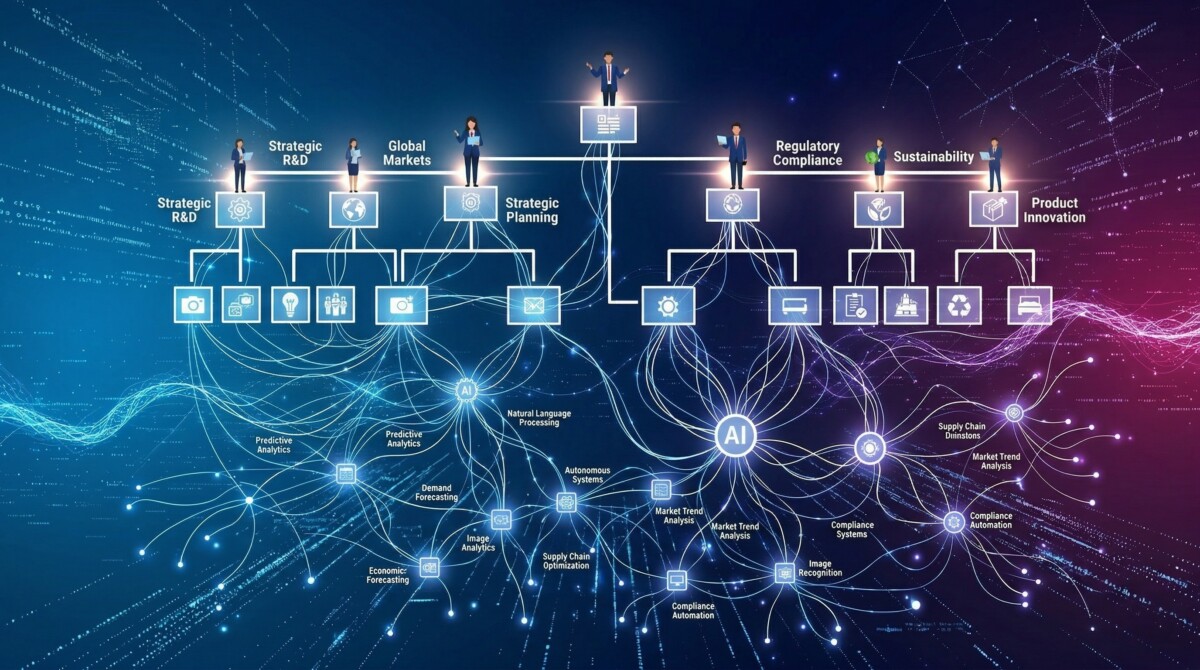
The 10 person, $10 million dollar brand is not built by installing better tools. It is built by founders who do the unglamorous work of translating years of compressed expertise into structured knowledge that both humans and AI can actually use.
What You’ll Learn
- Why Shopify’s 2025 AI mandate changed the default question every founder should ask before making a new hire
- What Klarna’s AI customer service reversal reveals about where full automation breaks, and what the hybrid model actually looks like in practice
- How to externalize the operational knowledge locked in your head so that AI tools and team members can actually work with it
- What a lean, AI-augmented team structure realistically looks like at the $500K to $5M revenue stage, and what makes it functional versus aspirational
- How to tell the difference between genuine AI-driven efficiency and AI washing, so you make decisions based on evidence rather than narrative
I run a small operation. A podcast that just crossed Season 9. A newsletter with 45,000 subscribers. A content business that reaches 200,000 readers a month. The team is me, Kirsten, Christopher, and a set of AI tools that collectively do work that would have required four or five additional hires two years ago. I’m not telling you this to brag. I’m telling you because the question I keep asking myself is not whether to use AI. It’s whether I should hire a fifth person, or whether the better move is to get smarter about the AI I’m already running.
That question is the one most founders in the $500K to $5M range are actually sitting with right now. Not “will AI take all the jobs?” That’s a pundit debate. The real question is operational: what work in this business genuinely requires a human, and what work is just waiting to be redesigned around better tools?
The honest answer is more nuanced than either the AI optimists or the skeptics are giving you. Org charts are compressing. The evidence is real. But the brands that win in this environment are not the ones that automate the most. They are the ones that redesign work so AI handles repetition and humans own judgment. That distinction matters more than any headcount target.
The piece nobody writes about AI and teams is the upstream problem. Every AI tool you deploy is only as good as the context you give it. And the most important context in your business is the judgment you have built over years of pattern recognition: knowing which products to feature in a flash sale, reading a customer complaint and instantly sensing it is a retention risk versus a one-off gripe, looking at your Klaviyo dashboard and feeling that something is off before you can articulate what. That knowledge is compressed in your head. You built it through thousands of decisions. And until you find a way to get it out of your head and into a format your AI tools can work with, the 10-person team on paper stays a 10-person team that still depends on you for every judgment call.
Four things this piece will show you:
- Why the platform you build on just changed the default hiring question
- What happens when you automate past the point where human judgment still matters
- How to externalize the operational knowledge that makes AI delegation actually work
- What a leaner, AI-augmented team actually looks like at your stage
Why Shopify Changed The Conversation
In April 2025, Shopify CEO Tobi Lütke sent an internal memo to his 8,000-plus employees. It went viral almost immediately, not because it was unusual for a tech CEO to talk about AI, but because of one sentence that said out loud what most executives were only thinking privately.
Before asking for more headcount and resources, teams must demonstrate why they cannot get what they want done using AI.
That is not a productivity suggestion. It is a structural change to how hiring decisions get made. Lütke went further, adding that AI usage was now “a fundamental expectation of everyone at Shopify” and that the company would embed AI usage questions into performance and peer review processes. As he put it: “Frankly, I don’t think it’s feasible to opt out of learning the skill of applying AI in your craft. Stagnation is almost certain, and stagnation is slow-motion failure.”
TechCrunch’s coverage of Tobi Lütke’s April 2025 memo noted that Lütke was advancing the idea that AI agents could help Shopify maintain a smaller workforce. Fortune framed it more directly: Shopify was saying the quiet part out loud.
What This Means For Merchants, Not Just Shopify Employees
The instinct is to read this as a story about a large tech company managing its own costs. That misses the more important signal. Shopify is the platform that powers the commerce infrastructure for millions of merchants. When its leadership reorients the entire company around AI-first operations, that is a preview of the operating model it will build tools for, optimize for, and ultimately reward.
The merchants who will get the most out of Shopify’s roadmap over the next two to three years are the ones building AI-native workflows now, not the ones waiting until the pressure is undeniable.
The practical implication for a founder at $1M to $3M: every new hire now competes with a workflow redesign, not just with another candidate. The question shifts from “do we need more people?” to “what specifically requires a person?” AI competency becomes a baseline expectation for every role you do hire, not a bonus skill.
Shopify’s context is enterprise scale. But the underlying logic applies at $800K just as clearly as it does at $8 billion. The platform signal is real. The question is whether you are building the team and the processes that take advantage of it.
The Klarna Lesson: Efficiency Without Judgment Breaks Fast
If Shopify’s memo is the platform signal, Klarna’s story is the cautionary proof point. And it is worth understanding in full, because most coverage gets it wrong in both directions.
In early 2024, Klarna announced that its AI-powered customer service chatbot was handling the equivalent work of 700 full-time agents. Resolution times dropped to under 2 minutes. The company froze hiring. CEO Sebastian Siemiatkowski declared publicly that “AI can already do all of the jobs that we, as humans, do.” It was the most cited example of AI replacing human labor at scale, and it was everywhere.
By May 2025, Siemiatkowski told Bloomberg the company was recruiting humans again. His explanation was direct: “As cost unfortunately seems to have been a too predominant evaluation factor when organizing this, what you end up having is lower quality.”
Klarna’s spokesperson put the new positioning in sharper terms: “AI gives us speed. Talent gives us empathy. Together, we can deliver service that’s fast when it should be, and emphatic and personal when it needs to be.”
What Actually Failed, and What Did Not
The nuance matters here. The AI was not bad at everything. It was very good at the work it was designed for. CX Dive’s reporting captured the failure mode precisely: the volume-based metrics that AI performed well on masked the quality deterioration on specific interaction types. Satisfaction scores dropped. Repeat contact rates rose.
The cost savings projected in the original announcement did not fully materialize, because handling quality failures cost more than the automation saved. See how ecommerce brands that scaled sales with AI chat built hybrid models that avoided this trap from the start.
The Lesson For A Shopify Brand
Your customer service team does not go from 6 people to 0. The Klarna story does not justify that move, and it never did. What it does justify is a redesign: AI handles the 65% of interactions that are routine, fast, and pattern-based. Humans own the 35% where the stakes are highest and the interaction is most likely to determine whether a customer stays or leaves.
The right question for your CS operation is not “how many agents can we replace?” It is “which interactions genuinely require human empathy and judgment, and are those the ones we’re protecting?” That distinction is the entire lesson. Not “AI failed.” Not “AI is fine.” Hybrid design, built around where human judgment still creates the outcome, is what consistently outperforms both extremes.
Where Human Judgment Still Wins In Ecommerce
The Klarna case is customer service. But the same logic applies across every function in a commerce operation. The question is not whether AI can touch a task. It is whether the outcome of that task depends on judgment, taste, or relational context that AI cannot reliably replicate.
Harvard Business Review’s analysis made a pointed observation: many companies are making workforce decisions based on AI’s potential, not its demonstrated performance. That gap between promise and proof is where the real risk lives for founders who move too fast. NVIDIA’s State of AI in Retail and CPG found that 89% of retail and CPG companies are actively using or piloting AI, with 97% planning to increase spending. The adoption is real. But widespread adoption does not mean full replacement. Explore the best AI tools for ecommerce businesses to understand where the genuine gains are being made.
The Handoff Map: What AI Owns vs. What Humans Own
The left column of that table is work AI handles well precisely because it does not require your personal context. FAQ resolution follows patterns. Demand forecasting runs on data. Price monitoring is mechanical. The right column is different. Complex escalations require knowing your brand’s tolerance for exceptions. Campaign strategy requires understanding which customer segments respond to which messages at which points in the year. Positioning decisions require taste. Every item in the right column depends on knowledge that lives in someone’s head. The question is whether that knowledge stays locked there or gets externalized into something the rest of your operation, human and AI, can reference.
The Compounding Advantage
This is not just about protecting quality in the short term. It is about what compounds over time. A brand that builds AI-literate humans who operate above the automation layer is building a structural advantage that gets harder to replicate as the tools improve. The AI handles more volume. The humans get better at the judgment work because they are doing more of it, not less.
A brand that automates indiscriminately may see short-term cost savings and longer-term erosion of the customer relationships and brand equity that drove the revenue in the first place. The Zendesk CX Trends 2026 report found that 86% of customers believe empathy and human connection matter more than a fast response when service quality is at stake. Speed without judgment is not a competitive advantage. It is a liability waiting to surface.
The Missing Step: Getting Your Operational Knowledge Out Of Your Head
The biggest bottleneck in AI-augmented commerce is not the technology. It is the founder’s inability to describe what they actually do all day in enough detail that an AI system can replicate the routine parts. This is not a criticism. It is a structural property of how expertise develops. The better you get at your work, the more your decision-making compresses into automatic patterns, and the less visible your own process becomes to you.
The Expertise Compression Trap
At $2M in revenue, your judgment has been compiled from explicit steps into automatic behavior. You no longer think through decisions the way you did at $200K. You just know. The problem is that “just knowing” is invisible to every system you try to delegate to.
Think about what that looks like in practice. There is the founder who reads a supplier email and immediately senses a delay is coming, not from anything the email explicitly says, but from a tone, a phrasing pattern, a specific kind of hedging language they have seen a hundred times before. There is the marketing operator who scans a Klaviyo flow report and spots the problem in 30 seconds without consciously going through every metric, because the pattern recognition is so deeply embedded it operates below the level of conscious thought. There is the CS lead who reads the first sentence of a support ticket and already knows whether this is a $50 resolution or a $500 save-the-account situation, before they have read the rest of the message.
Each of those is tacit knowledge. Each is invisible to the person who has it. And each is the reason their AI tools underperform, because the AI was never given the context that drives those judgment calls. The tool is not broken. It just does not have access to the years of pattern recognition that make the judgment fast.
What Externalization Looks Like For A Commerce Operator
This is not about building AI agents or deploying complex automation. It is about the practice of documenting your operational knowledge in structured form, in enough detail that another person or an AI system can act on it without needing to interrupt you for clarification.
There are five areas every Shopify founder at the $500K to $5M stage should externalize.
Operating rhythms. What do your days, weeks, and months actually look like? Not the calendar version. The real one. When do you check metrics? What triggers a decision to run a promotion? What does your Monday morning review actually consist of, step by step? If you had to write a detailed guide for someone taking over your mornings for a week, what would it say?
Decision frameworks. When you look at your dashboard and decide to change ad spend, what are you actually evaluating? What thresholds matter? What combinations of signals trigger action versus waiting? The goal is to write down the actual logic, not a generic version of it. “We increase spend when ROAS holds above 2.8 for three consecutive days and inventory depth is above 60 days” is useful. “We increase spend when performance is good” is not.
Quality standards. What does “good enough” look like for product photos, email copy, customer responses, ad creative? The specific bar you hold in your head but have never written down. What is the difference between a product description you approve on the first pass and one you send back? If you can articulate that, your AI tools and your team can hit the standard without your review.
Exception handling. Which customer situations get escalated to you? Which supplier issues require a personal call versus an email follow-up? What are the judgment calls your team asks you about repeatedly because only you know the answer? Write those down. Every one of them is a place where your AI layer will break without your intervention, until you give it the rule.
Brand taste. The intangible sense of what is “on brand” and what is not. The product description that feels right versus the one that technically says the same thing but feels off. The email subject line that sounds like you versus the one that sounds like a generic DTC brand. This is the hardest to externalize and the most valuable when you do. Collect specific examples. “This headline works. This one does not. Here is what the difference is.” That document becomes a training resource for every AI tool and every new team member you bring on.
The Compounding Advantage
The merchants who invest 3 to 5 hours externalizing their operational knowledge get compounding returns. Every AI tool they deploy after that point has context. Their customer service AI knows what “good enough” looks like for their brand. Their content tools know the voice. Their analytics dashboards are configured around the metrics they actually care about, not the defaults. The second tool deploys faster than the first. The fifth deploys in minutes.
This is where the 10 person, $10 million dollar brand stops being aspirational and becomes operational. The merchants who skip this step install tools, play for a weekend, hit a wall, and conclude AI does not work for their business. The tool worked fine. The problem was never the tool.
Before mapping your lean org chart, start with 3 hours of structured self-documentation. Write down, in as much detail as you can, how you actually make decisions in the five areas above. That document becomes the operating system for every AI tool and every team member you deploy from this point forward.
What A Leaner Org Chart Looks Like At $500K To $5M
The abstract case for AI-augmented teams is easy to make. The harder question is what it actually looks like at your revenue stage, with your current team, and the specific roles you are considering filling next.
$500K To $1M: AI Delays Several Hires
At this stage, the founder is still doing a significant amount of the work directly. The temptation is to hire out of exhaustion. Before doing that, it is worth mapping exactly what is consuming time and asking whether any of it can be absorbed by AI workflows.
But before mapping the workflows, document the judgment. The founder at this stage is the entire operating system. Every decision framework, quality bar, and exception rule lives in one person’s head. If you do not externalize that knowledge first, every AI workflow you build will produce generic output that requires your review and correction anyway, and you will have saved no time at all.
At this stage, AI can realistically handle content and copy (product descriptions, email sequences, ad copy first drafts), customer support triage (FAQ responses, order status, return initiation), research and competitive monitoring, and reporting from Klaviyo, Google Analytics, and Shopify’s built-in dashboards.
The World Economic Forum’s Future of Jobs Report 2025 found that 77% of employers plan to reskill and upskill workers as AI transforms roles, rather than simply reducing headcount. The brands at this stage who invest in making the founder and any early hires AI-literate are building a compounding advantage. The ones who hire generalists to do work AI can handle are building a cost structure that becomes a burden at $2M.
$1M To $5M: Fewer Generalists, More AI-Literate Operators
This is the stage where most Shopify brands get the hiring equation wrong. Revenue is growing. The instinct is to staff up across every function. What actually works is a smaller team of people who each operate at a higher leverage point because AI is handling the volume underneath them. The shift is not fewer humans at any cost. It is fewer generalists doing low-leverage work and more operators who use AI as a force multiplier on their judgment-heavy work. For a practical look at which tools enable this, see the best Shopify AI tools to grow your store.
A realistic lean team at $2M to $5M looks like this: six humans maximum. AI handles volume. Humans own every judgment call.
That ratio only works if the judgment calls are documented well enough that the AI layer underneath can operate without constant correction. A marketing operator using AI for ad copy drafts can move three times faster if the brand voice document, the audience segment definitions, and the performance thresholds are written down explicitly. Without those documents, the operator spends half their time correcting AI output and the other half explaining the same brand standards to the tool over and over. The externalization work is what makes the lean team actually lean.
The key planning lens at this stage is revenue per employee, not headcount minimization. A $3M brand running with 5 AI-literate operators can outperform a $3M brand with 12 generalists on margin, speed, and adaptability. That gap compounds as the tools improve and the AI-native team gets more capable while the bloated team gets more expensive.
The Honest Counterargument: Some Of This Is AI Washing
Before treating every AI-linked efficiency claim as a genuine signal, it is worth applying some skepticism. Harvard Business Review put the problem plainly: many companies are cutting staff based on AI’s projected capabilities, not its proven performance. The IBM survey cited in Fortune’s Klarna coverage found that only 1 in 4 AI projects delivers on its promised return on investment, and just 16% are scaled across the enterprise.
There is also a structural incentive at play. Amazon, Meta, Google, and Microsoft are expected to collectively invest hundreds of billions in AI infrastructure. Payroll is one of the largest controllable costs. Some of what gets labeled as “AI-driven efficiency” is cost restructuring that would have happened anyway, with AI providing a more palatable public narrative.
The practical test for founders is straightforward: has the AI implementation improved throughput, response quality, margin, or customer satisfaction in a measurable way? If yes, it is real. If the answer is “we think it will,” that is a bet worth making carefully, not a mandate worth acting on immediately. DLA Piper’s analysis of recent FTC enforcement noted that grounding AI claims in demonstrable use cases with human oversight disclosures is what builds durable trust. Skepticism is not an argument against AI adoption. It is the filter that separates the decisions that compound from the ones that cost you twice.
Build The Team AI Can’t Replace
The $10M brand with 10 people is not a fantasy. It is the operating model that the current tools make possible for founders who are deliberate about where humans still create the outcome.
Before your next hire, run the role through four questions:
- What does this person do that AI genuinely cannot? If the honest answer is “mostly things AI can handle,” the role needs redesigning before it gets filled.
- Is this work judgment-heavy, relationship-dependent, or taste-driven? Those are the functions worth protecting with a human.
- Would an AI-literate version of this role be 2x more valuable than a non-AI-literate version? If yes, that skill requirement belongs in the job description, not as an afterthought.
- Have I documented the operational knowledge this person will need to work with AI effectively? If the answer is no, the first week of any new hire should include structured sessions where they learn your decision frameworks, quality standards, and exception rules. That documentation is also the operating system for every AI tool they will use.
The 10 person, $10 million dollar brand is not built by installing better tools. It is built by the founder doing the unglamorous work of translating years of compressed expertise into structured, transferable knowledge. That knowledge becomes the foundation for every AI workflow, every delegation decision, and every hire you make from this point forward. The brands that do this work first will get compounding returns. The brands that skip it will keep wondering why their AI tools never quite deliver.
Frequently Asked Questions
Should I hire my next employee or invest in AI tools for my Shopify store?
Run the role through one question first: what does this person do that AI genuinely cannot? If the honest answer is mostly content drafting, data reporting, support triage, or research, those are tasks AI handles well today. The right hire at the $500K to $5M stage is someone who operates above the automation layer, owning judgment calls, brand decisions, and customer relationships that require human context. Hire for what AI cannot replicate, and use AI to handle the volume underneath that person.
What did Klarna actually learn from its AI customer service experiment?
Klarna’s AI chatbot handled two-thirds of all customer inquiries and cut resolution times to under 2 minutes. But satisfaction scores dropped on complex interactions: billing disputes, fraud cases, and emotionally charged conversations. By May 2025, CEO Sebastian Siemiatkowski acknowledged that cost had been “a too predominant evaluation factor” and that the company had sacrificed quality. Klarna shifted to a hybrid model where AI handles routine volume and humans own escalations. The lesson for Shopify brands is not to avoid AI in customer service. It is to protect the 30 to 40% of interactions where human judgment determines whether a customer stays or churns.
How is Shopify’s AI mandate relevant to my store as a merchant?
Tobi Lütke’s April 2025 memo told Shopify’s own teams they must prove AI cannot do the work before requesting new headcount. For merchants, the signal is strategic: Shopify is building its roadmap around AI-native operations, which means the tools, workflows, and platform features it invests in will increasingly reward merchants who have already designed their teams around AI. Founders who wait until the pressure is undeniable will be adopting AI reactively. The ones building AI-literate teams now will get the most out of Shopify’s next two to three years of product development.
Which ecommerce roles can AI realistically replace at a $1M to $3M Shopify brand?
AI handles high-volume, pattern-based work reliably: first-draft copy for ads and emails, customer support triage and FAQ resolution, inventory and demand forecasting models, competitive price monitoring, SEO research, and data aggregation from Klaviyo, Google Analytics, and Shopify dashboards. What it does not replace well is anything requiring contextual reasoning, brand voice judgment, supplier relationship management, or creative direction. The practical model at this stage is fewer generalists doing low-leverage work and more AI-literate operators who use these tools as a force multiplier on the judgment-heavy work that actually drives growth.
How do I know if an AI efficiency claim is real or just AI washing?
Apply one test: has the implementation improved throughput, response quality, margin, or customer satisfaction in a measurable way, with a specific number and a timeframe? If the answer is yes with evidence, it is real. If the answer is “we project it will” or “we believe it has,” that is a narrative, not a result. Harvard Business Review found that many companies are making workforce decisions based on AI’s potential rather than its demonstrated performance. Before restructuring your team or cutting headcount based on an AI tool’s projected impact, require 30 to 60 days of measured operational data first.
How do I start externalizing my operational knowledge as a Shopify founder?
Block 3 hours and document five things in as much detail as you can. First, your actual daily and weekly operating rhythm (not what your calendar says, but what you really do and check). Second, your decision frameworks for the three to five biggest recurring calls you make (when to run promotions, when to reorder, when to escalate a customer issue). Third, your quality bar for the outputs your team produces (product photos, email copy, ad creative, customer replies). Fourth, your exception handling rules (what gets escalated to you and why). Fifth, your brand taste (what feels right and what does not, with specific examples). That document becomes the operating context for every AI tool and every team member you deploy. Update it quarterly as your judgment evolves.
