



Verified & Reviewed
Published on April 13, 2026 Written By Rachel Hand

Published on April 13, 2026 Written By Rachel Hand

Subscribe for More
As your ecommerce business grows, outsourcing fulfillment to a 3PL becomes essential. When orders multiply, managing fulfillment in-house consumes valuable time and resources that could be directed toward growth.
Choosing the right 3PL partner matters. This decision will shape your customer experience, operational efficiency, and bottom line – and with many options available, you need a clear strategy aligned with your specific needs and growth trajectory.
This guide outlines key factors for evaluating potential 3PL partners, from understanding outsourced fulfillment benefits to assessing specialized capabilities, comparing pricing models, and implementing best practices for a successful transition and ongoing partnership.
3PL vs. other logistics solutions
When it comes to managing your ecommerce logistics, there are several options available. Each with its own set of advantages and trade-offs.
- Third-party logistics provider (3PL): One of the most popular choices for growing businesses. These companies have evolved from simple service providers to strategic partners that help brands focus on their core competencies while leaving the complexities of fulfillment to the experts.
- In-house fulfillment: Offers greater control over your operations but requires a higher upfront investment in infrastructure, technology, and staff. This option may be suitable for businesses with unique requirements or a strong desire to maintain direct oversight, but it can quickly become a burden as order volumes grow.
- Fourth-party logistics providers (4PLs): Manage multiple 3PL companies on behalf of their clients, offering a higher level of strategic oversight and coordination. However, this added layer of management can also increase costs and complexity, making it more suitable for larger enterprises with complex supply chains.
- Simple shipping carriers, such as FedEx or UPS: Offer limited services focused primarily on transportation. While they can be a good fit for businesses with low order volumes or simple fulfillment needs, they lack the comprehensive solutions and value-added services that 3PLs provide.
For most growing ecommerce brands, 3PLs offer the optimal balance of expertise, infrastructure, and cost-effectiveness.
By leveraging their established networks, advanced technology, and economies of scale, 3PLs can help businesses achieve scalability without the capital expenditure of building their own fulfillment infrastructure.
Why partner with a 3PL? 5 key benefits
Partnering with a 3PL provider can transform your ecommerce operations and elevate your customer experience. However, it’s essential to recognize that not all 3PLs deliver these benefits equally, so it’s critical to be careful when selecting your partner.
As you evaluate potential partners, keep these five key advantages at the forefront of your decision-making process.
1. Advanced technology & seamless integrations
In the fast-paced world of ecommerce, real-time visibility and automation are non-negotiable. Look for a 3PL that offers a proprietary software platform, providing you with instant access to inventory levels, order status, and performance metrics.
Seamless integration with your ecommerce platform, such as Shopify or BigCommerce, is equally crucial. This connection enables automated order routing and processing, eliminating manual work and reducing the risk of errors.
A fully integrated technology ecosystem not only streamlines operations but also generates actionable data to inform your business decisions. For example, analyzing historical sales data can help you identify trends and optimize inventory placement across multiple fulfillment centers, ensuring the right products are in the right place at the right time.

2. Strategic location & network coverage
The physical location of your 3PL’s fulfillment centers has a direct impact on shipping costs and delivery times.
A strategically distributed network allows you to store inventory closer to your customers, reducing the distance each order must travel.
This proximity translates to lower shipping costs and faster delivery, often enabling you to offer competitive 2-day shipping to a large portion of your customer base.
Additionally, having fulfillment centers near your product suppliers or manufacturing facilities can streamline your inbound logistics, reducing transportation costs and lead times. As your business grows, a robust 3PL network also facilitates easier expansion into new markets, both domestically and internationally.

3. Operational scalability & flexibility
Ecommerce businesses often experience seasonal fluctuations and sudden growth spikes. A reliable 3PL absorbs these changes without missing a beat, flexing their resources to meet demand. With scalable warehouse space, you can avoid the long-term commitments of leasing your own facility, allowing you to expand or contract as needed.
Beyond basic fulfillment, look for a 3PL that offers specialized capabilities such as kitting, assembly, and B2B fulfillment. This flexibility allows you to adapt to changing customer needs and pursue new opportunities without overhauling your operations.

4. Cost efficiencies & transparent pricing
Understanding the true cost of fulfillment is essential for making informed decisions. 3PL pricing typically includes components such as storage fees, pick and pack rates, shipping charges, and special handling requirements.
By distributing your inventory across multiple fulfillment centers, you can reduce shipping zones and associated costs. 3PLs also often have access to volume discounts and negotiated carrier rates, passing those savings on to you.
When comparing 3PL providers, look beyond the base rates and consider the total cost of ownership. Transparent pricing, with no hidden fees or surprise charges, is a must-have for budgeting and forecasting accuracy.

5. Brand representation & enhanced customer experience
Your 3PL is an extension of your brand, directly impacting how customers perceive your products and service.
The unboxing experience, from custom packaging to branded inserts, is a powerful opportunity to reinforce your brand identity and create a memorable impression. Accurate, on-time deliveries are equally vital for customer satisfaction and loyalty.
Efficient returns processing is another critical aspect of the customer experience. A 3PL that prioritizes hassle-free returns not only boosts customer confidence but also directly impacts repeat purchases and lifetime value.

Essential factors for effective 3PL evaluation
A systematic approach to 3PL selection can prevent costly partnership mistakes and ensure alignment with your business goals. Consider these key factors carefully, weighing each according to your specific business requirements.
🎯 Define your specific business requirements
Start with a clear picture of your current needs by documenting order volumes, SKU count, and storage requirements.
Forecast your growth trajectory and seasonal fluctuations to ensure your chosen 3PL can scale with you.
Consider any special product handling needs like fragility, size, or temperature sensitivity that will affect storage and handling requirements. Prioritize what matters most (whether it’s speed, cost, specialized handling, or other factors) to find a 3PL that truly aligns with your business goals.
Pro Tip
Create a detailed requirements document before contacting potential 3PLs to ensure you receive relevant, tailored proposals.
👷 Assess specialized handling & compliance capabilities
For products with specific requirements or regulatory oversight:
- Verify your 3PL has the necessary expertise and infrastructure.
- Look for relevant certifications (FDA registration, organic handling, medical device qualifications) that demonstrate compliance with industry standards.
- Evaluate climate-controlled storage options for temperature-sensitive items and confirm the 3PL can maintain required conditions throughout fulfillment.
- For international shipping, ensure they can navigate customs requirements and provide proper documentation.
- Ask specific questions about their experience with products similar to yours and their familiarity with your industry regulations to gauge their ability to meet your specialized needs.
🔌 Evaluate technology infrastructure & integration depth
Modern fulfillment demands seamless technology integration.
- Look for 3PLs offering real-time inventory visibility across all sales channels and robust order management systems with tracking and reporting capabilities.
- Verify their API functionality and ability to integrate with your tech stack, including your ecommerce platform and ERP system. Automated exception handling and proactive alerts will help you address issues before they affect customers.
- Don’t overlook security measures, backup procedures, and system reliability. Your 3PL should have robust safeguards to protect your business data and maintain operations during potential outages.
💰 Analyze comprehensive cost structures
While cost isn’t everything, understanding the full pricing picture is crucial. Familiarize yourself with standard 3PL pricing components: storage fees (per pallet, bin, or square foot), pick and pack fees, and shipping costs.
Watch for hidden fees like account setup charges, receiving fees, or returns processing costs that can quickly eat into margins. Understand any SLA penalties or peak season surcharges that might apply during high-volume periods.
When comparing quotes, look beyond headline rates to consider total cost of ownership, including all additional fees and charges.
Pro Tip
Request detailed, itemized quotes from each provider and compare them side-by-side in a spreadsheet to identify the most cost-effective option.
🗣️ Investigate support quality & consultative approach
The best 3PL relationships extend beyond transactions. Look for providers offering a consultative approach who invest in your long-term success.
Dedicated account management is a key indicator of commitment – your provider should assign a knowledgeable manager who understands your needs and offers proactive optimization recommendations.
Evaluate response times and issue resolution processes. Comprehensive onboarding support and training resources are especially important if you’re new to outsourced fulfillment.
To assess support quality, request references from current clients and look for case studies that highlight the 3PL’s partnership approach.
🤩 Research reputation & client experiences
A 3PL’s track record offers valuable insights into their capabilities.
- Request references from businesses similar to yours in size, industry, or complexity for relevant perspective.
- When speaking with references, ask about overall satisfaction, challenges faced, and how the provider addressed them. Look for patterns across multiple references.
- Consider the 3PL’s industry experience; those who’ve worked with businesses in your vertical will better understand your unique requirements.
- Review online feedback critically, focusing on detailed, specific comments rather than just ratings.
- Assess financial stability and business longevity, as providers with strong foundations are more likely to be reliable long-term partners.
Pro Tip
Research industry awards, certifications, and partnerships as indicators of expertise and commitment to excellence.
💯 Verify performance metrics & reporting transparency
A 3PL’s performance directly impacts your business success. Identify the KPIs that matter most to you (like on-time shipping, order accuracy, and inventory reconciliation) and ensure your 3PL provides regular, detailed reporting.
Look for customizable dashboards and easy access to your data for real-time monitoring and data-driven decision making. Continuous improvement should be a priority, so ask about their process for addressing performance issues and approach to optimization.
Set clear expectations and targets upfront. Your 3PL should collaborate with you to establish SLAs and performance goals aligned with your business objectives.
Pro Tip
Request sample performance reports and ask about their track record with other clients to understand their capabilities and commitment to excellence.
Download ShipBob’s comprehensive guide on how to choose the best fulfillment partner for your business. You’ll learn:
- How to find a fulfillment company you can trust to help your ecommerce business grow
- The right questions to ask a potential fulfillment partner to make sure you’re a mutual fit
- What technology and features to look for to achieve faster, more affordable order fulfillment
Step-by-step guide to successful 3PL selection
Now that you understand the key evaluation factors, here’s how to put that knowledge into action to make an informed decision and build a strong partnership foundation.
1. Build a comprehensive RFP or evaluation checklist
Create a structured RFP or evaluation checklist capturing all your business requirements and priorities. This serves as your selection roadmap and ensures consistent provider evaluation.
Categorize your requirements into must-haves versus nice-to-haves to focus on what’s most critical to your success.
Organize information in a spreadsheet for easy side-by-side comparison, making it simpler to identify strengths, weaknesses, and differentiators.
2. Ask strategic questions during provider interviews
Once you’ve shortlisted potential partners, conduct in-depth interviews to uncover their true capabilities and limitations. Focus on key areas:
- Technology: Inquire about their WMS, OMS, reporting capabilities, and integration with your existing systems.
- Scalability: Learn how they handle peak volumes and unexpected demand surges.
- Problem-solving: Understand their process for identifying and resolving issues.
- Flexibility: Discuss contract terms and their ability to accommodate changing business needs.
Pay attention to both content and delivery of responses, looking for transparency, expertise, and genuine commitment to your success.
Take detailed notes and watch for red flags. Evasiveness or unpreparedness may signal potential issues.
3. Plan a seamless transition & implementation
After selecting your 3PL partner, develop a detailed project plan with key milestones, timelines, and responsibilities. Include:
- Inventory transfer: Determine the most efficient way to move inventory, considering product requirements and handling needs.
- Technology integration: Work with the 3PL’s IT team to connect systems and thoroughly test before going live.
- Customer communication: Keep customers informed about any changes to your fulfillment process or delivery times.
Maintain open communication with your 3PL and prepare contingency plans for business continuity during the transition.
Consider a phased implementation approach, starting with a subset of products or specific region to identify and address issues before full rollout.
4. Establish ongoing performance monitoring
Set up a framework for continuous performance monitoring and improvement. Schedule regular reviews with your account manager focusing on key metrics like on-time shipping, order accuracy, and inventory reconciliation.
Establish baseline metrics and clear performance targets to objectively measure success. Ensure you have access to real-time data and reporting through your 3PL’s platform for day-to-day monitoring.
Don’t hesitate to ask for guidance. A true strategic partner will proactively identify optimization opportunities and work collaboratively on solutions.
Implement quarterly business reviews to assess the bigger picture, align on strategic priorities, and identify areas for improvement or investment.
Why ShipBob stands out as the leading supply chain and fulfillment platform
Finding a fulfillment partner that supports both your current needs and future growth is essential. ShipBob excels in this space as an industry leader, because we’re not a 3PL; we’re so much more.
As an expert supply chain and fulfillment solution, ShipBob combines cutting-edge technology, strategic fulfillment locations, and dedicated customer support to help ecommerce businesses succeed.
Here are just a few of the ways that ShipBob helps ecommerce brands optimize their fulfillment operations for scale.
Technology that drives efficiency & growth
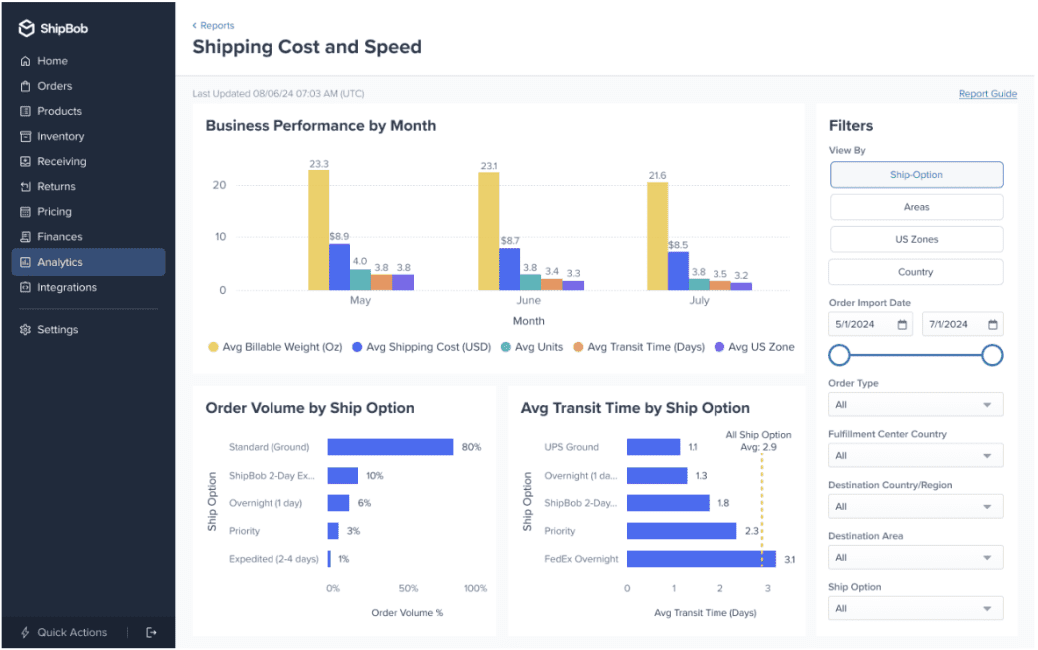
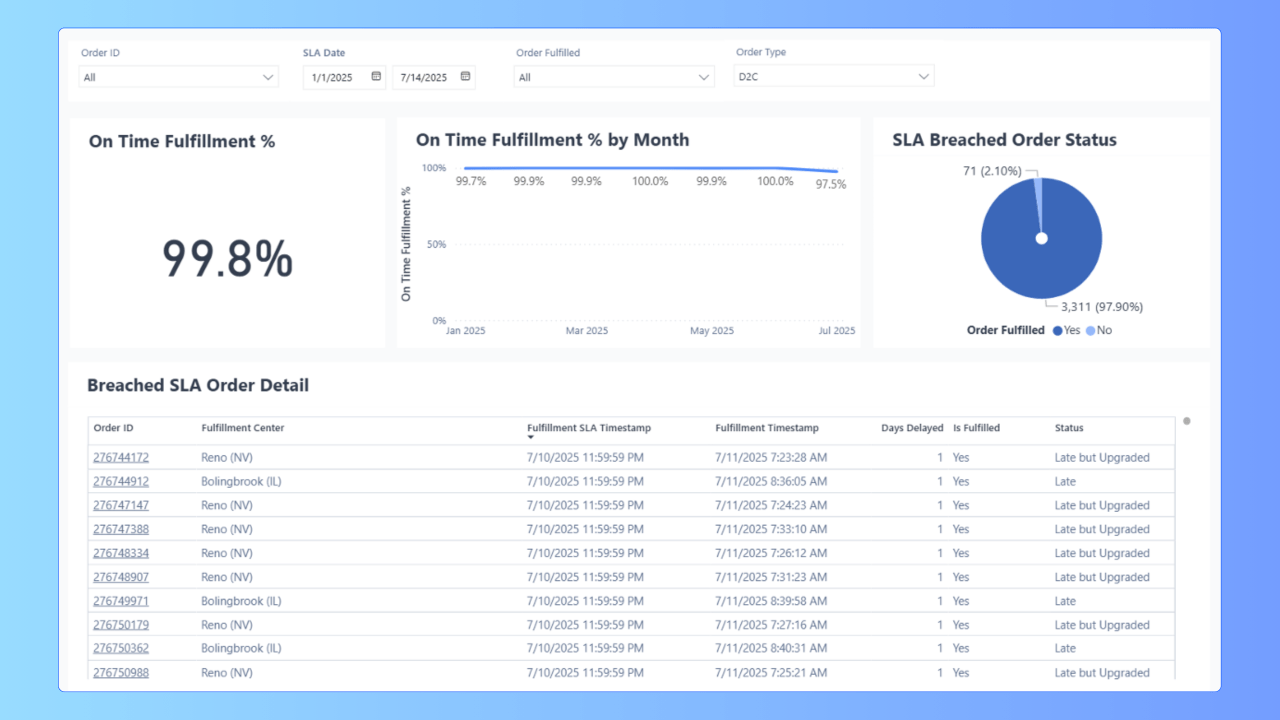
ShipBob’s proprietary WMS and merchant dashboard give you complete visibility and control over your fulfillment operations. The platform integrates with all major ecommerce systems, enabling real-time inventory management and order tracking.
Our technology uses smart algorithms to optimize inventory placement and carrier selection, ensuring products are strategically positioned while minimizing shipping costs and delivery times.
The platform also delivers actionable analytics, from inventory forecasting to shipping metrics, giving you the insights needed to continuously improve your operations.
Strategic fulfillment network for faster delivery
With 60+ fulfillment centers across the US, the UK, Canada, Europe, and Australia, ShipBob helps you reach customers faster and more efficiently. Distributing your inventory across multiple locations reduces shipping costs and enables fast, affordable delivery to customers across the globe.
Our international capabilities simplify global expansion with streamlined cross-border shipping and local market expertise.
As your business evolves, ShipBob’s network adapts to changing customer demands and expansion plans, supporting everything from new product launches to entering new markets.
“From the very beginning, I knew we would need a partner that also had fulfillment centers in or near all the countries we sell to – and the ones we want to expand into – so that I could cut shipping times and costs for those shoppers as well. That’s part of why we went with ShipBob: they have a huge global presence, including fulfillment centers in key markets like the UK, the US, and Canada. They had great coverage for the places we were selling and the places on our growth roadmap, so we could scale without a lot of complications.”
Luke Rolls, Founder of The Protein Pancake
Scalable solutions for growing brands
ShipBob addresses the challenge of scaling fulfillment operations with flexible solutions for businesses at every growth stage.
ShipBob’s capabilities are built to scale with your brand, meaning that you can adopt additional technology, network capacity, and specialized services like kitting or order customization as you grow.
“There are so many growth opportunities on the table for us – and because ShipBob offers so many different solutions and growth levers, we’re able to leverage our existing partnership to scale instead of having to go out and find different providers for every new expansion.”
Jessica Cedarleaf, VP of Operations at Tonies
They excel at supporting high-growth brands through rapid expansion, quickly onboarding products and handling volume spikes for some of ecommerce’s fastest-growing companies.
ShipBob also specializes in omnichannel fulfillment, managing orders across multiple sales channels while synchronizing inventory throughout your supply chain. Whether you sell through your website, marketplaces like Amazon, or retail partners, they help streamline operations and deliver consistent customer experiences.
“We’re about to start leveraging ShipBob’s Fulfilled by Amazon (FBA) integration in the US. Fulfilled by Merchant (FBM) through ShipBob has also been a game-changer for us in the UK. Additionally, we’re looking at leveraging ShipBob for additional marketplaces like Target Plus, Walmart, and others. Basically, anything that’s available to us, we want to do to continue growing both the DTC and wholesale sides of the business.”
Danica Quilty, Ecommerce Director of Lyres
For more information about how ShipBob can help you outsource ecommerce fulfillment effectively, click the button below to get in touch.
FAQs about selecting and evaluating 3PL providers
Here are answers to common questions about selecting and evaluating 3PLs.
What key questions should I ask potential 3PL partners?

- Create a comprehensive checklist covering technology capabilities, operational processes, pricing structure, and support options.
- Organize questions by category and include both basic and in-depth inquiries to reveal each provider’s true capabilities.
- Always focus on how their answers align with your specific business needs.
How can I compare 3PLs objectively?
- Develop a consistent evaluation framework with importance ratings based on your business priorities.
- Use a simple scoring system across key criteria for fair comparison.
- Visit facilities and request system demos whenever possible to verify actual capabilities beyond sales presentations.
What hidden costs should I watch for in 3PL contracts?
Look for storage surcharges, peak season fees, long-term inventory penalties, order minimums, and additional charges for receiving, returns, and support. Review exit fees and inventory transfer costs in case you need to change providers.
The best 3PLs offer fully transparent pricing without surprises.
What’s the typical timeline for implementing a new 3PL?
Implementation timelines vary based on factors like data migration complexity and inventory transfer logistics.
Consider a gradual transition with thorough testing before full commitment.
Develop backup plans to maintain operations during the transition and allow time for your team to adapt to new systems.
How can a 3PL support sustainability goals?
- Ask about eco-friendly practices, sustainable packaging options, and how their distributed network reduces shipping distances.
- Look for carbon offset programs, green shipping alternatives, and strong waste reduction practices.
- Request information on environmental policies and certifications to ensure alignment with your company values.
Which KPIs matter most for 3PL performance?
Some of the most important performance KPIs to monitor for your 3PL partner include:
- Shipping SLA accuracy
- Order accuracy
- Inventory accuracy
- Loss prevention metrics
- Delivery experience ratings
- Customer satisfaction scores
- Fulfillment costs
- Shipping optimization.
Set clear performance targets with your 3PL and review progress consistently to drive improvement.
How does ShipBob manage global fulfillment?
At ShipBob, we leverage our worldwide fulfillment network to streamline global logistics. Our platform provides international shipping expertise and customs support for easier market expansion. By storing inventory closer to international customers, we reduce shipping costs and transit times while improving customer experience.




