







Online retail has changed more in the last three years than it did in the previous decade. And honestly, most of it traces back to one thing: AI getting good enough to actually be useful. But, we are talking not in a “look at this demo” way. Useful in a “this saved me four hours on Tuesday” way. If you run an online store and you’re still on the fence about any of this, here’s a straightforward look at what’s already happening – and what’s coming next.
AI in Online Shopping: From Recommendations to Visual Search
Most people first notice AI in online shopping through product recommendations. You look at a jacket, leave the site, and somehow every store you visit for the next week shows you jackets. That’s part of it. But the actual technology is a lot more interesting than retargeting ads.
Modern recommendation engines aren’t just tracking what you clicked. They’re weighing how long you hovered, what you skipped, what you added, and then removed from your cart. They compare all of that with customers who behaved similarly and use it to make real-time predictions. And they do it without anyone at the company lifting a finger.
Visual search is the part that people underestimate. The idea is simple: you see something in the real world – a couch in a coffee shop, shoes on someone walking past you – and you take a photo. The search engine finds the same thing, or something close. For shoppers who don’t have the right words to describe what they want, this removes a frustrating barrier.
A few ways this shows up in practice:
- Reducing search abandonment. When customers can’t find what they’re looking for through text search, they leave. Visual search gives them another path in, especially useful for fashion, furniture, and home decor categories.
- Auto-tagging product catalogs. AI analyzes product images and automatically generates metadata. For stores with thousands of SKUs, this alone can save weeks of manual work.
- Capturing impulse intent. The window between “I want that” and “I forgot about it” is short. Visual search keeps that window open.
Voice search is part of the same shift. As more people use smart speakers to shop, or just ask their phone instead of typing, stores that write product content in natural language – the way people actually speak – will have an edge.
Key Ecommerce AI Solutions Transforming Online Stores
Let’s get specific, because the word “AI” covers a lot of ground and not all of it is equally useful. The ecommerce AI solutions that are actually moving the needle right now tend to cluster around a few areas:
- Inventory and demand forecasting. This one has real financial stakes. Overstock ties up capital and takes up warehouse space. Stockouts lead to lost sales and send customers to competitors. AI tools analyze historical sales, seasonal patterns, supplier lead times, and external signals (weather, local events, trends) to help stores order smarter. McKinsey research found that AI-driven supply chain tools can reduce forecast errors by up to 50%. That’s not a marginal improvement.
- Dynamic pricing. Airlines have done this for decades. Ecommerce is catching up. AI monitors competitor prices, demand levels, and your own inventory in real time and adjusts prices accordingly. Some tools do this multiple times a day. It sounds aggressive, but used carefully, it protects margins without manual effort.
- Fraud detection. Every fraudulent order costs more than the product itself – there are chargeback fees, investigation time, and the risk of losing your merchant account. AI systems analyze order patterns, device data, and behavioral signals, and flag suspicious transactions before they go through. Much faster than any human reviewer.
- Personalized marketing automation. The difference between a generic email blast and a well-timed, relevant message is significant. AI segments customers based on behavior and triggers messages at the right moment. Cart abandonment follow-ups. Re-engagement sequences for lapsed buyers. Post-purchase cross-sells based on what someone actually bought.
One tool category worth calling out specifically is bot software for handling customer interactions. The old version of this was painful – scripted responses, dead ends, frustrated customers. The new generation is built on large language models and can handle real questions, check order status, process returns, and hand off to a human when things get complicated. The difference in customer experience is significant.
The Future of Ecommerce: Personalization, Automation, and Insights
If you had to pick three words to describe where all of this is heading, they’d be: personal, automated, and informed.
The future of ecommerce isn’t just about convenience. It’s about stores that feel like they actually know you. Right now, personalization is mostly reactive – the system watches what you do and responds to it. What’s coming is predictive. Knowing what you’ll want before you go looking.
Automation is spreading into the back office too, not just customer-facing features. Returns processing, supplier communication, financial reporting, and ad copy drafting – AI tools are increasingly handling all of this. That frees up human teams for things that actually require judgment and creativity.
And data. Ecommerce businesses collect an enormous amount of it, and most of it sits unused. AI tools are getting better at turning that data into something actionable:
- Lifetime value prediction. If you know a new customer is likely to spend $800 over the next two years, you can justify a higher acquisition cost for them. If they’re likely to buy once and disappear, you calibrate differently.
- Content at scale. Product descriptions, ad variations, and email subject lines – AI can draft these quickly. The result is faster output without a drop in quality.
- Quiet churn signals. Some customers don’t complain before they leave – they just stop buying. AI can identify those patterns weeks before they show up in your revenue numbers.
How the Future of AI in Retail Is Redefining Customer Experience
Good customer experience has always been expensive to deliver consistently. You need staff, training, systems, and even then, things fall through the cracks.
The future of AI in retail is changing that math. Smaller stores can now offer a level of service that previously required a large team.
Some concrete examples of what’s already shifting:
- Returns processing. Instead of back-and-forth emails over three days, an AI-powered portal lets a customer select the item, choose a reason, and get a prepaid label in under two minutes. Most customers don’t care whether a human or an AI helped them – they care how long it took.
- Size and fit recommendations. Returns in fashion ecommerce are expensive and partly avoidable. AI tools that analyze body measurements, brand sizing data, and purchase history can recommend the right size before checkout. Brands using this technology have reported reductions in return rates of 20-30%.
- Real-time product questions. Shoppers have questions that product pages don’t always answer. AI can pull from specs, reviews, and manufacturer data to give accurate answers without the shopper leaving the page – or waiting for an email response.
- Post-purchase engagement. The sale isn’t the end of the relationship. AI can trigger personalized follow-ups, usage tips, loyalty rewards, and cross-sell suggestions based on what was purchased, when, and who bought it.
All of this is available to stores on Shopify, WooCommerce, BigCommerce, and similar platforms right now – through third-party integrations, without needing a technical team.
AI Chat and Virtual Assistants: The New Frontline of Customer Service
Customer service is where trust is won or lost. A slow response, a useless answer, getting bounced between departments – any of those things can turn a buyer into someone who posts a one-star review and shops elsewhere.
AI chat tools have gotten genuinely good at handling the volume that would otherwise overwhelm a small team. They are not replacing human agents; they are handling tasks that don’t require them.
What AI chat handles well today:
- Order tracking. The most common customer question, and one that never needed a human to begin with. AI handles it instantly, at any hour.
- Policy questions. Shipping timelines, return windows, and warranty coverage – all answerable from existing documentation.
- Product discovery. A conversational interface can help shoppers narrow down options the way a good sales associate would. “Do you have this in a smaller size?” “What’s the difference between these two models?”
- B2B lead qualification. Identifying high-intent visitors and routing them to the right person before they get bored and leave.
What still benefits from a human:
- Complex complaints that span multiple departments or orders
- High-value customers who expect a relationship, not a script
- Situations where the answer isn’t obvious and empathy matters
The quality jump in the last two years has been real. Rule-based chatbots frustrated customers because they couldn’t handle anything slightly off-script. Language-model-based AI chat understands context, remembers earlier parts of the conversation, and gives answers that actually help. That difference is what determines whether a shopper completes a purchase or closes the tab.
You don’t need to overhaul everything at once. Pick the area where your business feels the most friction – customer service response times, inventory guesswork, personalization gaps – and look for a tool that addresses that specific problem.
AI for ecommerce works best when it solves a real problem, not when it’s implemented just because it sounds like the future. Start specific, that measures what changes. Add from there. The stores that figure this out early will have an advantage that’s hard to catch up to later.
What Is EcomBalance?
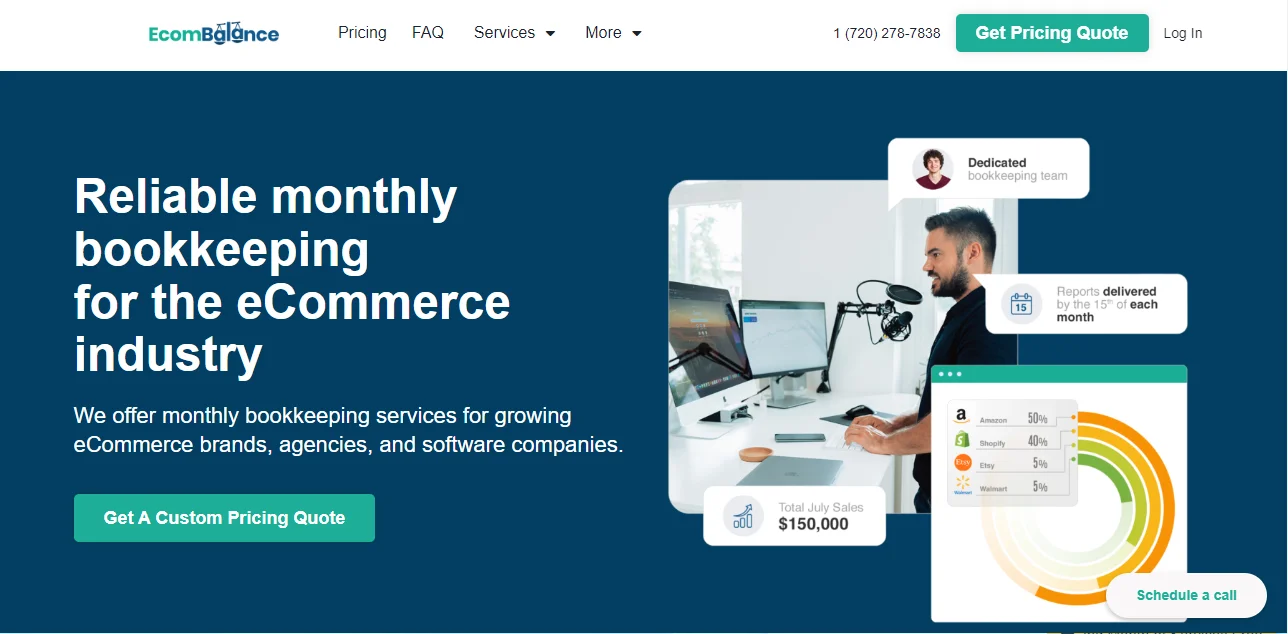
EcomBalance is a monthly bookkeeping service specialized for eCommerce companies selling on Amazon, Shopify, eBay, Etsy, WooCommerce, & other eCommerce channels.
We take monthly bookkeeping off your plate and deliver you your financial statements by the 15th or 20th of each month.
You’ll have your Profit and Loss Statement, Balance Sheet, and Cash Flow Statement ready for analysis each month so you and your business partners can make better business decisions.
Interested in learning more? Schedule a call with our CEO, Nathan Hirsch.
And here’s some free resources:
- Monthly Finance Meeting Agenda
- 9 Steps to Master Your Ecommerce Bookkeeping Checklist
- The Ultimate Guide on Finding an Ecommerce Virtual Bookkeeping Service
- What Is a Profit and Loss Statement?
- How to Read & Interpret a Cash Flow Statement
- How to Read a Balance Sheet & Truly Understand It
Huge thanks to Newo for collaborating on this post!
