

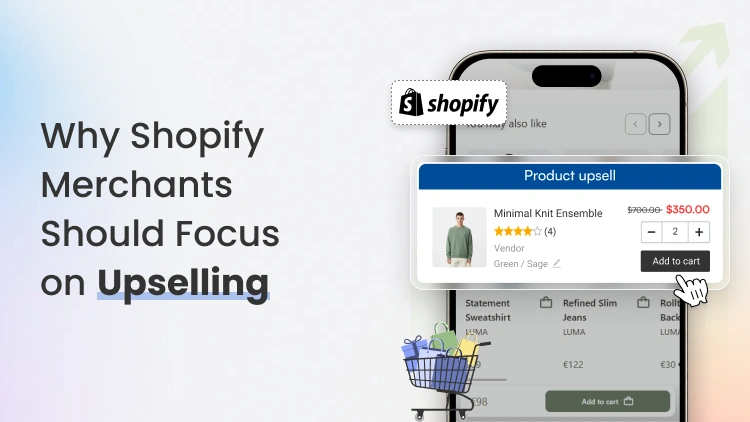
The merchants I have seen grow fastest in 2026 are not the ones spending more on ads. They are the ones extracting more revenue from every buyer who was already going to say yes.
Ads are pricey now in 2026. One wrong campaign and your budget disappears fast. That’s why getting more traffic doesn’t mean you will get more conversions.
I have seen customers focus on many factors when it comes to building a Shopify store:
While all these factors need to be studied while running a Shopify store, they do miss one thing:
Upselling is a lot simpler than merchants imagine. You earn more from the same buyer, in the same session. No extra spend needed.
This guide keeps it simple. You’ll learn what to upsell, where to place it, and how to do it without sounding pushy.
A Shopify upsell is a simple upgrade for any product in your store. You’re nudging the shopper from “good” to “better” without changing what they came for.
Think of a bigger screen for a smartphone or a better OS for a laptop.
Let’s not get upsell confused with cross-sell, which is providing complementary products. For example, merchants provide a phone case for free with a smartphone.
Here’s what I have learned in my 10 years in the Shopify domain:
✔️ Start with upgrades first.
Upgrades feel cleaner, easier to decide, and they don’t distract shoppers with extra choices. It also reduces decision stress. Instead of sending them back to browse, you give one clear option right where they are
Upselling feels natural when done right.
Good upsells follow the shopper’s intent. If they’re buying a face wash, a “bigger bottle for better value” makes sense. It feels like you are actually helping the shopper.

Traffic can spike today and disappear tomorrow. Moreover, with updates like AI overviews, website traffic is decreasing day by day.
Upselling helps you grow revenue per buyer, even when traffic stays flat. You can increase the conversion rate with the traffic you are already getting.
Around 70% of shoppers abandon carts on average across documented studies. That’s why your Shopify cart is where you either win or lose the sale.
If you want a simple way to decrease cart abandonment and add clean in-cart upsells in your store.
Shopify upsell apps like iCart Cart Drawer Cart Upsell help you build a cart drawer with a progress bar. Here, you can gamify the cart with different discount tiers.
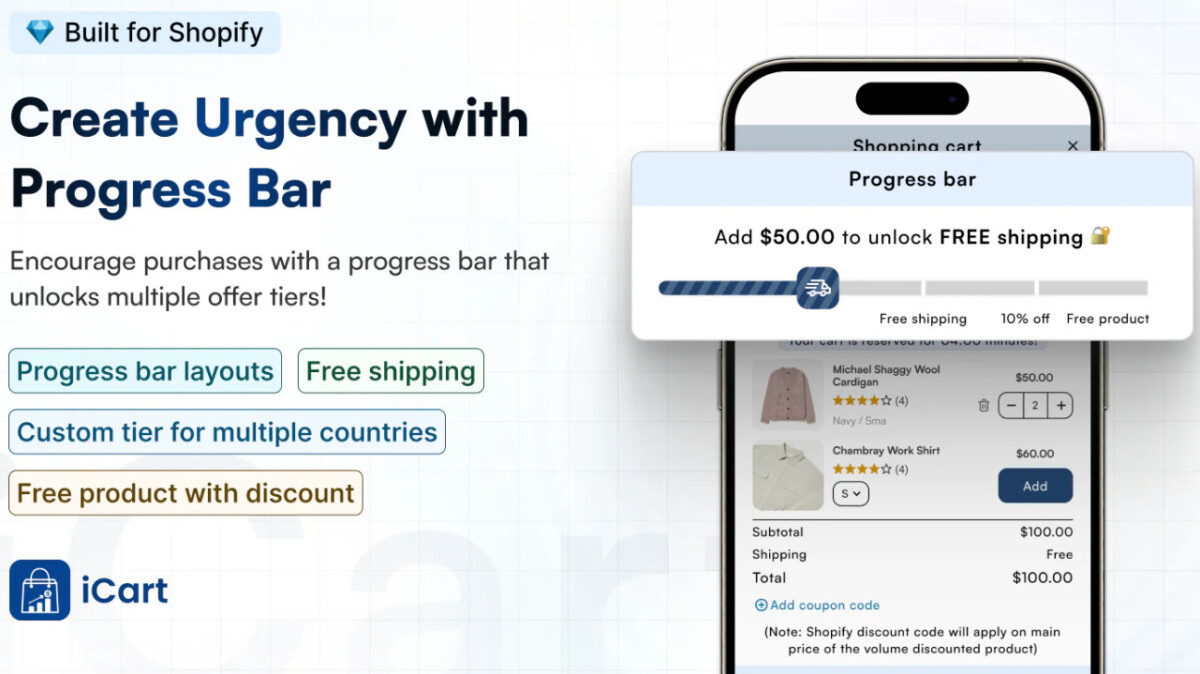
The shoppers will progress through each tier by getting rewards like free shipping to complete the checkout.
With AI getting more popular, shoppers expect the store to know what they need.
Even one personalization element can lift conversions by 3.2%. Upsells are the easiest way to do this because you can use AI-based product recommendations based on the shopper’s buying history.
While in-cart upsells work best for Shopify stores, it is not the only placement.
Online return rates stay high, and NRF estimates 19.3% of online sales have been returned in 2025.
When returns, reships, and support hit, upselling helps you protect profit by increasing AOV in Shopify orders.
This is where the shopper is still choosing. Keep it simple and show one clear upgrade that feels worth it. Example: “Go for the bigger pack and save more per unit.”
The cart is the highest intent moment. They already said yes, now you help them make the order better.
Keep offers simple and relevant. Frequently Bought Together bundles work best when they match the main item. You can also add BOGO deals with a free shipping bar, with a “Add $X more to unlock free shipping” offer.
At checkout, speed matters. If you add anything here, make it a tiny upgrade that takes one click. No extra forms, no long choices.
Post-purchase is great for one-click add-ons right after payment. The shopper already trusted you with their order, so a small “add this to your shipment” offer can increase conversions.
Upselling isn’t a new strategy for 2026. It’s how Shopify stores have always grown without burning money on ads and hoping it works.
But in 2026, the value of upselling has increased significantly because of how easy it is to integrate with AI.
You need to make more from the traffic you already fought to get.
Start small and keep it simple. Add one upgrade on the product page, one smart offer in the cart, and one simple post-purchase add-on. When it feels helpful, customers say yes more often, and your store gets profitable faster.
What is upselling on Shopify?
Upselling on Shopify means encouraging a customer to buy a higher-value version of what they already want. For example, suggesting a smartphone to the customer with a bigger screen. It increases AOV in a Shopify store without needing more traffic.
Why should Shopify merchants focus on upselling in 2026?
Ads cost more, and traffic quality keeps changing, so you can’t rely on traffic to grow. Upselling helps you earn more from the customers you already have. It’s one of the easiest ways to scale revenue without scaling spend.
How to increase orders in Shopify?
Make buying feel easier and more rewarding. Optimize your product pages, reduce checkout friction, and add smart upsells in the cart to increase order value.
Which is the best upsell app for Shopify in 2026?
If you want upsells where intent is highest (Shopify in-cart upsells), iCart, the Shopify upsell app is a strong option because it lets you add in-cart upsells, bundles, and progress bars inside your Shopify cart without any technical expertise.
Which is the best place to add upsells in a Shopify store?
The cart is usually the best spot because shoppers are already committed. Product pages work well for upgrades, and post-purchase works well for quick one-click add-ons.





