





Key takeaways 
A strong email open rate, typically between 28% and 35% in 2026, indicates effective subject lines and high audience engagement.
Industry benchmarks are essential for setting realistic goals, but it’s crucial to compare your performance against your own past data for meaningful insights.
Different types of emails yield varying open rates, with transactional and behavior-triggered emails generally outperforming mass promotional campaigns.
Due to privacy changes, open rates should be viewed as a guiding metric rather than an absolute measure of engagement, with other metrics like click-through rates and conversion rates being more indicative of success.
It’s easy to see why marketers obsess over tracking their email open rate. If your subscribers aren’t even opening your emails, all your effort in crafting the perfect message goes to waste, since they end up not reading them at all. A strong open rate signals that your subject lines are effective, your timing makes sense, and your audience is highly engaged.
Even with privacy changes affecting how we measure engagement, industry benchmarks still matter. Comparing your performance against your past data and the latest averages helps you set realistic goals and spot important trends. You need to know where you stand to figure out how to improve.
This guide covers everything you need to know about what makes a good email open rate in 2026. We’ll explore the latest industry averages, break down performance by email type, and share actionable strategies to improve your results.
Looking for higher open rates? Try Omnisend today
Quick sign up | No credit card required
What is email open rate?
An email open rate is simply the percentage of subscribers who opened your campaign out of the total number of emails successfully delivered. It gives you a quick snapshot of how well your email subject lines grab attention.
To calculate your standard open rate, use this formula:
Email open rate = (Number of recipients who opened your email / Number of delivered emails) x 100
However, most email marketing platforms already have this data, so you don’t need to perform any manual calculations.
You can also measure the unique open rate using this formula:
Unique open rate = (Number of unique email opens / Number of delivered emails) x 100
The total open rate counts multiple opens by the same subscriber, while the unique open rate counts each subscriber only once.
If you’re wondering how the tracking actually works, it’s quite simple. When someone views your message, a small tracking pixel is triggered, recording the email as opened. That’s it. However, with Apple’s new privacy feature, Mail Privacy Protection, it becomes a bit different. It can automatically trigger this pixel and consequently inflate your open rate data.
What is a good open rate for email?
In 2026, a good email open rate generally falls between 28% and 35%. If your campaigns consistently exceed 35%, your audience is highly engaged, and your sender reputation is in great shape.
Here’s what the dashboard with basic reporting looks like on Omnisend:
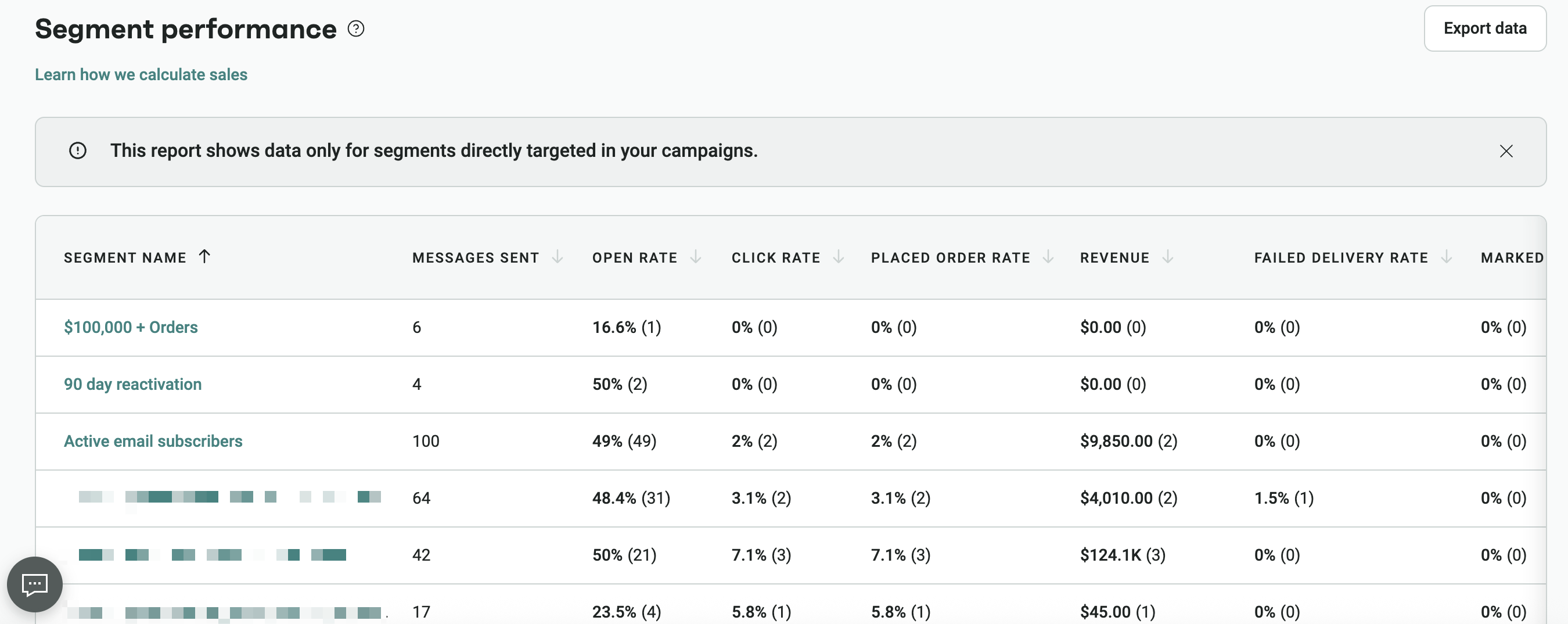
Here’s a quick breakdown of how different open rate ranges reflect your overall performance:
| Open rate range | Performance level | What it typically indicates |
|---|---|---|
| 45%+ | Exceptional | Highly targeted, automated, or transactional emails |
| 35-45% | Strong | Well-segmented list with engaged subscribers |
| 28-35% | Healthy | Solid performance for most industries |
| 20-27% | Below average | May indicate weak targeting or list fatigue |
| Below 20% | Needs attention | Possible deliverability or engagement issues |
Keep in mind that what is considered “good” can shift dramatically depending on the exact type of email you send. For example:
- Promotional campaigns usually see lower open rates because sending volume is higher and personalization is on a smaller scale.
- Welcome emails usually have higher open rates because users expect something in return for providing their email, as promised in the popup form.
- Abandoned cart emails have much higher open rates because strong purchase intent triggers them, and some people explicitly wait for these emails, expecting a discount.
- Shipping confirmations consistently have the highest open rates because customers expect them to confirm their orders or receive delivery updates.
Average email open rates by industry in 2026
Industry averages help you benchmark your results more realistically. Open rates vary widely by sector, audience intent, and email type, so cross-industry comparisons should be treated carefully:
| Industry | Average open rate (2026) | What this typically reflects |
|---|---|---|
| Ecommerce (retail and DTC) | 30–32% | Completely average metrics influenced by a mix of personalized automations and mass promotional campaigns |
| B2B services | 15%-30% | B2B clients are usually less inclined to read newsletters or promotional emails in general |
| SaaS and technology | 17%-30% | Similar to B2B, SaaS emails are rarely emotion-inducing and eye-catching |
| Nonprofit | 25%-40% | Mission-driven audiences may show stronger engagement |
| Travel and hospitality | 19%-26% | Depends greatly on seasonal interest, recipient’s availability, and commitment levels |
| Health and wellness | 28%-48% | Health content and longevity are easier to personalize since most major issues appeal to nearly everyone |
| Education and online courses | 28%-39% | Value-driven content appeals to the recipients’ desire to become better |
If you want to find more data about email marketing, we’ve done original research from our own data and listed some of the more interesting findings in the 2026 Ecommerce Marketing Report.
Here’s a closer look at what drives these numbers across different sectors:
- Ecommerce open rate: Averages 30-32%. While frequent promotional sends and high campaign volumes can cause inbox fatigue, targeted segmentation helps this sector maintain a highly consistent average.
- B2B benchmark: Sees 15-30% average open rates. This wider, often lower range reflects the challenge of reaching crowded inboxes of B2B decision makers and navigating strict corporate spam filters.
- SaaS and technology open rate: Averages 17–30%. While onboarding emails targeted toward specific segments can perform exceptionally well, product updates and company newsletters typically bring the overall average down.
- Nonprofit benchmark: Averages 25–40%. These campaigns perform well because mission- and value-driven audiences often feel personally invested in the cause and want to stay updated.
- Travel and hospitality benchmark: Averages 19–26%. Seasons likely play the biggest role here, as engagement rises during holidays and popular vacation days, and plummets during slower months.
- Health and wellness benchmark: Averages 28–48%. This sector sees some of the highest engagement ceilings, driven by highly personalized, educational content that audiences actively seek out.
- Education benchmark: Averages 28–39%. Value-driven content and ongoing course communication help keep readers consistently opening these messages.
Why do industry open rates differ so much? It generally comes down to audience intent, send frequency, and your specific mix of promotional versus transactional messages. As the data shows, a 28% open rate is exceptional for travel and hospitality but just the baseline for health and wellness.
You should always compare your current metrics against your own past performance first, and then look at your industry average. Or vice versa, if you’re just starting. Keep in mind that highly engaging automated and transactional emails can easily skew these general averages upward.
Average open rates by email type
When reviewing your campaign metrics, remember that not all emails should be measured against the same benchmark. Promotional campaigns, newsletters, and automated emails all perform differently because they serve entirely different purposes. In many cases, the specific type of email you send impacts your open rate far more than your overall industry does.
| Email type | Typical open rate | Why does it perform this way |
|---|---|---|
| Promotional campaigns | 20-30% | Sent in high volume to broad segments |
| Newsletters | 30-40% | Performance depends on content relevance |
| Welcome emails | 35-50% | Sent at peak engagement moment |
| Abandoned cart | 40-55% | Triggered by strong purchase intent |
| Back-in-stock | 45-60% | Sent to users who showed prior interest |
| Re-engagement | 25-35% | Targets inactive subscribers |
| Shipping confirmations | 55-65% | Expected and time-sensitive |
It goes without saying that transactional and behavior-based emails outperform mass promotional campaigns sent to everyone or a few broad segments. Welcome or abandoned cart email open rates, for example, stem from relatively high intent, since the user either wants to get their lead magnet or be reminded of a near-purchase.
That said, a lower open rate doesn’t necessarily mean poor performance, as different campaigns warrant different engagement levels and have significantly different goals.
What influences email open rates in 2026?
There’s no one, single factor that explains why your subscribers open your emails or scroll past them. Sure, subject lines are probably the most important, but different audiences are receptive to different tones and timings. So, to help you understand what you may be doing wrong, we’ll cover the core elements that define the success of your campaigns. If you prefer a video format, here’s one that explains everything:
Otherwise, if you’re a reader, let’s get into it.
1. Subject lines
It’s the first thing that your recipient will see, so it’s important to make it relevant, eye-catching, short, and irresistible. Otherwise, your entire email will likely be dismissed, and no one will ever know what goods you were hiding in the body of your email.
Here’s a brief overview of how you can optimize your subject lines to make them more effective:
- Personalization: Use the recipient’s first name, if applicable, or reference a thing they did to make the email feel like it’s meant for them alone.
- Clarity: Don’t make things worse for yourself by using confusing phrases or puns. Just let it convey your message in the simplest fashion possible.
- Urgency: If relevant, you can add urgency-inducing words to make them open the email before the offer is gone.
- Length: Most people, especially regular consumers, check their email on their phone, where space is more limited, so keep your message as short as possible.
We’d recommend using A/B testing on a small batch of subject lines to see which ones resonate best with your audience. Your own data and testing are better than any industry benchmarks.
2. Sender reputation and name
Sending an email doesn’t always guarantee it will reach the inbox. Internet Service Providers (ISPs) heavily monitor your sender reputation to determine your overall inbox placement.
For new accounts, taking the time for proper email domain warming is critical to establishing trust and avoiding being flagged as suspicious. Once that is done, your reputation relies on your actions alone and positive engagement signals: opens, clicks, replies, and more.
Conversely, high bounce rates and frequent spam complaints will severely damage your reputation, so don’t send emails to people who have already unsubscribed from your communications. That’s asking for trouble, both legal and in terms of deliverability. If ISPs see that subscribers are ignoring or actively marking your messages as spam, your campaigns will be respectfully escorted straight to the junk folder.
What’s more, you need to properly set up domain authentication so ISPs know you’re a legitimate sender. But this is a mandatory step on most ESP platforms, since without it, you won’t be able to send campaigns. In short, maintaining a strong reputation ensures your emails actually land where you want them to and that your audience can see them easily.
3. Email list quality
You need to segment your audience, at least in the most basic sense. If you’re not into building personalized campaigns, at least filter out the contacts that never engage with your emails. Sending campaigns to uninterested contacts guarantees low engagement and harms your overall sender reputation in the long run.
To maintain a healthy list, start with subscriber acquisition. You can also use a double opt-in process to ensure you collect accurate data only from high-intent contacts. From there, we highly recommend using an engagement-based segmentation to group subscribers by their actual behavior. It will allow you to deliver highly relevant content to people who actually want it.
Segmenting your customers, however, is not the only thing. You also need to maintain good list hygiene. One of the best practices to minimize manual input is to set up a sunset policy that automatically removes inactive subscribers who haven’t engaged for X days. To make it even better, you can use suppression lists to exclude certain contacts from your future sends, temporarily or permanently.
In short, regularly cleansing your email list ensures you send campaigns only to those who engage, improving retention, revenue, and sender reputation.
4. Timing and frequency
Ideally, you want to send emails when your audience is actively checking their inbox. This is just as important as the subject line, since sending at the wrong times means some of your recipients don’t even see the subject line. Also, relying on generic advice about the best day or hour to send is no longer an effective strategy.
In 2026, you can use send-time optimization tools that analyze past subscriber behavior to deliver messages precisely when every single one of them is most likely to engage. You’ll also find that behavior-based emails, like abandoned cart or browse abandonment emails, usually result in higher open rates. That’s because they appeal to something that the user has just done, and they are more likely to open these types of emails.
Your sending frequency should also reflect what you promised. If you initially said they would get a weekly newsletter but then bombard them with promotions every other day, inbox fatigue will set in quickly. In most cases, when it comes to email marketing, less is more, especially if you’re in it for the long run.
Try different sending times, run A/B tests, or use predictive analytics tools to figure out the rhythm that works best for your brand and audience.
5. Mobile optimization
As mentioned before, most emails are opened on mobile devices, so you must optimize your campaigns for mobile to achieve healthy metrics. If you send one or two faulty campaigns that aren’t tailored for mobile screens, your recipients may stop opening your messages altogether.
One of the biggest challenges is subject line truncation, which means the subject line gets cut off mid-sentence. A medium-length subject line may look great on a computer, but it will most likely get truncated on a mobile screen. This may hide your primary hook or discount offer. To combat the problem, make sure your subject lines are front-loaded with the most important information.
Also, don’t forget about the preheader text. This short snippet appears right next to or below the subject line and serves as a secondary hook. Try to make the most out of this feature by adding a clear and catchy context that convinces the user to tap and open the email.
6. Technical factors
These are the configuration steps you’ll need to do before you can start sending your campaigns. Most platforms don’t even allow you to send emails without first setting up SPF, DKIM, and DMARC records.
These protocols exist to verify your identity and protect both your domain and your email list. You set them up via your website’s hosting dashboard, and once confirmed, you’re good to go. The process takes a few minutes, and you’ll usually find detailed instructions on the ESP’s page on what you need to do.
Furthermore, you can set up BIMI (Brand Indicators for Message Identification), which allows your brand’s verified logo to display directly in the inbox. It can help build immediate trust and positively impact open rates.
Lastly, you need to monitor and maintain your infrastructure proactively. If you don’t practice good list hygiene, you may be exposed to spam traps. These are hidden email addresses used by providers to catch senders that don’t abide by the rules. If you manage to hit one of these traps, your domain may end up on an industry blocklist, and it’s not easy to get out of it.
How Omnisend can help improve your email open rate
Omnisend is a complete email marketing solution tailored for ecommerce businesses. It offers specialized tools designed specifically to protect your sender reputation and improve your open rates.
Here’s how you can use Omnisend’s advanced features to help you maintain high engagement and open rates throughout the entire customer journey:
- Deliverability and sender reputation:
- Email warmup support
- Authentication setup (SPF, DKIM, DMARC)
- Engagement monitoring
- Segmentation and automation
- Behavior-triggered workflows
- Dynamic audience segmentation
- Re-engagement filtering
- Testing and optimization
- Subject line A/B testing
- Send-time experimentation
- Engagement-based reporting
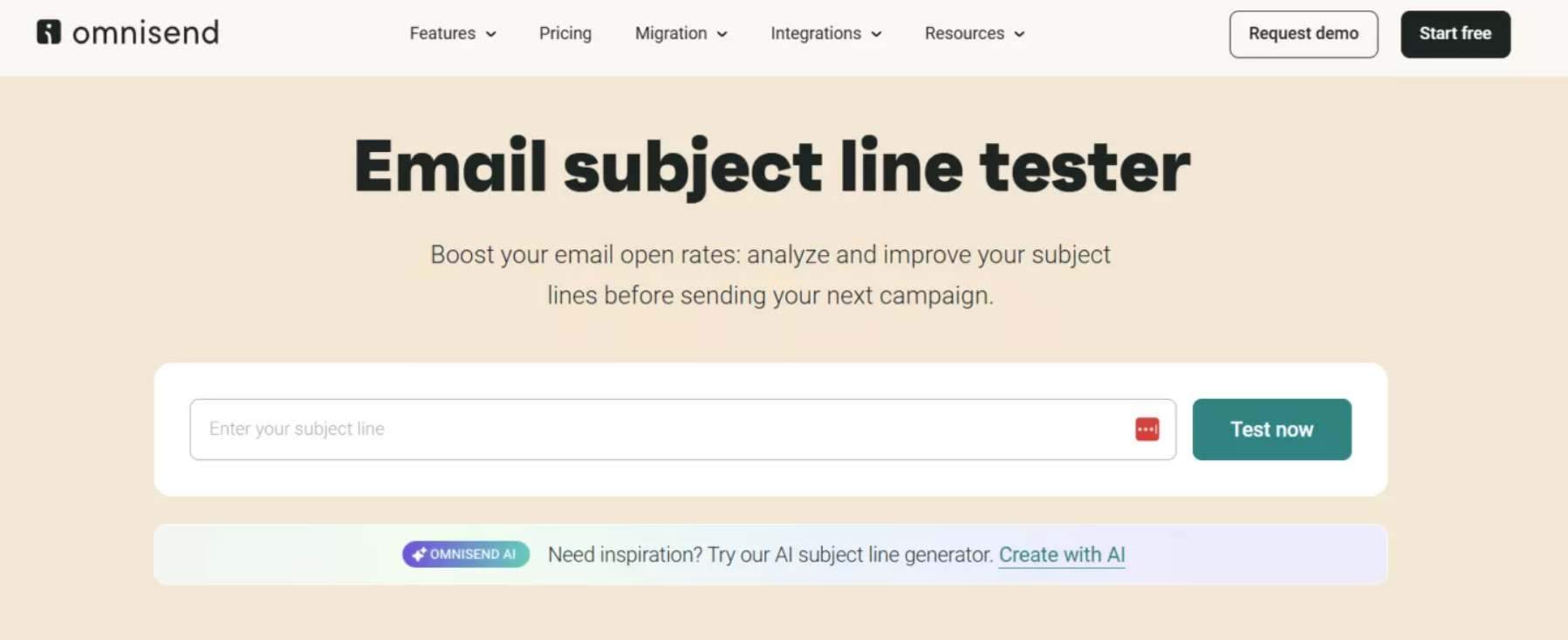
If you need help with your subject lines, Omnisend’s free subject line tester can help you optimize them for higher engagement and improve your overall email open rate:
Is email open rate still reliable in 2026?
Yes, but it would do you well to interpret them a bit differently. Recent privacy updates and technical filters have fundamentally changed how email opens are recorded. As a result, the open rate is no longer a precise and 100% accurate engagement email marketing metric.
Why open rates are less reliable today
These are the main things that make open rates not as reliable as they used to be:
- Apple Mail Privacy Protection (MPP) preloads tracking pixels
- Image blocking in some email clients
- Security bots triggering false opens
- Preview pane auto-load behavior
When the open rate is still useful
However, that doesn’t mean email open rates should be ignored altogether. They’re still great for:
- Subject line testing
- Monitoring deliverability trends
- Identifying sudden drops in inbox placement
When the open rate can be misleading
The best thing you can do is use the open rate as a guiding signal rather than relying on it as an absolute source of truth. Otherwise, it may mislead you when:
- Measuring content effectiveness
- Forecasting revenue
- Comparing promotional vs. transactional emails
Metrics that matter more in 2026
Instead of focusing all your efforts on open rates, you should divide your attention among some other metrics that are even more important, such as:
- Click-through rate (CTR)
- Click-to-open rate (CTOR)
- Conversion rate
- Revenue per email
- Engagement trends over time
While open rates can give you some insight into how your subject lines and timing perform, you should focus more on other metrics that are directly tied to revenue generation.
Conclusion
A good, average email open rate in 2026 typically ranges from 28% and 35%. These are, however, only benchmark numbers for all industries combined, and the numbers in your field may differ significantly. Also, keep in mind that some types of emails can inflate or deflate the number (for example, transactional emails can inflate, while mass promotional campaigns can deflate).
Instead of solely obsessing over broad industry averages, make up your own benchmarks. See where you stand right now, and experiment with A/B tests until you beat your own records. This way, you’ll understand exactly what your audience prefers instead of relying on external data.
To top it off, make sure you don’t use open rates as a single source of truth. This metric is no longer as reliable as it used to be due to privacy updates, and your best bet at data-driven decisions lies in metrics like conversion rates, revenue attribution, and more.
Get higher open rates and more sales using Omnisend’s advanced automation features
Quick sign up | No credit card required
FAQs
What is the average open rate for emails?
The short answer is 28%-35%. The longer answer is that open rates vary significantly based on email type. Transactional emails can reach 65% or more, and mass promotional campaigns can have underwhelming results. If you create personalized flows, you can expect dramatically higher engagement metrics than industry averages.
Is a 20% email open rate good?
It depends on the industry, but you can likely do better; the average ranges from 28% to 35%. It’s not catastrophic, especially if you’re sending to B2B recipients, but if you focus more on personalization, you’re likely to achieve higher numbers.
Is 60% open rate good?
Yes, 60% is an exceptional open rate for email marketing campaigns. If that’s the number you get on one-on-one prospecting emails, however, then you need to work on your copywriting or technical setup. It all depends on the type of email we’re talking about.
Is 35% a good email open rate?
Yes, a 35% open rate is a strong benchmark for most industries. It indicates that you have a well-segmented list, highly engaged subscribers, and effective subject lines. If you consistently hit 35%, your email marketing strategy is performing relatively well. But you should still try to beat your own records by experimenting with different subject lines and send times.
