

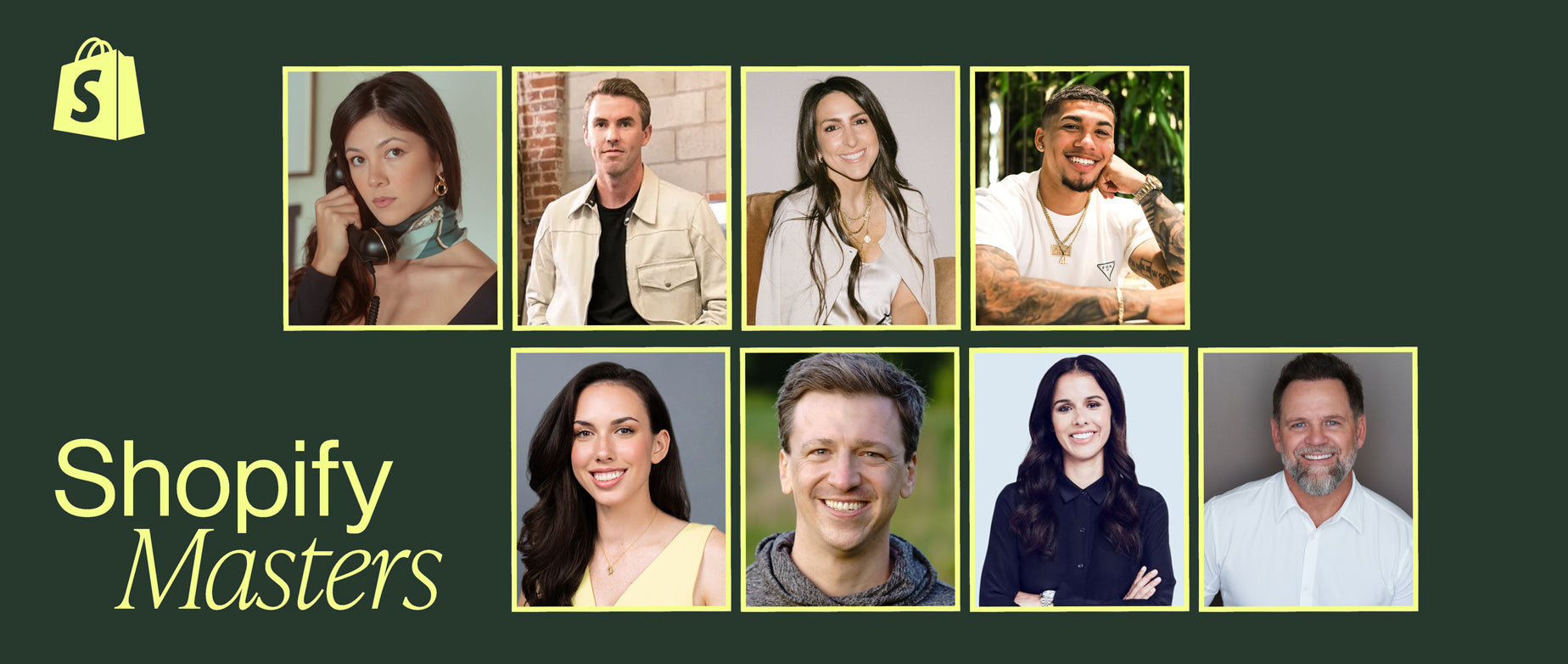

Catherine Goetze, founder and CEO of Physical Phones, used ChatGPT to crack a Bluetooth bug her manufacturer called unfixable—securing a technical fix that improved her product.
“There’s a total misconception that you need 50 different tools. We use one or two on a regular basis, and we just know how to use them really, really well.”

AC Hampton of Supreme Ecom has AI agents cutting ads, answering emails, and flagging issues around the clock. A Shopify store that used to take him five to seven days to build now takes 30 minutes. But for AC, knowing where to stop the machine is just as important as knowing how to run it.
“AI can’t feel emotion. And the one thing you do with marketing is push out emotion. Pain points, desires, real feelings—you can’t make that up. That’s where I don’t let AI touch.”

Trina Spear, cofounder and CEO of Figs, sees AI as the bridge between the health care database the company has built over years and the individual nurses they’re trying to reach.
“How do I build individual connection at scale? You can’t utilize AI at the highest level if you don’t have the data. We have one of the largest health care databases in the world—it’s all ripe to better connect.”

Dr. Jason Wersland of Therabody built his early recovery protocols by hand: complex spreadsheets across thousands of combinations. He doubted AI could replicate them. Then he saw it do it in a keystroke.
“When I look at what it can do in just literally a click of an enter button—wait a minute, wow.”
Now, Therabody offers “Dr. J in your pocket”: personalized recovery coaching inside its app, at scale, for 500,000 monthly users.

Melanie Bender of Lore uses generative AI for creative briefs that are physically impossible to shoot—and nowhere else. Her brand is human-led by design.
“I want minds and hands to be making the vast majority of what Lore puts out into the world. There are incredible photographers, videographers, prop stylists out there. I want us to be part of supporting that.”

Sean Reyes of Shock Surplus trained Claude on more than 200 of his own blog posts to create on-brand content. But the tool that changed how he operates is Notebook LM. He can feed it quarterly analytics, YouTube data, and Meta performance, and it builds a visual report in minutes.
“This would take hours for someone to put together. And the answer to what tools I’m using, even a month ago, is not the same as today.”

Sara Sugarman of Lulu and Georgia made AI foundational across customer service, A/B testing, coding, and product development. But lifestyle imagery stays off limits: real homes, real spaces, always.
“That’s not somewhere we’re using AI today, or I foresee in the future. You’re getting a real feel of how it would be in somebody’s home.”

Chloe Sapienza of Telescope Studio ran an internal AI hackathon for her team, and still believes the creative spirit should stay human. She doesn’t see a contradiction.
“Using technology to create a complete output of creative work takes away the joy of what makes it imperfect and human.”
Operationally, she’s all in. Creatively, some things are sacred.

Andrew Blackmon of The Black Tux downsized his engineering team by half. AI changed what a smaller team could accomplish: code generation, creative production, a fit algorithm trained on years of customer body data.
“Our engineering team is cut in half because of AI and Shopify—the combination.”

Kevin and Jin Chon of Coop Sleep Goods built a custom GPT trained on their brand guidelines, FTC white papers, and marketing history. The result is AI copy that actually sounds like them.
“We take the personal knowledge of the brand and the industry and use it for copywriting, brainstorming, and iterations of successful campaigns.”

Matt Hassett of Loftie runs a sleep brand with seven full-time employees. AI handles customer support tickets around the clock, powers a story-maker feature inside the product, and runs in the background of nearly every team function.
“When you’re a small company, you need software to help deliver the right customer experience. We’re an early and frequent adopter—and it shows.”

Dustin Pourbaba and Brian Wong of Feel Goods use AI for product development, content ideation, and first-draft landing pages. They feed Claude all of their published content so it learns what’s worked. Then they take it over the finish line themselves.
“It’s great for 80% of the initial lift. Then myself and one or two of our nutritionists go in and tinker. It just saves so much time on the initial draft.”
Not one of these founders is hesitating when it comes to AI. They’re building with what’s available today, adjusting every week, and getting sharper with every iteration.
The common thread: Go deep on one or two tools. Let AI handle the lift. Own the last mile.
Watch the full conversation on Shopify Masters and subscribe on YouTube so you never miss the strategies founders are actually using.





