

When it comes to growing your business, upselling and cross-selling are two sales techniques that you can use to introduce customers to new products. As businesses get online fast, proven offline sales strategies (Would you like fries with that?) are working just as well online for ecommerce merchants. With a focus on driving revenue, these strategies can help you sell more to existing customers, in addition to attracting new prospects and customers. In fact, according to Forrester Research, product recommendations are responsible for an average of 10-30% of ecommerce revenue.
Here, we’ll take a look at what upselling and cross-selling really mean, the pros and cons of each, and examples of how we implement these sales techniques for our clients at Diff.
Let’s get started.
According to HubSpot, It’s 5-25x more expensive to acquire a new customer than it is to retain an existing one. And if you do retain a new customer, they’re likely to buy more frequently and spend more if you use upselling and cross-selling. When it comes to customer retention, existing customers are also 50% easier to sell to than new prospects.
That’s why getting the art of these sales strategies right can help boost your average order value (AOV). Upselling and cross-selling can increase revenue, in combination with other strategies such as implementing customer loyalty programs, discounting, or moving your store to an online DTC model. Especially relevant during high sales periods, such as Black Friday, upping your sales strategy game can incentivize your customers to add more products to their cart.
Personalization platforms, like Diff’s technology partner Nosto, also play a large role in helping merchants optimize product recommendations for customers. Nosto analyzes a shoppers’ online and offline activity using AI technology to understand what a shopper truly wants. This creates unlimited customization options that can provide relevant product recommendations across your online store, email apps, or in-store experience.
Upselling is when you invite your customer to purchase more expensive items, upgrades, or add-ons to increase the value of their order.
Here’s an example:
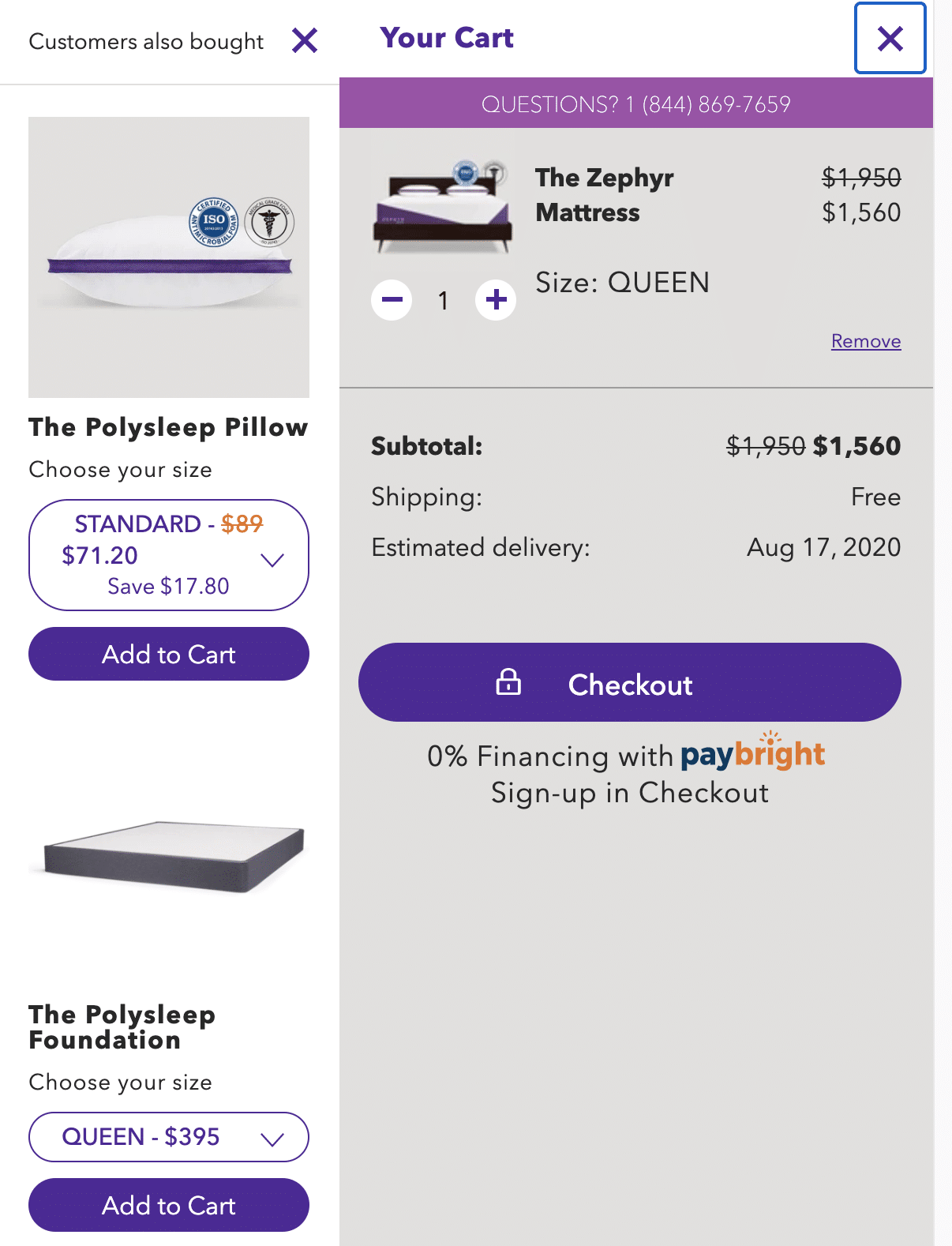
When someone clicks to purchase a brand new Zephyr Mattress on Polysleep’s website, they are presented with frequently bought items that complete their set. In this case, this includes includes a matching foundation and pillow. That is an upsell.
This custom sidecar, a feature created by Diff’s design team, adds an extra step to provide relevant recommendations alongside a shopper’s cart at checkout. This can help increase a shopper’s average cart order by showing them products that would add value to their order for a better night’s sleep. And if they are not interested in these extra products, they can simply close the sidecar and continue to checkout as normal.
Pros
Cons
Cross-selling is when you introduce products that are complementary to what a customer is currently interested in.
Here’s an example:
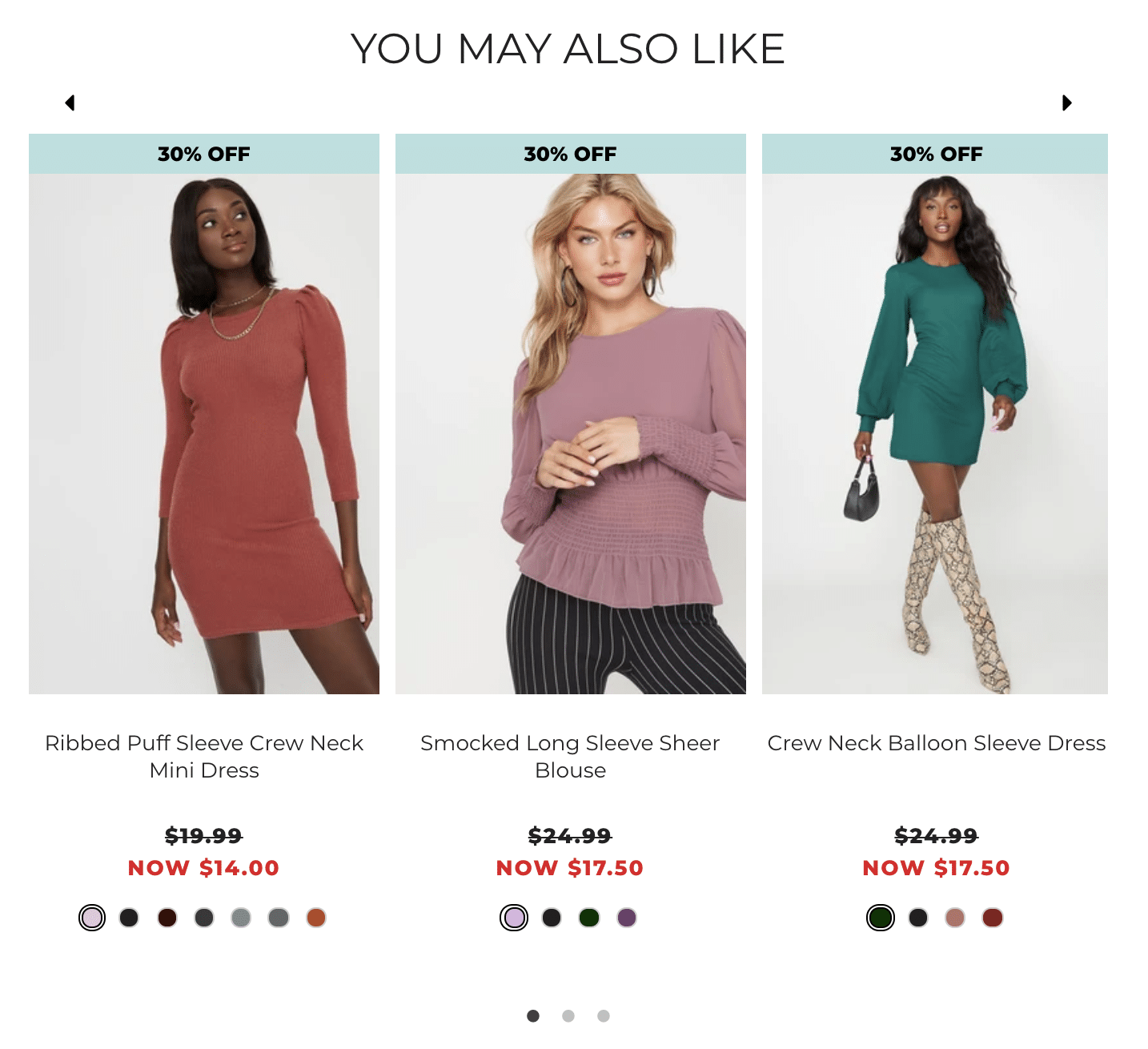
Diff helped boost conversions for Urban Planet, one of North America’s largest fashion houses, with cross-sells at the PDP page level. In this example, a customer is looking at a Ribbed Velvet Long Sleeve Mini Dress, and is presented with a cross-sell of complimentary dress wear they may be interested in. These relevant offers appeal to the shopper’s interest in formal wear, which make them more likely to be purchased.
Pros
Cons
While cross-selling is offering complimentary products, upselling is offering additional products that upgrade the primary purchase the customer has made. For example, upselling can be adding on the purchase of paper or ink for a new printer, making the upgrade more expensive. Cross-selling and upselling can often be used interchangeably in commerce. But sometimes, different scenarios call for the use of each on individually.
At Diff, we integrate Nosto for clients who want to guide customers through a full shopping journey from discovery to upsell. Nosto is an AI tool that guides shoppers’ online and offline activity by using machine learning algorithms to understand what every shopper really wants.
With customization and an interface built for action, we help merchants adjust personalized product recommendations that offer the most relevant products to shoppers, every time.
This partnership helps us improve product discovery by automatically surfacing relevant products, such as bestsellers, trending products, and new inventory. With a seamless integration, Nosto provides Shopify merchants with powerful merchandising rules that fine-tune strategies for creating customer groups and product recommendations.
Recommendations are based on what is in your shoppers cart, with cross-selling opportunities based on color, brand, material, or other categories. Recommended products can also be based on behavior, such as past purchases and predicted interests based on a user’s history.
Product Recommendations can also be optimized for specific merchant goals, such as stock levels, margin and product attributes. Or they can be made based on specific landing pages a user landed on from a Google Shopping campaign.
Create urgency with limited time offers, flash sales, scheduling discount events, or offering “last chance” opportunities.
At the product page
Offers can be helpful at the product page level that provide value to help your shoppers find what they are looking for. According to research by Predictive Intent, upselling performs 20 times better than cross-selling when it is placed on product pages.
At checkout
Selling at checkout is a very gentle way to offer an upsell or cross-sell. It is not distracting, and therefore doesn’t hurt conversion rates. It also does not add any extra steps to the customer experience to make a purchase.
With a pop-up
Pop-ups can be an effective method for introducing an offer. Pop-ups can either require a customer to actively accept or decline, or they can be displayed in a passive manner where no action (such as a click) is needed.
Agent/chat/customer service
This is when you offer an upsell or cross-sell when a customer is chatting with an agent or bot, or a sales representative on the phone. This approach only works if your store has a live chat feature or phone line available.
By carefully considering the customer experience, you can offer additional products that make the most sense for your shoppers. Looking at ecommerce analytics, or data from your customer loyalty program, can provide insight as to when your shoppers are making their purchasing decisions. Based on this information, you can provide relevant and timely suggestions that will solve your customer’s challenges, boost their satisfaction, and ultimately drive sales.
Need help integrating product integrations to your commerce website to drive conversions and boost your average order value (AOV)? Get in touch with our Shopify experts.
This article originally appeared in the Diff Agency blog and has been published here with permission.





