


Karolina Jūrėnė
Product Marketing Manager
Reading Time: 5 minutes
For most nimble ecommerce marketing teams, personalized retention marketing might seem like something ‘we’re gonna take care of tomorrow’. We all realize its value, but there’s only so much you can do with a lean team on a daily basis.
Omnisend’s newly introduced customer lifecycle stages were purposefully built to take any guesswork out of retention marketing and make it easier. In short, lifecycle stages help you to:
Customer lifecycle marketing means personalizing your marketing messages and tactics as your customers move throughout the different stages of their lifecycle. And there’s one main goal in doing so – to nurture and engage your customers at the right time in order to increase their repeat purchases and customer lifetime value.
In order to build timely, relevant re-engagement messages you need to take into consideration two core customer behavior variables that define their lifecycle stage:
You can surely implement personalized retention strategies with just one of these variables, however, a true, lifecycle-based marketing strategy can only be built when the two are combined.
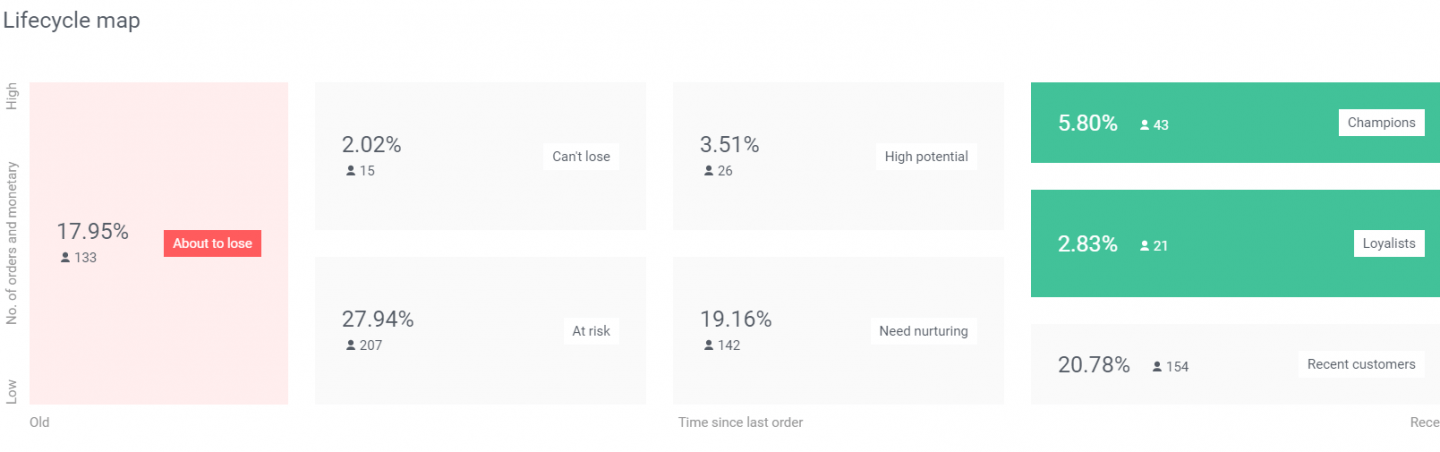
At Omnisend, we calculate and combine these two purchase behavior variables to group all your customers into eight lifecycle stages. You can see the customer value and the shopping recency represented on the vertical and horizontal Lifecycle Map axes, and all eight stages are mapped accordingly:
The Lifecycle Stages Map is a good starting point to plan your retention strategy and prioritize the tactics. One easy way to get started is to split it by 4 different strategy goals: Cherish – Nurture – Reactivate – Deprioritize.
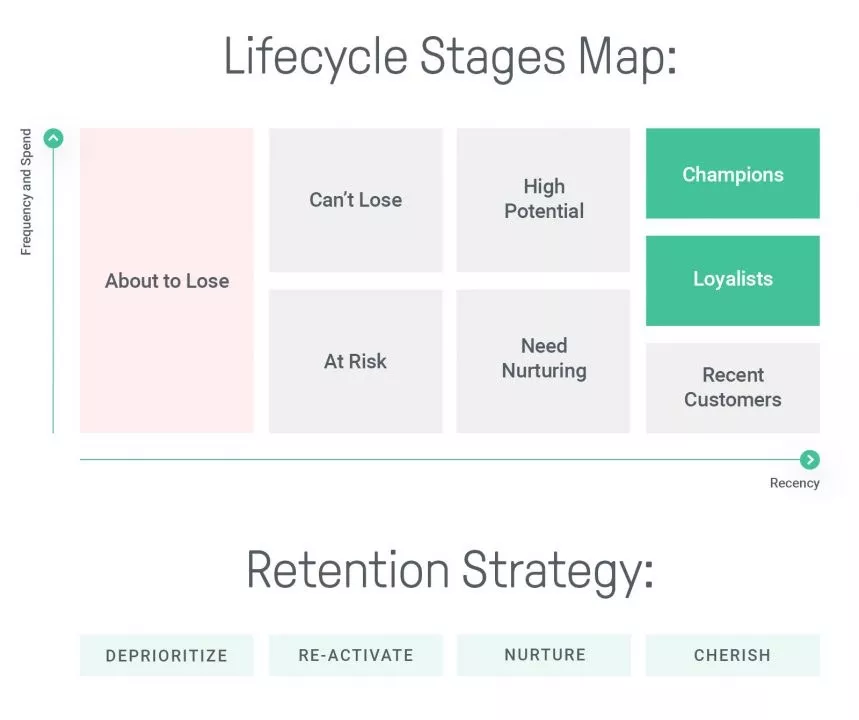
This strategy type applies to all customers who have bought something from your store most recently (Recent Customers, Loyalists, Champions). Your main goal should be to provide a positive post-purchase experience to all of these customers. However, you should aim to go the extra mile by rewarding your most valuable repeat customers (Champions and Loyalists) to make them feel special.
This strategy type is targeted towards all of your customers who fall between the most recent shoppers (in the Cherish strategy) and those who are already getting rather ‘cold’ and require reactivation. Your main goal with High Potential and Need Nurturing customers is to keep your brand top of mind and try to nudge them into buying again.
Can’t lose and At Risk customers need to be reactivated before they fall into the last, ‘coldest’ lifecycle stage. Your re-activation tactics should take into consideration the customer value: Can’t lose customers used to be your most frequent shoppers and/or used to spend more, whereas At Risk shoppers have just tried your products. In your reactivation messages, keep in mind to signal that you’re genuinely missing the customer and you’re making an effort (giving a discount, sending a letter from the founder, reminding them of the value of your products) to get them back.
The last strategy is targeted towards the remaining customers who haven’t shopped at your store for the longest time. As the strategy type suggests, depending on the length of your to-do list, it’s fair not to spend much time crafting special initiatives towards these shoppers as they are likely already ‘too cold.’ Your gains will probably be higher by prioritizing the customers in the other lifecycle stages.
The eight-stage lifecycle map doesn’t mean you have to build out 8 types of retention campaigns straight away. Instead, we suggest using it as a guide for prioritizing where you can drive the most
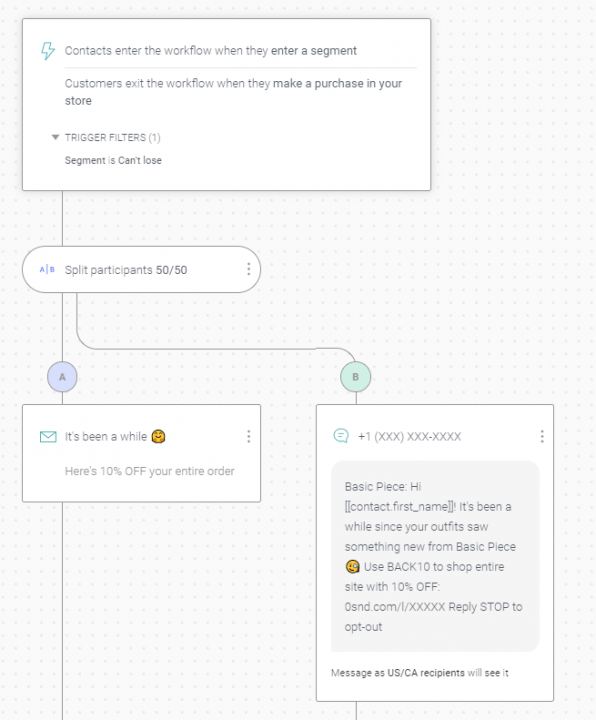
The Can’t lose lifecycle stage is assigned to your most valuable customers who used to shop more often and/or spend more than your other customers, but haven’t purchased anything for a while. The easiest way to try and reactivate them is to set up a segment-entry-based workflow including a series of messages.
A few tips for setting this workflow up for success:
#2 Cherish your Champion customers with exclusive campaigns
Your Champion customers deserve to be rewarded – these are the most active, valuable, and recent shoppers in your customer base. Here are a few campaign ideas to make them feel special :
#3 Improve your paid targeting by syncing your most valuable customers
Customer lifecycle stages can also be used to help you build consistent customer messaging on paid channels like Facebook and Google. Here are the two highest-impact strategies to leverage Omnisend’s audience sync and customer lifecycle stages:

Customer lifecycle stages are available to all Omnisend users – including those on free and paid plans. Not an Omnisend customer yet? Connect your store today to see your customer breakdown by different stages to start reactivating them right away.
Start a 14-day free trial of Omnisend to analyze and engage your customers by their lifecycle stages.





