


At some point in your business journey, you may require additional capital.
Whether it’s accelerating growth or covering a seasonal cash flow shortage, adequate funding can be make-or-break for small business owners.
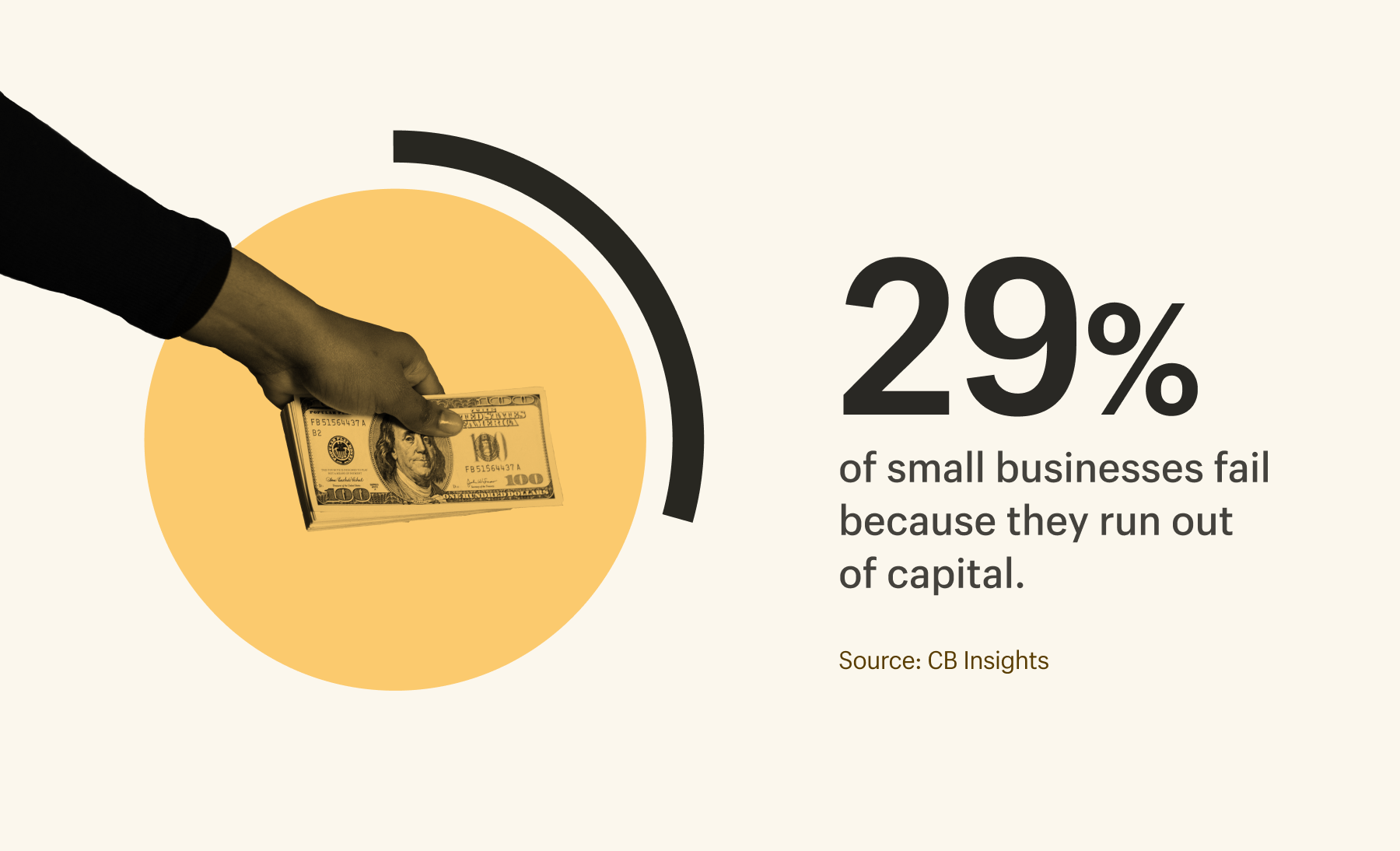
In fact, the vast majority (82%) of small businesses close their doors because of poor cash flow management, and another 29% simply run out of cash.
Luckily, there are plenty of small business lending solutions available. Banks, online lenders, and even family and friends can all help you secure the money you need to grow your business.
To help you navigate small business lending, we outline the various types of loans and share statistics on approval rates and average loan amounts to help you choose the right option for your business.
There are plenty of trim business lending options, but they each have advantages and disadvantages and varying repayment terms. Repayment terms are essential to pay attention to. For example, if your business has an extended cash flow cycle, short-term business loans with frequent payments could leave you in a cycle of debt payments.
Below is a quick overview of each type of small business loan and its pros and cons.

A business term loan is a lump sum of cash that small business owners can get from banks, online lenders, or other financial institutions. Companies have a fixed term to repay the lender. (95% of business term loans have fixed interest rates.)
These can be short-, medium-, or long-term loans, and depending on the lender, the time to receive funding can vary greatly. For example, medium-term business loans take longer to approve through a bank than through an online lender.
Short-term business loans have a short repayment period (usually between 18 months and 3 years), whereas medium- and long-term business loans have more extended repayment periods (up to 10 years).
? Pros:
? Cons
The US Small Business Administration (SBA) is a government-backed loan available through various lenders, including banks and credit unions. SBA loans are beloved for their enviable rates and loan terms.
There are a lot of variations and options regarding SBA loans, and amounts can vary from $75,000 to $5 million, so be sure to check the SBA’s website for the correct type of loan for your business.
? Pros:
? Cons
There are many avenues to investigate if you want money to start a business. One popular route is a small business loan, such as an SBA microloan, a loan of up to $50,000; nonprofit community lenders administer it and can come with favorable interest rates and terms.
A line of credit is a lump sum payment that small business owners can use for expenses—such as inventory, rent, or new machinery. Unlike business term loans, large banks give companies a line of credit without fixed repayment terms. It’s a short-term loan ranging from $1,000 to $250,000.
According to the Small Business Credit Survey from the Federal Reserve Bank, 54% of US small businesses applied for a business loan or line of credit in 2018.
? Pros:
? Cons
Specifically designed to finance equipment, this business loan can help you purchase the commercial fridge, tractor, or computer equipment you need. Lenders will rent equipment to you while you pay for it in monthly installments. Once the amount is paid, your business will own the equipment.
According to the Equipment Leasing and Finance Association, almost 8 in 10 US companies use some form of financing when acquiring new equipment. Banks were the primary lender for 43% of equipment financing deals.
? Pros
? Cons
A personal loan is a type of financing based on personal credit to help accelerate business growth in a pinch. It’s available from credit unions and banks and typically ranges from $1,000 to $50,000.
? Pros
? Cons
A merchant cash advance (MCA) is a type of funding that allows small businesses to borrow against future earnings. Lenders give companies rapid access to capital. The money is repaid based on a percentage of future daily sales. While MCAs offer quick financing solutions, it’s essential for businesses to carefully assess the terms and conditions offered by merchant cash advance companies to ensure they align with their financial goals and capabilities.
? Pros
? Cons
A business credit card is a simple way to make your everyday expenditures work for you. Once a bank approves, you’ll have a revolving credit limit for business purchases. Small businesses can use credit cards for short-term cash flow fluctuations.
? Pros
? Cons
Accounts receivable financing allows small businesses to borrow against unpaid invoices for working capital. You repay the initial amount to a lender when the invoices are paid, alongside weekly fees that act as interest.
? Pros
? Cons
For Shopify store owners, Shopify Capital is a funding option with no application process. It’s used primarily for growth funding and has a fixed 12-month term. Small businesses can loan between $200 and $2 million. The loan is repaid automatically as a percentage of your sales.
? Pros
? Cons
We weren’t old enough as a business to be approved for a bank loan…that’s when we found out about Shopify Capital. They already had access to all of our business data and quickly made an educated decision about how much money we qualified for. We received the funds in our bank account a few days later.
 Average loan amounts by loan type and lender
The average small business loan amount is $663,000. That’s for all business loans, regardless of loan type. Don’t be alarmed if that number sounds big. In the U.S. and Canada, a small business is defined as a company with fewer than 100 employees, so the size of loans can vary significantly by company size—from a few thousand dollars to over 5 million dollars.
Here’s a breakdown of the different types of business loans available to small businesses and their average lending amounts.

Loan sizes also depend on the lender. Here’s a breakdown of the average size loans by lender type.

Before submitting your business loan application, it’s worth understanding which types of small business funding have the highest approval rates. Getting approved for a loan can be tough: 48% of small businesses said their small business lending needs were met, and only 20% of small businesses qualified for the full financing they requested.

Research shows that merchant cash advances have the highest approval rate, at 87%. They are followed by equipment loans (86%), business lines of credit (79%), and business loans (70%).
Approval rates can also vary depending on the lender they’re coming from. Biz2Credit’s Small Business Lending Index lists the loan approval rates for each type of lender as of May 2021:

Securing small business funding can be challenging, especially from traditional sources like big banks. Lenders can choose to turn down applications for many reasons, but the most common reasons are as follows:

Do you need to decide whether you need to finance your small business? Below are some key moments that may require additional financing.
Although there are many low-investment ecommerce businesses, starting one can be expensive, depending on your industry and your team size. According to Shopify research, the average small company (4 or fewer employees) spends $40,000 in its first year.
If you need to make more revenue to sustain your business’s first year, you should consider lending options. Ensure you conduct a detailed assessment of SBA loans, particularly regarding the interest rates applicable during different durations. Gathering such data is crucial as improving cash flow management remains a significant priority. Here are some valuable insights on business loan rates that cover variations and current market trends to help you make informed decisions for your small business. You could also apply for a personal loan if other applications are denied due to a lack of established business credit—a common issue for early-stage startups.
To increase your chances of being approved by a traditional lender, write a business plan, including how much money you will need at various stages and how you plan to allocate any funding you receive. Having a good handle on your small business finances and the exact funding you might need before you get started can save you a lot of headaches (and rejections).
Working capital is the cash your small business can spend. It’s the difference between your assets/income and your total expenses, including accounts payable, inventory, and payroll costs.
Securing a small business loan helps increase your working capital. The more money you have in the bank, the better your cash flow. This helps reduce the risk of being unable to pay for expenses (like stock) because you don’t have enough money coming in.
Seasonal gaps also cause short-term problems with cash flow. For example, if you’re ramping up advertising spend before the holiday season, you may not make any revenue until months later.
Funding options like accounts receivable financing and merchant cash advances are good options here. Applications are processed quickly with these loans, with higher approval rates so that you can cover unexpected bills on short notice. (But keep in mind: the faster the loan, the higher the interest rate in most cases.)
Managing inventory is one of the most important things about running a small business. You can’t make revenue if you don’t have stock to sell. Financing your small business can help you purchase larger volumes of stock.
For example, you can borrow anywhere from $200 to $2 million with Shopify Capital. Merchants like Quartz & Rainbows use that funding to purchase inventory, stock up for peak seasons, or explore new products. They repay the loan as a percentage of sales—meaning repayments are flexible to suit your small business.
Because of Shopify Capital, I’ve been able to grow during the pandemic, add new products, and ship orders as quickly as possible. Now, I can have bigger goals to work towards.
Check if you’re eligible for Shopify Capital.
With no lengthy application process or credit checks, Shopify Capital is a fast funding option for growing your business. Repayment terms are flexible to fit your business.
Extra cash allows your small business to purchase equipment and machinery to help you work faster and more efficiently. Lending options like equipment financing give you money to spend on tools, allowing you to spend time on other business areas.
When you’re growing a business, there comes a time when you need an extra pair of hands. Whether you hire customer service associates, marketing staff, or someone to fulfill orders, you need cash to pay their salaries.
If you reach that point before you have enough working capital to hire, consider more traditional trim business lending options. An SBA loan has broad eligibility requirements and large sums of money available to borrow over longer terms. Despite its longer application process, it’s an excellent option to consider if you’re thinking about hiring staff. And if you’re a Shopify merchant, Shopify Capital is also a fantastic option for payroll funding.
Find out how much a loan will cost you.
Shopify’s small business loan calculator will give you an idea of how much it will cost to take out a loan. Adjust the term and add extra monthly payments to see how much of an impact you can have on repayment.
While many trim business lending options exist, that doesn’t mean they’re all available. Or suitable for your business. So, before you apply for a loan, ask yourself the following:
Once you’ve assessed each financing option and determined which type of funding is right, apply with enough time to approve your application to avoid being left in a sudden cash flow crisis.
Finally, remember to savor these exciting moments in your journey. Even though preparing to expand and grow can be stressful, it’s also an exciting opportunity to take your business to the next level. With some research and financial planning, small business lending could be precisely what you need to pursue your goals.





