


As consumer expectations evolve and new tactics and technologies emerge, it’s important for ecommerce businesses to keep up.
That’s why we’ve gathered a list of nine ecommerce trends to watch in 2023—so you can get ahead and stay ahead. This industry moves fast, so take a look and see which strategies you might want to incorporate into your own business.
Key takeaways
An IBM study found that one in two consumers say they are willing to pay a premium for sustainability. Meanwhile, four in five consumers in 2022 said sustainability benefits are vital when choosing a brand to support. This has caused more and more retailers to invest in corporate sustainability initiatives. For example, major players like Apple are pledging to be carbon neutral by 2030.
Companies hoping to become more sustainable and eco-friendly should start with the following steps:
In the 10 years since Google launched voice search, it has become a staple feature of almost every smart device. According to a recent survey, 35.1% of consumers use virtual and voice assistants daily. Smart speakers are also becoming more popular, with 35% of the US population owning one in 2022. These speakers are now the central control hub of smart home setups. People use voice assistants like Siri and Alexa to check the weather, play music, and shop online.
Online retailers are leveraging this trend by creating voice-enabled shopping experiences. This increases access for customers with limited mobility, and allows shoppers to quickly and easily find the products and services they want without sifting through multiple pages. It’s an intuitive and hands-free way to shop that makes buying your products easier than ever before.
The direct-to-consumer (DTC) business model is not new, but the pandemic caused a surge in its popularity. Many manufacturers found that selling directly to consumers was more effective and profitable than going through third-party platforms.
Take Nike, for example. In 2019, the brand decided to cut ties with Amazon. They’re now selling directly to customers through their own ecommerce website. This move increased Nike’s share of direct sales to 30%.
Or Recharge customer Mary Ruth’s, which sells liquid and gummy vitamins directly to consumers via their website:
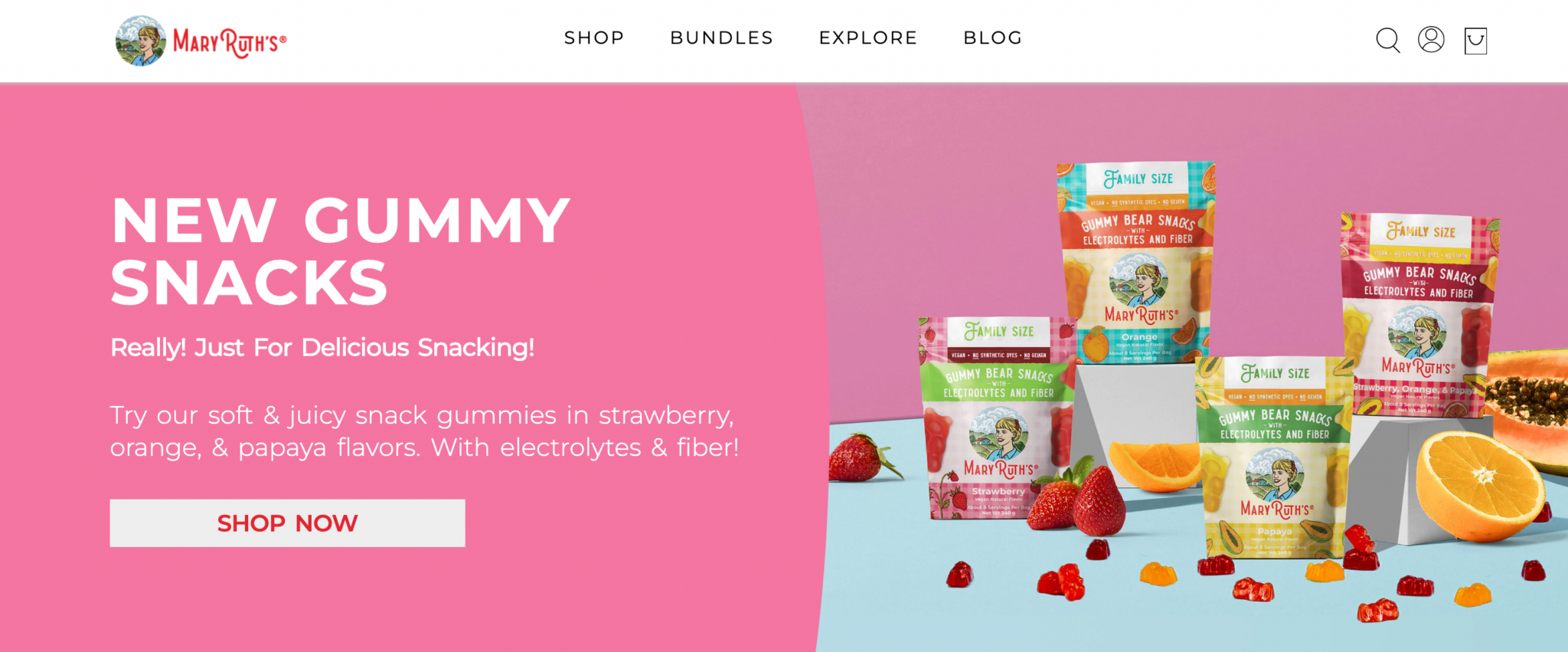
Eliminating the third party can cut costs, which means businesses can offer products at lower prices, or reinvest those savings into marketing efforts and other facets of their business. This model can also create a direct interaction between businesses and customers, which can help build those relationships. Customers can come directly to a business with any concerns or questions, creating opportunities to solve problems, upsell, and cross-sell.
The catch of DTC is that it can require more attention from the business. It calls for heavy engagement and more staff and resources to handle the added operational elements, including product shipping, handling, marketing, and customer service.
TikTok is a social platform that allows users to create and upload short-form videos. Other users can engage with that content through likes, comments, and shares. While millennials and Gen Z make up most of its users, it also has a large community of older users. TikTok has had a phenomenal year, check out even more stats here.
TikTok currently has the highest growth rate of all social media platforms. It was the most downloaded app worldwide in 2021, with over 656 million downloads. In the same year, TikTok was also the first app since Facebook to surpass three billion downloads. It’s great for social commerce and for brand marketing campaigns, and ecommerce businesses are taking note.
There are three ways you can promote your ecommerce business on TikTok:
In live selling and interactive shopping, retailers showcase their products through livestreams (usually on a social media platform), and allow customers to ask questions, get answers, and make purchases in real-time. This tactic first gained traction in China, where it generated $300 billion in revenue in 2021. It’s since spread to the rest of the world, with platforms like Facebook and Amazon jumping on the bandwagon.
The US live selling market is still in its early stages and expected to hit $25 billion in 2023. But with major players like Walmart, Nordstrom, and Macy’s getting involved, it’s expected to skyrocket in popularity.
The main appeal of live selling is its interactivity. It’s an opportunity for brands to get creative in how they show their products, get users to engage, and close sales.
Live selling is most popular among apparel and fashion brands. However, it is also gaining traction selling beauty products, electronics, and food.
Videos are a great way to show off your products or services, but the format can sometimes be limiting. Without a clear call to action (CTA) or way to find the products being displayed, you can easily lose potential customers.
Shoppable video ads incorporate calls-to-action and action buttons into the videos themselves. You can link these buttons to your ecommerce website, product page, or a landing page. Some buttons even have an add-to-cart functionality, expediting the checkout process even more.
The Interactive Advertising Bureau reports that 40% of marketers now use shoppable videos, showing a consistent increase from previous years. This should come as no surprise, given the potential this tactic has for shortening customer journeys and boosting conversion rates.

You can find examples of shoppable video ads on YouTube in the form of bumper ads, which often play before a video you select.
Personalization can be a powerful way to tailor your customer experience to individuals, helping convince them to buy and to boost their satisfaction and loyalty. But personalized experiences require gathering customer data. This brings us to data privacy, which has become a significant issue for many consumers.
In a recent survey, 86% of Americans said they were becoming concerned about data privacy, while 68% said they were apprehensive about the data that businesses collect.
This is actually an opportunity to potentially win over customers by being transparent about your company’s data practices. Let your audience know the types of data you collect and allow them to opt out if they want. This provides them agency over their data, and demonstrates your company’s respect for their privacy concerns.
Omnichannel retail involves creating a consistent customer experience across various touchpoints. Those touchpoints might include in-store interactions, website visits, mobile shopping, and phone calls. A customer might encounter your brand through all those channels before buying, and their experience needs to be consistent throughout—yet tailored to the nuances of each individual outlet..
The convenience omnichannel experiences offer often translates into ecommerce sales. Marketers using at least three channels in their campaigns had a 287% higher purchase rate than single-channel marketers. This makes sense, given that 56% of in-store customers used mobile devices to research products before buying.
Customers are accustomed to using many devices during their buying journey. An omnichannel strategy meets them wherever they are. It ensures a smooth experience no matter the channels they use.
In the ecommerce industry, artificial intelligence is proving to be useful in data mining, natural language processing, and machine learning.
Here are a few advantages of applying AI to an ecommerce business:
While both strategies incorporate multiple channels to enhance the customer experience, omnichannel retail focuses on providing a consistent and holistic experience across those channels.
As gaining new customers becomes costlier than ever, improving retention can help compensate. A few of the trends we discussed, including AI technology and DTC selling, along with personalized experiences, subscription plans, and loyalty programs can help reduce churn and increase your customers’ lifetime value.
Use the 9 trends we highlighted above to launch and test new programs, technology, and business models, reinvesting in the tactics that work.





