


Discover how to create a customer service policy that will drive customer delight, loyalty, and revenue growth for your team.
As you hire more customer service agents, providing quality support across the entire team becomes a significant challenge. Without clear rules, agents may each handle critical tasks — like handling refund requests or building self-service resources — in different (and incorrect) ways.
Fortunately, a good customer service policy helps avoid these problems. But your policy needs more than platitudes like “Be friendly” or “Respond quickly” to do that. Instead, it requires specific and actionable information.
In this guide, we’ll help you create a helpful customer service policy by sharing the five key topics it needs to cover. We’ll also discuss how to write and enforce your policy.
First, let’s start with the basics.
(Or skip straight to the advice for writing a helpful policy).
A customer service policy is a document containing a set of guidelines, rules, and standards for the customer service teams. Its goal is to help agents handle day-to-day tasks and set benchmarks for excellent customer service.
This policy is one of the first documents for new agents during training. It’s also a cornerstone document for the entire customer service team since agents can use it during complex or process-heavy interactions, such as customer complaints, order cancellations, etc.
The customer service policy is an internal document, so you won’t publicly share it. However, you can use it as a foundation and repurpose parts into various customer-facing policies (like cancellation or refund policies). These policies help you set customer expectations and reduce repetitive inquiries like “What’s your return policy?”
Take a look at how Marine Layer concisely does this:

You can share these customer-facing policies in:
While similar, customer service policies and service-level agreements (SLAs) differ.
Customer service policies are internal documents that help agents by setting standards and policies. Service-level agreements (SLAs) are external documents defining the expected service level between a business and its customers. Use an SLA to communicate information like:
If you have SLAs, your policy needs to reference them, as you’ll see.
For a real-life example, check out Berkley Filters’ Contact page:

Above, Berkey listed the working hours for two of their support channels and their average response time. This is an explicit promise to customers that sets their expectations for the level of service provided by Berkley Filters.
While customer service policies vary for each company, they benefit all organizations. Specifically, they:
Even if you’re a customer service team of one, we recommend laying the foundations of your customer service policy as early as possible.
Here’s why:
You and any agents you hire will be faced with some situations over and over, regardless of business size or industry. The sooner you set the rules for these scenarios, the better your chances of providing consistent service, avoiding confusion, and setting standards for your team.
For online stores, these everyday situations are:
Team members who handle customer inquiries should know how to deal with these from day 1.
Outside of these situations, you should continue to expand your policy as your customer service team grows. That’s a significant aspect of ensuring consistent, high-quality service across a larger group. We’ll discuss some additional policy topics in the next section.
Some elements of the customer service policy will vary depending on company size and industry. For example, a clothing brand’s return policy will differ from that of a brand that sells perishable goods.
However, all policies should cover the following five key topics below.
This is the most essential part of your customer service policy. It gives agents the knowledge they need to resolve customer issues and provide quality support.
Here are some common workflows to include in this section:
As you can see, there are many scenarios to consider here. Fortunately, once you’ve outlined them, you can quickly build a library of message templates around your standard processes, so your agents don’t have to waste time typing from scratch.
Gorgias’s version of templates, called Macros, includes variables that automatically populate each customer’s unique information (like names, order numbers, shipping information, and more). This means you can pull up and send the relevant macro without any copying/pasting.

You can also put information about these critical policies in helpful self-serve resources like FAQ pages or a help center. These empower visitors to resolve simple issues instantly instead of flooding your team with repetitive tickets (waiting for a response).
This is another crucial topic for your agents’ day-to-day that every customer support policy should include. Without prioritization rules, agents can follow their logic, resulting in poor response times for urgent tickets.

Here are three prioritization factors to include in your policy:

We have lots of helpful advice on this topic, so check out our detailed guide to prioritizing customer service requests.
As mentioned, SLAs are customer-facing promises about your team’s response and resolution times. This information should also be in your policy so agents are aware of the expectations your SLA sets.
But what if you don’t have an SLA? Your agents still need to know what standard they’ll be held to, i.e., what “good customer service” means for your company.
That’s why your policy needs to establish a set of customer service metrics or key performance indicators (KPIs), regardless of whether you have an SLA.
First Response Time (FRT) is the primary metric to consider here.
FRT measures how long your agents take to respond to customer inquiries. You can have different FRT targets depending on the channels you use. For example, a 1-hour FRT might be great for email support, while 1-2 minutes is usually a good target for live chat and SMS.
As Brianna Christiano, Director of Support at Gorgias, explains:
“We have members of the support team who monitor FRT every hour. This lets us keep a pulse on our workload and pivot if necessary. Suppose we notice that live chat or SMS inquiries are getting overwhelming. In that case, we’ll ask team members who typically do, for example, email support to help with the live messaging channels so we can maintain a low FRT.”
Also, you can use FRT to nudge buyers to try a specific customer service channel.
Let’s take another look at Berkley Filters’ Contact page:
Besides setting expectations, publicizing the average response time helped Berkley Filters push more buyers toward their new SMS channel.
Other valuable metrics for your policy include:

Your support team may be the only direct point of contact with your business for many customers. That’s why it’s crucial to establish that agents’ tone of voice should match the brands’ — whether professional, friendly, or a mix of both.
However, this broad rule can be challenging to apply in real-life situations. You also want to add clear examples of what fits within your tone of voice guidelines and what doesn’t.
For instance, starting customer interactions with an energetic tone can be a good foundation. However, agents should adapt to each customer’s style after the initial contact. After all, annoyed visitors likely won’t respond well to humor or light-hearted conversation.
Also, could you add an exhaustive list of words or phrases for your agents to avoid? For instance, agents shouldn’t sound overly apologetic when discussing fixed company policies (refunds, order cancellations, etc.) with customers. You can instruct them to avoid sorry language and use empathetic — but not overly apologetic — phrases to communicate the facts.
If you use different customer support channels, it’s a good idea to include specific guidelines for them. For instance, call center agents can be instructed to:
Of course, apply these same tone-of-voice considerations to any customer support templates or self-service resources. All these are an extension of your brand, and ensuring consistency at the source is mission-critical.
Customer service is much more than responding to tickets. Proactive customer service — where agents make the first move instead of waiting for people to contact them — can help you exceed buyers’ expectations, drive revenue, and reduce repetitive questions.

If you haven’t tried proactive customer service, here are some ideas you can test and describe in your policy:
You can learn more about the best customer service software on the market and how it can help streamline your customer service operations and boost revenue.
Before you dive into the policy’s content, make sure to name your document, i.e., “Customer Service Policy” or “[Brand Name] Customer Service Policy”.
You don’t need to get creative with the name. You need people to be able to find it fast when they need it.
Before writing the policy, please consider that it should only cover topics specific to the customer service team. Broader topics (like code of conduct or other employee rules) should be part of more extensive company handbooks or other high-level documents so the customer service policy doesn’t lose focus.
In terms of content, it can be helpful to separate the policy into two parts.
This first section lays the foundation for the rest of the policy. Your company’s values and mission statement are familiar places to start.
For example, Abel Womack — a material handling company — begins the public-facing version of their company’s policy by saying it “has been established to be reflective of our shared values,” which are integrity, empathy, customer care, and teamwork.

Some policies also include details about the company’s products at this stage. If you sell various complex products, it can be helpful to add that information. If not, you can skip it and move on to the meat of the policy.
The second half contains actionable information that helps agents provide excellent customer service.
Writing this part can be tricky, especially if you haven’t done it before. Fortunately, an outline makes the process much more accessible than starting with a blank page.
Copy the outline below based on the previous section’s checklist.
? Useful Resources: Our free refund and return policy generator & Loop Returns automate the returns process.
? Useful Resources: Best practices for prioritizing customer service requests.
? Useful resources: Detailed guide on evaluating customer service & 25 key customer support metrics.
? Useful resources: Our guide on proactive customer service & customer self-service ideas
From here, it’s all about filling in the specifics using your brand’s terminology, e.g., “customer service representatives” instead of “customer service agents,” and so on.
{{lead-magnet-2}}
So, you’ve worked hard to create a detailed and actionable customer service policy. Now, let’s get agents actually to use it.
First and foremost, ensure the document is easy to find by:
Also, keep in mind that the policy shouldn’t be a static document. Instead, it needs regular updates as you add new products, team members, and support channels. Entrusting a customer service team member, likely a manager, to keep it updated is a must.
Another critical tip for improving enforcement is tying the policy to the metric(s) you use to evaluate agents’ performance. This will keep people accountable and give you an objective way to determine their adherence.
Here’s an example of this idea in action by Brianna Christiano, Director of Support at Gorgias:
“At Gorgias, we use an internal quality metric to gauge the support team’s performance. Each week, managers audit 3 of their agents’ tickets and determine the quality and efficiency of the provided service based on that metric. This lets us continuously evaluate and reinforce customer service rules and standards.”
Finally, getting managers to shadow new agents is another best practice here. This lets managers reinforce your policy from day 1. Plus, it’s helpful to check if new agents can satisfy customers’ needs.
After weeks of writing, introducing a new policy to the team feels great. But getting the document out there is only half the battle.
You then need to monitor if the policy is helping you reach your customer service goals.
To do that, keep a close eye on your support metrics (FRT, ART, and so on) in the weeks after the initial implementation.
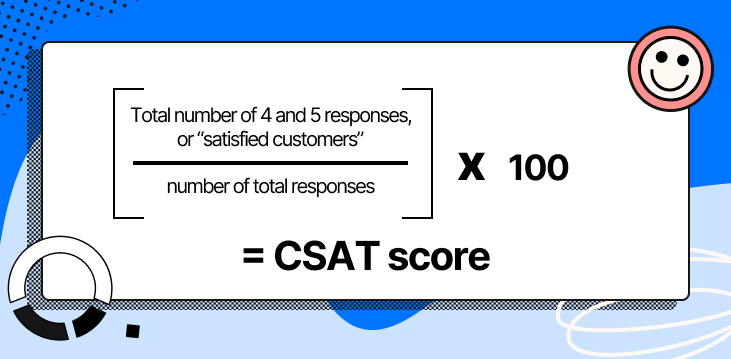
It’s also crucial to determine if your new policy is truly customer-centric. This means tracking feedback metrics, like CSAT and other customer satisfaction metrics, significantly impacting customer retention.
The evaluation process is as important as creating the policy, so notice it carefully. For additional practical tips, check out our guide to evaluating customer service programs.





