
4th
November, 2025
Affiliate marketing is a powerful revenue driver for brands, accounting for roughly 16% of all online orders in the U.S. In fact, 80% of brands run an affiliate program to boost e-commerce sales. However, managing an extensive affiliate network manually can become time-consuming and inefficient as your program grows. This is where affiliate marketing automation comes into play. By leveraging the right tools and strategies, companies can streamline tedious processes, improve tracking accuracy, and scale their programs to drive more revenue with less overhead. In this blog, we’ll explore why automating your affiliate program is crucial, the top tools and tactics for automation, and how embracing micro-influencers and user-generated content (UGC) can supercharge your results. Let’s dive in!
Running an affiliate program involves tracking links, handling payouts, recruiting partners, and analyzing performance data. Doing all of this by hand is prone to error and limits your growth. Here are some key reasons automation is a game-changer for affiliate marketing:
In short, automating your affiliate program management means you can scale faster and more efficiently, while maintaining accuracy and partner satisfaction. Next, let’s look at the essential tools that make this possible.
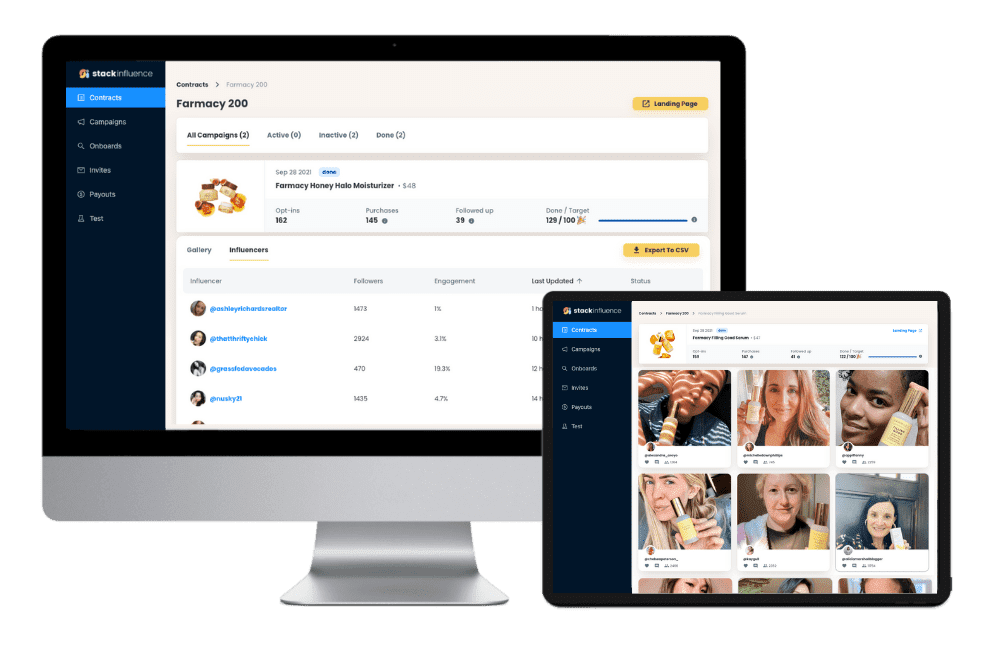
Implementing the right tools is critical to streamlining your affiliate program. Modern affiliate marketing platforms and software can take care of everything from tracking to payouts. Here are the top categories of tools to consider:
By investing in these tool categories, you’ll set a strong foundation for automation. Many all-in-one influencer/affiliate marketing platforms encompass multiple functions above under one roof, simplifying your tech stack. The next step is implementing smart automation strategies in your workflow.
Having the tools is great, but you also need the right tactics to fully leverage automation. Here are some best practices and strategies for scaling your affiliate program efficiently:
By applying these strategies, managing a large affiliate program becomes far more feasible. Essentially, you create scalable workflows: whether you have 10 affiliates or 1,000+, the process to onboard, equip, and pay them runs smoothly with minimal manual oversight. This sets the stage for explosive program growth without the usual growing pains.

One of the most effective ways to scale an affiliate program today is by partnering with micro-influencers and content creators as your affiliates. These are individuals on social media (Instagram, TikTok, YouTube, blogs, etc.) who might have smaller follower counts (often in the thousands or tens of thousands), but their audiences are highly engaged and niche-specific. Collaborating with micro-influencers combines the strengths of influencer marketing with the performance-based model of affiliate marketing – a powerful combo for e-commerce brands and Amazon sellers alike.
Micro-influencers excel at producing authentic, relatable content that resonates with consumers. Their product recommendations often feel like advice from a friend, which builds trust. It’s no surprise that 88% of consumers have been inspired by an influencer to make a purchase. When these creators become affiliates, they not only drive sales through their referral links or codes, but they also generate user-generated content (UGC) in the form of reviews, unboxing videos, social posts, and more. UGC is marketing gold: 90% of consumers say authenticity is important in deciding which brands to support, and content created by real users is perceived as the most authentic of all. By leveraging micro-influencer affiliates, brands get both the immediate sales from conversions and a library of authentic UGC that can be repurposed across social media, product pages, or ads to boost credibility.
From a performance standpoint, micro-influencers often “punch above their weight.” As the chart above illustrated, they can have engagement rates around 10% (far higher than the few percent typical of bigger celebrities) and deliver a significantly higher ROI on marketing spend. This is partially because they are cost-effective to work with (many are happy to promote products for a free sample or modest fee) and partially because their audiences trust them deeply. For an affiliate program, this means a network of micro-influencers can generate a steady stream of sales without requiring large payouts upfront – you reward them via commissions on actual results. It’s a win-win scenario: the influencer earns as their followers buy, and you acquire customers with a minimal up-front marketing cost.
Even major marketplaces have acknowledged the power of influencer-driven affiliate marketing. For example, Amazon’s Influencer Program allows approved content creators – from micro-influencers to celebrities – to create their own curated Amazon storefronts and earn commissions on any sales they drive to Amazon. Amazon sellers benefit because influencers promote products to their followers, who can then purchase easily on Amazon via the affiliate link, boosting the product’s ranking and sales velocity. This illustrates how integrating influencers into your affiliate strategy can amplify reach on huge e-commerce platforms.
The key to success when scaling with micro-influencers is automation. Managing dozens or hundreds of individual creators manually can be overwhelming. This is where using the tools and strategies discussed earlier becomes critical – for instance, using a platform to discover and invite relevant micro-influencers in your niche, automatically providing them with tracking links or codes, and streamlining communication (perhaps even through an online portal or dashboard for influencers). By automating the logistics, you can effectively nurture a large community of micro-influencer affiliates who continuously produce content and sales for your brand.
Stack Influence is one platform that stands out in this realm, offering an all-in-one solution to help brands scale micro-influencer affiliate campaigns efficiently. It specializes in automating product seeding campaigns and managing a vast network of everyday creators for e-commerce brands. By tapping into such a platform, businesses (including Amazon sellers) can connect with thousands of niche content creators and turn them into affiliate partners, generating authentic UGC and steady sales growth without the heavy lifting. Stack Influence’s approach exemplifies how blending influencer marketing with affiliate automation can drive impressive results at scale.
Scaling an affiliate marketing program efficiently requires a combination of the right technology and strategic execution. By automating core processes – from tracking and link generation to outreach and payments – you eliminate bottlenecks that typically hold programs back. This lets you focus on building relationships and optimizing performance, rather than getting buried in administrative tasks. At the same time, embracing micro-influencers and content creators as affiliates infuses your program with authentic promotion and high-engagement content, which translates into higher conversion rates and stronger brand trust.
In today’s fast-paced digital commerce environment, an automated affiliate program can be a game-changer for growth. Whether you’re an emerging D2C brand or an established online retailer, leveraging affiliate marketing automation will help you scale your program efficiently and profitably. You’ll be able to handle more partners, more campaigns, and ultimately drive more revenue – all while keeping your workload under control. Now is the time to audit your affiliate setup, adopt some of the tools and tactics we discussed, and take your program to the next level. With a smart, automated approach, you can turn affiliate marketing into a self-sustaining engine of growth for your e-commerce business.

By William Gasner
CMO at Stack Influence
William Gasner is the CMO of Stack Influence, he’s a 6X founder, a 7-Figure eCommerce seller, and has been featured in leading publications like Forbes, Business Insider, and Wired for his thoughts on the influencer marketing and eCommerce industries.
Want new articles before they get published? Subscribe to our Awesome Newsletter.
111 NE 1st St, 8th Floor
Miami, FL 33132



© 2025 Stack Influence Inc
© 2025 Stack Influence Inc
The post Affiliate Marketing Automation: How to Scale Your Affiliate Program Efficiently appeared first on Stack Influence.