AI-generated product videos let ecommerce brands turn existing product assets into scalable, low-cost videos for every funnel stage, as long as they respect creative best practices and keep humans in charge of direction and brand voice.
The bottleneck in ecommerce video is no longer cameras and studios, it is producing enough on-brand, channel-ready clips to keep up with every SKU, every week.
Previously, making a product video often required a studio, actors, and several days of filming and editing. But now, online retail brands have a completely different issue: they need a large number of videos for product pages, social media, short-form content, and paid ads, and quite often, every single week.
Nowadays, the problem moves from sourcing products to the challenge of producing enough pieces of content to satisfy the existing demand. Brands that utilize AI-generated product videos can convert product images and descriptions into promotional videos in minutes, thus not only increasing the speed of content creation but also lowering cost and at the same time making it easier to scale.
Traditional video production was originally designed only for the creation of a limited number of very high-quality campaigns, not to produce hundreds of product videos. As ecommerce brands increase their product catalogs and marketing channels, both costs and workload will very quickly become hard to manage.
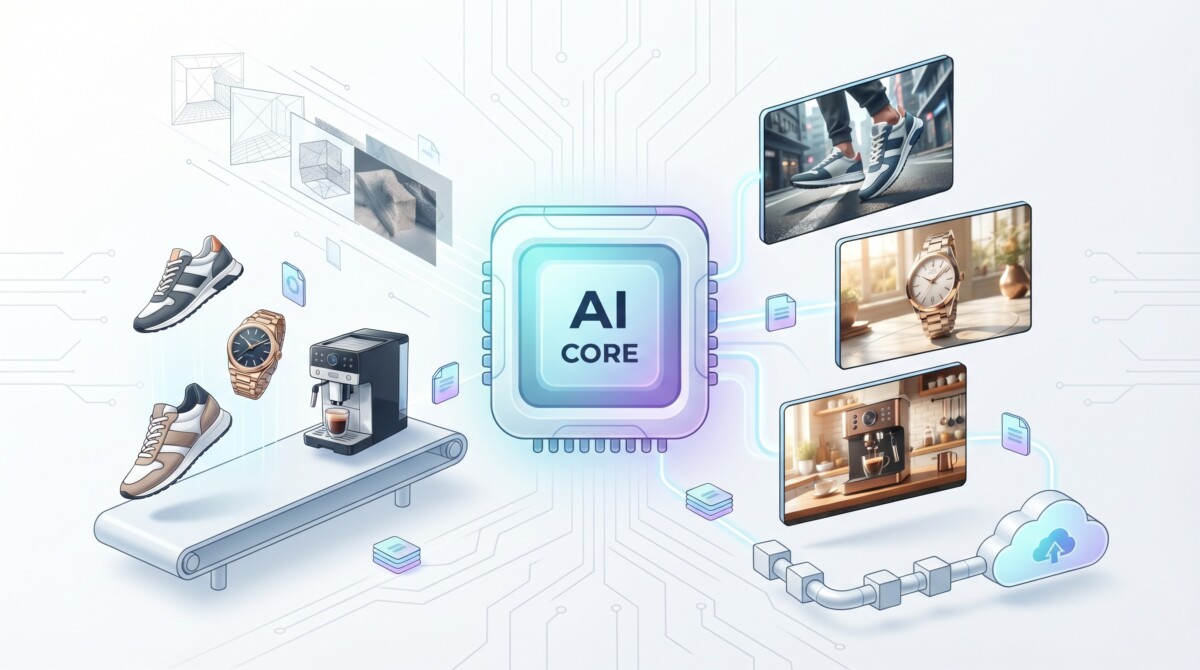
AI-generated product videos use product pictures, features, and other marketing resources as a base and AI tools such as text to speech, animated avatars, and automatic editing to create fully finished marketing videos within a few minutes as the final output.
Product showcase videos: Highlight product features with product rotations, close-ups, and visual elements that resemble a professional photo shoot.
UGC-style video ads: Use creator or customer content through testimonial-style narration and social-first formats.
Product comparison videos: Put products side-by-side or feature comparisons and do them clearly and quickly.
Multilingual product videos: Give AI voiceovers in other languages for campaigns targeting local audiences and global markets.
AI software enables advertisers to convert basic product descriptions or images into complete marketing videos, which remarkably lowers production time and costs, and at the same time allows onto producing more content.
First of all, the existing product materials such as Shopify product listings, product images, full descriptions, as well as marketing creatives have to be collected and uploaded. These materials give AI all the details it needs to know about the product, its visuals, features, and its market position.
After the assets have been imported, the AI tool automatically creates the outline of the video by scheduling the scenes, adding fluid transitions, highlighting main product features, and embedding the calls to action. This stage converts the raw product information into a video storyboard which is ready for production.
At this point, AI adds voiceovers and background music to the video to increase the appeal and persuasiveness of the content. Powerful narration is helpful in drawing viewers.
To do so, a lot of ecommerce companies nowadays resort to AI voice generation solutions such as Lalals to make lifelike voiceovers (with 1000+ AI voices), localized narrations, and multilingual audio tracks without the involvement of professional voice actors. This facilitates the production of reliable, superior audio for various markets on a large scale.
Once the video has been created, it can be easily exported in various formats tailored to different platforms. This helps brands keep their messages coherent yet flexible enough for each channel.
Faster time-to-market
Using AI, production turnaround time can be drastically shortened from several days or weeks to only minutes or a few hours, enabling brands to accelerate campaign launches.
Lower production costs
Since it eliminates the requirements for studios, editing teams, and outsourcing, it deeply reduces the total video production budget.
Higher creative volume
By quickly generating different video versions, brands can test various hooks, formats, and ad angles across platforms.
Easier content refresh cycles
Making changes often is made easy, allowing brands to prevent ad fatigue, enhance results, and react to seasonal changes.
| Funnel Stage | Examples | Goals |
| Awareness | TikTok videos, Instagram Reels, YouTube Shorts | Reach, discovery, engagement |
| Consideration | Product explainers, feature demonstrations, comparison videos | Educate shoppers, build trust |
| Conversion | Product page videos, FAQ videos, retargeting ads | Increase conversions, reduce hesitation |
Focus on benefits
Instead of just listing features, showcases show how customers’ lives change, the benefits they get and the value.
Make videos as concise as possible
Use 15 to 30 seconds for ads and 30 to 60 seconds for product explainers so that the audience stays engaged and the percentage of people who leave is minimized.
Showcase high-quality product images
AI results are only as good as the input, so crystal clear, well-lit and detailed product visuals mean much better resulting videos.
Localize videos for global audience
Change videos to multiple languages, regional messaging and localized voiceovers to relate to different audiences.
Tools like Lalals help ecommerce brands to quickly create large-scale localized voice content without the need to record separate voice tracks for each individual market.
Experiment with multiple versions
Make different versions with different hooks, CTAs, and narration styles in order to understand what brings the most engagement and conversions.
Authenticity concerns
AI-generated videos, if not properly directed, can easily turn into a monotonous or dull presentation that will negatively affect user trust and engagement.
Brand consistency
Nevertheless, brands have to constantly provide clear rules for tone, visuals, and message that make sure each video created with AI perfectly matches the brand identity.
Human oversight still matters
While AI can be a great helper in automating the production process, it is impossible to think that it can replace a human who is in charge of creativity and coming up with new ideas.
With the help of AI-created product videos, content creation for ecommerce will become a lot easier. Brands will have plenty of time on their hands when it comes to video production, allowing them to create more videos. This not only cuts down on the time, but also lowers the output cost, making the social media channels active, testing new concepts, and promoting a larger number of products that is oh so easy.
The brands can enhance the outcomes by concentrating on the sound too. For example, Lalals assist in producing voiceovers that sound human in various languages without going through the trouble of hiring voice actors. This gets the production process of market-specific videos simplified. It also opens up the possibility of reaching more customers worldwide.
AI-generated product videos for ecommerce are marketing clips created by software that combines your product images, descriptions, and other assets with automated editing, text-to-speech, and visual templates.
Instead of building each video manually in a timeline, you feed the system structured product information and it assembles scenes, overlays, and narration into ready-to-use content for product pages and ads.
AI product video workflows differ from traditional production by shifting the main effort from filming and manual editing to uploading assets, defining constraints, and reviewing AI-generated drafts.
You typically skip cameras and sets entirely, letting software generate structure, motion, and audio so you can produce more variants in far less time.
AI videos have the most impact where you need lots of tailored content: awareness ads, mid-funnel explainers, comparison clips, and bottom-of-funnel product page videos and retargeting creatives.
Because they are cheap to generate, you can cover more SKUs and audience segments with relevant assets instead of relying on a few generic brand videos.
Before testing AI-generated videos, you need clean product imagery, accurate descriptions, any existing brand copy, and clarity on target channels and goals for each asset.
The better your inputs and guidelines around tone and visual style, the more on-brand and effective the AI-generated outputs will be.
You can keep AI-generated videos from feeling generic by setting clear brand rules, emphasising benefits over feature lists, and always reviewing and iterating on the AI’s first drafts.
Pairing automated production with human oversight on scripts, visuals, and final cuts ensures the volume advantage of AI does not come at the cost of trust or differentiation.