

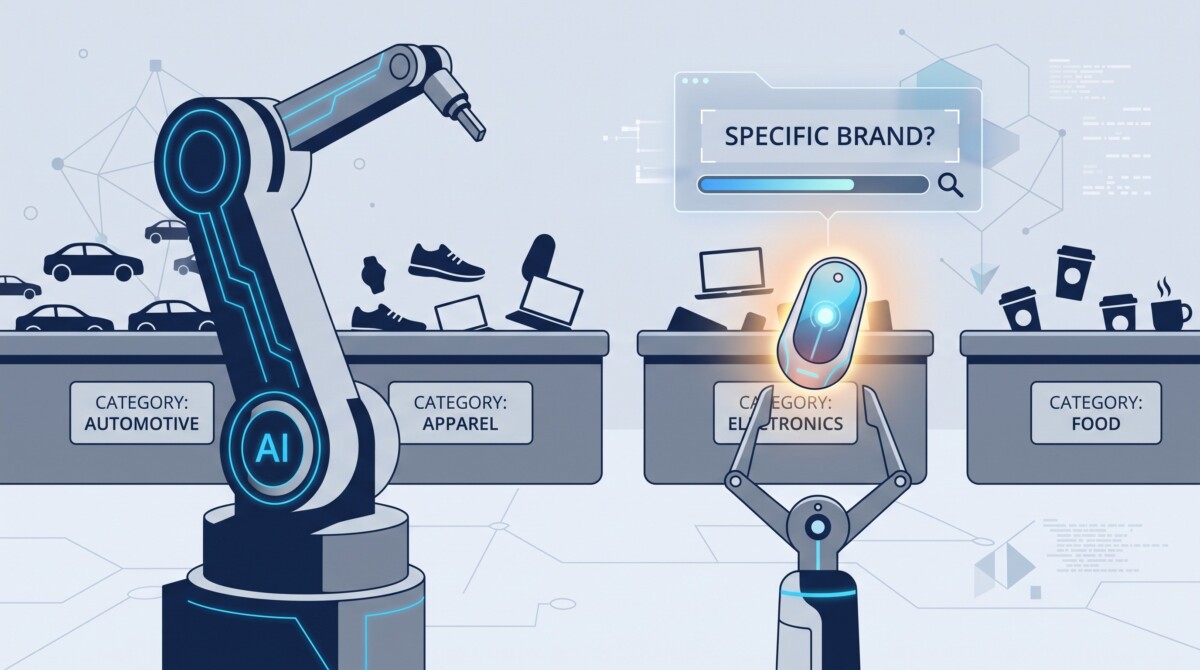
AI already understands your product category, but it only recommends brands that have built strong, consistent signals across reviews, editorial coverage, structured data, and multi-channel brand presence—if you haven’t, you’re invisible in those answers even when your offer is strong.
AI isn’t guessing which brands to recommend; it’s rewarding the ones that have already done the work to be consistently visible, credible, and machine-readable across the web.
Go ahead and ask ChatGPT for the best running shoes under $150. Or a clean skincare brand for sensitive skin. Or a home coffee setup worth buying in 2026.
You’ll get an answer. Confident, specific, with brand names. No search results page. No ads. No scrolling. The buyer gets a shortlist and moves on.
Here’s what most Shopify founders haven’t fully sat with yet: that shortlist is being built without them. Not against them. Just without them, because nobody optimized for the channel.
Most of what goes into figuring out which brands deserve to be in the answer is built on signals that most operators have never thought about. Building AI marketing systems around context and authority is a different discipline from traditional SEO, and it starts with understanding how AI systems actually decide who gets cited and who gets skipped.
AI systems know your category cold. They know what types of products exist, what buyers care about, what price ranges are normal, what the common complaints are. That knowledge was baked in during training on billions of web pages and continuously updated through live browsing.
What they don’t determine automatically is which specific brands deserve to be in the answer. That part depends on signals. According to an analysis of 100,000 AI citations by Hexagon, the top 2% of e-commerce brands capture 78% of all AI search recommendations. The gap between brands getting cited and brands getting skipped is widening, and it is compounding in favour of whoever moved first.
When a buyer asks an AI assistant which brand to choose and your name doesn’t come up, you didn’t lose on price or product. You lost because the model didn’t have enough consistent, authoritative signal to include you. And the buyer probably never knew you existed.
Traditional SEO had rankings. AI search has something researchers are calling share of model: how often your brand appears as the recommended answer across AI-generated responses. Impact.com’s 2026 analysis of AI brand visibility puts it plainly. LLMs aggregate authority, they don’t generate it. If your brand isn’t being discussed, reviewed, and referenced across independent credible sources, the model has no basis to cite you.
This is where the category versus brand distinction becomes a real operational problem. Ranking on Google for a category keyword was hard, but at least it was measurable. You could check your position every day. Share of model is harder to track because you’re not watching a results page. You’re trying to understand what an AI says about your brand across hundreds of different query phrasings, on five different platforms, to users you’ll never see.
Most Shopify operators have no visibility into this at all. They know their traffic. They know their ROAS. They don’t know whether ChatGPT is recommending their brand to buyers right now, or sending those buyers to three competitors instead.
The signals that drive AI brand recommendations are different from classic SEO signals. Foglift’s analysis of the factors behind ChatGPT brand citations found that review platform presence on G2, Trustpilot, and Amazon, and independent editorial mentions, carry more weight than domain authority or keyword rankings. The model is synthesising reputation, not crawling your site for keywords.
Recency matters more than most operators expect. Ahrefs’s 2025 citation study found 71% of ChatGPT citations come from content published between 2023 and 2025. Old content, even genuinely good content, gets passed over in favour of fresher sources. Consistency across sources matters just as much. When multiple independent sources reinforce the same things about a brand, the model treats it as verified and cites it with confidence. A single authoritative mention, even from a high-authority publication, doesn’t produce the same effect. And structured product data accelerates everything: brands with clean schema markup, accurate GTINs, and well-structured product feeds are simply easier for AI systems to interpret and include in responses. BrightEdge’s cross-platform research adds one more layer: ChatGPT mentions brands in 99.3% of e-commerce responses, while Google AI Overview includes them in just 6.2%. A strategy optimised for one platform doesn’t carry to the others.
Most growing Shopify brands have invested heavily in their store experience, their paid channels, and their email and SMS flows. Far fewer have invested in the kind of brand presence that actually feeds AI citation.
Review velocity on third-party platforms is the obvious gap. A brand with 40 reviews on Trustpilot and nothing elsewhere is largely invisible to a model synthesising reputation signals. The same brand with 400 reviews, consistent ratings, and responses from the team looks like a real, trusted business. Editorial coverage is the less obvious one. Being mentioned in industry roundups, gift guides, and comparison articles on sites the AI considers authoritative directly influences citation probability. This is earned media functioning as infrastructure, not just PR for vanity metrics.
Visual brand consistency matters too. Brands that maintain a coherent, professional presence across their Shopify store, their social channels, and any physical brand environments like pop-ups, showrooms, or retail spaces generate a stronger overall brand signal. Inconsistency across touchpoints is a trust gap, and trust gaps show up in how confidently AI mentions a brand.
Underlying all of this is spend visibility and procurement. Brands scaling fast enough to care about AI visibility are also managing growing vendor relationships, marketing budgets across more channels, and larger teams. The ones executing consistently across review generation, editorial outreach, and content publishing tend to be the ones who have gotten their operational infrastructure in order first. It is hard to maintain the cadence of brand-building activity when the back-office is running on spreadsheets.
The concentration of AI citations among a small percentage of brands sounds alarming. It is actually an opportunity, because the window to establish citation authority is still open in most categories.
The brands that will own AI recommendations in their space two years from now are mostly not the biggest brands. They are the ones that recognised this shift early and started building the signals: reviews, editorial presence, structured data, consistent brand authority across every channel. That compounding effect is already underway for the operators moving now.
The question is not whether your category is being discussed by AI. It is. The question is whether your brand is in that conversation, or watching it from outside.
AI assistants recommend brands based on aggregated signals like third-party reviews, independent editorial mentions, recency of content, and structured product data, not just on-site SEO or domain authority.
They synthesize reputation across credible sources, so brands that invest in off-site visibility and consistently updated content are far more likely to be cited than those relying only on their own store.
Share of model is a way of describing how often your brand appears as a recommended answer across AI-generated responses to relevant queries, similar to how rankings once described your visibility in traditional search.
It matters because as more shoppers start their buying journey by asking AI assistants instead of search engines, brands with high share of model will capture disproportionate awareness and demand in those channels.
Stores should prioritize accelerating review volume and quality on trusted platforms, earning consistent editorial coverage in authoritative publications, and implementing clean schema markup and product feeds.
Maintaining visual and messaging consistency across site, social, and physical brand environments further strengthens the trust signals AI systems use when deciding whether to mention your brand.
Many brands remain invisible because they’ve focused on onsite conversion and paid media while neglecting the off-site reputation signals and structured data that AI systems rely on.
Without sustained effort on reviews, editorial presence, and up-to-date content across multiple sources, AI assistants have little basis to recommend those brands, regardless of product quality.
In most categories, it’s not too late; relatively few brands have systematically optimized for AI citation, which means there is still room to move early and build a durable advantage.
Brands that start now on review generation, editorial outreach, structured data, and consistent brand signalling can compound those efforts into meaningful share of model before their competitors catch up.




