
Across 156,110 DTC customers tracked through 2026, only 18.8% placed a second order within a year. For family focused hardware, the gap between purchase and ongoing use is even wider, and the brands closing it are not running better email flows. They are building product ecosystems that make the device part of a family routine instead of a drawer occupant.
In DTC hardware, the first purchase is only the beginning. The real growth challenge is designing a product experience customers want to return to.
Plenty of DTC hardware brands are good at the launch. A clean product page, a strong unboxing moment, a seasonal spike, a wave of early reviews. The harder discipline is what happens four weeks after the box is opened.
For consumer hardware in particular, the gap between the initial purchase and ongoing usage is where most of the growth is quietly lost. The product still works. The brand still sends emails. The next obvious use case is missing, and the device slides into the drawer.
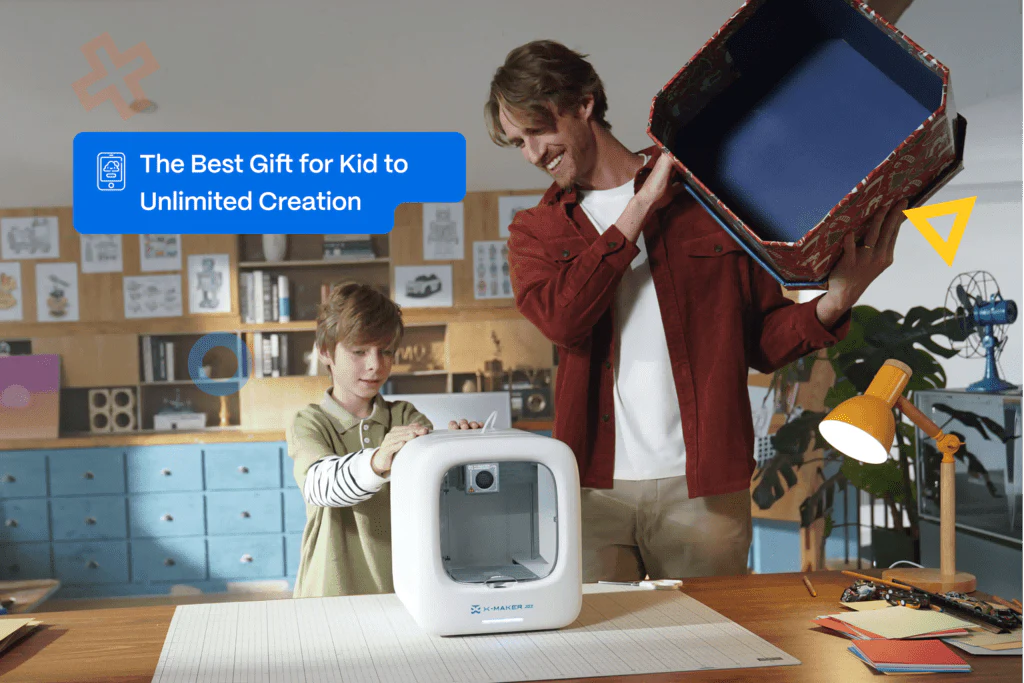
For family-focused hardware, that gap is wider. Parents are not only buying a device. They are buying a promise: that the product will be useful, safe, easy to start, and worth keeping in the family routine. That is why AOSEED’s positioning is interesting from a DTC growth perspective. The brand is not selling a kids’ 3D printer in the conventional sense. It is building a family creativity platform — and the architecture around the device says more about the next decade of consumer hardware than the device itself does.
Hardware brands tend to face the same retention problem under different labels. The customer buys, tries, enjoys the first few sessions, and gradually loses momentum. The category is irrelevant — fitness, kitchen, learning, and creative tools all hit the same wall.
It is sharper in categories that depend on inspiration. A creative product cannot sustain itself on the original purchase moment alone. It needs a continuous source of “what should I do next?” Without that, the product is a curiosity at best and an abandoned gadget at worst.
For families, the math gets harder. Parents are juggling schedules, screen-time concerns, school content, safety questions, and the constant search for activities that are meaningful but not exhausting. If a product needs too much setup or planning to use, friction wins. The competition is not other products. The competition is inertia.
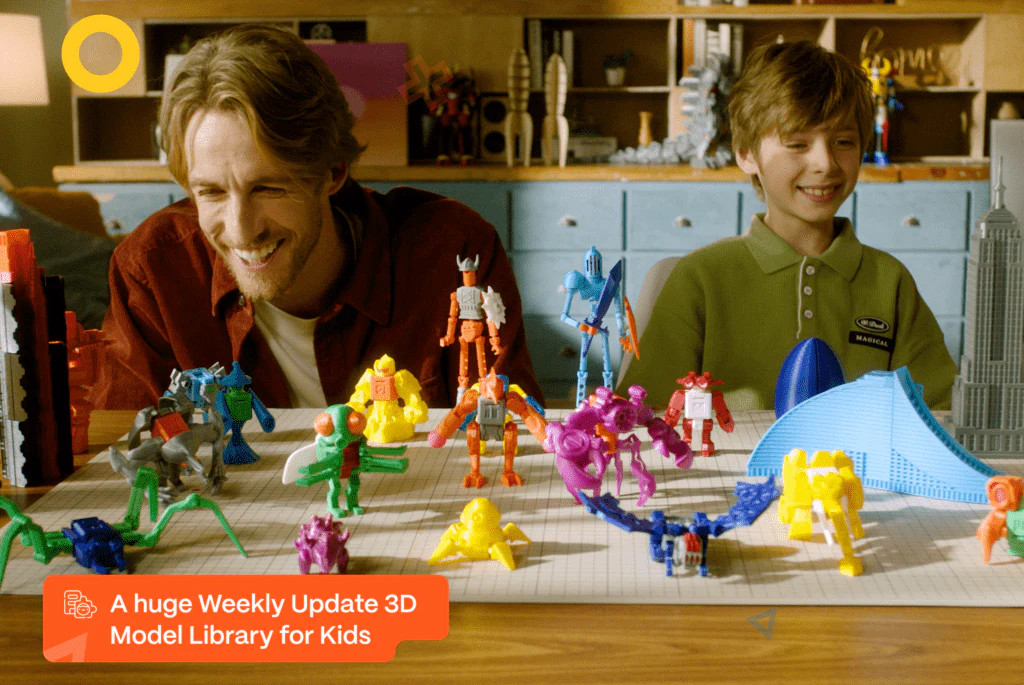
AOSEED’s stronger market position is not “a kids’ 3D printer.” It is a repeat-use family creativity platform — and the architectural difference is not subtle. The ecosystem can be summarized as:
Printer + App + Toy Library + Learning Center + Creation Kits = Repeatable Family Creativity
The printer is the hardware center, but not the whole story. The app gives kids a guided way to start creating without a blank technical canvas. The Toy Library gives families ready-made ideas for what to make next. The Learning Center reduces setup, troubleshooting, and confidence friction. Creation kits turn printed output into vehicles, music boxes, robots, and other interactive builds.
Together, the components turn a single SKU into a recurring activity. For DTC operators, the structural takeaway is the part that matters most: AOSEED’s toy-creation ecosystem is not bolting “content marketing” onto a hardware brand. It is treating content, software, and project ideas as part of the product itself — which is a very different P&L conversation than treating them as marketing line items.
In family tech, the screen-time conversation is unavoidable. Most parents are not trying to remove screens. They are looking for screens that do something — that lead to a project, a build, an output the child can hold afterward.
AOSEED’s app reframes the screen as a creation layer. For an entry-tier product like the 3D printer AOSEED X-MAKER JOY, the app is what makes the printer approachable for first-time families. According to the brand’s product framing, it guides children through three creative stages, and each stage maps to a different retention role:
| Stage | What the child does | DTC retention role |
|---|---|---|
| 01 | AI-assisted idea generation and simple personalization | Lowers the “what do I make?” barrier — first-week activation |
| 02 | Game-style toy design through themed mini apps | Replaces empty design tools with playful entry — week-to-week reopen |
| 03 | Beginner-friendly 3D modeling for structural builds and custom projects | Creates depth for older kids — long-tail engagement and project scope |
For DTC growth readers, the relevant point is that the app is not just a product feature. It is a retention layer. Each new design prompt, mini app, or guided workflow gives families another reason to open the product again — turning what could be a once-a-month device into a weekly creative session.
If the app is the entry layer, the Toy Library is the retention engine.
Most hardware products ask customers to supply their own inspiration. That works for some categories. It does not work for creative tools, where “what should I do next?” is the entire growth question.
The Toy Library is AOSEED’s answer. Instead of leaving families with a blank machine, it provides a continuously updated source of project ideas, sortable by age, season, interest, or play pattern. A child who loves animals starts with a creature. A child who likes cars prints a vehicle. A family near a holiday picks a small gift. A homeschool parent grabs a STEM-friendly build for the week.
For ecommerce operators, that single library opens up multiple retention loops at once:
The strategic point is sharper than it looks. Content libraries are not only marketing assets — at AOSEED’s level of integration, they are part of the product experience itself. They give customers a reason to return, and they convert content marketing from a cost center into a retention line on the model.
Parents do not evaluate family tech the way hobbyists evaluate hardware. A maker asks about print speed, build volume, and material compatibility. A parent asks a different list of questions, most of them quietly:
| The parent anxiety | Content that retires it |
|---|---|
| Is it safe enough for our home? | Buying and safety guides, enclosure explainers |
| How hard is the setup, really? | Setup walk-throughs, first-print videos, live recaps |
| How much help will my child need from me? | Parent-role articles, supervised-step breakdowns |
| What if the first print fails? | Troubleshooting library, recovery checklists |
| Will my child still use this in week three? | Toy Library tours, project ideas by age and interest |
| Is this more meaningful than another toy? | Screen-light creativity content, gift framing pieces |
This is where content stops being a traffic strategy and becomes a conversion strategy. The unlock for DTC operators is recognizing that the same article often solves both jobs at once — the pre-purchase concern and the post-purchase support question are usually the same piece of content for this customer.
Most ecommerce product pages still run on one flow:
Product → Specs → Purchase
It works when customers already know what they want. It fails when they do not. AOSEED’s project-first flow is built differently:
Project idea → Family value → Product fit → Purchase
Family tech buyers rarely start at “I want a 3D printer.” They start at “what should we do this weekend?” or “what would my eight-year-old enjoy?” or “what’s a meaningful birthday gift?” Meeting that customer with a project — fully described with age range, time, parent role, materials, and play value — converts better than meeting them with a spec sheet.
For AOSEED, the project-first strategy creates two leverage points DTC brands rarely get from their hero product alone. First, it generates non-brand demand — parents searching for “screen-light activities” can find AOSEED through a project article without knowing the brand. Second, it pulls the product out of the Q4 gift slot and into year-round occasions: weekend activities, school projects, gifts, STEM time. That is a structural answer to the seasonality problem most consumer-tech brands lose sleep over.
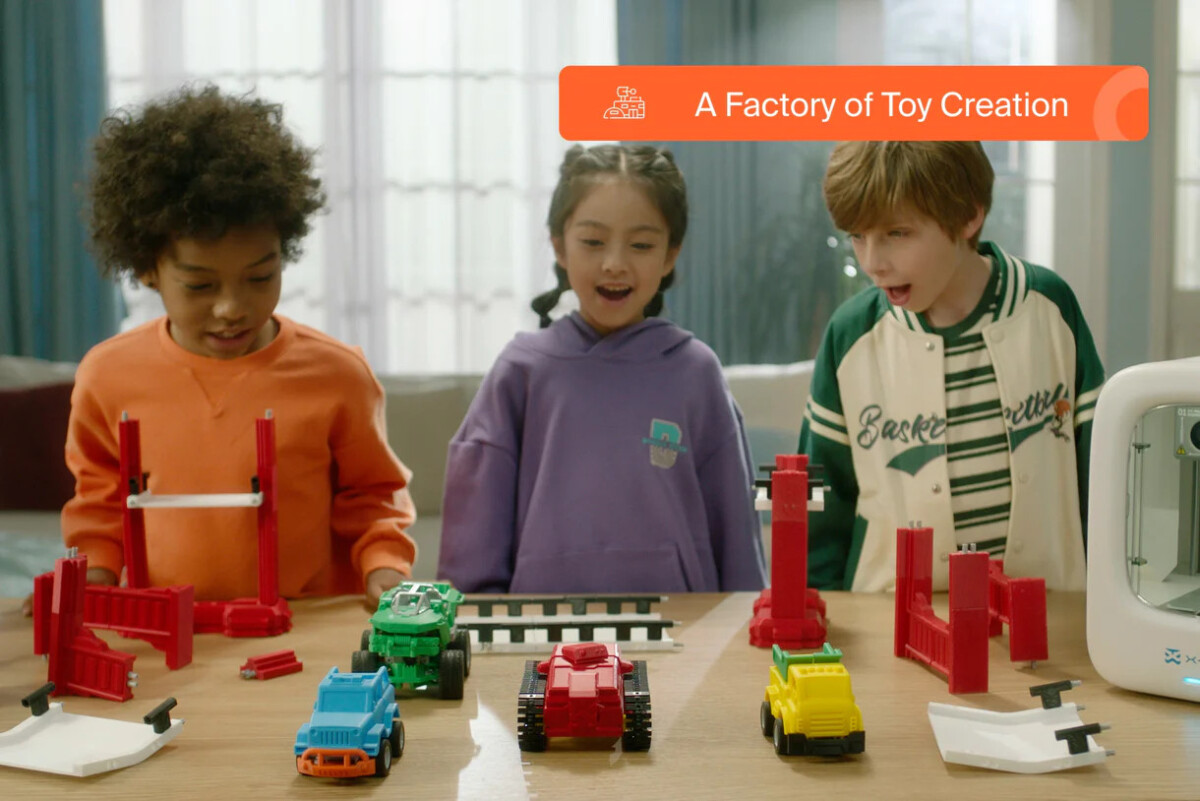
The principles transfer beyond 3D printing. Five things a hardware operator can carry into their own brand.
The future of DTC hardware growth is not better acquisition. It is better post-purchase. A product wins attention with a strong launch. It earns loyalty by becoming part of a routine.
AOSEED‘s bet is that a kids’ 3D printer can become a family creativity platform — that the printer matters, but the ecosystem around it (app, Toy Library, Learning Center, kits, content, community) matters more. If the bet pays off, the lesson generalizes. The strongest consumer hardware brands of the next decade will not be defined by the cleverness of their device. They will be defined by what customers keep doing with it on the 30th day, the 90th day, and the 180th day.
As family tech becomes more experience-driven, AOSEED’s kids 3D printer lineup shows how a hardware product can evolve into a repeat-use creative ecosystem — one that gives children something to make, parents something to trust, and the brand a reason to stay relevant long after the first unboxing.
Repeat purchase rate is the percentage of customers who place two or more orders within a defined time period, typically 365 days. The formula is the number of customers with two or more orders divided by total unique customers, multiplied by 100. The 2026 benchmark across 156,000 DTC customers sits at 18.8%, but that average masks wide vertical variation. Consumable categories like supplements and coffee average 25 to 30%, with top performers hitting 40 to 55%. Durable goods, including most hardware, sit lower at 12 to 20%. For hardware brands, the more useful metric is not the annual repeat rate. It is the percentage of customers still actively using the product 90 and 180 days post purchase, because active use is what drives accessory, consumable, and word of mouth revenue.
A content driven retention strategy treats content as part of the product, not as marketing decoration. For inspiration led hardware (3D printers, instruments, fitness equipment, learning devices), it means building project libraries, tutorials, troubleshooting guides, and community spaces that give customers a structural reason to keep using the product. The signal that you have built this correctly is that the same piece of content closes a sale on the product page and prevents a churn on the support side. Brands at the $500K to $5M stage usually need one well executed retention loop, like a weekly project drop or a monthly themed challenge, before adding a second.
A project first product page leads with what the customer can do with the product before showing what the product is. The structure is: project idea, family or user value, product fit, then purchase. For a kids’ 3D printer, that means the page opens with a specific build (a custom race car, a personalized name tag, a STEM project) including age range, time to complete, parent involvement, and play value. The spec sheet still exists, but it loads below the project layer because hardware buyers in family, learning, and creative categories do not start at “which model.” They start at “what would my child enjoy.” Test it by pulling your three highest converting customer reviews and asking whether your current page answers what those customers actually said they came for.
Most DTC hardware brands lose customers between day 30 and day 90 because the product runs out of obvious next use cases. The 2026 benchmark data shows that 50% of repeat purchases happen within 30 days of the first order and 76% within 90 days, which means the window for re engagement is much shorter than most brands plan for. After day 90, retention curves flatten and the remaining customers trickle in over the next nine months. Brands that lose customers in this window usually have a great unboxing experience and a single thank you email but no structural reason for the customer to return to the product itself. The fix is building inside the product (new content, new projects, new accessories, new community moments) rather than relying on win back emails after the customer has already gone quiet.
The difference between marketing content and product content collapses for inspiration led DTC categories. Marketing content is traditionally built to drive traffic and conversion before purchase. Product content is traditionally built to support customers after purchase. For categories where the product depends on a continuous source of inspiration (creative tools, learning devices, fitness, family tech), the same library serves both functions and is typically funded as a marketing line item even though it operates as a product feature. Brands that recognize the overlap and budget for content as part of the product P&L, not just the CAC line, capture both pre purchase conversion lift and post purchase retention lift from the same investment.





