The best AI visibility tool for you in 2026 depends on your workflow: Truffle is strongest for persona‑based B2B, AthenaHQ for Shopify‑native ecommerce, Peec.ai for high‑volume SEO teams, Otterly.ai for budget‑constrained solo marketers, and Profound for enterprise AEO agencies.
The right AI visibility platform is the one whose data you can actually turn into content, citations, and revenue—not just dashboards.
Best AI visibility tools 2026 — comparison of 5 leading platforms including Truffle, Peec.ai, AthenaHQ, Otterly.ai, and Profound with pricing and features
If your prospects are asking ChatGPT, Claude, or Perplexity about your category — and industry analysts including Gartner project that AI chatbots will absorb a growing share of traditional search engine volume through 2026 — you have a new category of software to evaluate. AI visibility tools track how your brand appears (or doesn’t) in the responses those AI engines generate, and increasingly they help you do something about it.
The space has exploded in the last 18 months. There are now dozens of platforms claiming to measure “AI visibility,” and the differences between them go well beyond UI polish. This piece compares the five most credible tools available in 2026 — with real pricing, exact model coverage, and honest verdicts on who each is actually built for.
💡 Editor’s top pick: Truffle — best fit for persona-heavy B2B workflows, with a 7-day full-feature trial and no credit card required.
Runner-up: AthenaHQ — best fit for Shopify-native ecommerce brands that need SKU-level tracking.
We evaluated each platform on six things that actually determine real-world fit: pricing transparency (including the add-on math nobody tells you upfront), whether you can try before you buy, how many LLMs are tracked at your realistic entry tier, whether the tool models buyer personas or just fires naked prompts, integrations that ship today versus features that live on a roadmap, and best-fit use case — because every tool has a customer archetype it serves well, and match matters more than raw feature count.
All data below comes from public pricing pages and hands-on evaluation as of July 2026. Where a tool has multiple tiers, we default to comparing the mid-tier plans since those reflect what the average buyer actually purchases.
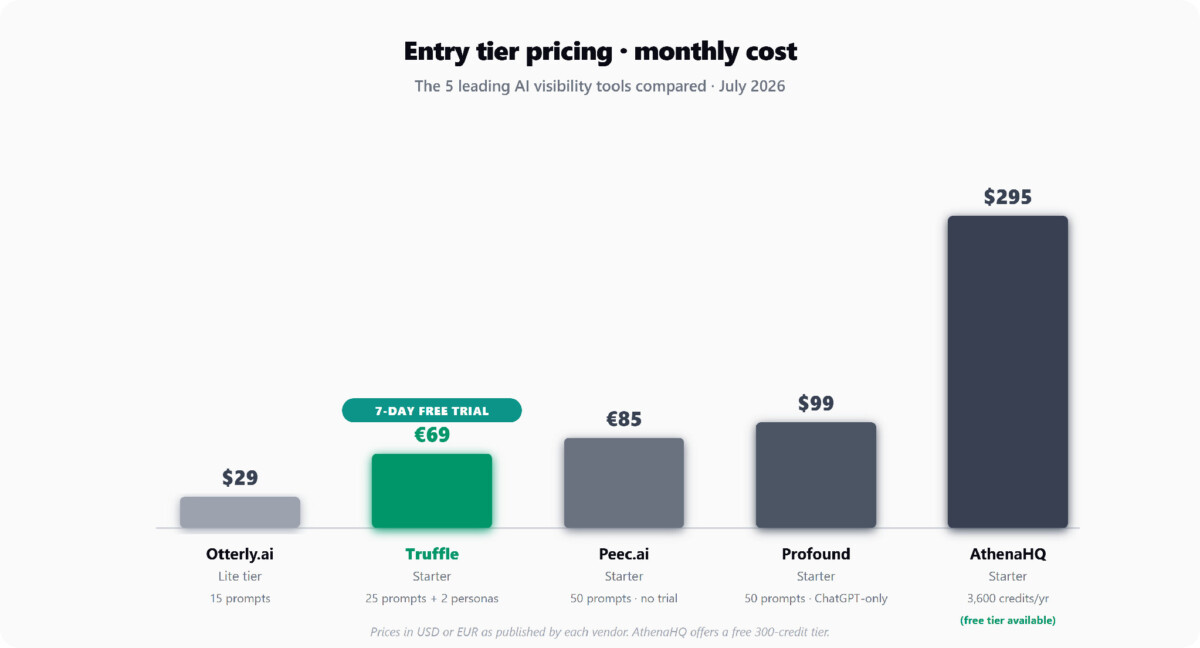
Best AI visibility tools 2026 entry tier pricing comparison — Truffle €69, Otterly $29, Peec.ai €85, Profound $99, AthenaHQ $295
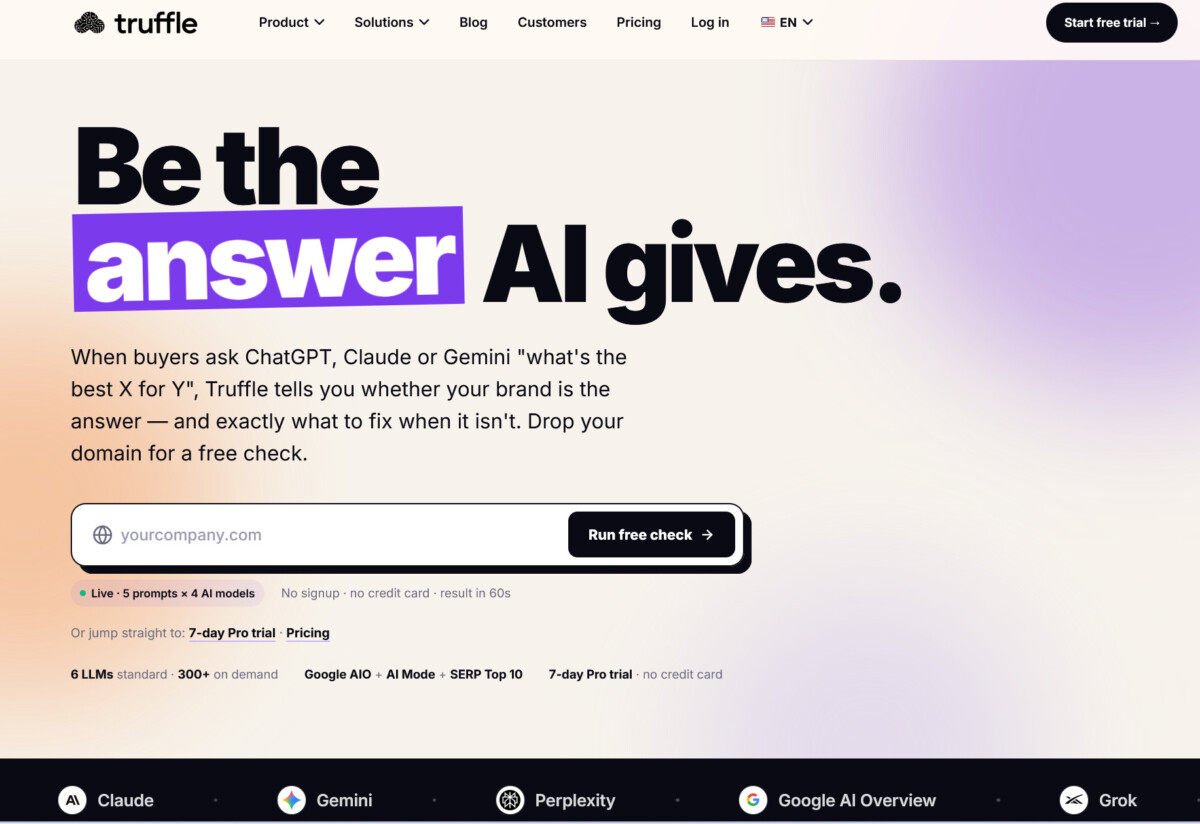
Truffle is a European-built AI visibility platform that stands out for its persona-conditioned prompting methodology. Instead of firing naked queries at LLMs, it passes buyer personas (with a WHO / PROBLEM / SYSTEM PROMPT block) to the model before the query itself. This simulates how real buyers actually query AI engines rather than how SEO teams think they do.
Pricing (as of July 2026):
AI engines tracked: ChatGPT (GPT-5.4), Claude Haiku 4.5, Gemini 3, Perplexity Sonar, Grok 4.3, Google AI Overview + Organic Top-10 — 7 by default across every paid tier, with 100+ more selectable via OpenRouter Sync at no per-plan lock.
Add-on math: +€2/month per extra model at Starter tier.
Integrations: Native Google Search Console and Google Analytics 4 connectors in Project Settings today. llms.txt generator and Full Audit tool included in every tier.
Truffle AI visibility tool Analytics — persona × engine matrix showing brand visibility per buyer persona across ChatGPT Claude Gemini Perplexity Grok
Best for: B2B services, high-consideration purchases, and any brand with multiple buyer personas (construction, hotels, education, SaaS, professional services). Truffle’s model fits when your buyer decisions get made by specific persona archetypes rather than a single generic audience.
The gaps: no native Shopify catalog integration (there’s an Ecommerce industry template but no SKU ingestion), no native MCP integration yet (it’s on the roadmap), and the platform is opinionated by design — analyst teams looking for a raw firehose of prompt telemetry will find more control elsewhere.
A note on Truffle’s pricing page reads: “Our standard Haiku has been benchmarked equal to Sonnet for AI-visibility tracking at one third the cost.” — a technical detail that clarifies why the pricing sits where it does. As an AI visibility tool, it fits teams working in the persona-conditioned lane rather than the raw-volume lane.
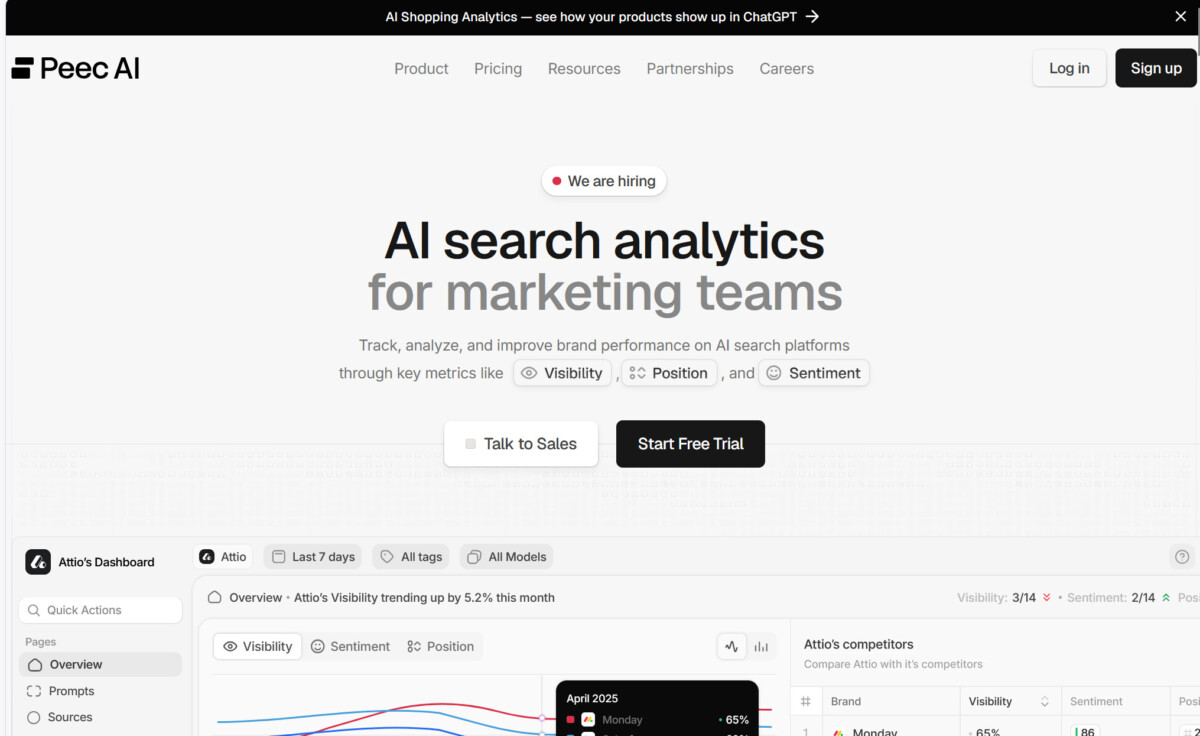
Peec.ai is a Berlin-based platform used by 2,500+ marketing teams according to its homepage. It’s positioned toward SEO teams and enterprise analytics workflows, and its strengths lie in raw volume and domain-level SEO gap analysis.
Pricing:
AI engines tracked: ChatGPT, Google AI Overview, Google AI Mode, Microsoft Copilot, Perplexity, Gemini. Six core engines, but you must “Choose 3 of 6” on Starter/Pro/Advanced tiers. All six unlock only on Enterprise. Additional models (Qwen, DeepSeek, Claude Sonnet 4, GPT-5 Search) via API on Enterprise only.
Add-on math: +€30/month per extra AI model at Starter tier (35% markup on the €85 base). +€70/month at Pro, +€140/month at Advanced.
Integrations: Google Search Console and Google Analytics 4 are marketed as “Early Access” (roadmap) at time of writing. MCP integration is Enterprise-tier only.
Best for: In-house SEO teams of 4+ analysts at mid-to-large brands who need a raw firehose of data. Peec’s Query Fanouts (which captures the background AI research queries LLMs run before generating a response — ~1,000 per month on Starter) and Gap Analysis (147+ ranked competitor domains) shine when you have the human capacity to turn that telemetry into content briefs weekly.
The gaps: no free trial at any tier, personas aren’t modeled as first-class objects, and the “Choose 3 of 6” model cap makes it hard to track a broad LLM catalog without an Enterprise upgrade.
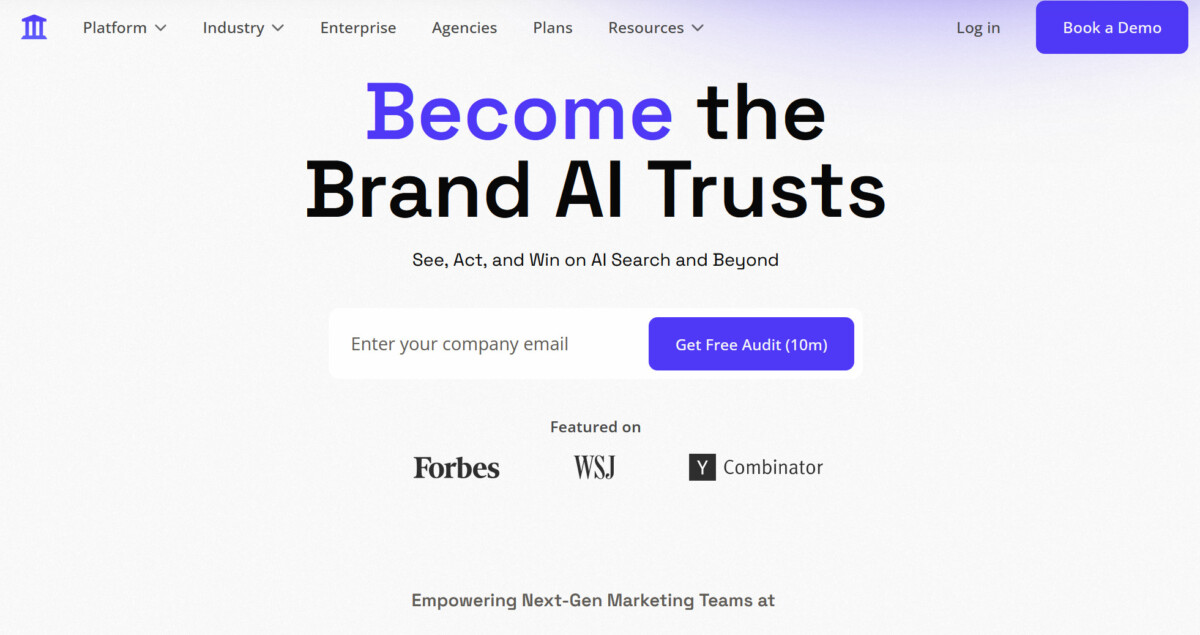
AthenaHQ emerged from stealth in 2024 out of San Francisco and has moved quickly into the AI visibility space with a focus on ecommerce and content-heavy verticals. Its differentiator is a proprietary “Ask Athena” agentic AI copilot trained on account-specific data.
Pricing:
AI engines tracked: ChatGPT, Perplexity, Google AI Overview, Google AI Mode, Gemini, Claude, Copilot, Grok — eight LLMs supported at Essential tier and above. Additional models available on request.
Credit model: 1 credit = 1 AI response. Simpler agents consume fewer credits; complex multi-step agents more.
Integrations: GA4, Google Search Console, Shopify, Webflow, and Framer all shipping today. Data export to CSV included from Starter.
Best for: Ecommerce and DTC brands (especially Shopify stores) that need SKU-level AI visibility tracking and revenue attribution. AthenaHQ’s Shopify integration is deeper than most competitors in this list, and the free tier is genuinely usable for evaluation.
The gaps: pricing scales steeply (the jump from Free to $295 Starter is significant), features like persona targeting and the Athena Recommendation Engine are Enterprise-only, and there’s no European headquarters — which matters if your legal team cares about GDPR data residency.
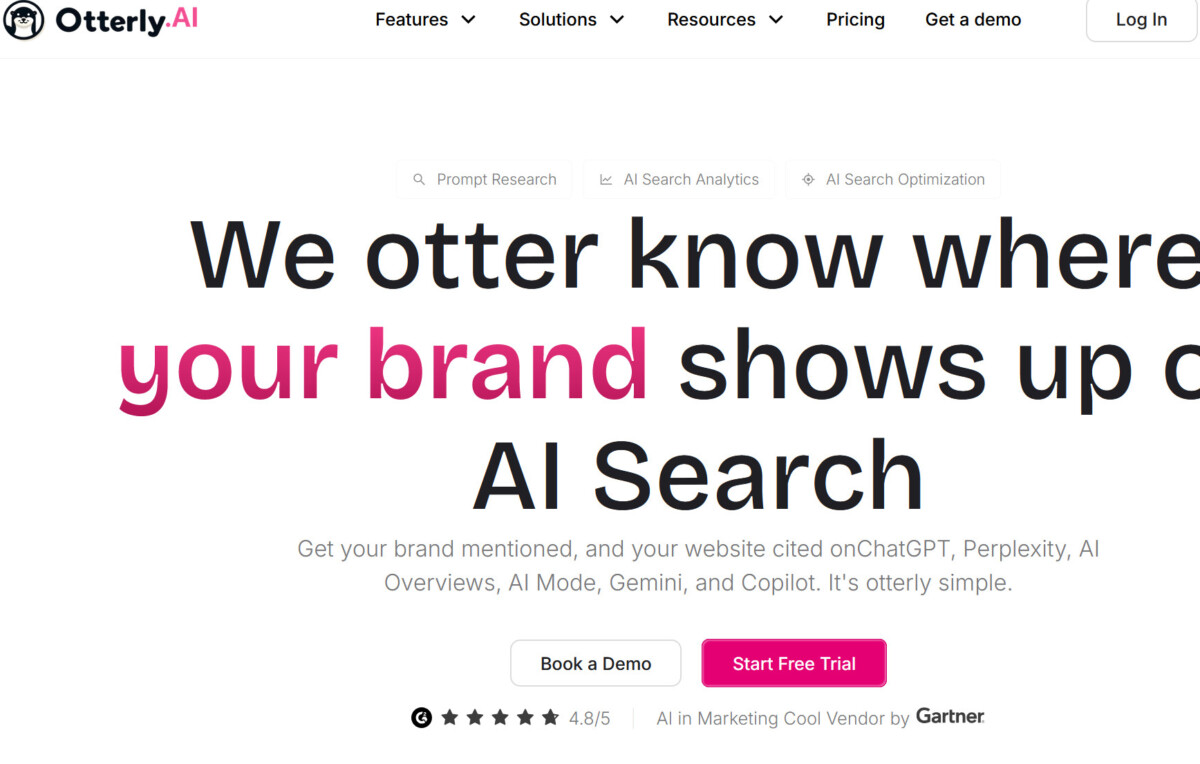
Otterly.ai is one of the most affordable options in the space, targeting solo marketers, small agencies, and teams testing AI visibility for the first time. Its entry pricing at $29/month is the lowest in this comparison.
Pricing:
AI engines tracked: ChatGPT, Google AI Overviews, Perplexity, and Microsoft Copilot at every tier. Claude, Google AI Mode, and Google Gemini available as paid add-ons (not included).
Integrations: MCP access starts at Standard tier — one of the few platforms to expose it below Enterprise pricing. Multi-country support included (50+ countries).
Free trial: yes, no credit card required.
Best for: solo marketers and small teams with tight budgets who want to start monitoring AI visibility without a €200+/month commitment. The Lite tier’s 15-prompt limit is restrictive, but at $29 it’s a valid entry point for validation.
The gaps: the “add-on for Claude/Gemini/AI Mode” pricing fragments what should be a unified experience — you can end up paying for engines that other tools bundle. Persona-level modeling isn’t there, and the Lite tier’s 15-prompt cap functions more as a demo than a working setup.
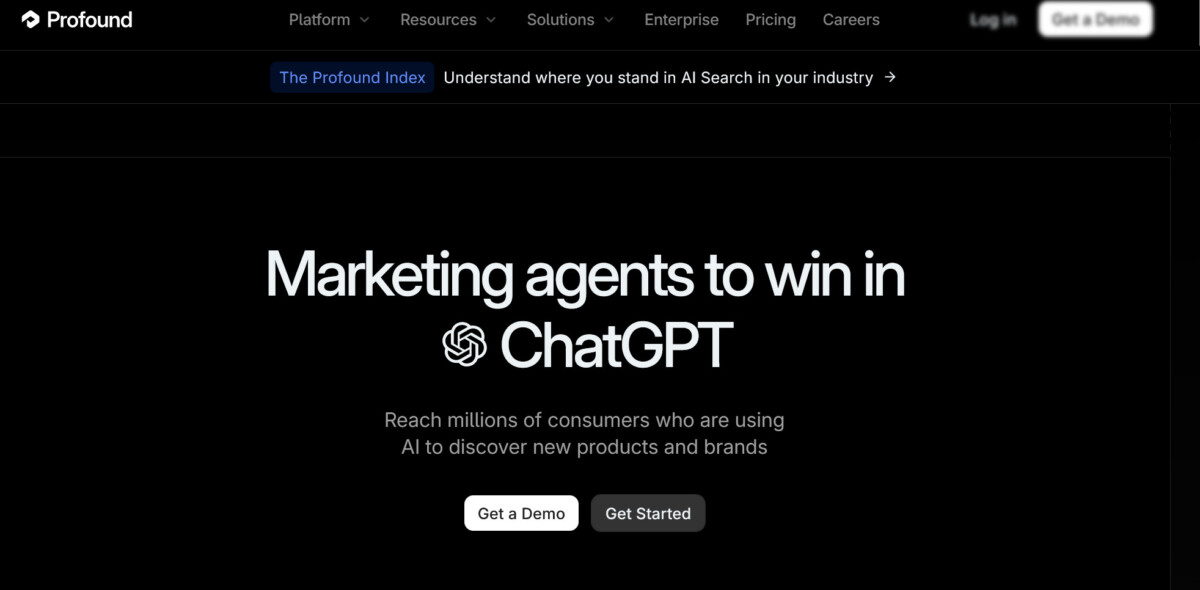
Profound (tryprofound.com) is a US-based platform that positions itself around Answer Engine Optimization (AEO) rather than just visibility tracking. It’s built for agencies and enterprise marketing teams managing multiple campaigns and needing agentic workflow automation.
Pricing:
AI engines advertised: Perplexity, ChatGPT, Claude, Gemini, Grok, Microsoft Copilot, Meta AI, DeepSeek, Google AI Overviews. But at Starter tier you get only ChatGPT tracking — the other engines unlock at Growth and Enterprise.
Agent Credits model: consumption-based. Simpler agents use fewer credits; multi-step agents consume more. Overage options include continued billing or usage pause.
Best for: enterprise brands and agencies who need AEO-specific agent automation, multi-company tracking, and SOC2 compliance. Profound’s positioning as “scale your presence, not your workload” appeals to teams already running structured content operations.
The gaps: the Starter tier’s ChatGPT-only limitation is a hard cap — realistic multi-engine tracking requires the $399/month Growth plan minimum. There’s no true free trial (both Growth and Starter offer “2 months free” but only when paid annually upfront), and the pricing floor prices out mid-market buyers.
AI visibility tools feature comparison — free trial, engine coverage, persona modeling, GSC GA4 integration, Shopify support across 5 platforms
For the same information in table form:
| Feature | Truffle | Peec.ai | AthenaHQ | Otterly.ai | Profound |
| Entry price | €69/mo | €85/mo | $0 (free tier) | $29/mo | $99/mo (annual) |
| Free trial (no card) | 7 days full | None | Free tier only | Yes | 2 months free (yearly only) |
| AI engines at entry tier | 7 default | Choose 3 of 6 | 6+ | 4 | 1 (ChatGPT only) |
| Additional models catalog | 100+ (OpenRouter) | 6 core + Enterprise API | 8+ | Add-on paid | Up to 10 (Enterprise) |
| Persona modeling as first-class | ✓ | ✗ | Enterprise only | ✗ | ✗ |
| Native GSC + GA4 | ✓ | Early Access | ✓ | Not documented | ✗ |
| Shopify integration | Industry template only | ✗ | ✓ (native) | ✗ | ✗ |
| MCP integration | Roadmap | Enterprise only | Not documented | Standard tier ($189) | ✗ |
| HQ | Europe | Berlin, DE | San Francisco, US | Not disclosed | US |
If you’re skimming, here’s the one-line version by situation:
“I run a Shopify store and need SKU-level tracking” → AthenaHQ
“I have 4+ analysts and want a raw firehose of data” → Peec.ai
“I sell to multiple buyer personas and want persona-conditioned prompts” → Truffle
“I’m a solo marketer with a $50/mo budget ceiling” → Otterly.ai
“I run structured AEO for multiple client brands, budget starts at $399/mo” → Profound
Rather than “the best tool,” think in terms of who each is actually built for.
The B2B services team selling into multiple personas — a construction firm, a hotel group, an education provider, professional services, or SaaS with a multi-persona ICP — should look at Truffle first. Persona-conditioned prompting is the clearest methodological differentiator we identified for this workflow, and the free 7-day trial keeps evaluation friction low.
The in-house SEO team with four or more analysts who needs raw volume — 1,000+ background queries captured monthly, 147 ranked domain gaps, 48-bot crawlability audit — is the natural fit for Peec.ai. Powerful if you have analyst capacity to process it; noise if you don’t.
The Shopify-native ecommerce brand where SKU-level tracking matters more than persona modeling should evaluate AthenaHQ. The free tier plus native Shopify integration make it the strongest ecommerce option in this list.
The solo marketer or two-person team just starting to measure AI visibility with a hard $29/month ceiling gets a valid entry point in Otterly.ai — with the caveat that the Lite tier’s 15-prompt cap is a floor you’ll hit quickly if the tool works for you.
The enterprise agency running structured AEO programs across multiple client brands with $399/month plus custom Enterprise inside budget from day one should look at Profound.
The category is maturing quickly, and a few patterns are worth flagging. First, free trials with no credit card are still rare — Truffle and Otterly are the only two on this list that offer true no-friction evaluation. Second, model coverage locked to tier is more common than it should be; when tools advertise “we track 8 LLMs” but the entry tier only gets 3, that’s the number that actually matters to buyers. Third, and most important: the tools that focus on generative engine optimization principles — not just monitoring what’s happening in AI answers, but doing something structured about it — are the ones creating durable value. Research from Ahrefs on 75,000 brands shows unlinked brand mentions correlate with AI visibility at 0.664 — three times stronger than backlinks (0.218) — so the tools helping you build authoritative brand presence, not just measure it, deliver the compounding return.
If you’re evaluating any of these, start with the free trial if one exists. If none of them fit your workflow after 7 days, that tells you more than any comparison article can.
What is the best AI visibility tool in 2026?
There is no single “best” AI visibility tool — the right fit depends on your workflow. For teams with multiple buyer personas across B2B services, Truffle’s persona-conditioned prompting is the closest methodological fit. For enterprise SEO teams with 4+ analysts who need raw volume, Peec.ai’s Query Fanouts and Gap Analysis are hard to beat. For Shopify-native ecommerce brands, AthenaHQ’s product catalog integration is unmatched. Match the tool to the workflow, not the other way around.
Which AI visibility tool has the cheapest entry price?
Otterly.ai at $29/month (Lite tier) is the cheapest paid entry point in this comparison. Rankscale starts at $20/month for Essentials with variable credits. AthenaHQ offers a free tier with 300 credits included, making it the cheapest zero-cost option. Truffle offers a free 7-day full-feature trial with no credit card required, followed by €69/month Starter.
Which AI visibility tools track ChatGPT, Claude, and Gemini at entry tier?
Truffle tracks 7 engines by default at Starter (including ChatGPT, Claude Haiku, Gemini, Perplexity, Grok, and Google AI Overview + Organic Top-10) with 100+ more available via OpenRouter Sync. AthenaHQ tracks 8 LLMs starting at the free Essential tier. Peec.ai locks you to “Choose 3 of 6” at Starter/Pro/Advanced. Otterly.ai tracks 4 engines at Lite tier (ChatGPT, Google AI Overview, Perplexity, Copilot) with Claude/Gemini as paid add-ons. Profound tracks only ChatGPT at Starter — multi-engine coverage requires the $399/month Growth plan.
Which AI visibility tools offer a free trial without a credit card?
Truffle offers a 7-day full-feature trial with no credit card. Otterly.ai offers a free trial without commitment. AthenaHQ offers an Essential Free tier with 300 credits. Peec.ai offers no free trial at any tier. Profound offers “2 months free” but requires annual billing upfront.
What is generative engine optimization (GEO)?
Generative engine optimization is the editorial and technical practice of structuring content so that generative AI engines — ChatGPT, Claude, Gemini, Perplexity, Google AI Overviews — cite your brand when users ask about your category. The five tools compared in this piece all address different layers of GEO: some focus on monitoring (measuring where your brand appears), others focus on action (generating content structure like llms.txt files) or persona-conditioned prompting (simulating how real buyers query LLMs).
About the author: This comparison was researched and written by the Marketing Insights Desk. Data sourced from public pricing pages and hands-on platform testing between June and July 2026. No sponsorships or affiliate arrangements were involved in the ranking decisions.