

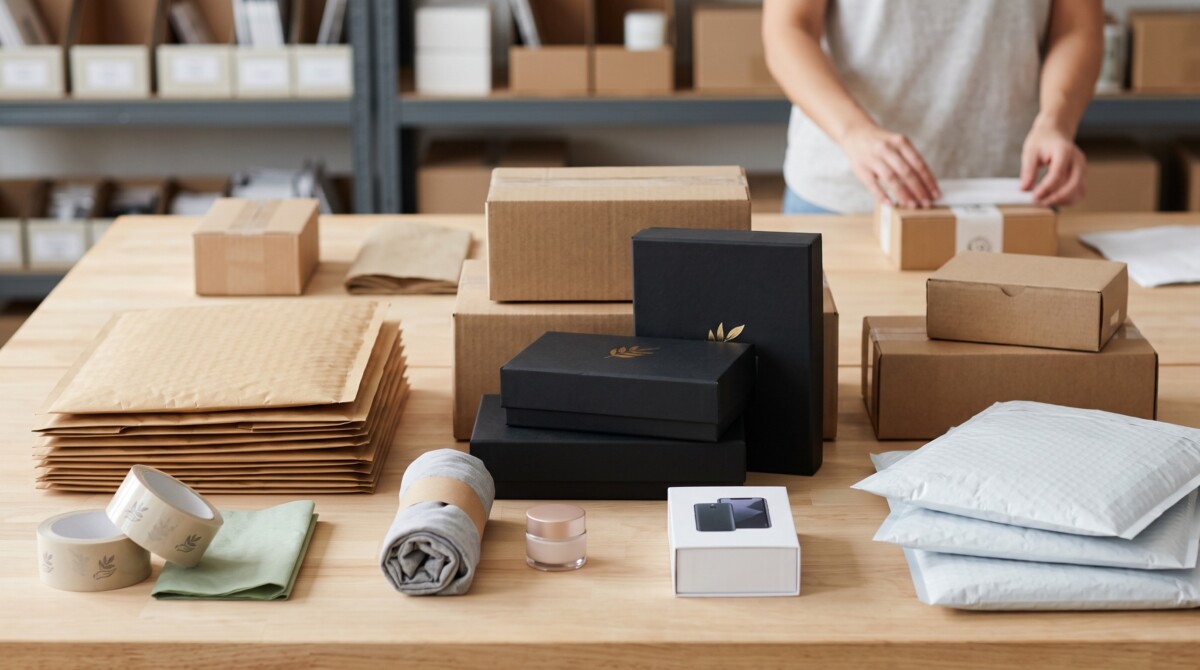
Most ecommerce brands should start with branded corrugated mailer boxes or compostable mailers for everyday shipments, then layer in custom packaging services, rigid boxes, or reusable solutions as product value, fragility, and sustainability goals increase.
Your packaging is not just protective armor, it is a profit lever that touches shipping costs, returns, sustainability, and how likely a customer is to order again or share your brand with a friend.
Your first physical touchpoint isn’t the website—it’s the box on a doorstep. In 2024, Atomix Logistics found that 72 percent of online shoppers let packaging steer their purchase. Oversized boxes inflate DIM fees, flimsy mailers drive returns, and bland unboxing stalls referrals. Amazon’s April 2026 ban on plastic air pillows—15 billion pieces yearly—shows sustainable, right-sized packaging is table stakes. This guide unpacks five options, from compostable mailers to luxe rigid boxes, to safeguard products, wow customers, and slash freight. Ready for custom packaging?
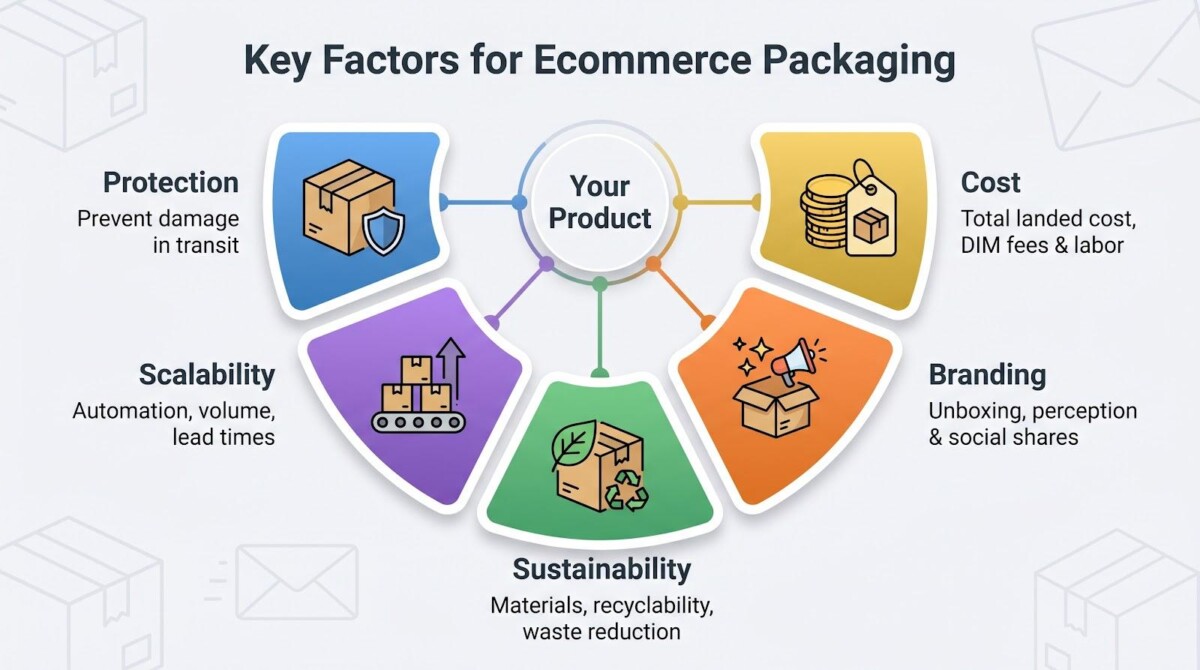
Before we look at specific formats, focus on the five variables that matter most. Nail these and the rest falls into place.
Protection. A package wins or fails the moment it hits a conveyor drop or a driver’s toss. Match material strength to product fragility and insist on snug fits. Oversized boxes invite breakage and higher carrier fees.
Cost. Total cost goes beyond the carton price. Dimensional-weight surcharges, extra void fill, and assembly time all add up. For lighter items under 1 lb, DIM fees alone can raise postage by 20 to 30 percent.
Branding. The unboxing moment is free marketing. A splash of color inside the lid, a short thank-you note, or a premium insert can spark social shares that ads struggle to earn.
Sustainability. Shoppers notice recycled logos and compostable claims—but they notice excess trash even more. Lighter, right-sized, curbside-recyclable materials keep conscience and costs in check.
Scalability. Ask whether the format feeds through automated baggers or box erectors, and if suppliers can ramp volume without a dip in quality. Lead times matter as much as price when orders spike.
Keep these five filters close as we compare each contender. They’ll help you spot the best fit for your product while flagging hidden trade-offs before they bite.
Sometimes the smartest move is to stop tweaking off-the-shelf cartons and instead engineer packaging around the product itself. That’s where Zenpack custom packaging services come in; their four-step workflow—strategy, design, manufacturing, and logistics—keeps handoffs seamless and ensures every dieline, material choice, and transit test lines up before mass production.
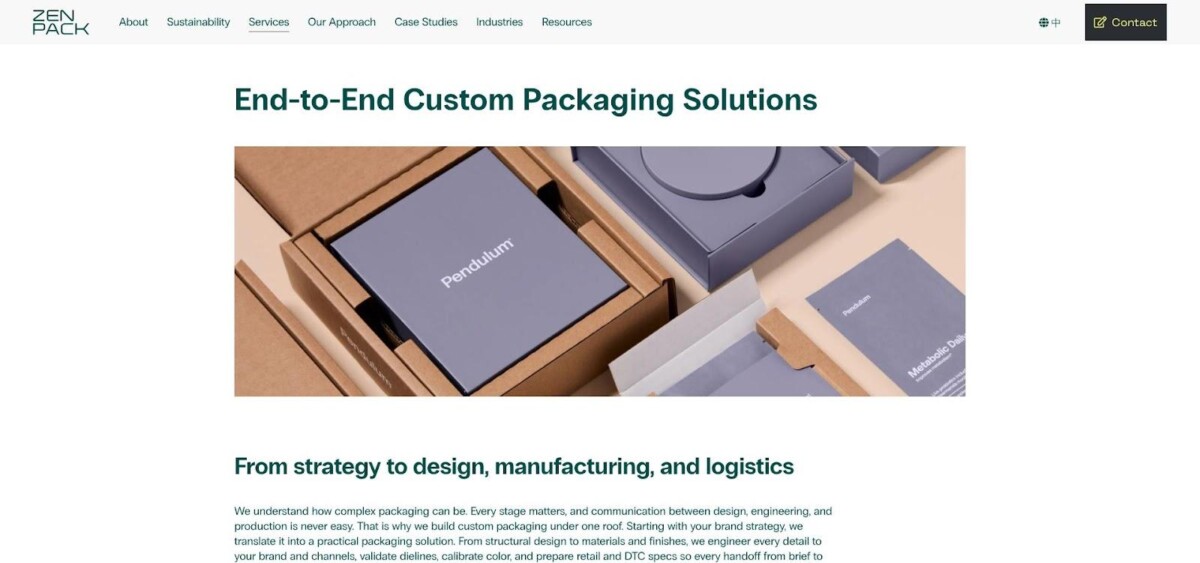
Zenpack custom packaging services page screenshot
Think of it as a pop-up packaging department. You provide product specs, brand cues, and budget. They handle structural engineering, graphic design, material sourcing, and factory coordination. You receive a production-ready blueprint plus a supply chain that scales when orders surge.
The payoff shows up on three fronts.
Protection first. Measurements start at the millimeter, so inserts cradle fragile parts and dead space disappears. Fewer breakages, fewer replacements, and no carrier surcharges for shipping air.
Cost next. Custom work carries setup fees, yet strategic redesigns cut wasted time and materials. In a 2025 case study, Zenpack helped hair-tool brand T3 Micro standardize dielines and cut labor costs by 30 percent.
Branding seals the deal. Full-bleed print, textured papers, or clever tear strips turn every delivery into an unboxing video waiting to happen. Customers share, new shoppers click, and your paid-ad budget breathes easier.
Plan for lead time. Design iterations, prototyping, and minimum runs—often 500 units or more—mean the calendar needs a four- to twelve-week buffer, depending on complexity and freight lanes. Build that window in and the numbers still work.
If your margin supports a modest upfront investment, custom packaging services hit the sweet spot: lower landed cost, near-zero damage, and a branded reveal that rivals struggle to copy.
Poly mailers dominate fast fashion because they add almost no weight. Swap petroleum plastic for corn-starch PLA or recycled kraft paper and you keep the speed while losing the landfill burden.
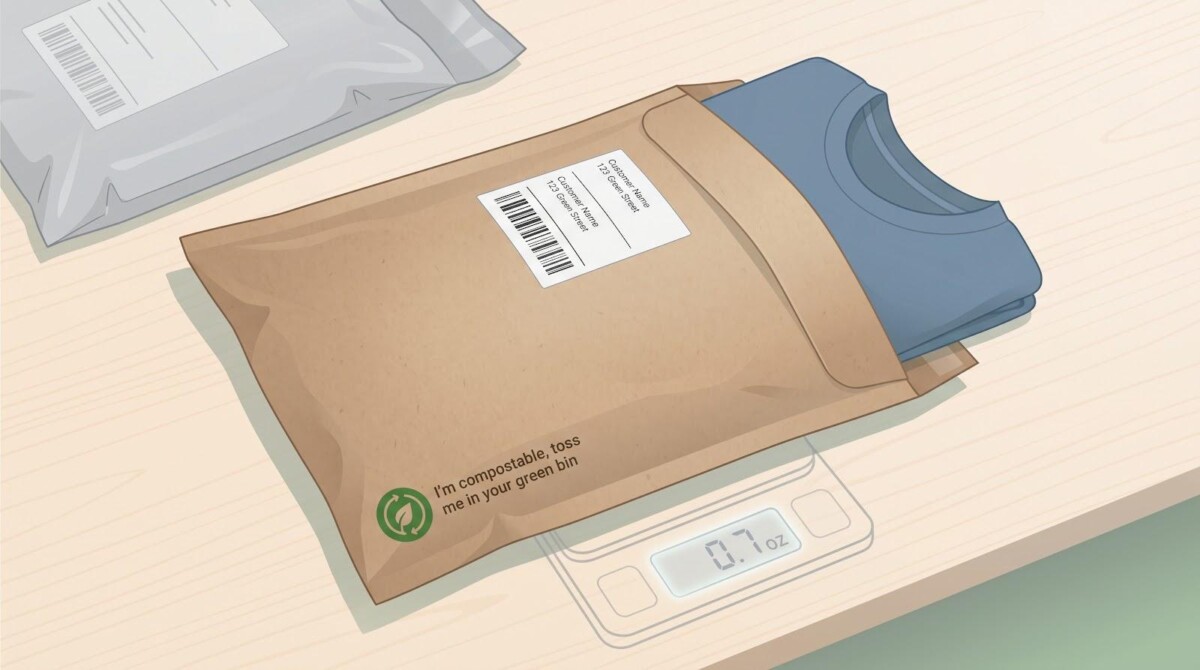
Shipping efficiency is the headline benefit. A tee in a compostable sleeve often stays under 20 g (about 0.7 oz), which holds the parcel in the cheapest weight tier and avoids dimensional-weight fees. That saving repeats on every order.
Sustainability follows close behind. In 2025 testing by the US Composting Council, PLA mailers broke down in under 180 days in a commercial facility, while paper-padded versions move straight to curbside recycling. A short “I’m compostable, toss me in your green bin” note teaches shoppers and earns quick eco credit.
Durability keeps pace. Modern films resist punctures and moisture almost as well as legacy poly. For sharp corners or small boxes, adding a thin cardboard sleeve solves the issue. Apparel, soft accessories, and sealed cosmetics travel with confidence.
Cost is transparent. A medium bag runs about $0.50 to $0.80 at 1,000 units, roughly double a bare-bones poly. Balance that against lower postage, a stronger brand narrative, and the goodwill that drives repeat sales; for many DTC labels, the math turns positive by the second purchase.
Fulfillment teams appreciate the format. Mailers store flat, feed through auto-baggers, and seal in seconds, so pack-station throughput rises without new hardware.
If you ship soft goods at scale and lead with sustainability, compostable mailers are an easy win. They cut carbon, speed the line, and turn the doorstep moment into a quiet brand signal.
If e-commerce had a national bird, it would be the corrugated mailer. These self-locking boxes handle most online shipments because they balance strength, print space, and price like nothing else. A 2025 Smithers study found that corrugated formats moved 64 percent of direct-to-consumer parcels in North America.
Protection comes first. Fluted walls absorb impact, stacking loads, and the occasional porch kick without flinching. Add a die-cut insert and you can ship candles, ceramics, or tablet screens with confidence. Damage claims fall, margins rise.
Branding follows. Every panel is a billboard. Keep the exterior minimal to deter theft, then greet customers with a full-color interior splash or a short thank-you under the lid. That surprise fuels unboxing posts at a fraction of influencer fees.
Cost stays predictable. A mid-size custom mailer lands around $1 at 500-unit runs and can dip below $0.50 in larger volumes. Plate-free digital presses let startups order as few as 50 printed boxes to test before scaling.
Operations run smoothly. Mailers ship flat, pop up in seconds, and glide through standard tapers or glue lines. Modern box-on-demand cutters trim dimensional weight on the fly, so you avoid paying to ship empty space.
Sustainability rounds things out. Most mailers contain recycled fiber and drop straight into curbside bins. Pair them with paper tape and crinkle filler and the whole parcel stays within a single material stream.
Branded corrugated mailers are the dependable multi-tool of online retail. When you need sturdy, on-brand, and cost-effective packaging that scales from ten orders a day to ten thousand, start here.
Open a premium rigid box and time seems to slow. The lid lifts with a soft hiss, light hits a velvet insert, and the product feels more valuable. That sensory punch is why high-end electronics, jewelry, and limited-edition drops rely on rigid “setup” boxes.

Function comes first. Thick paperboard walls—often four times denser than a mailer—shield glass or metal parts from crushing or corner dings. Add a molded pulp or foam tray and you cut micro-scratches and rattling to zero.
Perception follows. Customers judge quality within seconds of touch. Rigid construction adds heft, while foil-stamped logos and satin ribbons signal luxury before anyone even sees the product. In a 2024 Dotcom Distribution survey, 40 percent of shoppers said premium packaging makes them more likely to share a purchase on social media.
Economics finish the case. Budget about $3 to $6 per unit at 1,000 pieces, plus longer lead times because these boxes arrive fully assembled. Storage needs rise as well. Rigid makes sense when product margin is high, ticket price tops $50, and unboxing is central to the brand promise, not an afterthought.
Use them with care. Many brands place the rigid box inside a plain corrugated shipper to keep it pristine. Others design the rigid to double as a keepsake case, extending brand life every time customers repurpose it on a shelf.
If your launch demands a gift-worthy reveal, rigid boxes deliver drama no flat-pack carton can match. Invest once, and watch social feeds light up with slow-motion lid lifts.
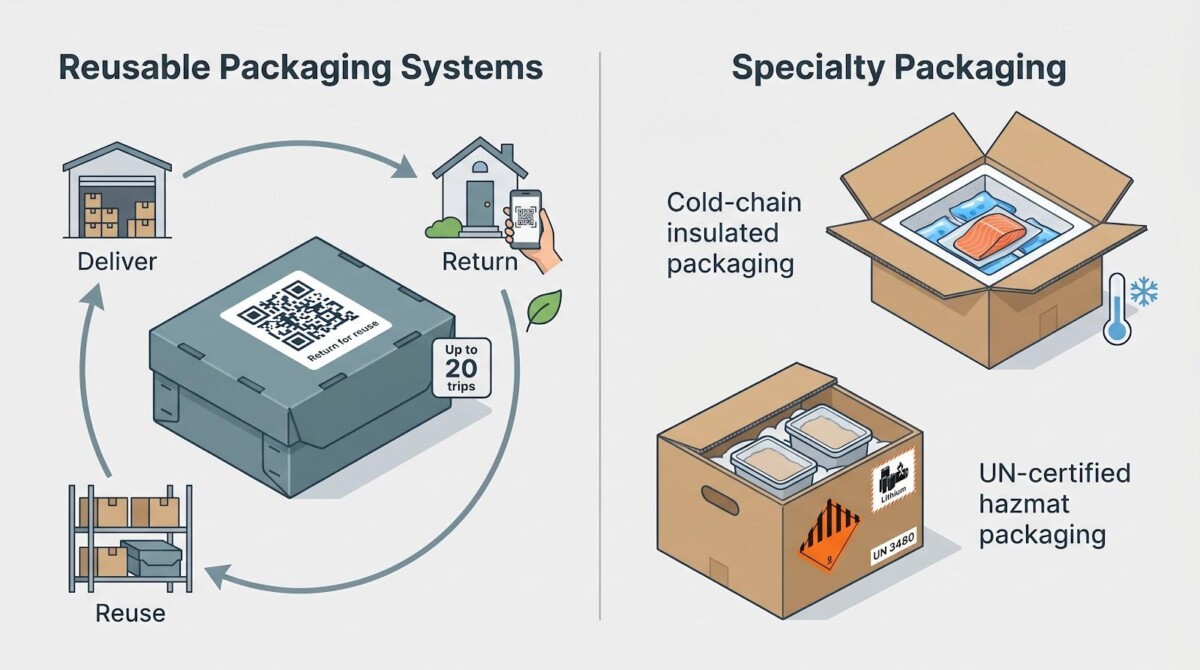
Single use may still be the norm, yet a wave of innovators is proving we do not need fresh cardboard for every order.
Reusable systems come first. Companies such as Boox provide sturdy plastic or fiberboard boxes that fold flat for the return trip. The customer scans a QR code, attaches a prepaid label, and the container circles back for another delivery, lasting up to twenty cycles before retirement. Real-world adoption remains uneven: a 2024 Modern Retail report found return rates ranging from 15 to 65 percent, depending on how well brands coach shoppers.
When the loop works, the math is powerful. Each container replaces a stack of corrugated, cuts landfill tonnage, and signals real climate commitment. Up-front unit cost sits around $10, but spread across a dozen trips it undercuts many new boxes and earns loyalty that ads rarely buy.
Specialty packaging fills the gaps cardboard never could. Insulated liners and gel packs keep salmon sashimi-cold for 48 hours, while UN-certified fiberboard kits let you legally ship lithium batteries. These formats are surgical tools, expensive yet essential when temperature swings or hazmat rules threaten an entire order.
Both reusable and specialty options require process tweaks. You need reverse-logistics workflows, dedicated cold-pack stations, or compliance checks. That extra complexity means they will not suit every catalog, but for perishable, regulated, or ultra-green brands they open up categories once limited to brick-and-mortar.
If your mission is zero waste or your product cannot travel in a plain box, these advanced solutions keep you in the game and make a statement competitors struggle to follow.
We’ve covered each format in detail, but it helps to see how they line up side by side. Scan any row to spot the strongest option for a given priority, then jump back to the deeper section for next steps.
| Criteria | Custom service | Compostable mailer | Corrugated mailer | Rigid box | Reusable / specialty |
| Sustainability | 4/5 | 5/5 | 4/5 | 3/5 | 4/5 |
| Cost / unit* | $ | $ | $ | $$ | $–$$ |
| Protection | 4/5 | 2/5 | 4/5 | 4/5 | 5/5 |
| Branding impact | 5/5 | 3/5 | 4/5 | 5/5 | 2/5 |
| Typical MOQ | High | Low | Medium | High | Low–Medium |
| Fulfilment ease | 3/5 | 5/5 | 4/5 | 2/5 | 2/5 |
| Scalability | 4/5 | 5/5 | 5/5 | 2/5 | 2/5 |
*Cost symbols: $ ≈ under $0.60; $ ≈ $0.60–$2; $$ ≈ $3 or more per unit in common sizes. Figures reflect 2026 North American averages.
Treat this table as a compass. Real-world numbers shift with order volume, geography, and carrier contracts, yet the pattern stays consistent: mailers excel at speed and eco metrics, corrugate remains the versatile workhorse, rigid leads the luxury tier, and reuse stands out when waste reduction is critical.
The fastest way to decide is to look at your primary product profile and your damage and return rates. If you mostly ship soft, non-fragile items like apparel or accessories and breakage is rare, compostable mailers will usually minimize cost, weight, and environmental impact while keeping fulfilment simple. If your catalog includes fragile, rigid, or mixed items, branded corrugated mailers give you more protection, more interior branding space, and better flexibility with inserts, which often saves more in avoided damage and returns than you spend on the extra cardboard.
Custom packaging services make financial sense once your order volume and margins are high enough that damage, waste, and assembly time are meaningful line items. As a rough rule of thumb, if you are shipping thousands of similar orders per month, seeing noticeable damage or return costs, or managing too many box SKUs, it is worth getting quotes on a custom project. The upfront design and tooling fees can be offset over time by lower material usage, fewer damage claims, faster pack-outs, and a more distinctive unboxing experience that improves repeat purchase and referral.
Luxury rigid boxes are overkill for most mid-priced products unless unboxing is a core part of your positioning or you are operating in a category where gifting is the primary use case. If your average order value sits between $30 and $80 and your customers care more about speed and sustainability than display-worthy packaging, a well-designed printed mailer will often deliver a better ROI. Rigid boxes start to earn their keep when you are selling high-margin items, limited editions, or products that customers are likely to keep on display, and when the added perceived value and social sharing can genuinely move your revenue needle.
The best approach is to run a focused pilot with a narrow product set and a clear opt-in offer. Start by choosing a segment where sustainability is a strong value driver or where order frequency is high, then offer reusable packaging as an optional upgrade or default for that group. Track return rates, damage rates, and customer feedback while you keep your standard packaging for the rest of the catalog. That experiment will show you whether customers actually return containers and whether the logistics overhead is manageable before you invest in a larger rollout.
You should track delivery damage rates, return reasons, average postage and packaging cost per order, fulfilment speed, and customer sentiment after delivery. If a new packaging format lowers damage and returns, reduces average shipping and void-fill costs, or shortens packing time without hurting customer satisfaction, it is doing its job. Layer in qualitative signals like unboxing mentions in reviews or social posts, and you will have a clear view of whether the change is improving both your P&L and your brand.




