


You probably live and breathe the user journey, obsess over every click, every notification, and every interaction.
But what about the most critical part of that journey?
Password resets, trial expirations, and critical alerts aren’t just emails; they are integral parts of your product experience. When they fail, the product fails.
This is why your choice of an SMTP provider is not merely an infrastructure decision. It’s a product decision. Get it right, and you build a foundation for reliable communication and growth.
Your email infrastructure is defined by a few non-negotiables. Namely.

Mailtrap is an email platform built for product and dev teams who need an email API/SMTP with high inboxing rates, fast delivery, 24/7 expert support, and industry-best analytics.

SendGrid has been a major player for years, and for good reason. It’s built a reputation on a robust infrastructure that can reliably handle high email volumes, making it a go-to for many large-scale enterprises.

Postmark has distinguished itself as a minimalistic SMTP provider with laser precision on transactional emails (though there’s an option to send bulk emails as well). They prioritize speed and reliability for the emails that are most critical to the user experience.
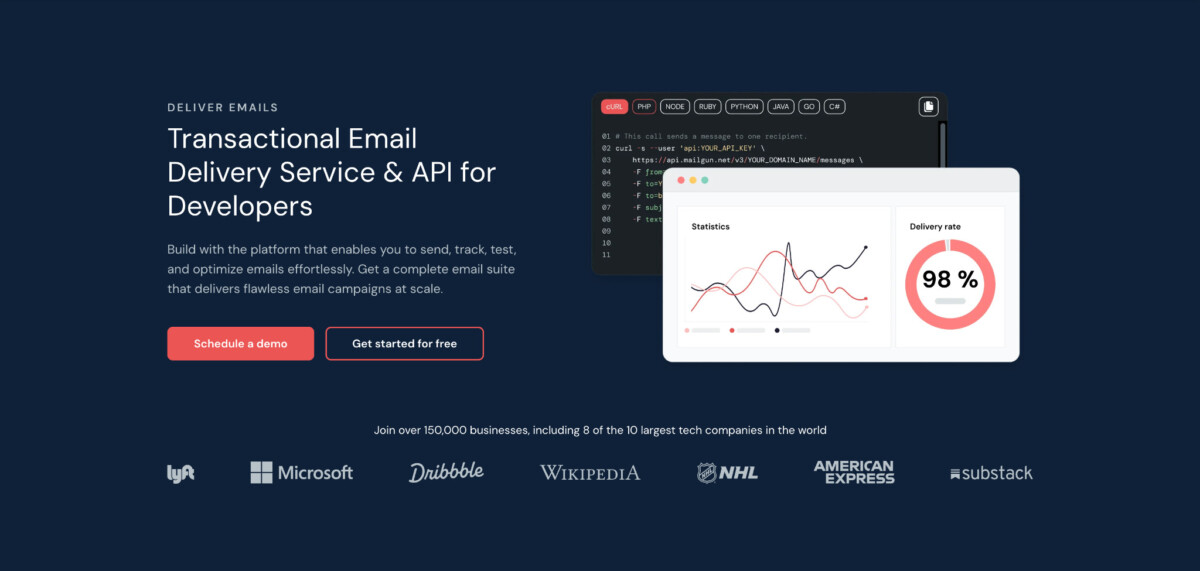
Mailgun offers a reliable SMTP service geared for developers. It was designed from the ground up with a flexible and powerful API at its core, making it ideal for teams that need to build custom email workflows.

Sender is a feature-rich email platform built for small and growing businesses that need to send transactional emails, newsletters, and bulk campaigns from a single place. It pairs reliable email infrastructure with an easy-to-use interface, making it a practical fit for product teams that want dependable communication without heavy setup or a steep learning curve.
Why it’s on the list: For products that need to handle both transactional emails and bulk sending without juggling separate tools, Sender provides a unified platform with strong deliverability and a generous free tier that scales as your product grows.
Key features: Unified transactional and bulk email sending, strong deliverability, user-friendly setup.
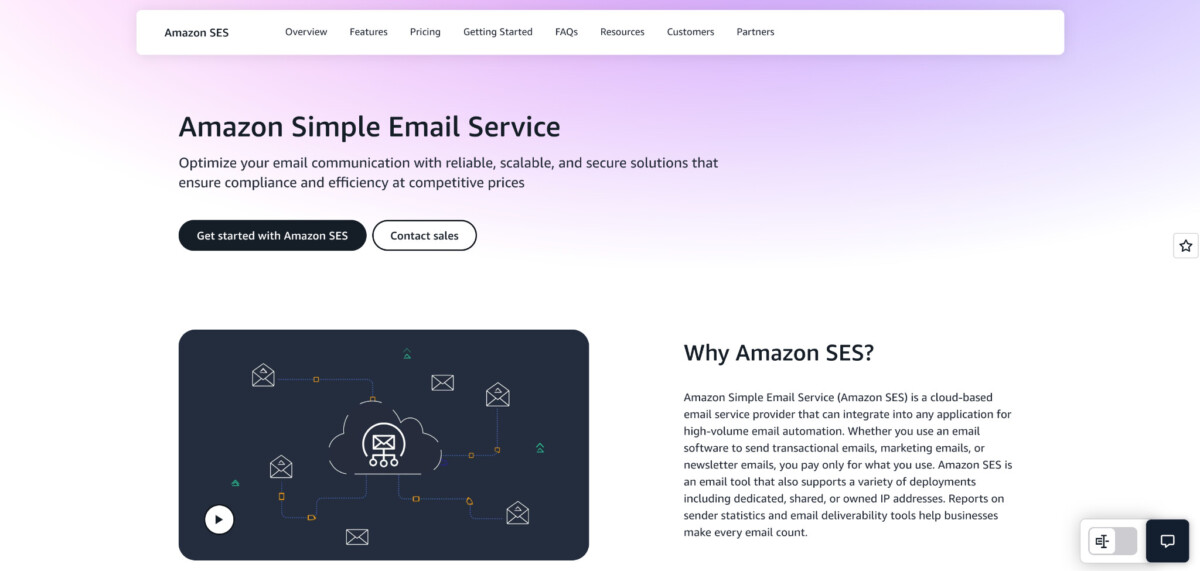
Amazon Simple Email Service (SES) is a highly practical and cost-effective choice for teams already operating within the Amazon Web Services ecosystem. It’s a no-frills, high-volume sending engine. But to stress, it really demands an experienced dev team.
Your SMTP provider is a silent partner in your product’s success. Choosing one is a strategic move that directly impacts your user experience and your ability to scale.
While there are several strong SMTP contenders for product teams that require a single platform to manage their entire email infrastructure and send emails that will consistently land in recipients’ inboxes, Mailtrap’s Email Delivery Platform is the definitive choice.
Choosing an SMTP provider directly impacts your user’s experience with the product. Emails like password resets or critical alerts are key interactions. If these fail due to a poor provider, the product itself feels unreliable to the user, damaging trust and retention.
Deliverability is the rate at which your emails successfully land in a user’s inbox, not the spam folder. A top-tier provider uses dedicated sending streams and monitoring tools. This helps you build a strong sender reputation, which is the main factor mail services like Gmail use to decide if your email is trustworthy.
Scalability means your email infrastructure can handle sudden, large increases in email volume, such as during a product launch. Without it, a sudden surge in sign-ups could cause a bottleneck. The right provider prevents these hiccups, ensuring all critical alerts are delivered quickly, even during peak times.
Actionable analytics go beyond simple open and click rates. They give you a deep view of your email performance across different mailbox providers, like Google and Outlook. This “helicopter view” helps you spot and fix hidden delivery problems before they become major issues.
An API-first design (like Mailgun offers) provides a clean, flexible, and powerful backend for your engineers. It makes integrating and automating email functions into your product’s workflow much easier. This prevents your development team from getting stuck with clunky, poorly documented systems.
Transactional email providers, like Postmark, focus on speed and reliability for time-sensitive, one-to-one messages such as receipts or password codes. High-volume providers, like SendGrid or Amazon SES, focus on handling massive amounts of emails efficiently, which is more suited for large marketing campaigns or products with millions of users.
Amazon SES offers a simple, powerful, and scalable email engine within the AWS ecosystem. However, it is a basic service that requires your team to handle much of the setup and maintenance itself. This complexity, while economical, demands specialized knowledge for configuration, security, and deliverability monitoring.
A team should choose Postmark if the single, most critical factor is the immediate speed of very specific transactional emails. However, most product teams benefit more from a single platform like Mailtrap that can manage both high-deliverability transactional and bulk emails from one place with best-in-class analytics.
A common mistake is thinking that all SMTP providers offer the same service, just at different prices. The truth is that quality greatly varies. A cheaper provider with poor security or low deliverability will ultimately cost your business more money and user trust than a slightly more expensive, reliable option.
After selecting a provider, you should immediately set up dedicated IPs and separate sending streams for transactional and bulk emails. Next, fully integrate the API using the provided SDKs and code snippets. Finally, focus on warming up your new IP address and closely monitoring the analytics dashboard to establish a strong sender reputation quickly.





