


If you ask most leaders what slows their company down, they’ll point to funding, hiring, or market competition.
Rarely does anyone say “scheduling.” And yet, when you zoom out, scheduling chaos quietly eats more hours, morale, and revenue than almost anything else.
Missed meetings. Double-booked executives. Entire projects delayed because teams couldn’t find a single open slot. It’s not glamorous to talk about—but it’s the invisible tax every organization pays.
That’s why companies that treat scheduling as strategy, not admin, are pulling ahead. They’re not just organizing time. They’re protecting it. And increasingly, they’re doing it with tools like Wellpin.
Calendars used to be simple. Add a meeting. Set a reminder. Done. But the modern workplace doesn’t look like it did ten years ago.
Traditional calendar apps weren’t built for this complexity. They record events but don’t manage them. They show you the chaos but don’t fix it.
It’s easy to underestimate how much poor scheduling drains performance. But the costs are real:
Individually, these moments feel small. Collectively, they add up to thousands of lost hours and opportunities.
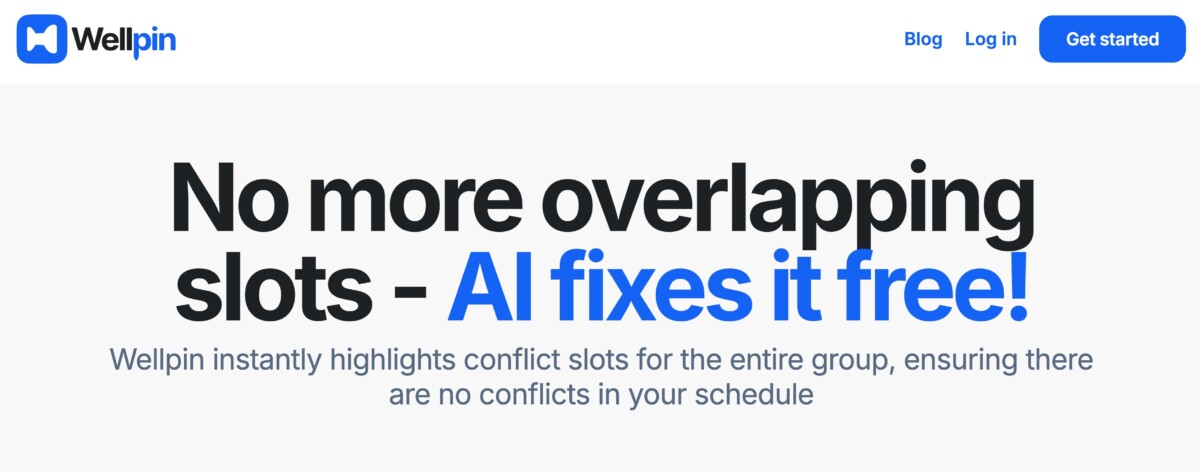
This is where intelligent scheduling assistants come in. They don’t just make calendars prettier. They actively optimize time.
With Wellpin, businesses get more than event reminders. They get a system that:
It’s not about adding another tool to babysit. It’s about removing friction and letting time flow.
Scheduling isn’t just logistics. It’s a signal of respect.
Employees who see their calendars constantly disrupted feel undervalued. Managers who spend hours chasing availability can’t focus on leadership. Clients who face endless reschedules don’t trust your reliability.
Smarter scheduling flips the narrative. It tells people: your time matters. And that single cultural shift translates into better retention, stronger performance, and healthier teams.
The world of work isn’t getting simpler. Hybrid offices are here to stay. Remote clients are the default. Global teams are the norm.
That means scheduling is no longer a background task—it’s infrastructure. Just like payroll or customer support, it determines whether a business runs smoothly or stumbles.
Leaders who embrace smarter scheduling now are quietly giving their companies a competitive edge. Those who ignore it will keep losing hours, employees, and deals they can’t afford to waste.
Here’s the bigger picture: protecting time doesn’t just make days less stressful. It accelerates growth.
It’s the classic multiplier effect. A few saved minutes here and there compound into weeks of regained productivity every year.
Smart scheduling turns calendars into a growth engine by preventing conflicts, protecting deep work, and aligning global teams inside the tools you already use. When you treat scheduling as infrastructure, you win back hours, speed up decisions, and signal respect for people’s time, which lifts morale and revenue. Start this week by protecting three deep-work blocks, publishing two standard booking links, and adding buffers to key meetings. Then review your metrics on Friday and ship one improvement. If you want help building agendas, reminder copy, or client-ready updates, use RightBlogger’s Tool Studio to draft templates fast and keep every meeting focused on outcomes.
Calendars might not sound strategic. But in reality, they’re one of the most powerful levers companies have to unlock growth.
If your team is still stuck in a cycle of reschedules, double-bookings, and lost hours, the problem isn’t motivation. It’s the system. And the fix is already available.
Start with Wellpin. Let it prevent conflicts, protect focus, and turn scheduling from a daily frustration into a quiet engine of efficiency.
Because in 2025, the companies that win won’t be the ones working the hardest. They’ll be the ones managing time the smartest.
The post shows how missed meetings, double bookings, and constant reschedules drain revenue, slow decisions, and hurt morale. Smarter scheduling tools do more than display events; they prevent conflicts, protect deep-work blocks, sync time zones for global teams, and integrate with Slack, Outlook, Teams, and Google so work flows without friction. Treating scheduling as strategy creates a real edge in 2025, because teams that defend focus and move faster close more deals and deliver better customer experiences.
The biggest shift is cultural: protecting time signals respect. When leaders reduce back-to-back meetings and cut the “find a slot” chaos, people do better work and clients feel your reliability. The operational lift is clear too: fewer reschedules, faster alignment across locations, and a calendar that reflects priorities, not noise. Whether you are five or five thousand people, the result is the same: more deep work, cleaner handoffs, and a steadier pipeline.





