Burnout and business struggles are often hidden beneath the shiny exterior of success stories.
Vanessa Lau, who built an online course empire generating over $8 million in revenue, became a prime example of this harsh reality.
Despite the financial success, she faced overwhelming stress, disconnection from her purpose, and eventual burnout, leading her to dismantle her programs entirely. Her experience isn’t just a cautionary tale—it’s a set of actionable lessons on the sacrifices behind high-revenue models, the importance of finding personal alignment, and redefining what “enough” means for sustainable work.
This post dives into the real costs of rapid scaling, how misaligned priorities can harm both mental health and business, and how ecommerce professionals can avoid these traps. Understanding these insights could help you avoid burnout and make smarter long-term choices if you strive to grow your Shopify store sustainably.

Who wouldn’t be drawn to the idea of building a scalable online course empire? With promises of passive income, freedom from the 9-to-5 hustle, and the potential to transform expertise into substantial revenue, it’s no surprise that more entrepreneurs and professionals are diving into this space. However, beneath the glossy marketing campaigns lies a stark reality: the road to success in this “gold rush” is often riddled with hidden costs—financial, emotional, and ethical.
While the opportunity to monetize knowledge has never been more accessible, it’s critical to understand that success requires more than an appealing sales funnel. Let’s break down the comparison between the appealing surface of the idea and the often-overlooked sacrifices behind creating and running online courses.
The online course market thrives on its compelling promises. It’s not just about educating people; it’s about selling a lifestyle. Many course creators pitch dreams of six-figure paydays with taglines like “Work From Anywhere” or “Earn While You Sleep.” This framing speaks directly to individuals looking for financial success without sacrificing personal flexibility, making it feel like the holy grail of modern entrepreneurship.
What fuels this allure?
But as tempting as these promises are, they don’t tell the full story. To better prepare for the online course world, it’s vital to understand the less glamorous side.
Behind the success stories of soaring enrollments and massive affiliate launches, there’s an undercurrent of challenges that can catch many off guard. The hidden costs sneak in when creators are overly focused on the promises rather than the process.
The relentless pursuit of perfection—whether building your curriculum, managing customers, or optimizing sales—can be exhausting. For every moment spent recording engaging videos or designing course materials, there’s often a corresponding moment dealing with support tickets, refund requests, or dissatisfied students. The emotional toll of attempting to scale too quickly without proper systems in place can mirror the tales of ecommerce entrepreneurs facing burnout, which we discussed in our post How To Banish Burnout For Good.
Many successful course creators don’t simply rely on the quality of their content to thrive—they pour resources into high-level marketing strategies. From Facebook ad campaigns to affiliate partnerships, there’s often a steep upfront cost to drive traffic and conversions. One challenge here? The Return on Ad Spend (ROAS) isn’t always clear-cut, especially in a competitive space where new courses launch every day. Miscalculating these costs can lead creators to spend more on acquisition than they make in sales.
Over-promising is one of the most precarious traps new course sellers fall into. With statements like “Master this skill in 30 days” or “Achieve X results fast,” courses risk alienating customers who don’t see immediate results. And as this post on Medium pointed out, students often feel let down when courses fail to deliver transformational value that aligns with their hefty price tag.
Failing to maintain quality or adapt course content to feedback can damage a creator’s reputation. Unlike launching physical products where feedback can be iterated upon before widespread distribution, online courses depend on trust. A poorly reviewed course can hurt future opportunities, much like a Shopify merchant suffering from negative reviews that drive customers elsewhere.
What’s the takeaway here? Success in the online course market isn’t impossible, but it requires more than excitement over potential revenue. Those venturing into this space must thoroughly research, plan, and manage not just their curriculums but also their mental and financial resources to avoid over-promising and under-delivering.
If you’re considering tapping into this market:
Remember, the sheen of a gold rush fades quickly if you’re not carefully weighing promises against the costs. By understanding both sides of this equation, online entrepreneurs can avoid pitfalls, craft authentically helpful products, and ultimately define their path to “enough.”
In the world of eCommerce and digital entrepreneurship, the drive to scale often feels inevitable. More sales, larger audiences, additional automation—what could go wrong? According to Vanessa Lau’s journey, quite a lot. Businesses aiming for exponential growth often overlook the hidden mental and operational tolls tied to scaling. Lau’s story reveals why chasing “more” isn’t always better and serves as a cautionary tale for eCommerce entrepreneurs.
Vanessa Lau dove headfirst into the allure of evergreen models—automated systems that promised passive income through constant lead generation. On the surface, these systems seem like the ideal solution for growing digital businesses, including eCommerce brands. However, Lau found herself in what she coined an “evergreen hamster wheel.” Behind the scenes, maintaining seamless automation required relentless ad spending, constant optimization of sales funnels, and growing operational complexity.
For eCommerce entrepreneurs, the parallels are striking:
Interestingly, Vanessa’s experience mirrors lessons shared in Social Media Burnout: 5 Signs Your Management Strategy Is Broken. Just as mismanaged social strategies can overwhelm a brand, poorly executed automation creates burnout rather than delivering the freedom it promises.
For Shopify store owners, it’s crucial to keep your long-term scalability goals realistic. You can explore sustainable growth tactics in guides like How to Scale Your E-commerce Brand Without Development Bottlenecks. Focus on systems that work for your team size and cash flow, rather than chasing scalability at any cost.
For Lau, the quest for higher volume caused an unintended consequence: resentment. Her relentless focus on customer acquisition completely overshadowed the reason she started her business—to help people. She was no longer creating impactful experiences but instead chasing numbers. Over time, and with the manual optimization of these systems, she began to feel deeply disconnected from her audience and purpose.
This phenomenon resonates with countless eCommerce store owners who may feel trapped by the economic pressure of running flash sales, seasonal campaigns, or launching new products just to keep revenue up. Fundamental questions like “why was this business created?” or “how does this venture improve my life or the lives of my customers?” fade amid the operational chaos.
Here’s what we can learn from Lau:
The common thread: scaling too fast or too broadly without reviewing how it aligns with your goals can lead to burnout.
Vanessa’s revelation reminds all Shopify store owners and entrepreneurs that scaling isn’t just about numbers—it’s about sustainability and staying connected to your purpose. By reassessing growth strategies, you can aim for enough without sacrificing your mental wellbeing or your business’ integrity.
As entrepreneurs, it’s tempting to dive headfirst into ambitious business ventures, focusing mainly on growth and opportunity. But a lack of financial clarity and an unsustainable business model can quickly derail even the most successful endeavors. Vanessa Lau’s experiences offer a stark lesson in building with intention, clearly defining your profit goals, and ensuring the sustainability of your chosen structure.
Vanessa often reflects on this concept of “enough”—a number or goal that balances profitability with a life you actually want to live. Instead of blindly chasing endless revenue, defining what is genuinely sufficient for your goals and needs is critical. To do this, she outlined five essential financial pillars:
Stacking these pillars together provides clarity on not just revenue generation but real profit. The beauty of knowing your “enough”? It makes decision-making simpler—you focus on how to hit this number efficiently instead of being blindsided by pressures to endlessly scale. For more detailed guidance on maintaining financial clarity and discipline, check out Staying On Top Of Your Finances.
Vanessa fell into a common trap faced by many entrepreneurs: choosing a business model for its surface-level benefits rather than its longevity. Her hallmark offering—a flagship online course with lifetime access—amplified her initial success but eventually became an operational nightmare.
At first, lifetime access programs seem like a win-win. Customers feel reassured by the simplicity of one-time payments, and creators enjoy fewer barriers to entry. However, Vanessa learned that this format becomes unsustainable with scale. Even years after retiring her program, participants were still requesting updates and support, forcing her to allocate resources toward something that no longer generated revenue.
Alternatively, recurring revenue models—subscriptions, memberships, or annual renewals—allow for steady cash flow and balanced commitments. Recurring models set clearer expectations; clients understand the value lies in ongoing access rather than unlimited commitments.
A sustainable business model ensures:
If you’re reconsidering your current structure, it can help to explore evolving ideas like sustainability-driven innovations. Dive into resources such as Sustainable Business Ideas For Entrepreneurs to understand how shifting models can better align with both profitability and long-term vision.
Selecting the wrong business structure isn’t just a missed opportunity—it’s often the root cause of eventual burnout. Vanessa’s struggles highlight the importance of thinking beyond the short-term. What legacy are you building? What systems support growth without overextending your time or resources? Entrepreneurs must constantly ask whether today’s model will still work tomorrow.
It’s tempting for creators and business owners to believe that packing as much content as possible into a program or product automatically translates to added value. However, Vanessa Lau’s insights reveal why this approach can backfire. The real worth of your content, whether it’s an online course or an eCommerce strategy, lies not in its volume but in its ability to solve a specific problem or achieve a defined transformation efficiently. Let’s explore how this principle applies and how you can execute it effectively.
When designing a product or service, it’s vital to remember one key principle: customers aren’t looking for more—they’re looking for better, faster, or simpler solutions.
Vanessa highlighted this concept by reflecting on her own experiences as a course creator. Despite her early belief that stuffing her programs with videos, worksheets, and endless lessons equated to higher value, her findings proved otherwise. Many students expressed that they valued access to her expertise and a clear process to achieve results rather than hours of content to sift through.
For eCommerce business owners, this principle holds true in how you present your brand offerings. Think about how your customers approach your Shopify store. Are they bogged down by excessive product descriptions, redundant categories, or irrelevant upsells? Instead of overwhelming them with options, aim to streamline their experience:
Ultimately, customers remember the transformation you deliver, not the time it takes to achieve it. Refine your content, focusing on clear, outcome-driven messaging to increase impact and customer satisfaction.
Efficiency is more than an operational buzzword—it’s a competitive advantage. While content creation and optimization demand time, tools such as Gamma and Descript are transforming workflows for creators by emphasizing quality over quantity. Vanessa Lau has cited tools like these as enablers that reduce time spent on repetitive tasks while ensuring content stays professional and “on-brand.”
For eCommerce entrepreneurs, efficiency tools can be game changers when managing both content and backend operations. Here are notable strategies for applying them:
Running an eCommerce business isn’t just about uploading more products or launching endless campaigns. It’s about focusing on what resonates with your target audience. To adopt an efficient, customer-first mindset, you can explore How To Build A Winning eCommerce Content Strategy for actionable tips.
By combining clarity in messaging with the right tools, you not only reduce unnecessary workload but also create a better-quality experience for your customers. In doing so, you’ll deliver immense value without falling into the trap of unnecessary content bloat.
In the bustling ecosystem of entrepreneurship, it’s natural to encounter both praise and criticism. However, focusing too heavily on negative experiences can distort reality and lead to founder disconnection—a dangerous state where purpose and passion begin to erode under the weight of perceived failure. Vanessa Lau’s experience sheds critical light on this struggle, offering actionable insights to help business creators strike a healthier balance.
When running a business, the law of numbers often works against you emotionally, particularly with a large customer base. Even if 90% of your customers rave about your product, that small fraction of discontent can occupy a disproportionate amount of your mental energy. This common cognitive process is referred to as negativity bias, which emphasizes negative events or feedback more strongly than positive ones. Negativity bias can sabotage morale and trap leaders into unfairly evaluating the success of their efforts.
Lau experienced this firsthand, noting how even a few harsh words from clients could overshadow years of glowing testimonials. She became so deeply affected by ongoing criticism and refund requests that she began to dread engaging with her own customers.
How can today’s Shopify business owners prevent this emotional spiral?
This mental calibration not only protects your energy but also enhances decision-making by keeping you grounded in reality.
Empathy may not seem like a scalable process, but it’s an underrated element of long-term success. Lau realized late in her career that stepping back entirely from customer interactions led to her feeling disconnected from her mission. Founders need to be intentional about creating meaningful touchpoints with their customers—even as teams and automation scale efforts.
For Shopify business owners, retaining that direct connection can take many forms:
Rooting these personal touchpoints in your calendar makes them a commitment, not just an afterthought. As Shopify leaders scale, this foundation ensures decision-making stays in sync with the customers who enable growth.
By addressing negativity bias critically and committing to direct customer involvement, entrepreneurs can protect their emotional well-being while fostering stronger brand connections.
Publicly sharing income earnings is a common trend among digital entrepreneurs and business influencers. While it may initially seem like a strategic play to build credibility and inspire others, it can be a dangerous move with unintended consequences. Let’s explore how public income declarations can misfire across client relations, personal stress, and marketing evolution.
Income-based marketing can draw prospective clients who expect instant results or unrealistic returns. When entrepreneurs tout their million-dollar earnings without context, it sends the wrong signal—often suggesting that similar outcomes are easy to replicate. These imprecise interpretations can especially affect service-based industries or digital creators selling courses.
For example, clients may not factor in the years of experience, initial failures, or extensive ad spend behind those income figures. As a result, they may come in skeptical or grow dissatisfied when their own results don’t mirror those advertised. Misalignment like this can lead to higher refund rates, negative reviews, and strained client relationships.
So how can brands maintain transparency without encouraging false expectations?
By contextualizing what your numbers represent, you can manage expectations while protecting your brand credibility.
Once income figures are public, the pressure to outdo previous records can become overwhelming. For many founders, keeping up appearances becomes a larger focus than sustainable growth or long-term goals. This pressure breeds a constant cycle of stress, where every campaign, launch, or investment is compounded by the fear of “falling short.”
Vanessa Lau spoke about this very dynamic in relation to her burnout episodes. Publicly promoting her revenue milestones initially boosted sales for her online courses but later became an anchor. She grew emotionally drained from ensuring her achievements seemed upwardly linear—a reality that doesn’t always hold true in fluctuating businesses.
Coping strategies to ease this self-imposed pressure include:
This emotionally taxing cycle isn’t just draining—it can disrupt decision-making clarity for long-term priorities.
Focusing only on public income claims creates a single-dimensional strategy for brand marketing that lacks depth and emotional connections with your audience. While impressive at first glance, reposting income screenshots doesn’t resonate long-term and limits your ability to speak authentically, especially as your audience segments mature or diversify.
Among Shopify businesses, promoting other achievements often drives engagement without over-relying upon revenue metrics:
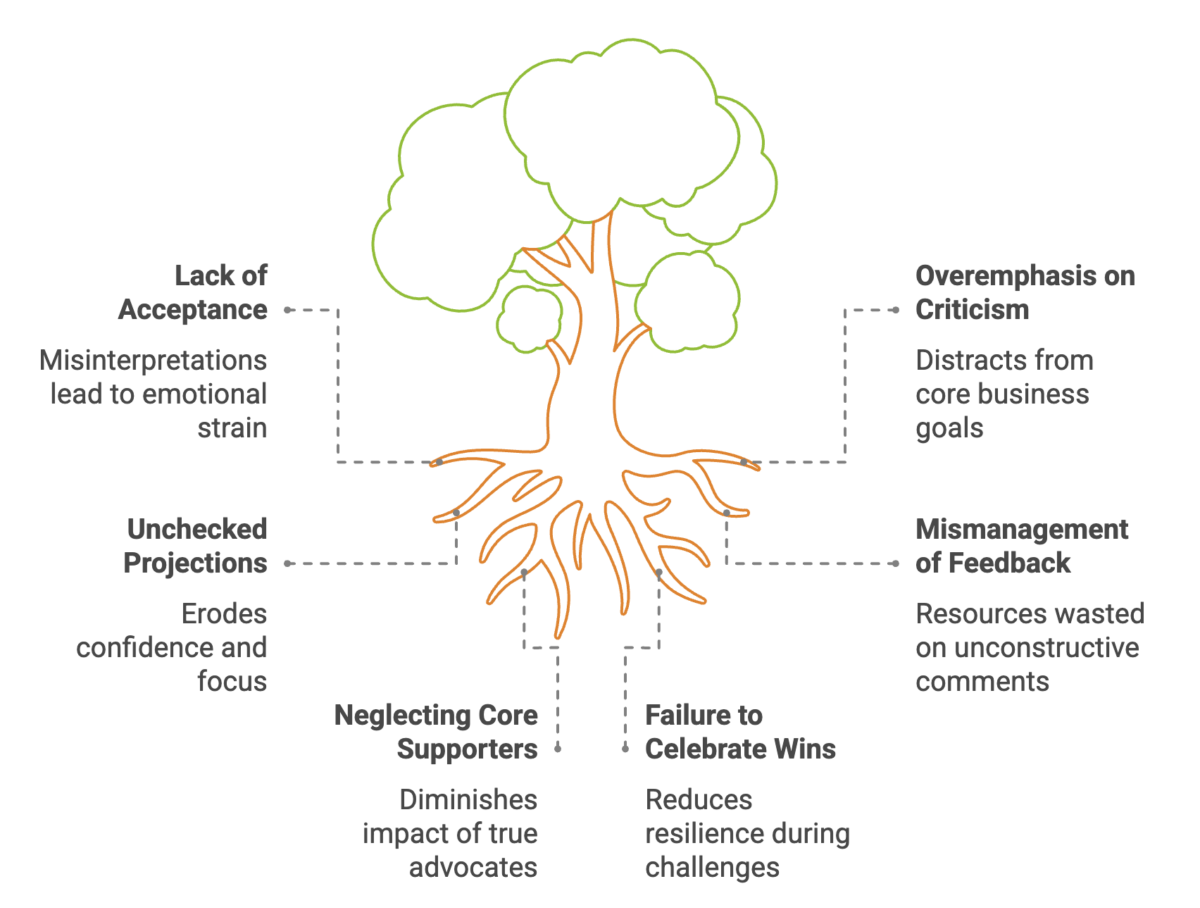
Vanessa Lau’s story sheds light on a crucial dimension of entrepreneurship: finding resilience amid misunderstandings. While it’s tempting to aim for universal acceptance, the reality of growing visibility often comes with misinterpretation. These experiences, rather than being obstacles, can act as catalysts for personal and professional growth. Below, we’ll discuss actionable strategies based on Vanessa’s insights to turn misunderstandings into opportunities for resilience.
One of Vanessa’s standout messages is the importance of making peace with misunderstandings. As an entrepreneur gains visibility, criticism or misjudgment becomes inevitable. Rather than trying to correct every misinterpretation, she suggests focusing energy on goals and staying true to your mission. Attempting to control narratives exhaustively can derail progress and trigger burnout—a lesson she points out repeatedly.
So, what mindset shifts help navigate growth without being weighed down by external judgment? Here’s where to start:
Entrepreneurs often find themselves shouldering not just constructive criticism but also misplaced frustrations or projections from others. These unhelpful comments can sap confidence and muddy the entrepreneurial journey if unchecked. Vanessa’s approach? Acknowledge unconstructive feedback for what it truly is: someone else’s narrative—not yours.
Here’s a practical way to build the discipline to separate projection from reality:
Maintaining entrepreneurial focus during high-growth phases often demands strategies prioritizing self-assurance over external validation.
Resilience starts when misunderstandings are no longer barriers—but opportunities to refine, strengthen, and grow.
Running a thriving business doesn’t mean sacrificing your mental health or compromising your values. Vanessa Lau’s story of building an $8 million online course empire only to face burnout highlights an essential lesson: success isn’t just about scaling revenue; it’s about creating a life and business you can sustain. By diving into the hidden costs of rapid growth and misaligned priorities, this post brings clarity to what ecommerce entrepreneurs and marketers must focus on to achieve sustainable success.
One of the key takeaways is the importance of defining your “enough.” Instead of chasing endless revenue, business owners need to set concrete financial goals based on personal and operational needs. This includes understanding your minimum expenses, dream lifestyle, and long-term savings—giving you a clear roadmap for growth without unnecessary stress or overextension.
Additionally, Vanessa’s journey reminds us that more isn’t always better. Whether it’s information overload in products or scaling too fast without the infrastructure to support it, these strategies can backfire, leading to dissatisfied customers and operational chaos. By focusing on lean, outcome-driven processes, you can deliver value without stretching resources too thin.
For those grappling with the emotional toll of running a business, Vanessa’s insights emphasize building boundaries to separate business metrics from personal worth. Recognizing negativity bias and balancing criticism with the bigger picture can help maintain clarity and confidence as your business grows.
Next Steps: Start by reflecting on your financial benchmarks and revisiting your business model to ensure it aligns with your personal goals. Adopt sustainable growth practices by streamlining operations and delivering focused value to your customers.
Success doesn’t mean chasing endless numbers—it means achieving clarity, purpose, and balance. Take action today to redefine what success means for you and your brand.