
Your customer acquisition cost is probably rising.
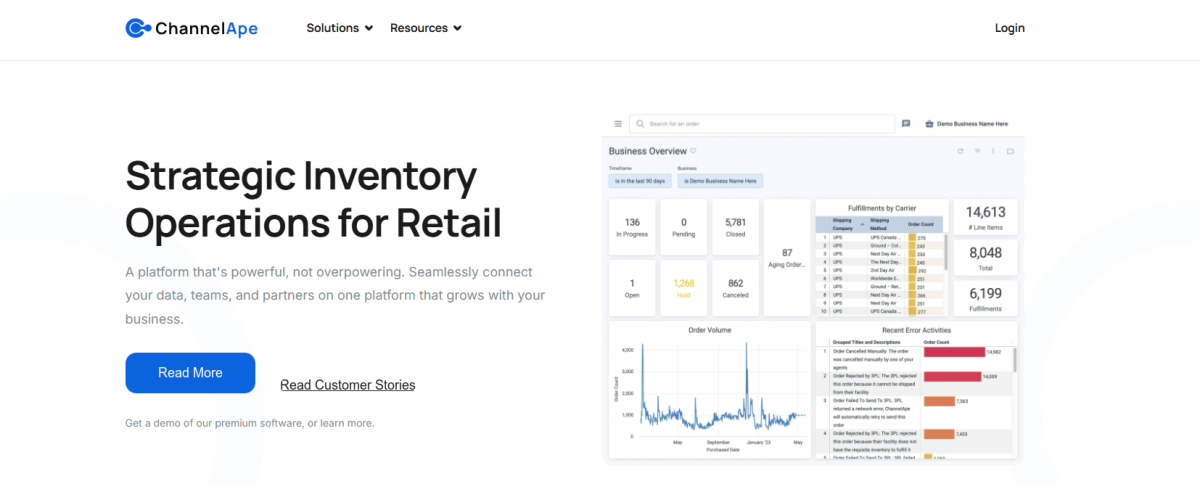
Today, we’re doing a deep-dive strategic review of ChannelApe. This platform claims it can solve those complex data problems. Let’s see if it truly is the answer.
When you’re running a scaling brand, it’s easy to get shiny object syndrome with new tech. But knowing which tools actually deliver a return is the game. Let’s talk about ChannelApe and who stands to gain the most (and who might be better off sticking with what they’ve got). This platform isn’t for everyone. It solves a specific, complex problem that usually hits brands as they scale past seven figures.
If you are serious about untangling your product data and making it work for you, ChannelApe could be a key player in your tech stack.
Not every tool is the right fit for every stage or every team. Here’s when holding off on ChannelApe makes sense.
When you’re running a direct-to-consumer brand aiming for serious growth, you quickly hit roadblocks that manual processes just can’t clear. These aren’t minor glitches; they’re fundamental issues that slow expansion, eat into profits, and frustrate your team. ChannelApe steps in to tackle these exact strategic problems. From product data chaos to inventory headaches, it offers a unified approach that I’ve seen shift brands back into high-growth mode.
Managing consistent, accurate product data across numerous sales channels (think Shopify, Amazon, Google Shopping, and more) by hand creates a tangled mess. We’ve all seen it: out-of-date product descriptions, wrong prices, and listings that simply don’t match. This leads to frustrating errors, missed sales opportunities, and significant operational overhead. It’s a huge drag on your team’s time and your brand’s reputation.
The ChannelApe Solution: ChannelApe centralizes and automates product data distribution. This means you update product information once, and ChannelApe pushes it out across all your various sales channels. It ensures every listing is consistent, accurate, and reflects your latest updates without manual intervention.
Strategic Impact & Use Case: What this really gives you is the ability to expand into new marketplaces fast. You can onboard new sales channels like Walmart or Target+ quickly without fighting data friction. This maximizes your brand’s reach and significantly reduces the operational burden on your team. Imagine launching on a new platform in days, not weeks, because your product data is already synchronized and ready to go.
Disconnected inventory systems are a nightmare for growing brands. You end up overselling products that aren’t actually in stock, experiencing frustrating stockouts, and routing orders inefficiently. These issues directly hurt customer satisfaction and, critically, your profitability. Your customers expect fast, accurate shipments every time.
The ChannelApe Solution: ChannelApe provides real-time, unified inventory visibility across all your locations. It automates order routing, sending each order to the optimal fulfillment location. This could be your own warehouse, a 3PL, or even multiple fulfillment centers working together.
Strategic Impact & Use Case: This capability enables seamless multi-warehouse or 3PL operations. It significantly reduces fulfillment errors, cuts down on shipping times, and improves the overall customer experience. I’ve watched brands reduce their operational costs by fixing these inventory bottlenecks. For example, if you have a product in warehouses on both coasts, ChannelApe ensures an order from California always ships from the West Coast facility, saving time and money.
Maintaining rich product content (descriptions, high-quality images, videos, product attributes) across various internal and external systems is cumbersome. It often leads to inconsistent messaging and incomplete product pages, which directly hinders conversion rates. Generic or missing product details can kill a sale.
The ChannelApe Solution: ChannelApe offers robust Product Information Management (PIM) capabilities. This allows you to create and enrich product data centrally. Even better, you can tailor this content for each specific sales channel. For instance, an Amazon listing might need different keywords and display fewer images than your Shopify product page.
Strategic Impact & Use Case: Using ChannelApe’s PIM improves product page SEO, customer engagement, and ultimately, conversion rates. You present accurate, compelling, and channel-optimized product information efficiently. This means cleaner, more effective product listings that resonate with shoppers, driving more sales without constant manual adjustments.
Now, let’s talk about the practical side of things: how ChannelApe actually performs in the day-to-day operations of a scaling brand. This is where we see if it truly helps you ship products faster and make more money.
When you’re running a Shopify or Shopify Plus store, the depth of any integration makes or breaks its value. ChannelApe’s connection here is strong, and it pulls in the data points that matter.
It syncs orders, products (including variants, images, descriptions), and inventory levels. This usually happens in near real-time, which is essential for avoiding oversells or stockouts.
What key e-commerce uses does this unlock?
Are there critical gaps for scalers? For most core product and inventory management, ChannelApe handles its business. However, if your use case involves highly custom Shopify Flow automations that need to trigger actions within ChannelApe based on very specific Shopify events, you might find yourself needing a “bridge” tool. Sometimes, Zapier or a similar automation platform fills these niche gaps, but I’ve found it’s less often required for ChannelApe’s primary functions compared to other platforms.
Let’s get down to the numbers, because what truly matters is how this impacts your profit and loss statement. Here’s a look at ChannelApe’s pricing tiers and what each means for your business.
The Tech Stack Consolidation Math
This is where ChannelApe often pays for itself, not just in monthly savings, but in reduced complexity.
You can see the immediate potential for direct cost savings. The ROI doesn’t stop with monthly fees. Think about the time saved by your team. If they spend 8-10 hours a week on manual product data entry or inventory reconciliation across different systems, that’s easily $500-$1,000+ in lost productivity each month for a single team member.
ChannelApe impacts the P&L by:
This isn’t just about saving money on software; it’s about reclaiming team bandwidth and unlocking new revenue streams through improved data accuracy and operational efficiency. That’s a direct uplift to your bottom line.
Transitioning to a new system is always a concern for scaling brands. We want power, but we also need a smooth user experience that our team will actually adopt.
From a power-user’s perspective, ChannelApe’s UI/UX shines in areas focused on setting up new channels and managing product feeds. The interface for mapping data fields from your source (like Shopify) to a destination (like Google Shopping) is intuitive. This crucial step, which can often be a headache, feels well-designed here. You can create complex rules to transform product data on the fly, tailoring it for each unique channel without needing a developer.
Where might it create friction? Like any robust data platform, ChannelApe has a learning curve. If your team is used to simple plug-and-play apps, the depth of ChannelApe’s capabilities might feel a bit overwhelming at first. It’s not a ‘no-code’ tool in the simplest sense; it’s a ‘low-code’ platform meant for someone who understands data flows.
The realistic time-to-value for a skilled team to get high-impact product data flows live is typically 2-4 weeks. This includes initial setup, data mapping, and testing your first few channel integrations. It’s not an overnight flip, but the payoff comes quickly.
As for onboarding resources, ChannelApe offers solid documentation and responsive support. I’ve found their team understands the nuances of multi-channel ecommerce operations, which is critical when you’re dealing with complex issues. They don’t just answer tickets; they help you solve architectural challenges.
Alright, let’s pull all of this together. We’ve dug deep into ChannelApe, looking at how it integrates, what it costs, and how your team actually uses it. Now, it’s time for the straightforward truth about whether this platform is your next strategic investment for scaling your brand.
When I look at ChannelApe, I see clear advantages for fast-growing brands, but also some realities you need to prepare for. Think of it as preparing for a marathon; you need the right gear and the right training. Here’s my breakdown:
Pros (Strategic Advantages):
Cons (Potential Hurdles):
No tool is a perfect fit for everyone. The choice often boils down to your number one priority right now. Here’s how ChannelApe stacks up against some common alternatives, helping you decide where to place your strategic bets.
So, when does ChannelApe come out on top? It’s for the brand whose number one priority is unifying and automating both product data and inventory synchronization across a diverse, multi-channel sales ecosystem. If you’re constantly fighting inconsistent product listings on Amazon, dealing with oversells on Shopify, and struggling to expand into new platforms because of data friction, this is your solution. You’re valuing breadth and unified data above all else, aiming for operational excellence that directly impacts your bottom line.
ChannelApe stands out as a clear solution for online stores that are growing fast. If your brand is at or past the seven-figure mark, you likely face issues with messy product data and inconsistent inventory across many selling platforms. ChannelApe is built to solve these exact problems.
This platform helps you bring all your product information into one central place. This means you update details once, and ChannelApe makes sure they are correct everywhere, from your website to online marketplaces. It also offers real-time inventory updates across all your storage locations. This prevents selling out-of-stock items and helps get products to customers faster.
The strategic impact of using ChannelApe is significant. It cuts down on expensive human errors and speeds up how quickly you can launch products on new sales channels. This directly helps your profit. While it requires a dedicated team member to manage, the time saved and new revenue streams it unlocks make it a powerful investment.
For e-commerce founders and marketers, here’s your key takeaway: If you are constantly battling inconsistent product listings, handling oversells, or struggling to expand because of data issues, ChannelApe offers a unified approach. It consolidates tools and centralizes your data, leading to a more efficient and profitable operation.
My advice remains clear: Start the ChannelApe 14-day trial. Connect your Shopify store and centralize your top 10 products. This simple step will show you ChannelApe’s immediate power and how it can help your brand streamline its data.
ChannelApe helps stores that sell products on many different websites. It fixes issues like product information not matching everywhere or running out of stock because inventory numbers are wrong. This saves time and prevents lost sales.
No, ChannelApe is generally not for very small, new businesses. It’s best for brands making over $500,000 yearly. New businesses should focus on finding their market first, as ChannelApe’s advanced features might be too much for their needs.
ChannelApe centralizes your product data. You update your products once, and it sends the correct information to all your selling sites like Shopify, Amazon, and Google Shopping. This makes sure all your listings are accurate and consistent.
Yes, ChannelApe provides real-time updates on your inventory across all your warehouses or fulfillment centers. It helps send orders to the closest location. This reduces shipping times and prevents selling products you don’t have.
ChannelApe’s PIM feature lets you create detailed product descriptions, add high-quality images, and manage other product details in one place. You can also change this content for different sales channels, making sure it looks best everywhere. This leads to better sales.
Getting ChannelApe set up and seeing real benefits usually takes about 2 to 4 weeks. This time includes setting up your account, linking your data, and testing the connections. It’s an investment, but it quickly pays off by improving how your store runs.
ChannelApe can combine the functions of several tools, often replacing separate inventory management and data feed services. This can save money and make your tech setup simpler. It brings many core functions into one platform.
ChannelApe is a powerful tool with a bit of a learning curve. It’s not completely “no-code.” Your team will need someone who understands how data moves to set it up and manage it. This ensures you get the most from its features.
ChannelApe helps profit by reducing manual errors in pricing and listings. It also speeds up new product launches, helping you earn money faster. Finally, it prevents oversells and stockouts, which keeps customers happy and avoids lost sales.
For brands with complex data needs across many channels, ChannelApe is a strong investment. It streamlines operations, reduces errors, and allows for faster growth into new markets. The cost savings from reduced labor and increased efficiency often outweigh the subscription fee.





