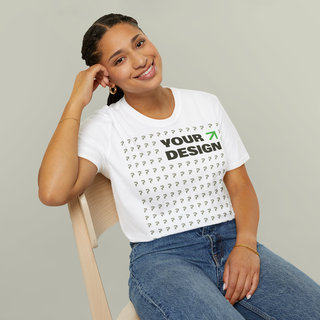
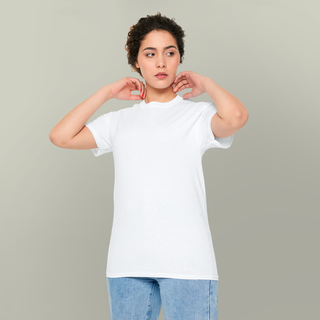
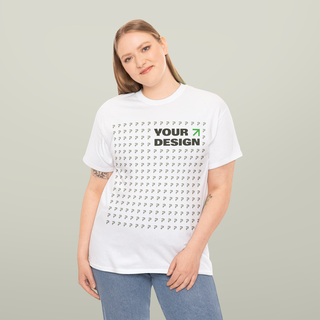
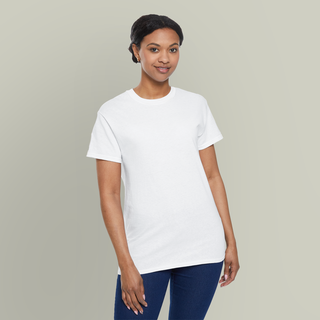
Shopping for cheap custom shirts is easy. Picking the right shirt for your store is the part that actually matters.
Below, we break down what makes custom t-shirts budget-friendly, which blanks are worth buying, and how to save money without quietly downgrading your brand, margins, or quality.
Want the list? Skip to the 10 cheapest custom t-shirts.
What makes custom t-shirts cheap?
Before we get into the list of garments, let’s clear up the logic. The final number comes down to several factors, and most merchants lose money when they focus on one low price and ignore everything else.
Printing method
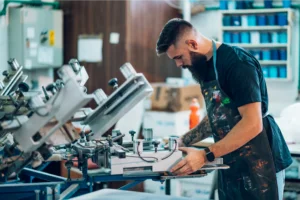
The first lever is printing. Different methods change setup, detail, texture, and how the final shirt feels in real life.
Printify’s print-on-demand platform uses DTG (direct-to-garment), DTF (direct-to-film), AOP (all-over print), dye sublimation, and embroidery for apparel decoration. Each method suits different artwork, fabrics, and order sizes – without the setup costs and minimum runs that come with traditional screen printing.
That means more digital printing flexibility for short runs, testing, and detailed artwork than any single method could handle on its own.
DTG is the everyday option for detailed designs on cotton-rich t-shirts.
DTF works across more fabric types and handles bold graphics well.
AOP and dye sublimation are better for full-coverage prints, especially on polyester-based products, where ink colors absorb into the fabric.
Embroidery is the premium outlier. It’s not a print method, but it earns its spot here. Embroidery outlasts any ink through washes, looks high-end, and buyers associate it with brands that charge more – which means you can, too.
The most affordable t-shirt printing method depends on the job. A single shirt with a detailed logo needs a different setup than large quantities for a school team or an event.
This is where merchants either protect their margin or wreck it. The gap between a single shirt and a larger order can be huge, especially once printing starts.
With traditional suppliers, higher quantities mean a lower per-unit price – but you’re paying upfront and betting that every shirt sells. That math only works when demand is proven.
With Print on Demand, the per-unit cost stays flat whether you order 1 or 100. You pay more per piece, but you carry zero inventory risk and no minimum orders.
Some suppliers look cheap until you hit their minimum requirement. Others only unlock low pricing at high quantities. Read the fine print – minimum, no minimum, and hidden pricing rules aren’t the same thing.
A no-minimum order is useful for testing custom t-shirts without gambling on stock. Compare supplier minimums against POD before committing.
Bulk too early means saving on unit cost and losing money on unsold shirts. Scale when the data says go, not when the pricing looks tempting.
Fabric and shirt type
Now we get to the part merchants often skip. The blank itself decides a lot. A cheap base price doesn’t magically make a good shirt.
Fabric weight changes how the shirt hangs, folds, and feels.
A heavier cottonshirt gives more structure. A lighter, super soft tee can feel easier to wear.
A polyester blend may dry faster, but plain cotton often wins for classic everyday t-shirts.
The right t-shirt style depends on your audience, your brand, and the kind of custom t-shirts you want to sell.
Neckline, fit, and sleeve length all matter. A simple crew-neck tee and a V-neck tee appeal to different people.
Even small choices like shirt color and cut shape affect how t-shirt designs land.
Supplier and fulfillment model
The last piece is the system behind the blank. This is where a low price either stays honest or turns into a mess once orders roll in.
WithPrint on Demand, you can create and sell custom t-shirts without buying inventory first.
That means no dead stock, no storage headache, and no forced minimum commitment before demand is real.
Check turnaround time, support, and whether there’s a real person when something goes wrong. Printify’s merchant support is here for you 24/7.
Compare standard shipping, international shipping, and whether the supplier bakes in hidden fees.
Good platforms like Printify show instant pricing, clear all-inclusive pricing, and enough customization options to keep your catalog flexible.
If you need faster delivery or even rush orders, the fulfillment setup matters just as much as the blank.
Now for the part you came for. We looked through the low-end options and picked the t-shirts that best suit merchants who want budget-friendly t-shirts without sacrificing quality.
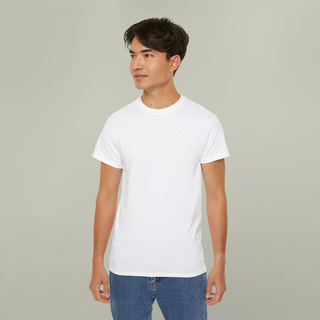
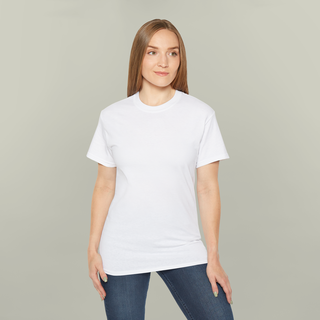
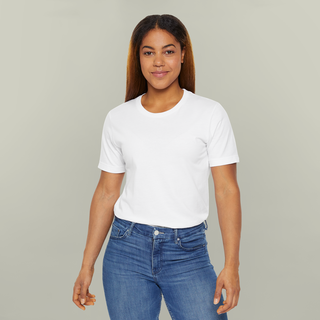
1. Unisex HD Cotton™ T-shirt (Fruit Of The Loom 3930R)
Price from: $10.98 With Printify Premium from: $8.77
Yes, this shirt costs more than the bottom-tier blanks. It still belongs here because the value is real.
The cut is cleaner, the shirt feels more retail, the sleeves sit better on the body, and the overall fit is closer to what customers expect from a brand they’d buy from twice.
Many merchants stick with this shirt because customers love the fit, finish, and premium feel. For stores chasing repeat buyers, this is often the fantastic middle ground between affordable and elevated.
Once you’ve found a few blanks you like, the next trap is buying too fast. This is where merchants lose margin, time, and patience.
Choosing the absolute cheapest blank Low price is useful when ordering custom t-shirts. Low standards are not. The wrong shirt can hurt reviews, returns, and perceived quality.
Ignoring the printing method Some art needs screen printing. Some art needs digital printing. Bad method, bad result.
Skipping samples Order the t-shirt. Touch the t-shirt. Wash the t-shirt. Check the sleeves, print, and fit before you go live. Sample orders are non-negotiable.
Forgetting the math on the minimum Minimums come in different shapes – a local printer wants 24 t-shirts upfront, another buries the requirement inside pricing rules. Read the fine print. Printify never tells you how to do your business – order just one shirt or hundreds.
Buying in bulk too early Bulk ordering is useful when demand is proven. Before that, bulk is just expensive optimism.
Not checking quality cues Look at fabric, shape, print area, and whether the blank matches your brand. One cheap shirt can lower the perception of the whole store.
Picked your shirt? Design and order it with Printify
Good. Now let’s get it made. The best time to test a product is before you’ve had twelve meetings about it.
Printify makes that part easy, which is exactly why merchants partner with us to create and launch custom t-shirts fast.
Sign up for a free Printify account
Create a free account so you can explore the platform, compare blanks, and check your options before you spend anything.
It’s a low-pressure way to create your first product and see what fits your business – no credit card, no commitment, no minimum t-shirt volumes.
Choose the right t-shirt
Pick the shirt that matches your niche, your brand, and your margin target from our huge Catalog (over 1,300 products, hello?).
Some custom t-shirts work better for giveaways, some for retail, and some for team orders or one-time events. Focus on fit, fabric, and starting price, not only the cheapest option on the page.
Create t-shirt designs
Use the Product Creator to upload your unique designs, place your logo, personalize with text and free clipart, and build clean mockups.
Every design gets a free artwork proof through Printify’s mockup preview before anything goes to print – so you can catch issues early.
It’s a great tool if you want to move fast and you’re not a graphic designer or don’t have a design team – the free built-in graphics library, AI Image Generator, and templates handle the basics.
Connect your store
Once the design looks right, connect Printify to your website or sales channel and publish the product.
This is where everything comes together. Once you publish, Printify syncs your custom t-shirts, routes orders to the Print Provider, and handles production and shipping automatically. You sell, we print and ship – no warehouse, no packing tape, no fulfillment headaches.
Order samples and launch your marketing
Before you go all in, order a sample. Check the print, fit, fabric, and overall quality in real life. Then start marketing with confidence.
Use the mockups, build a clean product page, and decide whether offers like free shipping make sense for your margins. It’s a smarter way to test demand, save money, and launch without guessing.
Quick tip
Offer free shipping above a clear threshold, like “Free shipping on orders over $50.” It lifts average order value and feels easier to justify than blanket free shipping on every order. 39% of shoppers abandon checkout because extra costs are too high.
FAQ
For small runs, Print on Demand with DTG is usually the best way to achieve cheap t-shirt printing – no setup fees, no inventory risk, and no minimum order. For simple artwork in large quantities, screen printing often wins on per-unit cost. The best method depends on the design, order size, and turnaround time you need.
If you want custom t-shirts with no minimum order volume, Printify is the place to start. No forced stock, no heavy upfront spend, and enough low-cost blanks to test your ideas before you commit to a bigger move. You can order a single shirt or scale to large group orders, free of minimum order requirements.
The lowest starting price on this list is under $8(with Printify Premium). The final cost shifts depending on the blank, print area, and supplier. Faster delivery, additional print placements, and the exact quantity all affect the total. That’s why comparing product pages matters before you commit.
For more info on shipping, check Printify’s shipping rates.
They can be. The trick is choosing a shirt that matches the job. Some shirts are perfect for giveaways, others for stores, and others for a polished brand. Cheap doesn’t mean bad. Lazy selection does.
Keep the art simpler, limit extra placements, and avoid overbuying. Evaluate free shipping carefully and move to bulk only when the data supports it. That’s how you save money without losing the quality your customers pay for.
Create awesome t-shirt styles with Printify
The smartest approach to cheap t-shirt printing is the one that leaves you with margin, decent quality, and a shirt good enough to bring customers back for a second order. Pick the blank with intent, match the printing method to the design, and let demand tell you when to scale.
Do that, and custom t-shirts affordable enough to test can still feel sharp, sell well, and support a real business.
This originally appeared on Printify and is available here for wider discovery.
FIND US ONLINE
WEEKLY DTC INSIGHTS
TRUSTED BY THOUSANDS
TRUSTED PARTNERS
NEWSLETTER
Fastlane Insider, Free Every Thursday
One email. What's actually working for Shopify operators this week.
49,690+ subscribers. No fluff. No sponsored vendor pieces dressed up as analysis. Just the operator-grounded read you need before Friday's leadership meeting.
Free forever. Unsubscribe anytime. Read by founders, operators, and platform teams at Klaviyo, Gorgias, Shopify, and many more.