Scaling a direct-to-consumer (D2C) brand often feels like you’re fighting a multi-front war.
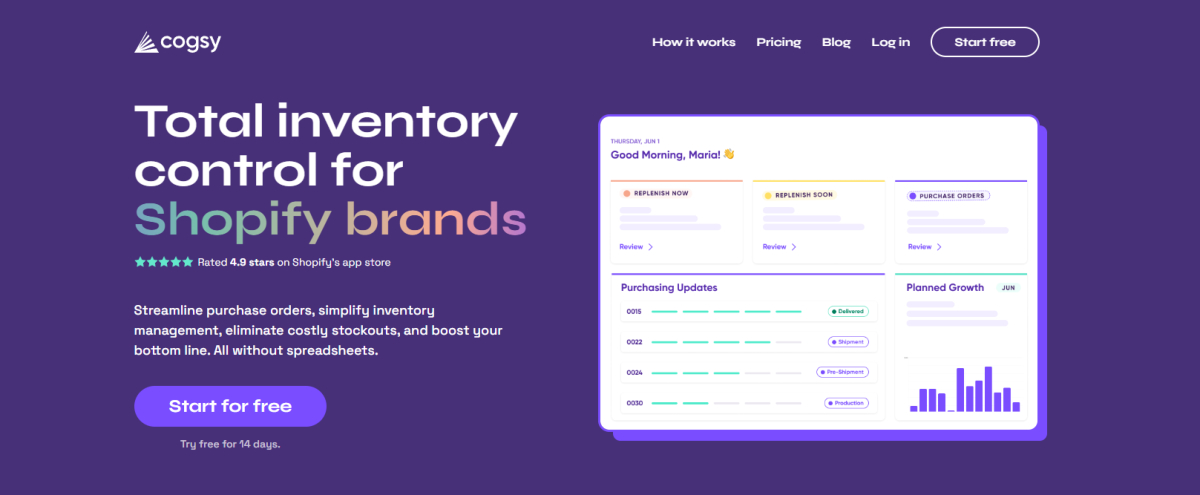
Today, we’re taking a strategic look at Cogsy. It’s a platform that claims to solve some of these complex inventory and operational problems for scaling D2C brands. We’ll explore if Cogsy truly delivers on that promise.
Is a tool like Cogsy worth your attention? Absolutely. Managing inventory and cash flow becomes a huge headache as you grow. If you’re tired of reacting to stock issues instead of predicting them, then pay close attention.
I’ve worked with hundreds of Shopify and Shopify Plus brands. I understand that not every tool fits every business. Trust me, I’m not here to tell you to buy something you don’t need. Knowing who a product is not for can save you a lot of time and money.
You should seriously consider Cogsy if:
You should probably hold off on Cogsy if:
We’re looking for solutions that genuinely move the needle for scaling brands, and Cogsy fits that bill for many. But like any powerful tool, it requires the right context and the right team to get the most out of it.
I’ve worked with hundreds of Shopify and Shopify Plus brands. I understand that not every tool fits every business. Trust me, I’m not here to tell you to buy something you don’t need. Knowing who a product is not for can save you a lot of time and money.
You should seriously consider Cogsy if:
You should probably hold off on Cogsy if:
We’re looking for solutions that genuinely move the needle for scaling brands, and Cogsy fits that bill for many. But like any powerful tool, it requires the right context and the right team to get the most out of it.
When you’re running a D2C brand that’s really taking off, you quickly hit a wall if your inventory isn’t perfectly aligned with your sales. It’s like trying to drive a sports car with flat tires. Cogsy steps in as your co-pilot, giving you the visibility and control you need to keep growing without the common headaches of stockouts or cash tied up in excess inventory. In my view, it’s about operating with real certainty.
Stockouts and overstocking are profit killers for D2C brands. They can ruin customer trust and tie up your valuable cash. Cogsy helps you get ahead of this by providing incredibly clear insights into your future inventory needs. It predicts what you’ll sell, so you can always have products ready. This means consistent sales, smoother operations, and better cash flow.
Think about a D2C apparel brand gearing up for Black Friday. In prior years, they often ran out of popular sizes for their top-selling hoodie by mid-day, leaving significant money on the table. Using Cogsy, they could feed in historical sales, monitor real-time demand spikes, and factor in lead times. Cogsy’s predictive analytics alerted them to increase their order for specific sizes weeks in advance. The result? They maintained stock throughout the entire peak season, maximizing their sales and capitalizing fully on the surge in demand. That’s real, tangible impact directly on the bottom line.
Creating purchase orders can feel like a game of chance, especially as your product catalog grows. Manual errors creep in, costing you time and sometimes damaging supplier relationships. Cogsy takes the guesswork out of this process. It automates and optimizes your purchase order creation based on precise calculations from your sales forecasts and current inventory levels.
Imagine a D2C skincare brand that sources ingredients from various suppliers globally. Historically, their purchasing manager spent hours cross-referencing spreadsheets and often made errors, leading to delays or over-orders. With Cogsy, data-driven purchase orders are generated seamlessly. The system knows exactly what to order, when, and from whom. This accuracy meant fewer manual errors, significant time savings for the team, and strengthened relationships with suppliers due to consistent, clear orders. It’s about building trust and efficiency throughout your supply chain so you can focus on growth.
Accurate demand forecasting is the backbone of efficient D2C operations. Trying to guess what customers will buy is a losing game. Cogsy uses your historical sales data and current trends to give you highly accurate demand forecasts. This empowers your brand to make informed decisions about how much inventory to hold, when to reorder, and even how to time your marketing campaigns. It cuts down on waste and boosts your profitability.
Consider a D2C home goods brand that noticed a subtle trend in their sales data for decorative candles. Without Cogsy, they might have missed it or acted too late. Cogsy’s forecasting tools analyzed the rising interest, factored in external trends like seasonal shifts, and predicted a significant surge in demand for certain scents in the coming months. Because of this insight, the brand was able to place larger, more strategic orders with their manufacturers well in advance. They launched targeted marketing campaigns just as demand peaked, perfectly aligning their inventory with customer interest. This foresight minimized stockouts, prevented excess inventory, and ultimately led to a much more profitable product line for them.
Now that we’ve covered who Cogsy helps and how it tackles growth bottlenecks, let’s get into the practical side. How does Cogsy actually fit into your existing operations? This is where rubber meets the road. We’ll examine its integration depth, the real financial conversation around its pricing, and what it’s like for your team to actually use it every day.
For any scaling D2C brand on Shopify, the depth of app integration is vital. You don’t need another silo. Cogsy syncs deeply with both Shopify and Shopify Plus, pulling in essential data points like your orders, product data, and sales history. What really matters here is that the sync is near real-time, giving you accurate, up-to-the-minute insights into your inventory situation.
This robust integration unlocks several key use cases for scaling D2C brands:
Are there any critical gaps for scaling brands? From my experience, while Cogsy’s core integration is solid, specific custom data flows or less common app connections might require a bridge like Zapier. This isn’t a deal-breaker, but it’s something to factor into your implementation plan if your current tech stack is complex. For example, syncing highly specific customer tags from an obscure third-party loyalty app might need a Zapier connection to fully optimize Cogsy’s insights.
Let’s talk about money. When evaluating Cogsy, it’s not just about the monthly fee; it’s about the return on your investment. Can it actually save or make you more money?
Here’s a simplified breakdown of Cogsy’s potential pricing tiers and what each means for your brand:
Now, let’s look at the tech stack consolidation math. Many growing brands piece together solutions, leading to what I call “spreadsheet hell” and a bundle of monthly subscriptions.
Consider this common scenario:
On the surface, Cogsy might seem more expensive. But the ROI isn’t just about the direct monetary savings on other apps; it’s about the time saved by your teams and the conversion lift from unified data. Cogsy helps reduce stockouts, which directly converts to lost sales. It also reduces excess inventory, freeing up cash flow. I’ve seen brands free up tens of thousands of dollars in tied-up cash in their first few months, simply by optimizing their purchasing with Cogsy. That’s a direct hit on your P&L you won’t see from a dozen fragmented tools.
When you’re bringing in a new tool, the question isn’t just “does it work?” but “will my team actually use it?” From a power-user’s perspective, Cogsy’s user experience generally excels in its clarity and focused dashboards. It’s built for inventory and operational planning, so it isn’t cluttered with unnecessary features. The forecasting views are intuitive, and you can quickly see your stock levels versus projected demand.
However, like any powerful tool, it might create friction where complexity meets specific, non-standard workflows. If your D2C brand has highly unique production processes or super niche supplier relationships, adapting those into Cogsy’s streamlined framework might require some initial setup time. It’s not a flaw, but a reality of moving from ad-hoc systems to a structured platform.
The ‘time-to-value’ with Cogsy, based on what I’ve observed, is surprisingly fast for a tool of its caliber. A skilled G.M, operations leader or someone on your inventory team can realistically achieve their first high-impact result, such as optimizing a major product’s reorder point or generating accurate purchase orders, within 1-3 weeks. This assumes a focused effort during the onboarding phase.
Cogsy offers quality onboarding resources, including documentation, video tutorials, and dedicated support during initial setup. Brands I’ve worked with often mention the support team’s responsiveness during implementation, which is critical for smooth team adoption. It’s not just handed over; they help you integrate it, which makes a big difference.
Choosing the right inventory and forecasting tool is one of the most impactful decisions you’ll make for your D2C brand’s financial health. It’s not just about counting boxes; it’s about optimizing your cash flow, ensuring products are always available, and ultimately, maximizing your profit margins. Let’s break down Cogsy’s overall standing and its place in your strategic toolkit.
From where I sit, having worked with hundreds of scaling D2C brands, Cogsy brings some serious advantages to the table. But like any powerful tool, it also comes with considerations.
Here’s my take on Cogsy’s good points and the areas you need to think about:
Pros:
Cons:
When you’re evaluating Cogsy, it’s wise to look at the other players in the inventory management and forecasting space. Each has its strengths, and the best choice always depends on your brand’s specific priorities.
Here’s a quick look at Cogsy compared to some notable alternatives:
The deciding factor often comes down to this: what’s the biggest pain point holding your D2C brand back right now? If it’s a lack of clear inventory foresight, cash tied up in dead stock, or missed sales from stockouts, Cogsy is a very strong contender. If you’re solving for something else entirely, or if inventory is still a minor concern, then another solution might fit better. For scaling brands looking to predict profits, Cogsy hits the mark.
Managing inventory well is vital for D2C brands that want to grow and make more money. Cogsy offers a clear way to predict your inventory needs. This helps you avoid losing sales from stockouts or tying up too much cash in extra products. It moves your business from guessing to precise planning.
For example, Cogsy helped one D2C apparel brand prevent running out of popular hoodie sizes during Black Friday. This meant they made the most sales possible during the busy season. It also helped a skincare brand order the right ingredients at the right time from global suppliers. This saved them time and built better supplier trust.
Cogsy works easily with Shopify, pulling in your sales data to make smart predictions and create purchase orders automatically. This means less manual work and fewer mistakes. While Cogsy does cost money, it can save you much more by freeing up cash and boosting sales. Brands have seen tens of thousands of dollars freed up and sales go up by 5-10% just by reducing stockouts.
The main takeaway is clear: if you are a D2C brand on Shopify making over $500,000 yearly and tired of inventory problems, Cogsy is worth trying. It helps you make smarter choices about what to buy and when, leading to better profits. Consider trying out their free trial to see how it can help your specific business grow.
Cogsy helps direct-to-consumer (D2C) brands stop losing money from inventory issues. It solves the problem of not knowing how much stock to buy. This prevents selling out of popular items or having too much old stock.
Cogsy uses your past sales data and current trends to guess what customers will buy. This means you order the right amount of products. It changes inventory from a guessing game to a planned process.
Yes, Cogsy is designed to prevent stockouts. It tells you exactly when to reorder and how much. This helps you always have products ready for customers.
Cogsy improves cash flow by reducing the money tied up in extra inventory. You only buy what you need when you need it. This frees up cash for other important business needs, like marketing or new products.
Cogsy is best for D2C brands that are growing quickly and making over $500,000 in sales each year. If your inventory needs are very simple, or you’re just starting, it might be more than you need.
Cogsy uses your sales history and market trends to make very accurate demand forecasts. The better your sales data, the more precise Cogsy’s predictions will be. Clean data helps Cogsy work its best.
Yes, Cogsy connects deeply with both Shopify and Shopify Plus. It pulls in your orders, product details, and sales history in real time. This strong connection helps Cogsy give you accurate inventory information.
The biggest benefit is that Cogsy automates and optimizes purchase orders. This saves many hours of manual work and reduces errors. It makes sure you order the correct items at the right time.
Many teams see big results from Cogsy in just 1 to 3 weeks. This includes things like ordering popular items better or creating accurate purchase orders. This happens fastest when the team focuses on learning the tool during setup.
If your team doesn’t have someone dedicated to inventory planning, Cogsy might not be the right fit. Cogsy provides great insights, but you need someone to use that information and take action.